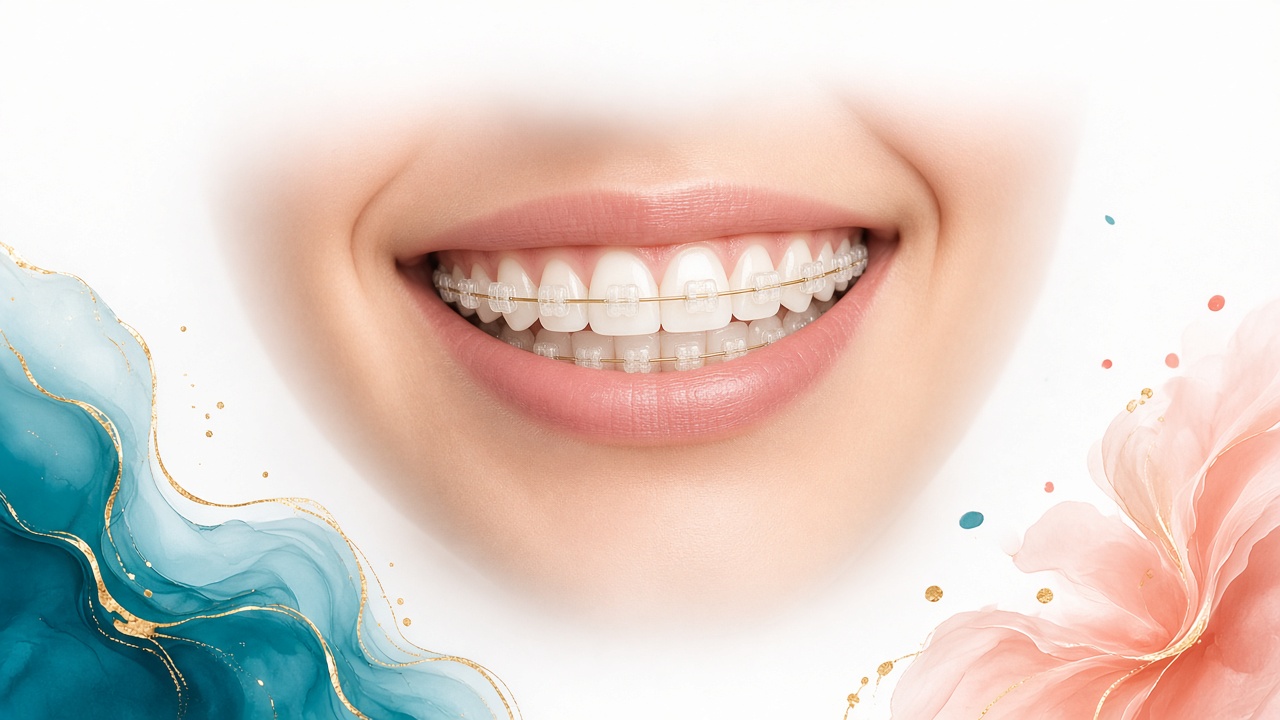
People compare their adult course with a son’s or daughter’s and expect the same calendar, the same bone ease, the same “one year and done.” I am Dr. Maksut Behruzoglu, a specialist orthodontist in Dubai; in adult orthodontics and orthodontics after 30–40 visits I unpack seven clinical differences: jaw growth, bone remodeling speed, periodontium, neighbouring restorations, timelines and how activation feels, plan goals, retention. Tooth-movement biology is one field — force, resorption, deposition. What changes is skeletal reserve, alveolar density, gum state, crowns and implants next door, and work life. Reviews from 2022–2024 on age-related orthodontics agree: adults often show a slower early movement phase, alveolar support after incisor retraction can end thinner at a similar inclination, and active periodontitis must be stabilised before force. Below — seven differences without the myth “after thirty it is too late” and without the promise “like the teen in the advert.” I do not approve an adult plan from a selfie.
Why comparing yourself with a teen breaks expectations
An adult sits down after a relative’s line: “my niece finished in fourteen months.” The line sounds like a diagnosis of your timeline. I hear it in English, Russian, and Turkish — same mechanism. Someone else’s teen calendar replaces your diagnosis. The schoolkid with residual growth in the next chair and the adult with crowns and thin gingiva at the incisors are two clinical portraits. I put them side by side at consultation and explain why a family-chat timeline does not belong to you.
Shame feeds the comparison. Adults hide brackets on video calls; teens hide them at school — both feel visibility, but adults add “I should have done this at school.” I do not litigate guilt. I collect today’s mouth: inflammation, bone thickness, restorations, a goal in your words. Without a goal, an appliance is decoration. Dubai adds an expat layer: “back home they stop after twenty-five,” “here everyone wears trays.” Both lines describe other chairs, not your periodontium.
Second opinions are welcome. AED figures come after a plan with a price-list date if cost enters the talk. Policy cover is confirmed by the insurer’s administrator. Below — seven differences I state before agreement so an adult does not measure themselves against a daughter’s school timeline.
Difference 1. Jaw growth: teens still have reserve, adults largely do not
Skeletal growth is the first split between a teen plan and an adult plan. In a teen, part of bite correction can lean on jaw growth: growth direction still changes, functional appliances and jaw-relationship control sometimes close what an adult already needs surgery or a dental compromise for. In an adult, skeletal growth is largely finished. We move teeth in established bone. That is not a ban on adult orthodontics. It is different maths for expectations. I draw the fork before start, not mid-course when “the jaw will catch up” has already failed.
Adults after thirty often confuse “the jaw does not grow” with “the tooth does not move.” Those are different claims. A tooth in the alveolus moves with force and a healthy periodontal ligament. The jaw as a bony block in an adult no longer catches a teen. The plan either respects that or honestly invites a surgeon. Below — three growth layers I open in the chair before we choose a system.
Large Class II or III skeletal disharmony
A large skeletal disharmony in an adult is sometimes solved only with orthodontics plus orthognathic surgery, or with a dental compromise short of a full skeletal “ideal.” I name the limit aloud: which spaces remain, which incisor inclination is acceptable, how that meets lips and speech. Compromise is also a plan, not “under-treatment.” The patient signs understanding, not hope that “the profile will become sixteen again.”
In a teen with residual growth, part of the same picture can soften with time and growth. In an adult, time without surgery barely moves the skeletal block. That is why someone else’s teen “before/after” with a strong profile change often hides growth or surgery you do not see in a feed.
Passport ages 16–17 are not a plan
In Dubai, some patients at 16–17 still show residual growth clinically and on films; others already show minimal growth. The Emirates ID number is not a plan. We read tissues and a film series if one exists from a prior clinic. Parents of teens ask “can we wait another year.” Adults ask “is it too late.” Both questions close with diagnosis: if the goal is dental and the periodontium is ready, age alone rarely stops us. If the goal is skeletal without surgery in an adult — I draw the limits.
Functional appliances and facemasks are age-window tools
Facemasks, functional appliances, growth-direction control — tools of a teen window. In an adult those tools rarely close a skeletal task. I do not sell a “teen facemask” to an adult mouth as surgery replacement. I explain which movements stay dental and which need a colleague. At an orthodontics after 30–40 consultation that talk takes longer than bracket colour — and it should.
Difference 2. Bone and periodontal ligament: a different response tempo
Adult tooth movement obeys the same laws as adolescent movement: force — bone resorption on the pressure side — deposition on the tension side. Tissue response speed changes. Adult alveolar bone is more often denser, ligament vascularity lower, and the early movement phase can run slower until the cellular response builds. A 2024 Frontiers review on age effects in orthodontic tooth movement describes a slower early cellular response in adult models and a different osteoclast balance in the early phase. Retrospective comparisons of incisor retraction show adult alveolar support after movement can end thinner at a similar inclination. I read that as a signal to protect amplitude and budget time, not as a stamp “after thirty it is too late.”
Adults often feel teeth “move slower than the child in the advert.” Part of that is biology; part is a false comparison. Teen treatment leans on growth and different bone density. Adult treatment leans on careful force and visit discipline. I do not race wires “to finish before holiday” on a thin periodontium. Below — three biology layers I translate into plain chair language.
Early phase and the “tight” week
After bonding and the first wire changes, adults more often describe a dull ache for two to four days. That does not prove harm. It is a reason not to activate the night before a board meeting or before a long-haul flight with no buffer. Soft food for 48 hours and your usual analgesics if your GP allows them — ordinary logistics, not weakness.
Teens may complain shorter or louder by personality, but biology does not ban adult movement. Night elastics and thicker wires stack sensations — do not copy a family teen’s wear sheet without your own memo.
Bone density and careful force
Dense adult bone lengthens the linear phase under careful force. I explain that as the price of kept support, not as “the doctor is dragging it out.” Speed at any cost in an adult with a thin biotype costs more than an extra month on the calendar. At consultation I say: “we travel inside the bone we have,” and I show on film where the reserve is thin.
Women in perimenopause sometimes ask about jaw bone density. Orthodontics does not replace whole-skeleton densitometry; with known bone issues we coordinate with the treating physician and reduce force aggression when needed.
Root resorption — a talk before start
Root resorption can occur at any age. In adults with trauma history, short roots, or heavy forces in a prior course I discuss risk before start. Check films by indication, not “everyone every month.” We watch teen roots too; adults more often already bring a “history” on film that desire for “faster like my daughter” cannot ignore.
Difference 3. Gums and periodontium: the adult start filter
Age raises the odds that recession, a thin biotype, old inflammation, and overhanging restoration margins already live in the mouth. Orthodontics does not cure active periodontitis with wire force. Stabilise first: hygiene, periodontal or restorative care as indicated, then force. The British Dental Journal and recent recession reviews link root exposure risk to moving a tooth beyond bone support and to a thin soft-tissue phenotype; a careful plan can, conversely, improve conditions for the arch. The “periodontal envelope” idea describes safe alignment limits: bone thickness, attachment level, gingival phenotype, root position.
Teens more often start with less chronic inflammation history, though school hygiene can be weaker than adult discipline. In adults the start filter is stricter: bleeding, pockets, mobility — periodontium first. In Dubai I often see adults who have “cleaned hard for years” and still arrive bleeding — a stiff brush and horizontal strokes on thin gingiva do their work. Below — inflammation, recession, joint work.
Active inflammation stops force
Bleeding on brushing, mobility, deep pockets, pus — periodontium first, orthodontics second. Moving a tooth through active inflammation risks faster support loss. I delay bonding until the picture stabilises and hygiene holds. “I need this before a wedding in two months” does not cancel that stop.
Maintenance after stabilisation is also part of the plan: an adult with periodontitis history stays on supportive visits while force is on. Orthodontics without that support is a bad deal even with a perfect wire. Teens meet this plot less often, but the same rule applies if inflammation is present.
Recession already present
An exposed root before treatment is not an automatic ban. Sometimes the tooth sat outside bone for years; uprighting into the arch reduces toothbrush trauma. Sometimes ambitious smile widening in thin adult bone is exactly what draws new recession. I show on film and in the chair where the root can travel safely. I do not promise gums will “lift themselves because of braces.”
Full-face “before” photos with the gum line help memory a year later, when the eye adapts to the new arch and forgets where recession sat. I ask for those frames before bonding.
When a periodontist shares the plan
Thin biotype, existing smile-zone recession, tooth-loss history, poorly controlled diabetes, smoking — reasons for a joint plan. Soft-tissue grafting may be needed before orthodontics; healing takes weeks, not days. I state the pause before start, or the adult expects “a straight arch at any cost by Monday.”
I discuss smoking plainly: it hits healing and support-loss risk. I do not moralise. I put the fact in the plan: reduce or stop in the treatment window, or accept more cautious goals. The same for poorly controlled sugar — endocrinology and stable numbers first, then force on a tooth.
Difference 4. Restorations, crowns, and implants nearby
Teens more often bring “their own” teeth without crowns and bridges. Adults bring another history: crowns, veneers, wear, bridges, neighbouring implants, missing teeth. That is the fourth clinical difference that changes plan mechanics. An implant is not an orthodontic passenger. A bridge can block space. An ankylosed tooth does not move “like natural” because you want an even arch. An adult orthodontics plan often meets a prosthodontist: what moves, what anchors, what is prosthetic afterward.
Adults sometimes ask to “move everything, including the implant.” A promise to do that is bad advertising. Sometimes orthodontics is needed specifically to create space for a future implant or to upright neighbouring axes — then sequence before the drill matters more than bracket colour. Below — three common forks.
What moves, what anchors
At consultation I sort teeth into three bins: we move, we keep as anchor, we change with prosthetics after. A crown on a moving tooth may need replacement after the axis uprights — that is not “failure,” it is honest sequence. Teens rarely need that talk. Adults without it get a plan that lies about time and budget.
Old overhanging restoration margins hold plaque and irritate gingiva. Sometimes a restorative margin correction is needed before force. I do not start a wire over a chronic irritant “because we want it faster.”
Bridges and missing teeth
A bridge fixes a distance. If the goal is to close a space or upright axes under a new prosthesis, the bridge may block the path. Remove or keep — a decision with the prosthodontist before orthodontics starts. Teens almost never bring bridges; adults meet this plot after extractions years ago.
A missing tooth for years changes neighbour inclination. Uprighting an axis for a future implant is a typical adult task inside orthodontics after 30–40. Time here depends on millimetres and periodontium, not on comparison with a school course of incisor alignment.
Veneers “instead of” orthodontics
Veneers and orthodontics solve different tasks. Sometimes the arch is aligned first, then restored. Sometimes with a healthy bite and local aesthetics, prosthetics proceeds without orthodontics. Choice follows exam of face, bite, and periodontium. I do not rank methods as good/bad; I lay out which tool closes your goal without extra bone risk. “At 45 only veneers” is a label, not a plan.
Difference 5. Timelines, visits, and the feeling of “slower”
Adults ask for one number. I answer with a corridor after diagnosis: months depend on the task, hygiene, attendance, biology. Comparing with a teen advert is useless. Comparing with your own course twenty years ago is weak too: growth was present, periodontium differed, forces differed. Retrospective duration data in adults often show several extra months versus a comparable teen task — a research corridor, not your personal verdict.
In Dubai, timelines break on flights, visas, Ramadan, and children’s school holidays that make the parent skip their own slots. I set a realistic calendar before start. The fifth difference is not “adults are always longer,” but “adult calendars break for different reasons and different biology.” Below — what lengthens a course, what you control, what honestly sits on tissues.
Hygiene and debonds. Plaque and repeat debonds in adults often track coffee, dates, hard road snacks, night work without brushing. Each lost bracket is a lost slot. I show a minimal cleaning kit on the first visit after bonding. A water flosser helps some patients; it does not replace floss and brushes where the wire holds plaque. White spots after an adult course hit self-image harder than in schoolkids: you straightened for the camera and got chalky zones at the brackets. Prevention is part of the plan.
Attendance. Skipping activations “because of a project” stretches the course more than passport age. An aligner adult who wears trays 10 hours instead of 20 gets the same delay maths. I ask for honesty at the start: if the Emirates horizon is three months, a short stage or a delayed start beats a broken full course.
Biology. Dense bone and careful force in a periodontal patient lengthen the linear phase. Root resorption risk and a thin envelope force a slower ride. I explain that before agreement. A mid-course goal change is another lengthener: you start “just tidy the incisors,” then six months later want “close everything like the advert.” I stop and rebuild consent.
Separately — treatment “holidays.” An adult leaves for two months and asks to “put a stiffer wire in advance.” I do not speed biology that way. A honest pause plan is better: what to wear, how to write if something breaks, when the first visit after return is. A stiff wire “just in case” on a thin periodontium is a bad gift to a holiday.
Difference 6. Plan goals: aesthetics, function, pre-prosthetic setup
The sixth difference is goal hierarchy. A teen more often arrives to “straighten teeth” under school and parent pressure. An adult more often carries a mixed request: even arch on camera, upright roots under crowns, close a gap after extraction, chew without fatigue, less wear. I ask for one main goal in your words before we talk brackets. Without a goal, metal versus trays is decoration.
Trays sometimes fit adult work and hygiene better. Sometimes mechanics need fixed appliances. Age alone does not choose the system. Task, periodontium, and wear discipline do. Teen tray discipline is often weaker; adult discipline is stronger, but the diary is harder. I match appliance visibility to real load after diagnosis, not from a feed.
Dubai adults often arrive after several “free consults” that promised an ideal without risk numbers. I prefer a short written list: what we can do, what we do not promise, what needs a colleague. The list removes shame better than a slogan that “it is never too late.” In adult orthodontics we compare your mouth with your goals, not with someone else’s Instagram or a daughter’s course.
Another layer is a second course. An adult already wore braces in youth, dropped retention, and the arch drifted. A prior course is not a ban. It gives information: what worked, what debonded, what the periodontium was like. Bring old films if you have them. Teens need a second course less often; adults meet it as ordinary work.
Difference 7. Retention and life after removal
The seventh difference is how hard we talk about retention. An adult arch without retention drifts. Night trays, a bonded retainer, reviews — part of the course, not an “if I remember” option. The more complex the periodontium and the larger the movement amplitude, the harder I am about night discipline. That is not punishment for age. It is ligament and bone mechanics after force.
Teens need retention too; adults more often underestimate it the second time: “the arch will remember.” The ligament does not work that way. Losing a retainer on a business trip is a common Dubai plot. A spare tray and knowing whom to message at night save months of “it shifted a little.” I issue the protocol before appliance removal, not after a “freedom” party.
Lifelong night emphasis in adults with thin periodontium is an ordinary honest frame. Teens have a frame too, but adult life with flights and clinic changes breaks retention more often. Changing doctors on a move: bring films, wire list, and retainer type; I do not scold a prior plan from afar.
Work and shame in Dubai amplify the seventh difference. Adult courses break on meetings, office light, and the habit of comparing yourself with the teen in the next chair. I match appliance visibility to real load: metal, ceramic, trays — after diagnosis. Flights: wax in hand luggage, spare elastics, a photo if something breaks, not pliers in a hotel. Ramadan and long workdays change hygiene windows — we state them before activation. Camera shame closes with a concrete line: “I am treating my bite; the timeline is clear.” Long apologies to colleagues draw more eyes to the metal.
Expat families often start “before a move” or “after the visa.” I ask for clarity on the Emirates life horizon: one year, three, unknown. The horizon decides whether we finish a full plan here or split stages. Prices come after a plan. I do not invent AED ranges in an article without a price-list date. If night after consultation spins “too late and shameful,” the answer is criteria: periodontium, bone, goal, Dubai life horizon. Between “bond everything tomorrow without films” and “never, because passport” sits adult orthodontics: slower than teen biology, still treatable inside honest limits.
Seven differences in one table
The wording below is conversation accent at consultation, not a verdict on a passport. Your case can sit in “teen” tissue response speed with an adult passport — or the reverse. The table helps a family stop arguing “who is right: daughter or me” and see where the clinic actually diverges.
| Clinical difference | Teen (typical accent) | Adult (typical accent) | What I check before a plan | Honest limit without an exam |
|---|---|---|---|---|
| Jaw growth | Residual growth possible; part of correction via growth | Growth largely closed; skeletal ideal without surgery limited | Films, clinical exam, profile goal | “The jaw will catch up after 30” is false |
| Bone / ligament | Faster early phase; different density | Often slower start; denser alveolus | Panoramic / CBCT when indicated | “After age N there is no bone” is false; thickness is individual |
| Periodontium | Often less chronic history | Recession, pockets, thin biotype more common | Probing, bleeding, hygiene | Active periodontitis + force = a bad deal |
| Restorations | Few crowns and bridges | Crowns, veneers, implants, bridges | What moves, what anchors, what is prosthetic | An implant does not move with braces |
| Response time | Often shorter for a comparable task | Often longer; attendance and hygiene critical | Prior course history, Dubai life calendar | No guarantee “like my daughter in a year” |
| Goal | More often “straight teeth” | Aesthetics + function + pre-prosthetic setup | Goal hierarchy spoken aloud | Instagram ideal ≠ plan |
| Retention | Mandatory; discipline unstable | Mandatory; nights and trips break results | What you will wear after removal | Without retention the arch drifts at any age |
I give three reading rules for the table. First: the “adult” column is not a ban. Second: the “teen” column is not a licence for aggressive expansion in the adult next door. Third: a family-chat timeline does not substitute your millimetres and your periodontium.
FAQ
Do adult teeth stop moving?
No. Bone remodeling around a tooth continues while a periodontal ligament remains and conditions are controlled. Adult response is often slower than in teens. “They do not move” as an absolute is a myth. Limits come from exam and periodontium.
Why was my daughter’s course shorter than what you outline for me?
Often because of growth, different bone density, a different task, and different attendance. Comparing two courses by passport is useless. Compare after diagnosis: goal, periodontium, millimetres. Someone else’s calendar does not belong to you.
Can an adult copy a teen plan “one for one”?
Rarely. Adults bring different skeletal reserve, periodontium, and restorations. We rebuild the plan for today’s mouth. Old films help; a “like at 14” template does not.
Are aligners better than braces “at my age”?
Sometimes they fit work and hygiene better. Sometimes mechanics need fixed appliances. Age alone does not choose the system. Task, periodontium, and your wear discipline do.
Do adults need extractions teeth more often than teens?
Not “more often because of age.” More often the table already holds another history: losses, restorations, years of bite compensation. Extraction decisions follow space and face analysis, not an age template.
What matters more: age or gum state?
Gums and bone support sit closer to the start decision than a round birthday. Age enters through tissues and growth, not through a label. At an orthodontics after 30–40 consult I read periodontium before passport.
Is it too late if I already wore braces before?
A second adult course is common: retention dropped, teeth drifted, the goal shifted under a prosthesis. A prior course is not a ban. It informs the new plan. Bring old films if you have them.
Can a photo tell me whether I will finish “like a teen”?
No. A photo helps with aesthetic request and booking urgency. Plan, recession risk, and timeline need an exam with films. I treat sent photos as a consultation filter, not a remote treatment contract. Activation pressure often feels louder against adult work weeks — that does not prove “more dangerous than teens”; we plan dates and soft food.