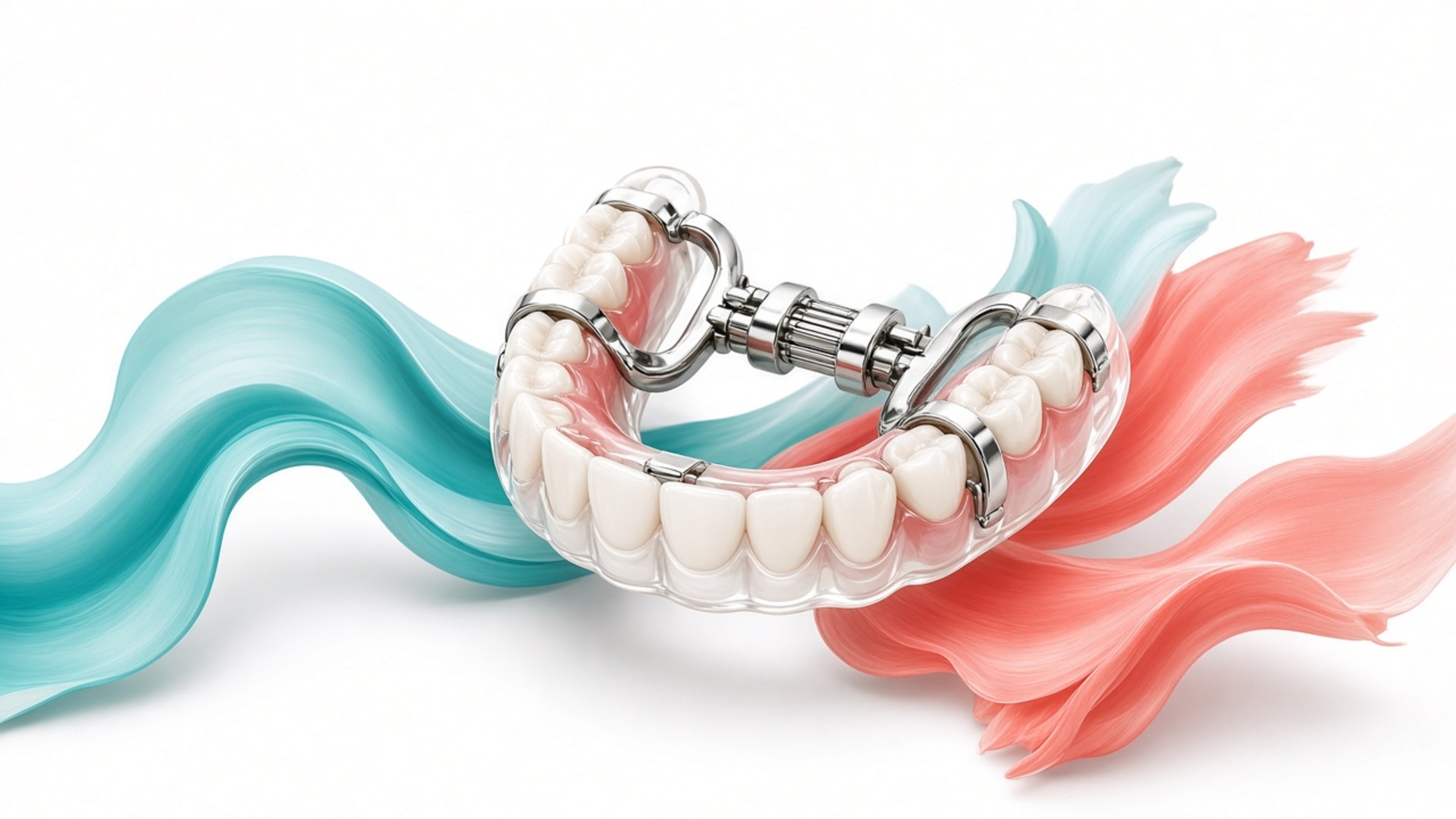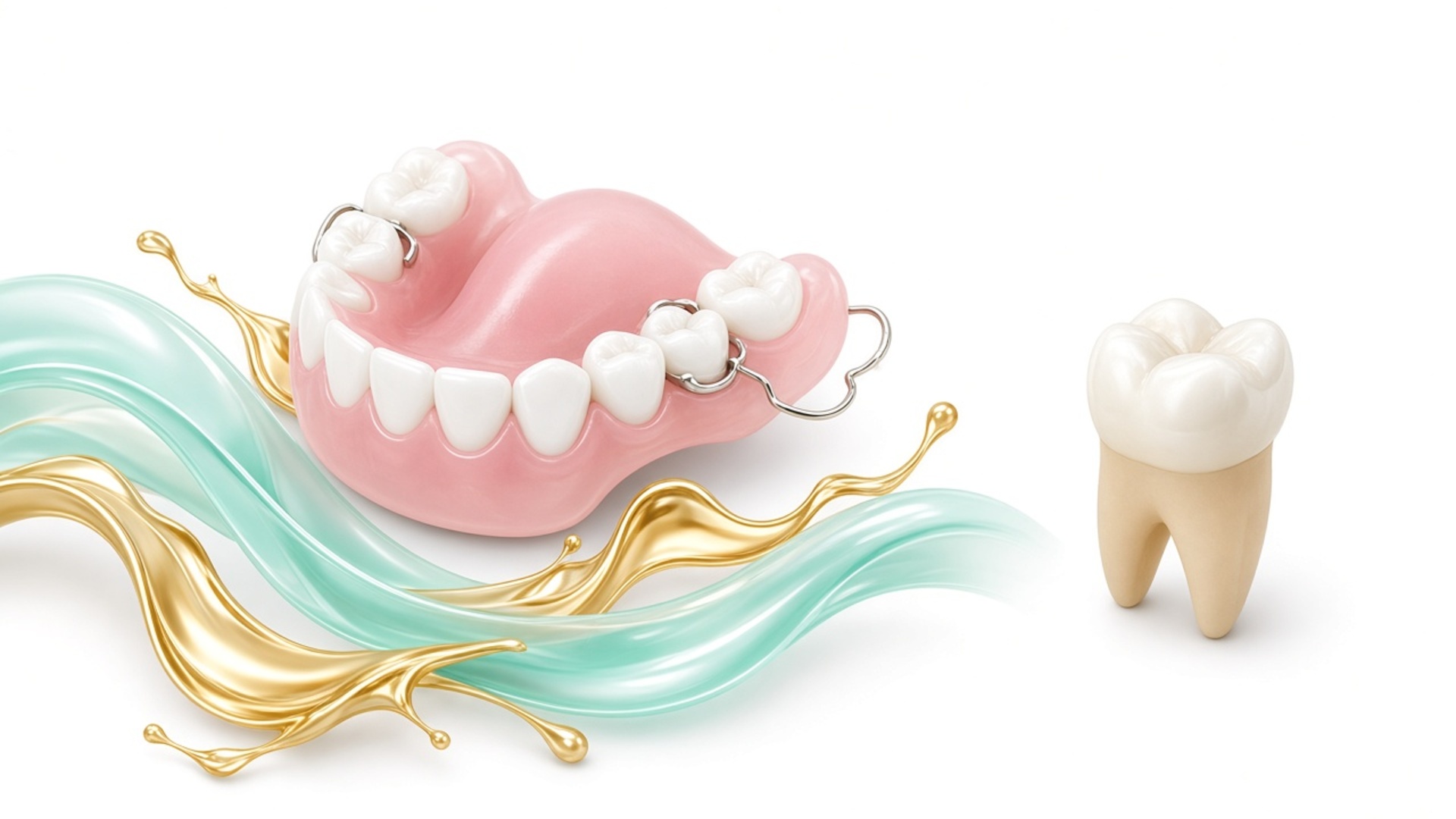
A parent opens a child’s mouth and sees two rows of lower incisors: the baby teeth still stand, the permanent ones have come in behind, toward the tongue. Search calls this “shark teeth children” and “second row of teeth.” The picture scares more than most mixed-dentition stages: it looks as if the jaw is “wrong” and the teeth will stay double. I am Dr. Maksut Behruzoglu, a specialist orthodontist in Dubai; at pediatric consultation I usually translate the panic into mechanics: the permanent incisor took a tongue-side path, the baby tooth has not yet given up its root, and the tongue often then nudges the new tooth forward — if space exists and the baby tooth does leave. The American Association of Orthodontists (AAO) recommends a screen no later than age 7, right in this mixed-dentition window. The American Academy of Pediatric Dentistry (AAPD) addresses ectopic eruption and over-retained baby teeth. I do not decide from a panic selfie whether to extract today. Below — what a second row means, when we often watch it, when the baby tooth should come out, and how early intervention meets children’s braces.
What parents mean by a second row and shark teeth
“Shark” is household language: sharks grow teeth in rows; a child, for weeks or months, shows both baby and permanent lower front teeth. In the chair I say it differently: the permanent lower incisors erupted on the tongue side while the baby teeth still occupy the row. This is a common plot at six to seven, when the lower centrals are due to swap. Dubai families bring a photo from the school bathroom and ask to “pull everything now.” I first name which row and which tooth, because “second row” in chat also gets stuck on upper incisors, molars, and a canine that came in high. Below — three pictures parents mash into one search. Calm wording here saves an extra extraction on a panic day and an extra month of fear if the baby tooth is already loose.
Lower incisors behind the baby teeth
Classic shark teeth: a permanent lower central or lateral stands behind the baby tooth, toward the tongue. The baby tooth may still sit firm or already wiggle. Work from Gellin and Haley, and later mixed-dentition observations, showed that in a large share of children with adequate or even mildly short space, the baby teeth still shed and the permanent incisors drift forward, helped by tongue pressure. “A large share” is not “all.” I do not promise self-correction from a photo.
Upper incisors in two layers
On top, the permanent tooth more often butts from the palate side or stands in front of the baby tooth. Here I think faster about space, baby-tooth trauma, pulp treatment, and a spare bud. The upper lip and palate steer a tooth differently than the tongue does below. I rarely leave an upper second row as “see you in winter” without a film, especially if one central is in and the matching baby tooth is stone-still.
A side “second row”: molar or premolar
A parent sees two teeth stacked in a side segment: a permanent premolar erupting while the baby molar still sits, or a first permanent molar jammed into a baby molar. That is not the internet’s shark meme. It is ectopic eruption and space. AAPD describes ectopic eruption of first molars in up to about three percent of children. Tactics differ: watch, separate, or remove the baby tooth and hold space. You cannot mix this with lower incisors under one tip of “wait, the tongue will fix it.”
Why the permanent tooth comes in behind the baby tooth
Tooth swap is not the cartoon of “baby tooth out, new tooth in the same hole.” The baby root should resorb under the permanent bud. The permanent lower incisor is laid down on the tongue side of the baby tooth. If resorption lags, the permanent crown finds an exit where bone and gum are thinner — often behind, toward the tongue. The child then points: “I have two teeth in one place.”
I show it on a model: the baby tooth occupies the old road; the new one travels its own, a little inside. At rest and on swallow, the tongue presses lower incisors outward. The lip presses inward. While the baby tooth occupies the row, the permanent tooth cannot sit where the arch wants it. Remove the baby tooth at the right moment — the permanent tooth gets a corridor. Leave the baby tooth if it is already loose and the root is going — the corridor opens on its own.
Resorption lags for several household reasons. A baby root after trauma or after pulp treatment gives way poorly. An ankylosed baby tooth cannot shed. Arch space is short, so the permanent tooth deflects even more to the tongue. A tongue habit or a thumb holds the incisors. A spare bud above scrambles the path — that is a neighbouring plot, not the shark meme. I hunt the cause so we can decide: watch, remove the baby tooth, hold space, or call early intervention.
Families ask whether “the jaw is too small, that is why there are two rows.” Sometimes a space deficit exists, and the second row is its shop window. Sometimes the arch has enough millimetres, and the baby tooth simply has not given up the root yet. That difference decides whether “it will settle” or a step is needed. A ruler and a film speak louder than the fear of “genetics, like uncle.”
In Dubai I also hear a household theory: “this is from the dummy / the bottle / purée.” A pacifier and mouth breathing affect bite and tongue posture, and I ask about them. They rarely, alone, draw the classic tongue-side lower incisor exit at six. I do not dump the second row onto one habit, and I do not send the family home with a lecture instead of an exam.
When the picture often settles on its own
Watching is a legitimate plan if the criteria line up. I say that calmly, because the parent arrives ready for “cut today.” The readiness makes sense: the child shows the mouth to classmates, a photo hits the family chat, someone writes “surgeon now.” My job is to name when baby-tooth surgery can wait, and to set a date. Dubai adds a flight in ten days: the family wants the question closed before the airport, even if the baby tooth is already loose and the corridor is about to open. Below — three props I use to hold observation. If one prop is missing, the basket changes to extraction or to a wider space review. I write the watch interval in the chart: often four to eight weeks for baby-tooth mobility, not “until they leave primary school.”
The baby tooth is already mobile
The child wiggles it with the tongue, an apple shows a little blood, the root on film is short. The permanent tooth then often finds the row after the baby tooth leaves. I ask not to yank it with a napkin “to speed things” if it still hangs on a painful strip of gum: a dental date is kinder. If the tooth hangs on a thread of tissue and blocks eating, chair extraction is calmer than a home operation before school.
Tongue and lips can finish the job
Lower incisors after baby-tooth loss often migrate forward under tongue pressure if the arch has millimetres. I look for a strong tongue-between-teeth posture and for a thumb habit that holds an open bite. Tongue pressure is an ally for a tongue-side incisor. It is an enemy if the incisor is already too far forward and a gap will not close. I separate those on exam rather than repeating the slogan “the tongue will fix everything.”
Arch space is not exhausted
If the incisors sit with spaces, the arch is broad, crowding is absent — the chance of self-alignment is higher. If the permanent teeth already overlap, laterals are squeezed out, baby molars have no room — waiting for “the tongue to build a row” is naive. Classic work on lingual eruption of lower incisors noted that with mild shortage some cases still recovered, while frank shortage more often needed a next step. I do not paste poster percentages as a guarantee for your child. I measure and set a date.
When the baby tooth is in the way
Removing a baby tooth is a tool when that tooth blocks the path or harms the permanent one. I explain to the child before anaesthetic: “the old tooth is holding the door; the new one cannot sit down.” After a night of search, the family fears “they will pull it and everything will spread.” Sometimes space after removal does need a maintainer — I say that before the chair. Sometimes the row closes on its own. I name in advance who extracts, whether a maintainer is coming, and the date we check the row. A Dubai diary also needs the flight and school photo this week: that shifts the day, not the fact of removal. Below — four situations where I do not offer extra selfies. Pain, swelling, and fever sit apart: dental urgency; the calendar can wait a day.
The baby tooth is stone-still
No mobility, a dull percussion note, a long or bent root on film, the permanent tooth already in the mouth behind. Resorption is not happening. Waiting for it to “loosen by New Year” leaves the permanent tooth on the tongue side for months of bite habit. Removing the baby tooth opens a corridor. The next position of the permanent tooth is review, not magic from one visit.
The baby tooth had pulp treatment or trauma
After pulpotomy and root filling, a baby tooth often resorbs poorly. AAPD links altered incisor eruption with necrosis and with pulp treatment of baby incisors. Trauma at three to five is the same story: the root “froze,” the permanent tooth looks for a bypass. I ask for the treatment date and that visit’s film. Removing such a baby tooth in mixed dentition is often cleaner than another round of “let’s watch.”
Pain, swelling, a gum boil, the child will not eat
A second row with pus is not an orthodontic meme. Clean the infection first. Sometimes the baby tooth leaves in the same visit because it is the source. Sometimes a paediatric dentist is needed before the orthodontist. I do not keep a septic tooth “so space will not close.” Infection costs more than a millimetre of arch.
There is no space, and the permanent teeth are already crowded
The baby tooth occupies volume; the permanent teeth sit tongue-side and rotated; laterals are squeezed out. Extracting one baby tooth without a space plan can collapse the arch further — or, conversely, let an incisor sit. Here I count millimetres, read a panoramic, and decide on a maintainer, separation, or a short early phase. “Pull all the front baby teeth” without measuring is a common request after a night of search. I do not perform it as ritual.
What I do at the visit when I see a second row
At pediatric consultation the order is fixed: child first, then the mirror, then a film if indicated, then a plan basket. The child has already heard “shark,” “ugly,” “emergency surgery” at home. I ask parents not to repeat that in the chair. I speak to the child: show with your tongue which tooth is new, which is old, whether biting hurts. Then I look from which side the permanent tooth emerged, whether the baby tooth can shed, whether crowding exists, how the back teeth meet, whether the child mouth-breathes. A film belongs when the baby tooth is “stone,” when pulp treatment or trauma is in the history, when the sides do not match, or when I suspect a spare upper bud. Not every shark row at six needs a panoramic. Below — three decisions the family takes home.
Watch with photos and a date
The baby tooth is mobile, space exists, hygiene is calm, no pain. A date in a few weeks, two smile photos from a phone, the rule “if it swells — come earlier.” I allow the child to wiggle a already-lively tooth with clean fingers. I forbid thread, pliers, and “let dad pull it after football.”
Remove the baby tooth and review the row
The baby tooth is a block. A paediatric dentist or surgeon takes it out. I set a check of the permanent tooth’s position: sometimes hygiene and time suffice, sometimes a plate or a short arch. The family leaves with a written task: “we removed the door; we wait to see if the new tooth sits in the row.” Without that sentence, extraction feels like the end; it is the middle.
Space, early phase, braces later
Arch shortage, a crossbite, a suspicious canine, several teeth off-path. Then the second row is the shop window of a larger job. Early intervention can hold or recover space, catch a molar, remove a block. Children’s braces as a full course more often come later, when more permanent teeth are in. Bonding an entire row at six because of two tongue-side incisors is rare in my chair.
Space, crowding, and the risk it stays that way
The parent’s fear is precise: the permanent teeth will sit tongue-side and get used to it. Part of that risk is real. Lower incisors that spent half a year behind baby teeth in a tight arch “roll forward” less well even after extraction. The tongue then pushes into an already closed corridor. Lower-incisor crowding in mixed dentition is common; not every case needs an appliance today; some of it will be the material of a teen course. The table below is how I sort household pictures in the chair. It is a booking and conversation filter, not an online diagnosis. The “usual path” column is what I see more often, not a promise to your child.
| Picture at home | Baby tooth | Permanent tooth | Arch space | What I more often suggest | When not to wait for “one more selfie” |
|---|---|---|---|---|---|
| Lower shark incisors, age 6–7 | Mobile, root going | Tongue-side, no pain | Spaces or mild shortage | Watch 4–8 weeks, photos, a date | Swelling, gum boil, zero mobility at review |
| Same incisors | Stone-still, pulp treated or trauma | Already in the mouth behind | Any | Extract baby tooth, review the row | Pus, refusal to eat, gum cut by an edge |
| Lower incisors fanned, laterals squeezed | Baby teeth still occupy volume | Crowded, rotated | Frank shortage | Film, measurement, sometimes early phase | A year of “the tongue will build it” with traumatic contact |
| Upper two layers | Baby central sitting | Matching tooth in for months | Often tight or a block | Film sooner, hunt a supernumerary | Asymmetry >6 months, a history of a blow |
| Side “second row,” six-year molar | Baby second molar undercut | Molar jammed, not standing | Molar corridor being stolen | Ectopic assessment; sometimes separation or extraction + maintainer | Distal decay, pain on chewing |
| Premolar in two layers | Baby molar ankylosed, “sunk” | Premolar deflected | Neighbours already drifting | Film, plan for the baby tooth and space | Tooth below the bite on sight, neighbours higher |
I measure the shortage. I check whether the permanent teeth are rotated, whether they meet the uppers or pass them. I check whether a lower incisor is traumatising an upper. If the lowers hit the palate or chip the uppers — waiting for smile cosmetics is already too late; we need to take the contact apart. If contact is calm, space exists, the baby tooth has left — we review.
The risk it “stays that way” is higher with frank shortage, mouth breathing and a tongue between the teeth, early loss of side baby teeth with drift, and family crowding where the parents’ incisors fanned until braces. The risk is lower with spaces, a mobile baby tooth, a short root, a quiet tongue. I name risk as “higher / lower,” not a pharmacy-grade percentage.
The upper jaw sits apart. An upper second row more often leaves a mark in appearance and bite if you ignore it for a school year. A spare bud, dilaceration after trauma, ankylosis — “the tongue will fix it” does not apply. I run that plot on a tighter film timetable.
Hygiene suffers with two rows: the brush cannot pass between baby and permanent, plaque, gingivitis, smell. I show how to clean both rows while they coexist. Parents read inflamed gum as “the tooth is growing crooked and rotting.” Sometimes that is an uncleaned pocket. Sometimes pocket plus baby-tooth decay. Cleaning does not replace the extract-or-wait decision. It stops you losing a permanent tooth to dirt while you wait for a date.
Watch, extract, early phase, children’s braces
The baskets match other children’s plots; the entrance here is emotional. I deliberately slow the talk for five minutes after the exam: I name what I saw, what I did not see, the next step, and what we are not doing today. The child hears that their mouth is not a disaster. The parent hears that a plan exists. Below, the four baskets again as a Dubai family route, with holidays and school photos. An ad that “fixes shark teeth in a week with a mail-order aligner” and a tip that “everyone waits until twelve” both skip the exam. I do not choose either as clinic policy.
Watch. Criteria above. Family calendar: if a home-country flight is in a month, I set review before departure or write signs for “see a dentist there.” Messenger photos are a filter, not a remote plan.
Baby-tooth extraction. Often that is the only “appliance” needed. After — hygiene and a date. If the permanent tooth has not sat by review, we raise space and traction.
Early phase. A maintainer after loss of a side baby tooth, separation for an ectopic molar, a plate or a short arch if incisors will not travel, expansion for narrowing. A narrow job measured in months, not “straighten everything like a blogger.”
Full course. Children’s braces or a teen system when enough permanent teeth exist to build an arch. A second row at six does not, by itself, prescribe a full course. It prescribes a screen and, if space is short, a queue of tasks. I repeat that because after the word “braces” in the corridor a parent already budgets three years.
AED figures, if cost comes up, I name after a plan with a price-list date. UAE insurance covers orthodontics differently; the policy administrator confirms cover. Baby-tooth extraction often sits under paediatric dentistry; the orthodontic stage is separate. Mixing two invoices in one panic does not help.
I stitch home-country holidays into the route. If the baby tooth is already mobile and the flight is in a week, it can be more honest to let it finish at home, with a dentist address “in case,” than to extract on a Friday night without swelling. If the baby tooth is dead and the permanent tooth is cutting the gum, waiting for August with grandparents is a weak plan: the edge traumatises, hygiene drops, the child stops biting apples. I write down who in the household can actually get to clinic on a weekday — in Dubai that is often a driver or nanny, and they need the same paper the parent received in the chair.
School photos and ID cards press for “remove it now, the smile looks wrong.” I understand the pressure and still separate a week of cosmetics from risk to the permanent tooth. A two- or three-day gap after extraction looks different from two rows for years. A teacher needs a short note for soft food on extraction day. A rugby coach gets a separate line: skip contact after a fresh socket if it bleeds — not “a month off for shark teeth.”
How to talk to the child without feeding the panic
Words at home heal or injure more than a brush. The child mirrors the parent’s face in the bathroom mirror. If the adult says “horror, shark, everyone will laugh,” the child shuts their mouth in the chair and at school. If the adult says “the new tooth came in a little behind, the old one has not left, the doctor will look,” the visit feels like a measurement, not a trial.
I ask for three household rules. Do not photograph the mouth for the relative chat without the child’s consent. Do not compare with a classmate’s smile at breakfast. Do not promise “they will not do anything to you” — better “first we look; if the old tooth is in the way, they take it out, it is quick.” A lie about “they will not do anything” breaks trust in the chair when extraction is still needed.
Teasing in Dubai schools is real. I offer a short line the child can say: “my teeth are changing, the lower ones come in behind, that happens.” For the teacher — a note if a soft lunch is needed after extraction. For sport — if the gum bleeds after extraction, we skip the contact day on the facts, not “a month because of shark teeth.”
The nanny and the other parent must hear the same plan. A third-hand retelling of “the doctor said pull everything now” takes me an hour to untangle. I write three lines in the chart and in a message: watch until date / extract this tooth / review on this date. Shark teeth in children stop being a household crisis when the crisis has a date and a verb.
Expat families compare with home-country habits: some extract every “extra” baby tooth on visit one; some say “it will pass, do not touch.” Both rituals exist. I lean on mobility, space, a film when indicated, and this family’s logistics. A second opinion is welcome. If fear lands after a sleepless night — “we will miss it” — the answer is criteria, not an impulse and not a new chat with photos of the child’s mouth.
Older siblings need a footnote. “The older one sorted itself” soothes until the younger one has a different space deficit and a different pulp-treated baby tooth. “The older one had them pulled and still needed braces” frightens until the younger one has a mild tongue-side eruption with spaces. I ask for the older child’s films if they exist, and I still measure this child. A family plot helps read crowding heredity. It does not copy a plan one-for-one.
The evening after the visit. The parent rereads search results and again sees “shark, surgery now.” I leave three plan lines in a message and allow a note if swelling appears overnight. A return visit “just to ask again” is cheaper than a 23:00 thread extraction at home. A second row of teeth stops running the house when the house has a date, a verb, and a ban on midnight pliers.
FAQ
Are shark teeth in children normal or a problem?
A common lower-incisor swap: the permanent tooth comes in on the tongue side while the baby tooth still stands. For many children this is a temporary picture. A blocked baby tooth, a space deficit, pain, or an upper second row with a hidden obstacle makes it a problem. Exam separates those, not a search meme.
Should we extract the baby tooth the same day we see a second row?
No as an automatic rule. If the baby tooth is loose, space is enough, and there is no pain — we often wait days to weeks with a review date. If the baby tooth is dead, pulp-treated, swollen, and the permanent tooth is already in the mouth — extraction is more logical. The decision follows a look in the mouth, not a night of search.
Will the tongue push the permanent teeth forward on its own?
Sometimes yes, on the lower arch, after the baby tooth leaves and if millimetres exist. The tongue does not build a row in frank crowding and does not move an upper incisor through a spare bud. I look at space and habit, then I do or do not promise “it will settle.”
How long can we wait for the baby tooth to fall out?
I more often set review at four to eight weeks if the tooth is already mobile. If mobility is still zero at that date, we change baskets. A year of patience-for-patience with a dead baby tooth and tongue-side permanent teeth is not a plan.
Does this mean braces later, for sure?
No as a formula. Some children, after the baby teeth leave, complete the row and stay on review until a teen screen. Some reach children’s braces because of crowding that would have existed without the shark episode. A second row is a reason to measure space, not a three-year metal sentence.
Can we send a photo and get a plan on WhatsApp?
A photo helps with urgency: swelling, a gum boil, two rows, which jaw. Extraction and watch plans need an exam. I read frames as a booking filter. I do not write a diagnosis remotely.
Is an upper second row the same story as a lower one?
Often no. On top I hunt a block, trauma, baby-tooth pulp treatment, a supernumerary faster. Below, classic tongue-side incisor eruption more often limits itself. Mixing two tips in one relative’s message is unsafe.
Paediatric dentist or orthodontist in Dubai?
Pain, swelling, baby-tooth decay — dentist, sometimes the same day. The question “shark teeth children, wait or extract, is there space” is pediatric consultation. Bring films if you already have them. A referral is not required: you can book yourself when the picture in the mouth stopped making sense at home.