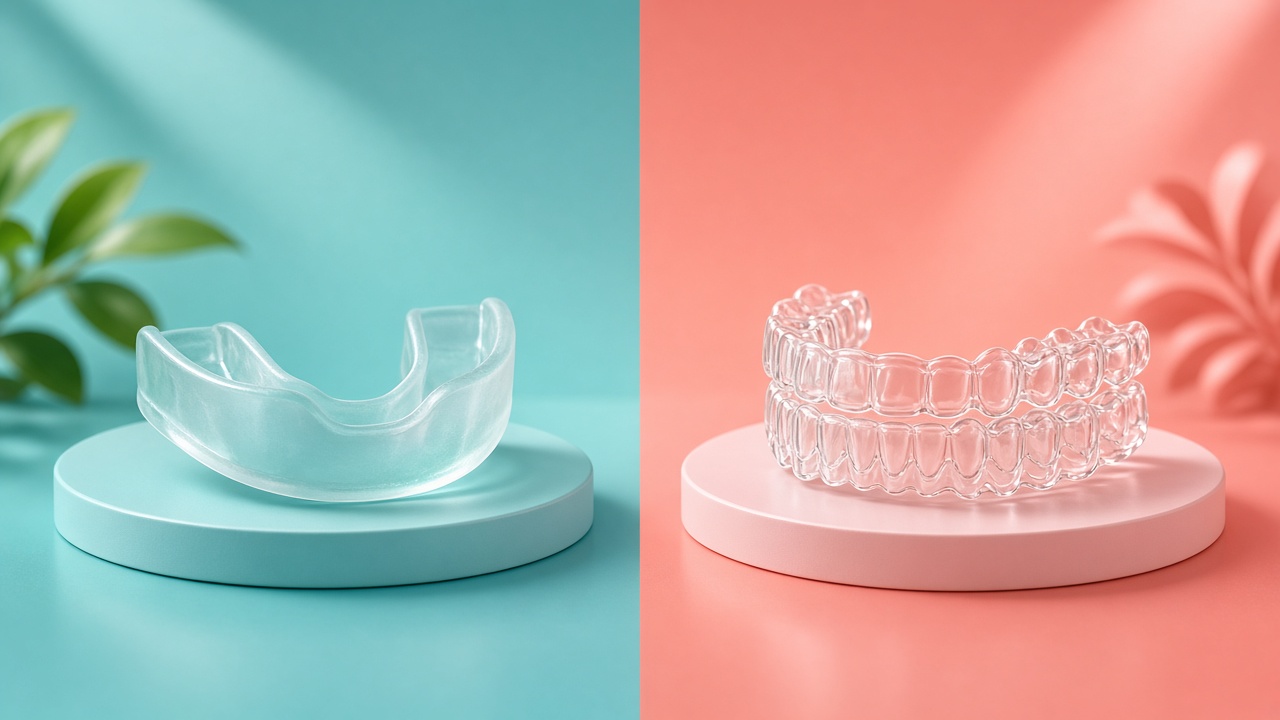
A teen embarrassed about braces is not being dramatic for the sake of drama. Behind “I do not want metal on my face” sit school ID photos, class group chats, fear of a comment on a story, and the feeling that adults are deciding the body again. I am Dr. Maksut Behruzoglu, a specialist orthodontist in Dubai; in teen braces and teen aligners I treat that embarrassment as a working motive for care: I name what shows at two metres versus on a close selfie, which options lower visibility without promising “nobody will notice,” and which wear schedule or hygiene load the family can actually carry. The American Association of Orthodontists (AAO) notes that clear aligners look discreet in photos yet work only with about 20–22 hours of wear a day. Psychosocial studies in adolescents seeking orthodontics (2024) link self-motivation with a stronger impact of the bite on quality of life, while a parent-only “you must” without the teen’s voice weakens cooperation. I do not prescribe a system from one messenger photo. Below — what an honest compromise looks like: ceramic, lingual, aligners, Dubai school life, compliance, and the limits of delay.
Embarrassment in the chair: what I hear on visit one
Families arrive with crowding or a protruding incisor; fifteen minutes later the talk slides to “he is ashamed.” The teen looks at the floor and answers in one word. The parent translates: class photos, ID day, jokes in the chat about someone’s brackets. I take embarrassment as social load, not noise in front of the real diagnosis. Bite and face stay on the table. Embarrassment decides which daily life the course will survive. Skip that layer and you get bonding on the calendar and hygiene sabotage by month three. Interviews with teens 14–16 show they hide teeth in photos before treatment and often describe friends as support after starting. My job is to turn shame into concrete questions: what shows, where, how many hours, what we will not promise. Below — three layers before we choose hardware.
What feels exposing: smile, profile, or being in treatment at all
I ask straight: what exactly scares you in a photo? A full smile close-up, the side view while talking, coloured ties, metal flashing under cafeteria lights? The answer sets the fork. Fear of a frontal selfie often points toward ceramic on the upper front or toward aligners. Fear of speech and profile points toward caution with lingual braces. Fear of “being in treatment” is about control and negotiation, not bracket material. A teen who cannot name the fear has often not decided the treatment is theirs. Then I slow the start: films, models, a second talk in a week, no bonding “today while mum booked.”
Who is more embarrassed: the teen or the parent
In Dubai’s mixed families one adult pushes “invisible at any cost,” the other pushes “put metal on and move on.” The teen sits between aligner ads and exam calendars. I separate the parent’s wish from the child’s complaint. If mum is mainly embarrassed at the school concert and the teen wants metal with coloured ties as style, ceramic for the parent’s taste is wasted money and extra fracture risk. If the teen is embarrassed and the parent says “just endure it,” a course with no visibility compromise often breaks on hygiene. A one-page mini-plan — “what shows / what we do not promise / what you choose” — cuts the dinner-table war.
Shame about the bite versus shame about the appliance
Some teens already hide a smile because of crowding or a gap. Then the appliance becomes a bridge toward a smile they want. Some bites worry the doctor and the parent while the teen only fears metal on the face. Both plots are legitimate. In the second I do not promise shame will vanish in a week. I promise an honest visibility range and a date to review adaptation. Studies of self-perception with metal brackets show a mixed picture: some patients avoid smiling in the early months; many normalise the look by six months. I lean on the teen in the chair, not on a questionnaire mean score.
Metal, ceramic, lingual, aligners: what actually shows
When a teen is embarrassed about braces, ads answer with “invisible.” In the chair that word splits into four mechanics and four daily lives. Metal remains a workhorse for many teen cases: predictable force, simpler repairs after sport, less dependence on overnight wear. Ceramic lowers bracket contrast on light enamel, yet the wire still shines. Lingual braces sit on the tongue side: quiet outside, busy speech. Aligners often barely read at two metres and demand hours. The AAO notes aligner success leans on compliance; for severe rotations, fixed mechanics are often more predictable. I do not call one legitimate system “worse.” I lay out visibility, risk, and daily life against your bite on the consult desk. Below — three forks before a contract.
Ceramic and “almost tooth-coloured”
A ceramic bracket sits closer to enamel colour on the front. On a straight school photo it usually reads softer than metal. On a flash selfie and on a side frame, the wire and bracket edges still show. I say it plainly: ceramic is a visibility compromise, not camouflage. It needs care with staining drinks and foods; it needs hygiene, or a white bracket on yellow plaque looks worse than metal. Ceramic fractures after hard food or contact sport happen; repair is possible, and it costs a visit. For some teens the compromise is ceramic on the upper incisors and metal on the back — less “iron mirror” in the smile with simpler mechanics posteriorly.
Lingual: quiet outside, busy inside
Inside braces barely show on a frontal smile. For a teen whose stop-word is “metal on my face,” that is a strong argument. The cost is tongue, speech, hygiene on the inside, and often higher precision and fee demands. The first weeks may lisp; Dubai oral assessments (IB, A-levels, presentations) belong in the start calendar. Not every bite and every arch suit lingual mechanics. I do not promise “as if nothing is there”: the tongue feels brackets every day. If the teen is already anxious about speech or plays a wind instrument, we discuss the lingual path separately, with adaptation time in the plan, not as a surprise after bonding.
Aligners: freedom to remove and the price of hours
Teen aligners suit those who fear metal and want to brush without threading floss around brackets. In photos the tray often blends with teeth; composite buttons (attachments) still add a light texture, especially in close-ups. Removing for lunch is convenient. Removing “for the whole school day” breaks the timeline. Removable-appliance research in teens repeats one line: self-reports inflate wear time. Some teen systems use wear indicators that change colour; on review that is an honest mirror, not a trap. If the child already sabotaged a plate or an older sibling’s retainer, I am cautious about aligners as the only plan. A compromise can read: start in aligners when the case fits, with a written condition to switch to fixed if fit and indicators show a wear crash.
School, ID photos, and class chats in Dubai
A Dubai school presses harder than an orthodontic textbook. Long days, buses, lunch without a proper sink, sport after lessons, house-event photos, stories in the class chat. The teen counts who already has braces, who wears trays, who has “nothing yet.” One comment on a selfie outweighs a lecture on enamel wear. I do not dismiss that. I build the school calendar into the plan: midterms, mocks, oral blocks, choir concert, season finals. We try not to place bonding and major activations in weeks when the mouth must stay calm. Smaller visits are easier. School notes I write from the visit, not “just in case for a month ahead.”
ID and yearbook photos are a separate plot. Families ask to “remove for a week for the shoot” or “delay until after photo day.” Removing a working system for one frame is rare and only when stage and clinic allow without losing mechanics; more often we time the start around photo day or choose a less frontal option. At two metres small brackets read softer than on an arm’s-length selfie. Giving the teen the right to choose which frames to post in the first months is a small adult courtesy and a large control lever for them.
Contact sport — football, rugby, hockey — needs a protective mouthguard over braces. That talk belongs before start, not after a cut lip. For aligner trays you need a separate protocol: sports guard and orthodontic tray are different jobs; mixing them “by eye” is unsafe. Hygiene in a school toilet: compact brush, interdental brushes or a single-tuft, water after food, wax in the pocket. I hand out a short rucksack checklist without a sermon. Summer flights to grandparents and school moves inside the emirates I ask you to name before the contract: they change visit frequency and the choice between fixed and removable hardware on the road.
The social layer. In some year groups metal is already normal; in others it looks “old” next to trays. I do not promise classmates will not notice. They notice. The job is to make visibility bearable and tie it to a clear finish line: progress photos at three and six months, a visible arch shift, a review date. Teens in qualitative work often describe friends as support after treatment starts. Naming one person in class who can hear “I have an adjustment today” is a stronger anchor than “everyone does this.”
Another Dubai layer is changing school or section mid-course. A new class re-judges the smile, and embarrassment can flare again even in teens who had settled. Warn me about a transfer early: sometimes a review visit in the first week of the new place, fresh progress photos, and a short line for new classmates is enough. Without that prep the teen meets new faces right after a wire change while lips are still sore — a poor cocktail for social anxiety.
Expat parent chats add comparison fuel: “in London everyone is on ceramic,” “in Mumbai trays are standard,” “lingual was cheaper in Istanbul.” I listen and bring the talk back to one mouth in Dubai: bite, hygiene, exam calendar, readiness to wear hours. Someone else’s successful story frame does not prove your teen will carry the same daily life.
Compromise table: what I put on the desk
Families ask for “the most invisible option.” I put a comparison table on visibility, discipline, sport, and typical shame traps. Hour counts and feel ranges are chair guides, not a guarantee of your sensation. Choice follows exam and films; the table does not replace diagnosis. AED fees I name separately with a price-list date if cost comes up — systems and scope differ; there is no single “price of invisibility.”
| Option | What shows on a frontal photo | What shows close / from the side | Discipline | School and sport | Typical shame trap | When I often suggest it |
|---|---|---|---|---|---|---|
| Vestibular metal | Brackets and wire read clearly | Read strongly | Hygiene, wax, visits; cannot “forget to wear” | Guard over braces; debond repairs usually simpler | “Everyone will see the metal” | Complex bite, weak plate history, contact sport |
| Ceramic / sapphire in front | Softer than metal on light teeth | Wire and edges still there | Hygiene + care with staining | As metal + ceramic fracture risk | “You promised invisible, but the wire shines” | Selfie shame when mechanics fit |
| Combo: ceramic front, metal back | Smile softer than full metal | Side view shows posterior metal | As fixed appliances | As fixed | Fight over “why not all ceramic” | Budget and smile compromise |
| Lingual | Outside almost empty | Tongue sees and feels daily | High inside hygiene; speech adaptation | Plan oral exams in early weeks | “Invisible, but I lisp in the presentation” | Strong look-shame when case and speech readiness fit |
| Aligners | Often nearly blend | Buttons and tray edges on selfies | 20–22 h/day; case; no chewing in trays | Out for food; sport needs its own protocol | Removed all day “so I won’t feel shy” | Suitable case + proven discipline |
| Delay with a review date | No appliance yet | Bite may progress | Photos and showing up | Photo day possible without brackets | “Wait until graduation” with no criteria | No urgent trauma/wear; teen not ready |
| Watch + hygiene / night guard if grinding | No ortho brackets | Depends on the problem | Night guard when indicated | Usually simpler daily life | Mixing sports and retention guards | Ortho start early for readiness, mouth still needs protection |
I give three reading rules. First: “less visible” is not the same as “better for the bite.” Second: “removable” is not the same as “optional.” Third: every compromise gets one sentence in the plan — or dinner becomes an ad war again. If a teen is embarrassed about braces and will not wear tray hours, honest metal or ceramic is often kinder than “invisibility” parked in a rucksack for six lesson periods.
Discipline: the price of lower visibility
Looking quieter in photos almost always buys something else: wear hours, hygiene in awkward zones, food care, repair visits. Families who only watch the smile frame in an ad feel let down by month three. I tie system choice to discipline history: a plate at eight, a retainer after an early phase, a sports guard they forget. Past sabotage is a signal, not a verdict. Motivation at fifteen may be higher than at ten — or not. In Dubai, discipline also meets nanny routines, buses, and two households: trays vanish between addresses unless a case sits in both bags. I ask who checks evening hours and who messages the clinic. Without those names, a discreet plan stays an ad. Below — three home tests before a low-visibility course.
Hours and the case
For aligners a case in the bag is mandatory. A tray in a napkin in a Dubai canteen ends in lost-and-found or the bin. I ask the teen where the case will live between lessons. No answer means the schedule does not exist yet. Wear indicators, when the system has them, we treat as a mirror, not a punishment. Parents should agree the control language early: “show me the trays this evening,” not a surprise rucksack search with guests in the room.
Hygiene as part of how you look
White spots after braces and brown plaque around brackets amplify shame more than metal itself. I say that before start: appliance visibility plus poor cleaning is a double hit on photos. A minimal school kit, floss threaders or a water flosser at home by agreement, plaque checks on visits. If the teen chooses ceramic “to look nice” and skips the brush, I bring the talk back to metal or to a delay with cleaning first. A pretty bracket on a dirty tooth does not save a selfie.
Elastics, buttons, extra aligner series
Inter-arch elastics show in a smile more than “clear” advertising admits. Buttons under trays add texture in close-ups. Extra aligner series after the first plan lengthen the course when hours were leaky. I name these before start so shame does not meet a surprise. The teen has a right to know that a “discreet” path sometimes includes visible elastics for months. If that is a stop-word, we pick another mechanic or another stage.
Negotiating at home without an ultimatum
Talks work when medical fact stays separate from emotion. Fact: trauma risk, wear, crossbite, decay risk in crowding. Emotion: shame, fear of control, anger at the parent calendar. Mixing them into “you will look awful without braces” breaks dialogue for a school year. I recommend a short cycle: one calm talk at home, one visit with no bonding promise that day, a family decision with a start or review date. In Dubai, exam pressure and flights are high; the temptation to force the issue grows. Force gives bonding and an empty brush routine. Two extra weeks of negotiation often save six months of sabotage. If one parent pressures with shame and the other promises total invisibility, I ask for one honest sentence before the consult. Below — roles, words, when a third voice helps.
Parent and teen roles
The parent owns health, fees, and visit logistics. The teen owns daily course life: brush, wax, elastics, tray hours, a message to the clinic if something breaks. At home the adult speaks in the first person about their own fear (“I worry about an incisor injury in football”), rather than diagnosing over the child. The teen names three fears in writing. That list comes to me — I close each point with a fact or a system option. I ask parents not to promise “it will not show at all”: that promise makes the doctor a liar on the first selfie with a wire.
Frames that help
Helpful: “exam and films first; we will not bond the same day if you are not ready.” Helpful: “which month is calmer — after midterms or in winter break.” Helpful: a choice between two clinically safe options, not the full Instagram menu. Unhelpful: a gift ultimatum. Unhelpful: comparison with a sibling. Unhelpful: a public scolding in front of relatives. Price waits until after the plan: a number without a diagnosis turns shame into bargaining.
When the doctor or a counsellor should speak
If home is stuck in shout–silence–shout, a visit where the parent stays quiet for the first fifteen minutes helps. I show the panoramic, bite photos, a model. The teen hears about wear and trauma, not “beauty for mum.” If anxiety around the mouth sits deeper than orthodontics, I do not shame a referral to a school counsellor or family specialist. Sometimes the clinic can offer a watch window with criteria if delay is safe. A third voice works when adults agree not to interrupt.
When delay is fair, and when risk grows
Embarrassment is a reason to seek a system compromise. Embarrassment is rarely a reason to delay forever when the bite is trauma-prone. I separate “wait six to eight weeks for photo day / exams” from “wait three years for graduation.” The AAO reminds families that a first orthodontic screen is due by age seven; a teen start is about indications and readiness. Delay with a review date and photos is a tool. Delay without criteria is a class-chat trap.
Fair windows. A stable case without sharp wear and without high trauma risk; the teen agrees to revisit after a named event (exams, a move, photo day); hygiene and restorative care can catch up. In that window I fix the date and what counts as worsening: a new chipped incisor corner, rising gum recession, joint pain, a midline shift the family saw in photos.
Windows I brake. A deep trauma-prone protrusion in contact sport without a guard; progressive wear; decay in crowding that cannot be cleaned; already missed windows because of “one more term”; a parent bargain of “only if you guarantee invisibility.” I do not guarantee invisibility on any system. I guarantee an honest talk about visibility and the fact that a course without cooperation runs long.
Dubai families often leave for the summer. If departure is in two weeks and shame blocks the start, I split: what we can do now (films, plan, system choice, cleaning), what starts after return, what is unsafe to leave without a clinic address once hardware is on. A number for breakage photos and the rule “sharp edge — wax, not pliers” go out before the airport if treatment is already running.
Expat families compare with home-country habits: wait until sixteen “because they are still growing,” or place metal with no talk about shame. I lean on bite, face, discipline, and the school calendar here. A second opinion is welcome. If night fear hits after the consult — “we will miss the window” or “metal will break them” — the answer is criteria, a date, and the chosen compromise on paper, not bonding tomorrow at any cost, and not leaving the bite to shame forever.
Insurance expectations sit beside that talk. UAE policies cover orthodontics unevenly; an “aesthetic” request may read differently from a trauma-prone protrusion. I do not invent policy tariffs: the insurer’s administrator confirms cover. In the consult we first fix the clinical job and the visibility compromise, then the family checks what the limit includes. A teen’s embarrassment is not cured by a claim letter, yet fee clarity lowers the home bargain of “then give us the most invisible ones.”
If treatment is already running and shame flares again — after a bad photo, a chat comment, bright ties “for a friend’s joke” — bring that story to the visit. Sometimes we change colour, pause extra elastics for a photo week inside the plan, or tighten hygiene before yearbook. Sometimes we admit the system did not match daily life and discuss a safe switch. Silence at home and anger at every visit only lengthen the course.
FAQ
Can braces be made completely invisible?
Full invisibility does not exist. Lingual braces barely show outside, yet the tongue feels them. Aligners often blend in photos, yet buttons and edges read in close-ups, and wires or elastics on other systems show too. I promise lower visibility for your case, not camouflage.
If a teen is embarrassed about braces, are aligners the only answer?
No. Aligners fit when the bite suits them and hour discipline exists. If shame is high and wear is weak, ceramic or a metal combo often protects the result better. Decision follows exam in teen aligners and a school talk, not an ad.
Do ceramic braces stain?
The bracket itself usually holds colour better than the ties. Pigmented drinks, plaque, and elastics change the look. Hygiene and ligation style matter more than chat horror stories. We judge the real mouth on visits, not undated photos online.
Do lingual braces work with heavy oral exam seasons?
Sometimes yes, if start lands in a break and speech adaptation is planned. Sometimes no — if speech anxiety is already high or the bite is a poor fit for inside mechanics. That is a consult test, not an order “like the influencer.”
Can we remove braces for school photo day?
Rarely, and only if stage and clinic allow without losing mechanics. More often we move the start date or choose a less visible option. On-off bonding for one frame is a poor trade for enamel and for the timeline.
What should they tell classmates?
A short truth beats secrecy: “I’m straightening my teeth for a couple of years.” Teens in studies often meet peer support after starting. One pre-chosen friend in class lowers cafeteria panic when food sticks.
How long does the first wave of embarrassment last?
The first one to two weeks are usually sharpest: a new mirror image plus pressure and wax. By a month many stop catching every glance. If shame grows at two to three months and school or eating avoidance appears, we say it aloud on a visit, sometimes with school support.
How do we book if the child is still “against” but will listen?
You can book teen braces with a deal: exam and films only today, no bonding decision. I speak to the teen directly. We write the plan and compromise; I will not bond “while they have not changed their mind” without consent.