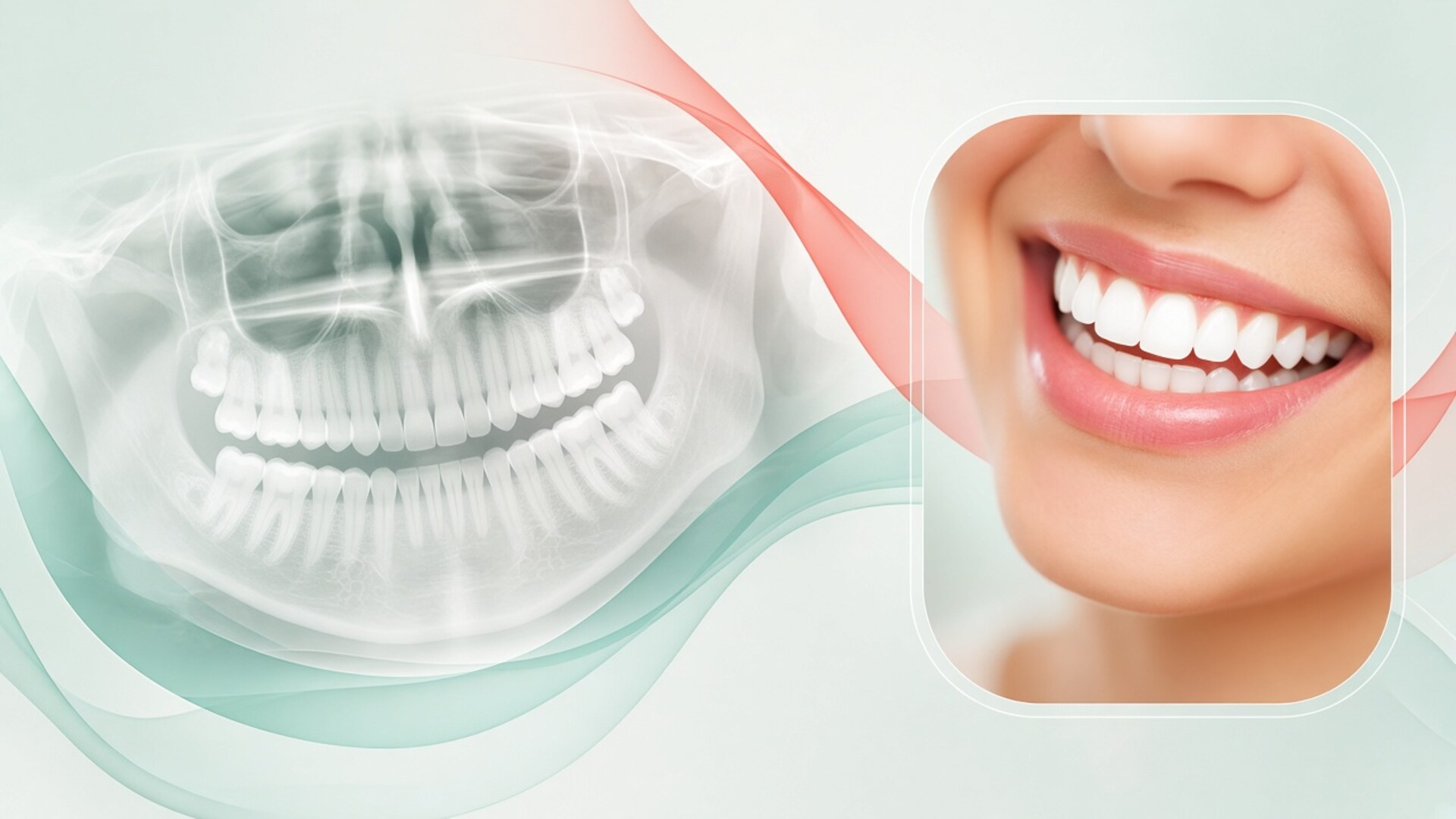
“It runs in our family” is a line I hear more often than “my tooth hurts.” A parent shows their smile, a grandmother’s photo, an older child’s post-braces picture, and asks whether these are hereditary bite problems and whether the younger child is next. I am Dr. Maksut Behruzoglu, a specialist orthodontist in Dubai; I treat family history as a risk map, not a verdict. Genes influence jaw and arch size more than every millimetre of incisor overlap; habits, breathing, early baby-tooth loss, and environment add their layer. A 2023 European Journal of Orthodontics meta-analysis found arch width and length often highly heritable, with occlusal traits more moderate on average. The American Association of Orthodontists (AAO) recommends a first check by age seven. I do not diagnose a child from one parent selfie. Below — what families pass on, where habits sit, how to screen siblings, and what adults can do without fatalism. At pediatric consultation and in orthodontics after 30–40 the tone differs; the logic does not.
What a family actually passes on
Heredity in orthodontics is not one gene for “crooked teeth.” It is a bundle of traits: jaw size and shape, palate width, arch length, crown size, missing buds, sometimes a clear skeletal class. Reviews report moderate to high heritability for many facial and dental dimensions, while overbite and overjet are often more environment-sensitive. So “dad had the same gap” may be tooth size, tongue habit, or both. I collect family history briefly: who wore braces, who lost baby teeth early, who has a Class III type, who snores. Then I examine the person in the chair and on film when indicated. “It runs in the family” becomes a hypothesis to test on exam and film. Below — three Dubai home plots.
“Like two drops of water” — and different plans
A brother and sister can share a similar profile and a different bite. One grew up with long thumb-sucking; the other did not. One lost baby molars early to decay without a space maintainer; the other passed mixed dentition quietly. The genetic background looks alike; the road to occlusion does not. I do not promise the younger child “the same course as the older.” I promise screening inside the same family risk corridor.
Grandmother’s film and today’s mouth
Families bring paper panoramics from home and say “look, we all share this.” An old film is useful as a hint about size and missing buds. It does not prove today’s child in Dubai will walk the same path: diet, allergies, adenoids, sport, hygiene, and access to dentistry have changed. I read the family archive as background and the current exam as the decision.
“If it is hereditary, just wait for growth”
Waiting for growth is sometimes fair. Open-ended waiting “until the jaw catches the teeth” while a space corridor closes is a trap. The AAO asks for a check by seven because growth can be used, not ignored. A hereditary contribution to a narrow arch does not cancel indicated space holding or expansion. It explains why “it sorted itself” worked for a neighbour from another family and not for yours.
Genes, habits, environment: three layers of one mouth
I give parents a simple three-layer model. First — the hereditary frame: jaws, arches, tooth size, rare syndromes. Second — function and habits: thumb and pacifier beyond the usual age corridor, mouth breathing, tongue posture, grinding. Third — environment and chance: decay and early extractions, trauma, broken care after a move. The layers stack. A child with a genetically narrow upper jaw plus chronic mouth breathing arrives with a crossbite more often than a child with the same background and nasal breathing. An adult with a family Class II pattern plus years of wear without a night guard sees a different picture from an uncle at twenty. Below — how I unpack each layer, without promising to find one gene and switch it off.
What I record from the family tree
Who had orthodontics, at what age, whether teeth were extracted for orthodontic reasons, whether relatives show a strong forward lower jaw or a deep bite, whether lateral incisors or second premolars were congenitally missing. Missing teeth and supernumeraries carry a family trail more often than “a slightly crooked canine.” A skeletal Class III in the family raises my attention to mandibular growth in the child; it does not set a diagnosis before the exam. I ask for parent smile photos straight-on and in profile — not to judge their old treatment, but to scale the child’s face.
Habits families blame on “genes”
Long sucking, a pacifier far past the age corridor, a night bottle, a constant open mouth in front of a screen — these are not “hereditary bite problems,” even if mum did the same as a child. A habit can sit in a family as a soothing culture, not as DNA. I separate what has already left a mark in the arch, what can still be wound down with a speech therapist and an ENT colleague, and what already needs an orthodontic basket. Mouth breathing with Dubai allergies is a frequent chair guest; braces will not cure the nose, and ignoring the airway in the plan is a mistake.
Move environments and “two calendars”
After a move to the UAE, families lose notes, skip space maintainers, change dentists. Arch space closes — and it feels as if “genes suddenly appeared” at nine. In fact a corridor closed after early extraction. I ask for extraction dates and old films. Environment here outruns the myth. The reverse picture: everyone in the family “fine without braces,” yet a child with front-tooth trauma and gum scar has a local problem without a family stamp — and still should not be sent home with “your relatives are straight.”
Table: what leans toward family, what toward environment
Heritability numbers in studies are population estimates from twins and families, not a test of your child. I put the table on the desk at pediatric consultation to separate “watch the siblings” from “film now” from “this is not about DNA.” The ranges below lean on reviews and meta-analyses of arches and occlusion (including EJO 2023) and on clinical genetics reviews of malocclusion; exact coefficients drift across papers.
| Trait / situation | Family contribution (guide) | Environment and habits | What parents usually notice | What I offer the family | What I will not promise |
|---|---|---|---|---|---|
| Arch width and length | Often high | Chewing, breathing, early tooth loss | “Big teeth / narrow jaw like dad” | Screen by ~age 7; space and growth when indicated | That the arch will “catch up” from the calendar alone |
| Crowding | Mixed: tooth size + space | Early extractions, space holding | “Same as me at school” | Side-to-side check, bud film | That the younger must copy the older child’s course |
| Overjet | Often moderate / lower than arches | Thumb, pacifier, mouth breathing, lip habit | “Upper teeth forward like uncle” | Habit work + ortho plan | That “family” means genetics only |
| Overbite | Moderate range in studies | Wear, grinding, growth | “Closes deep like mum” | Wear and joint check | A guarantee of “mum’s bite without treatment” |
| Crossbite | Occlusion: environment shows | Chewing asymmetry, breathing, habits | “Jaw shifted to one side” | Early shift assessment | That growth will always self-correct |
| Skeletal Class III / forward lower jaw | Often strong family trail | Growth, function | “Grandfather’s profile” | Growth monitoring, not panic at five | That orthodontics erases all facial genetics |
| Missing buds (agenesis) | Family and genetic trail common | — | Baby tooth “will not fall” | Film; keep / close / hold space | A plan from a chat photo |
| Supernumerary in the incisor zone | Can be familial; often local | — | Front tooth not coming in | Film before another half-year of chat | That “ours always erupted alone” |
| Mouth breathing / adenoid background | Family allergy tendency possible | Dubai climate, ENT status | Open mouth, snoring | Shared plan with ENT, not arch alone | That an expander “cures the nose” |
| Adult “recognises the family” after 30 | Face and tooth background | Wear, recession, old extractions | “I look like dad’s photo” | Adult course / guard / hygiene plan | A face “as at eighteen” |
Three reading rules. First: high family contribution is not fatalism. Second: lower family contribution is not “parents alone are to blame for the pacifier.” Third: the decision still comes from examining this mouth. The table helps ask the right question; it does not replace the chair.
Brothers, sisters, and screening without panic
When an older child already had braces, families either bring the younger “just in case” at five or forget until fifteen. I aim for the middle. The AAO guide for a first visit is by seven; if the family carries a heavy skeletal pattern, asymmetry, or agenesis, I will see earlier on complaint. Sibling screening does not copy the sister’s plan. It answers whether this child lives in the same risk corridor, whether a film is due, whether a review date is enough, whether an early basket is needed. In Dubai it is practical to book siblings on one day — less logistics, clearer comparison of faces and sides. I still keep two charts. Families with three or four children sometimes try to “close the file with one appliance for everyone” after a successful older course. That fails: age, habits, and space differ. A simple family orthodontic calendar — who is on review, who is in retention, who needs a film this school year — calms anxiety more than repeating “it runs in our family” at dinner.
What I compare. Profile and frontal view, breathing, habits, eruption timing, buds on a panoramic when indicated, arch width, midline, crossbite. What I do not treat as a verdict: the older child’s tie colours, course length, or fees in another country. The younger child owns their growth pace. The parent owns one clear dual outcome: “yearly review for both,” “film for the younger this quarter,” “retention for the older, watch for the younger.” If a nanny or a second household missed the visit, I ask you to forward the same sentence in writing — or home turns into “the doctor said wait” versus “the doctor said urgent.”
Twins deserve a note. Twin models produced many heritability estimates for arches. In the chair, identical twins can still diverge on habits and decay. I do not give them one plan “because the DNA matches.” I give two review dates and two talks about daily life. Different eruption timing in twins often sparks parent-chat panic; more often it is different biological pace inside a shared family corridor, which screening catches better than a classmate comparison.
If the older child was treated “back home” and the younger is growing here, bring the older child’s notes: extractions, appliances, retention. That speeds reading family risk. Not to copy the wire sequence — to understand which decisions this facial genetics already met. Films from home help even without perfect labels: I read what exists and add only the clinical gap, not a full pack “because this clinic’s protocol.”
School photos of a younger sibling often trigger screening earlier than an eruption chart: a parent sees “the same profile the older had before braces” and books. That is a fair reason. Bonding the same system “preventively” before an exam names a task is not. Family facial resemblance is a signal to look, not a signal to copy a course.
The adult who recognises a family pattern in the mirror
After thirty, people often look at a father’s photo at the same age and say “that is me.” Incisor wear, deep bite, lower crowding, profile — family background plus twenty years of function. In orthodontics after 30–40 I unpack hereditary bite problems without schoolyard shame and without promising an eighteen-year-old face from another continent. An adult course has another job: occlusion, wear, hygiene, retention, sometimes shared work with a periodontist and restorative dentist. Genes explain why it never sorted itself. They do not forbid tooth movement when the gums allow. In Dubai that layer also meets screen work, stress, grinding, and delayed visits after moves. Below — three common adult plots I unpack carefully in the chair before choosing mechanics.
“Dad lived with it”
He lived. And he wore enamel, lived with recession, chewed on one side. Surviving without braces is not the same as paying no price. I show wear, chips, gum thickness. The decision is yours: watch with a night guard, a limited course, a full course. I challenge fatalism of “leave family bites alone” with facts in the mouth, not with a slogan that everyone over forty must start.
Late child screening driven by adult memory
An adult who suffered crowding brings children early — good, if the visit stays calm. Sometimes adult anxiety outruns the child’s risk: then I set a review date and criteria, not an appliance “so mum can sleep.” The reverse: the adult endured and thinks children should “wait it out.” Then the family pattern is exactly why a screen by seven beats waiting for the child’s own pain at thirty-five.
A move, new films, old genetics
Dubai clinics take panoramics and 3D scans families never had at home. Suddenly an impacted canine or a missing bud appears — a “surprise,” though an aunt had the same. I tie the finding to the family map and to a plan, not to blame of a past dentist. Dose and need for three-dimensional imaging follow a clinical question.
What we can change, and what stays honest background
Orthodontics moves teeth in bone and sometimes uses growth. It does not rewrite all facial genetics. An honest talk sounds like this: which part of your complaint sits inside orthodontics, which inside habits and ENT, which will still resemble a parent even after a straight arch. Patients promised “a model face from another family” leave more disappointed than patients promised a reachable occlusion. I write the goal in one sentence before a contract: “a safer contact pattern,” “less wear,” “prepare for crowns,” “use growth for a crossbite.” If the goal sounds like “stop resembling my father entirely,” we narrow the expectation first. Below — borders I say aloud: growth in a child, camouflage and surgery in adults, and retention that outranks the family myth.
Growth in a child
In mixed dentition, growth is a resource. A narrow upper jaw, a crossbite, some Class II/III patterns are planned around growth peaks. Family background explains why growth may lean “the family way.” Dated reviews catch the moment. I will not sign “the jaw will self-align by sixteen because uncle did” without exam and film.
Camouflage and surgery in adults
An adult with a strong family Class III skeletal type may receive orthodontic camouflage or referral to an orthognathic team. Choice depends on face, occlusion, gums, expectations. “Family means surgery only” and “family means mail-order trays only” both skip the exam. I lay baskets after diagnosis.
Retention outranks the myth
A family tendency to lower crowding often outlives any course. A retainer is part of the plan, not a footnote. Adults who drop retention “because dad’s teeth held themselves” return with relapse and blame “bad genetics.” Genetics here is an argument to wear retention, not to discard it out of spite toward a parent.
A plan after “it runs in our family”
I turn the phrase into four steps. First: examine the person in the chair — child or adult — with complaints and indicated films. Second: a short family map without judgement. Third: a basket — dated watch / early task / full course / adult mechanics with retention. Fourth: which siblings to invite and when. In Dubai I add logistics: who flies for summer, who has exams, whose policy carries an orthodontic limit. The insurer’s administrator confirms cover; I do not invent policy tariffs.
I break fatalism in one patient-language sentence: “family sets the corridor; habits and timing decide where you sit inside it.” To a child I say simpler: “your teeth may match mum in size; we can still give them space and a straight row.” To an adult: “your profile may echo your father; we can still make wear and contacts safer.” If night fear hits after the consult — “the kids are doomed” or “it is already too late” — the answer is criteria and a date, not an endless chat of other people’s photos.
Expat families sometimes wait for “all adult teeth” from home-country habit, or demand hardware at five “because everyone in our line is crooked.” I refuse both automatics. Screen, film when there is a question, plan for this mouth. A second opinion is welcome. Hereditary bite problems are a reason to watch a family more carefully, not a reason to put hands down.
Dubai life adds one more practical layer. Siblings in different schools, a nanny who never saw the older child’s retainer rules, grandparents abroad who still push a pacifier “because it worked for the parents.” I write the family plan in plain sentences the household can share: who is watching, who needs a film this term, who is in retention, who is only on a calendar. Without that shared sentence, “it runs in the family” becomes a vague anxiety that never turns into a booking.
If you already started treatment elsewhere and arrived with a USB of films, bring the family story too. Transfer care reads faster when I know whether agenesis, Class III growth, or early extractions sat in the last generation. I still rebuild the plan from today’s mouth; I do not copy a relative’s old wire sequence as destiny.
Another frequent plot: an adult starts a course and brings the children “while I am already coming.” Logistics help. I still separate goals: your course is about wear and occlusion; the child’s visit is a screen. I will not bond children “because the parent is in braces” without indications. A family day in clinic can end with three different baskets — a normal outcome of careful exams, not a refusal to treat “hereditary problems.”
Expat chats sometimes sell fatalism in soft packaging: “Asian jaws,” “European profiles,” “nothing works in our ethnicity.” Ethnicity and family background can shift prevalence of some patterns; they do not cancel examination, growth monitoring, or adult care. I treat the mouth in the chair. Population averages stay in the research folder, not in the treatment contract.
FAQ
Are crooked teeth always hereditary?
No. Jaw and arch size often carry a strong family contribution, while overjet, crossbite, and tooth displacements lean more on habits, breathing, and early baby-tooth loss. We separate layers on exam; one family photo is not enough.
If both parents had braces, does the child need them for sure?
Not for sure. Risk is higher, screening matters more, and the plan follows the exam. Some children stay on dated watch. Some get an early space task. I will not copy a parent’s course onto a child.
From what age should we check a sibling if the sister already had treatment?
AAO guidance points to no later than seven; earlier if there is a complaint, asymmetry, family agenesis, or a strong skeletal pattern. At pediatric consultation both can come the same day with different conclusions.
Can a child “grow out of” hereditary bite problems?
Growth changes the face and sometimes improves relationships. Closed space, a crossbite with a jaw shift, and a missing bud do not heal from the passport alone. Dated review with criteria decides, not hope from the family album.
Can an adult after 35 still treat a “family bite”?
Often yes, if the gums allow and the goal is clear: occlusion, wear, alignment. In orthodontics after 30–40 heredity explains background; it does not ban a plan. I do not guarantee a face “as at eighteen.”
Do we need a genetic test for the bite?
In ordinary orthodontic practice, no. Rare exceptions go through oral-surgery and genetics colleagues when a syndrome is suspected. A family questionnaire and indicated films beat a home DNA kit from an ad.
Pacifier versus heredity — which matters more?
Both can stack. A long pacifier on a narrow hereditary arch costs more than the same habit on a wide one. I read today’s mark in the bite and what is still reversible, rather than arguing who is to blame.
What should we bring to a consult about a family bite?
Parent and sibling smile photos, old films, a list of who had orthodontics and any congenitally missing teeth, dates of early extractions. That saves a month of guessing. Diagnosis still comes from examining the person in the chair.