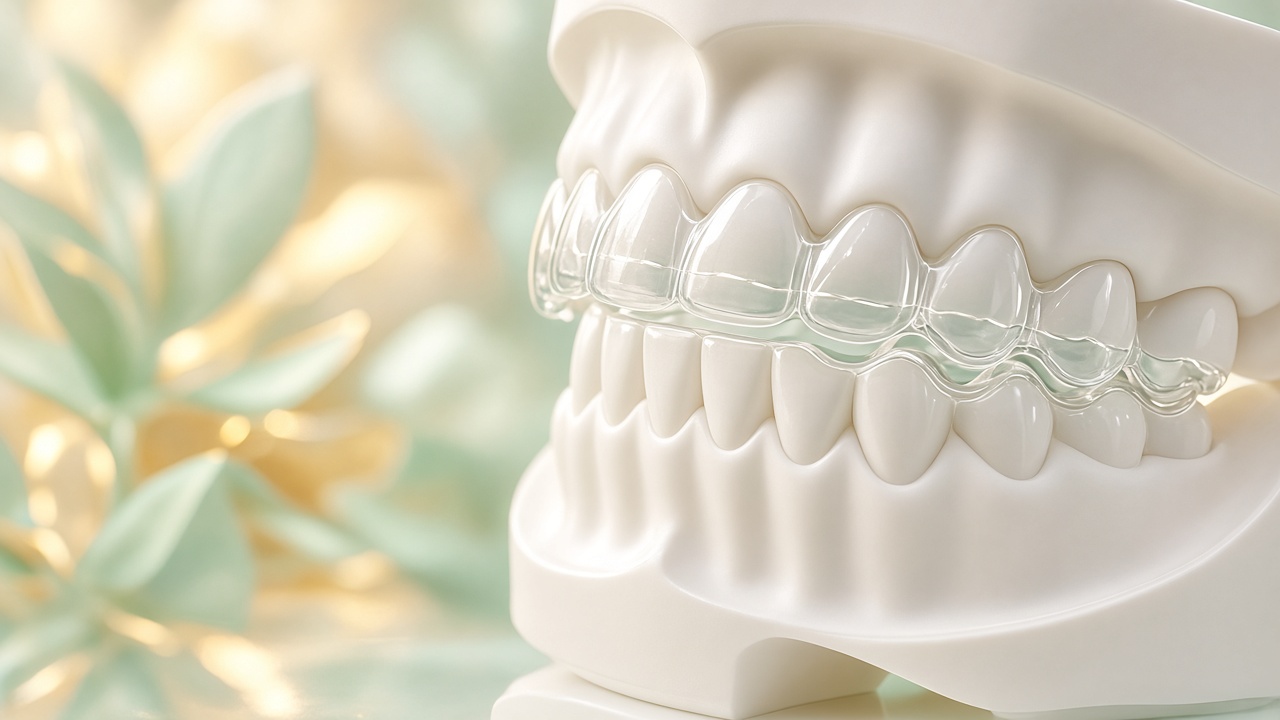
Parents search “braces for kids age” and want one number: seven, twelve, or “after all baby teeth are gone.” Medicine answers with a map, not a slogan. The American Association of Orthodontists (AAO) recommends a first orthodontic check by age seven — a growth and eruption screen, not an automatic start of children’s braces. A full fixed course more often begins near the end of the mixed dentition, frequently in early teens, when most permanent teeth are in and growth still helps. Early care is sometimes needed, but it is usually a different job: expansion, space holding, limited braces, habit support — not “every bracket now like an adult.” I run a pediatric consultation in Dubai after years in Istanbul. Below is when braces for a child usually fit, why “earlier forever straight” often breaks the plan, and how a teen course connects. I do not set start age from a messenger photo; the exam and films write the timing. If you are comparing your child with a classmate, compare panoramics and problem lists — not only passport age. The same passport age in Dubai often hides different dental ages — that is normal, not a reason to panic.
Age-seven screening is not bonding day
Seven is a useful point on the growth chart. By then many children have first permanent molars and incisors, and an orthodontist can see jaw growth and where buds are heading. The AAO stresses: if a problem shows earlier, do not wait for the birthday. If the child is already nine or ten with no check, you have not “missed forever.” Screening splits three outcomes: watch with a dated return, a short early phase, or a full course later. Mixing screening with “glue metal at seven forever” is a common school-chat and marketing error.
On the first visit I read the face, bite, hygiene, habits, and a panoramic film when needed. The parent leaves with plain words: “we watch,” “a narrow phase now,” or “we wait for the permanent dentition for a full course.” For the child the visit should be predictable — no surprise “we bond everything today.” I show instruments and explain that screening is talk and measurement, not punishment. Five questions I say out loud: is there a problem; what options exist; is an appliance needed now; what watch schedule if it is early; what timing window makes a start real. Clarity can sound like “see you in six months,” and that is still a plan.
Dubai families often move countries and bring folk rules: “only after all baby teeth,” “a plate for every five-year-old,” “braces ruin enamel.” We test each rule on this child’s facts. Inheritance affects tooth and jaw size, but start timing follows the eruption map, not the family album. A sibling with early expansion does not write the younger child’s path. Mixed families also bring different insurance expectations from different countries — UAE orthodontic cover must be checked with the policy administrator before a contract, without promises “like back home.”
Language matters. “Get braces” in daily speech can mean four brackets on incisors or a full two-arch course. I translate into exact words before the agreement. Otherwise a family thinks they bought “a little help” and receives a full package — or expects a miracle from a four-bracket segment for a year. In the note I write: limited arch / full course / removable phase — so a month later nobody argues about what was purchased.
Screening prevents two expensive mistakes. The first is missing a growth window (for example transverse narrowing with a functional shift). The second is starting a full fixed course while half the permanent teeth are still in bone, so the plan is rewritten every few months. The first costs time and trauma risk; the second costs money, child fatigue, and trust. If the pediatric dentist never mentions an orthodontist, that is not a ban on booking: a referral is not required. You can bring the child when bite, crowding, or habit questions appear.
Another household myth: “if baby teeth are straight, permanent teeth will be too.” Permanent teeth differ in size; growth rebuilds the arch. Straight baby teeth do not cancel screening. Crooked baby teeth do not always demand immediate braces. We read the system, not one selfie tooth. The myth “if it does not hurt, it is too early for an orthodontist” fails the same way: screening catches quiet problems before pain — supernumerary teeth, canine path issues, transverse deficit. Pain is a poor navigator for start age.
When a full braces course usually fits
A full braces course controls most permanent teeth in three planes. It needs a stage: most permanent teeth in the mouth, roots ready enough for planned mechanics, hygiene that can carry brackets for months, and a child or teen who understands food and cleaning rules. Passport age is a guide, not a switch. One child may have a nearly complete permanent dentition at ten or eleven; another’s mixed phase runs to fourteen. I read the dental map and growth, then the Dubai school calendar. Parents often bring a chat line — “everyone in class already has braces” — sociology, not diagnosis. Before age talk I ask for fresh smile photos and any older panoramic: a year of change speaks louder than rumours. Three pillars I use to decide a full course is ready — or still early — follow.
The dental map beats the birthday
A common corridor for full courses is late mixed or early permanent dentition: permanent canines and premolars are in, or clearly on the way with a readable path. If many baby teeth remain and large permanents are only “coming,” a full bracket set is often excess. Limited appliances can serve a narrow job. Waiting can be right. Promising an adult-level final smile on half a dentition is not.
Parents hear “everyone starts at twelve” and book. Twelve is a frequent corridor, not a law. A child with early eruption and dense crowding may start sooner. A child with late eruption and a calm bite may start later. Teen braces follow the same logic: mouth and household readiness, not a birthday invitation date. I ask families not to steer by the class chat: one Dubai classroom can hold two to three years of dental-age difference at the same passport age.
Growth still helps — and there is something to work on
In early adolescence jaw growth can still enter the plan. That is one reason not to park an indicated full course “until university.” On the other side, a too-early full course on an unfinished mixed dentition stretches bracket years and raises burnout risk. The clinician balances enough teeth for mechanics, enough growth for the job, and enough maturity for hygiene.
Girls often hit peak growth earlier than boys — another reason not to copy a classmate’s age. Cephalometrics and clinical exam beat school-parent rumours. If the skeletal pattern is marked, an early orthopaedic phase can matter more than early “cosmetic” brackets on two incisors — I name priorities out loud so the family does not buy a pretty secondary package.
Hygiene, caries, and the child’s agreement
Brackets collect plaque. If caries is active, gums bleed constantly, and cleaning is near zero, we stabilise the mouth first. Braces on sick enamel produce white spots and cavities faster than a “straight row” delights anyone. The child’s agreement is a filter too: a two-year course without minimal cooperation becomes breakages and missed visits. I do not require excitement; I require rule understanding and an adult ready to support the routine.
Dubai’s dense international-school calendars and sports clubs add another layer. Starting a full course in a week of three exams raises refusal. Sometimes I shift bonding by two or three weeks into a break: orthodontics survives that wait more often than a teen’s nervous system. Soft food for the first day and wax in the pencil case cut panic better than “you’ll get used to it.”
Why not sooner: risks of an early full course
Wanting to “start early so we debond before graduation” is understandable. An early full course without indication often fails to shorten the finish and lengthens life in metal. Reviews on orthodontic timing (including 2017–2023 work comparing early versus later starts for several problems) show that routine early full alignment does not automatically win on outcome or cost for every child. Early treatment is selective. “Braces for every eight-year-old” is anxiety marketing, not a standard. In the chair I separate a parent’s fear of missing a photo date from a clinical window where an appliance truly changes a path. If the only start argument is someone else’s graduation calendar, I offer a review date and a red-flag list for earlier calls. Three risks I name when a family asks for a full course too early follow.
Rewriting the plan at every eruption
While permanent canines and premolars are still en route, the arch and space keep changing. Brackets on early teeth get removed, rebonded, and wait for neighbours. The child lives in appliances longer. The parent pays for months spent waiting on biology, not finishing mechanics. Sometimes that is unavoidable with hard indications. Often watchful waiting plus a short non-full phase avoids it.
I show on the panoramic which teeth are still “in transit.” Parents accept waiting more easily when they see buds, not an abstract “too early.” Write this consult question: “Which teeth are missing for a full course, and when do you expect them?” The answer should be concrete.
Fatigue and burnout from metal
Two or three extra years in braces raise “I’m done” risk: worse cleaning, more loose brackets, pressure to remove “already.” Then a permanent-dentition phase is still needed — with less motivation. I prefer a short meaningful early phase plus a full course at readiness over endless metal “just in case.”
A junior schoolchild’s psychology differs from a teen’s. An eight-year-old may tolerate a limited arch; a full aesthetic demand “like my older brother” is often alien while the lifestyle limits are already real. Dubai adds cross-border moves: a course started too early breaks at clinic and visa joints. One coherent course beats three fragments.
A false sense of “fixed forever”
An early pretty incisor row is not the finale after canines erupt. Space can tighten again; contacts change. Families celebrate early removal, skip reviews, and arrive at fifteen asking why teeth look crooked again. Early success without a watch plan misleads. Every early phase I run ends with the next screening date, not “never come back.”
Separately: promises of “start early and there will be no second phase.” Early work sometimes simplifies phase two. Medicine does not guarantee cancelling a full course. An honest contract separates what we do now from what we reassess after the permanent dentition. If the paperwork only says “forever straight,” ask for a rewrite before paying the lab.
When early braces or phase 1 still make sense
“Not sooner” does not mean “never before twelve.” Some jobs make waiting for a full permanent dentition harmful or risky. The AAO describes early (interceptive) care as a tool for selected problems while baby teeth remain: crossbite, marked jaw discrepancy, habits, eruption problems, trauma-prone protruding incisors. The appliance may be removable, a fixed expander, or limited braces. The aim is to intercept, guide growth, create space — often with the understanding that a later course may still follow. I write the early-phase goal in one chart sentence: if the sentence will not form, the phase is not ready. In Dubai I add sports and school trauma risk for incisors — sometimes tooth protection outranks an aesthetic calendar. Three scenarios where I more often discuss an early fixed or combined phase follow.
Crossbite and functional shift
If a child closes with a lower-jaw shift driven by a transverse conflict, waiting for it to “grow out” can lock in asymmetry. Early expansion or targeted mechanics are sometimes indicated in the mixed dentition. Here “earlier” means on time, not “for a prettier photo.” Growth checks and repeat measures are mandatory. A useful parent question: how will we measure improvement in six months — midline, transverse contacts, shift complaints?
Trauma-prone incisors and marked proclination
Strongly protruding upper incisors raise fracture risk on playground falls or contact sport. An early phase may reduce prominence. That talk is about protecting a tooth, not a yearbook. A sports mouthguard still applies. In Dubai rugby, hockey, and combat clubs are common in international schools — the sports calendar enters timing decisions alongside the panoramic.
Space, retention, missing or extra buds
A panoramic may show a supernumerary, a missing bud, or a canine aimed at a neighbour’s root. Sometimes we need guided baby-tooth removal, a space maintainer, or a limited arch. Four to six brackets are not “a full course for a little kid” — they are a micro-job tool. I explain the difference before bonding so the family does not expect a perfect smile from a segment. If someone offers a full bracket set because one canine looks awkward on film, ask which part of the work is urgent and which can wait for the permanent dentition.
Two-phase care (phase 1 + pause + phase 2) is not for everyone. Reviews stress that for many problems one timely full course beats two mandatory phases “by tradition.” I recommend two phases when an early problem will worsen with waiting or when psychosocial or trauma benefits of an early phase are clear. If an early phase is offered to “every child,” I would ask for measurable goals and success criteria at six to nine months. The pause between phases is not a forgotten patient: it is observation with dates, photos, and sometimes a repeat film.
Age, stage, and expectations: one table for the talk
Families ask me to “just name an age.” I answer with a grid: age corridor × typical job × usual decision × expectation trap. Numbers below are consult talk ranges, not online prescriptions. A child with atypical growth, trauma, or a syndromic history falls outside any table — the exam decides. Before the table I usually draw a simple ladder: screening → narrow phase if indicated → full course at readiness. Mixing the rungs is how families buy extra brackets and extra tears.
| Age corridor | What we often see | Common decision | Full braces? | Typical expectation trap | Ask the doctor |
|---|---|---|---|---|---|
| Under 7 | Habit, crossbite, mouth breathing | Earlier screen if concerns; sometimes a narrow phase | Rarely a full course | “Time to bond everything” | Red flag now, or watch? |
| ~7–9 | Mixed teeth, jaw growth | AAO screen; plate/expander/limited care if indicated | Usually no | “Screen = bonding day” | What changes in 6–9 months? |
| ~9–11 | Late mixed dentition | Selective phase 1; watch; space prep | Sometimes limited | “Once started, finish to ideal now” | Will phase 2 be needed, and why? |
| ~11–14 | Early permanent dentition | Common full-course corridor | Often yes if indicated | “Earlier start = shorter course” | Are dental map and hygiene ready? |
| ~14–16 | Teen, near-adult arch | Full course / teen braces | Yes if indicated | “Too late — wait until 18” | How do growth and sport enter the plan? |
| After 16–18 | Growth finishing | Adult format; surgery talk in some skeletal cases | Yes | “Childhood was the only chance” | What orthodontics still offers without surgery |
The table is a talk frame. Exam, photos, and films set the plan — not a blog row. In Dubai I add school calendars and travel: starting a full course a week before a six-month stay abroad without reviews is its own risk. If tickets are already bought and the family wants “bonding before the flight,” I more often offer a screen and a written start date after return than a rushed bond without follow-up. Orthodontics tolerates a conscious pause better than a chaotic start without support.
Money and expectations sit beside the table. An early phase plus a later full course can cost more than one timely full course. That is not an argument never to treat early; it is an argument to count phases honestly. Ask whether observation between phases is in the package and what happens if phase 1 progress allows a shorter phase 2. Transparency here reduces conflict two years later more than any “sign today” discount.
How to decide on a Dubai consultation
On a pediatric consultation I first hear the family request: “braces by this year,” “the dentist said it’s time,” “a classmate already has them.” Then I translate into a list: which problem, what risk in waiting, which appliance now, which success measure, what chance of a second phase. If those points stay blank, I do not bond “for parental calm.”
Useful parent questions: How many permanent teeth are in, and which are missing for a full course? What happens in a year with no appliance? Why braces rather than watch or another phase? How will we measure progress? How does the plan meet exams and sport? What is an honest phase-2 probability? If a doctor promises “bond at eight and never again,” treat that as marketing until a second opinion.
Russian-speaking and other expat families often compare with home-country age habits and plate rates. I lean on the exam, AAO screening guidance, and timing literature — not market custom. A second opinion is fine: a good age plan survives scrutiny. Bring film copies on a stick or in the cloud so opinions compare the same data, not different memories.
For an anxious child the first visit may end with introductions only. Pressure for “impressions and brackets today” fits poorly with two years of cooperation. Consent builds on clear steps. Sometimes I draw a simple timeline: now / in six months / when permanents gather — so the child sees it is not “metal forever tomorrow,” when that is true for their case.
If night fear of “missing the moment” hits after the consult, the answer is criteria and a review date — not an impulsive full course. Braces age for a child is a product of mouth readiness and the job. Readiness is checked, not guessed from ads. Put the next visit in the family calendar next to school vaccines: orthodontic screens disappear easily between emirate moves.
What to tell the child and school before start
Even when age and indications match, start fails on logistics. I ask parents to explain the course without threats: why brackets, how many months until a visible early shift, that short soreness follows bonding and wire changes, how to eat in the cafeteria. Teens keep a voice in small choices — ligature colour, bonding time versus exams. Younger children get a predictable visit script and permission to say “I’m scared” without mockery.
A short teacher note may cover a few days of speech adaptation. Wind and drama clubs need a separate timing talk. Sport: a mouthguard over braces when indicated, contact-game rules. Dubai school nurses vary in orthodontic experience; wax in the pencil case beats hoping the nurse’s office is stocked. A small bag kit — wax, soft brush, interdental brushes, water — cuts cafeteria panic.
Hygiene before bonding is a filter. If the child does not clean without brackets, cleaning with brackets will be worse. A cleaning drill and professional hygiene belong in prep as much as impressions. I delay start for active caries more often than I “speed for age.” Sweet school snacks without brushing worsen any braces age: that household lever sits with the family more than any magic start date.
Separately: “debond by this graduation at any cost.” School calendars matter, but periodontal biology and mechanics matter more than one album photo. Sometimes we accelerate finish within reason; sometimes it is cleaner to move the photo expectation than to wreck occlusion quality. Hold that talk before bonding, not a month before the ceremony. If graduation is six months away and the dental map is not ready for a full course, I say so: a good start after the ceremony beats a rush for one picture.
FAQ
What age can a child get braces?
A common full-course corridor is about 11–14 when the permanent dentition is ready, but the dental map, growth, and hygiene decide — not a round birthday. Earlier, limited braces or other appliances may fit. Age is not set from a photo online. If you only heard “everyone at twelve,” ask for a read of your child’s film.
Why does the AAO talk about age seven if braces come later?
Seven is a first-check and screening guide, not the age of full bonding. By seven many growth and eruption issues are already readable. Treatment starts only with a job and in its window. Mixing screen with glue is a common error. After screening, a dated watch plan is a normal outcome — not a same-day full-course contract.
Can braces go on baby teeth?
Limited fixed appliances in the mixed dentition sometimes serve a narrow goal. A full adult-style course on baby teeth is usually the wrong tool. The doctor should name which teeth carry brackets and why. Without that line in the chart, a segment is easy to confuse with full treatment.
If we start earlier, will treatment be shorter?
Not necessarily. An early full start without readiness often lengthens wear while waiting for eruptions and rebonds. A timely course on a ready map is often shorter. Duration follows plan and cooperation, not a wish to “start yesterday.” Ask how many promised months will be spent waiting for neighbouring teeth.
Does every child need two-phase treatment?
No. Two phases fit early problems that are unsafe or harmful to wait out. Many children need one full course in the permanent dentition after observation. “Two phases for everyone” without a measurable early goal deserves questions. Ask for phase-1 success criteria before paying.
What if the child is already 15 with no braces history?
Not “too late.” Teen and adult courses work. Growth helps skeletal change less, but dental jobs remain solvable. Exam and films are needed; other options may enter the talk. “Should have started at twelve” helps younger siblings — it is not a verdict on the older one.
Do braces at 8–9 ruin enamel?
White-spot and caries risk track hygiene and diet at any braces age. Younger children often clean less well — so an early full course needs tighter plaque control. Age eight does not “ruin enamel”; poor care with an appliance does. Scheduled professional hygiene is part of an early course, not optional.
Where should we book if start age is unclear?
Book a pediatric consultation with the question “screen / early phase / full course.” Bring old films if you have them. For teen formats also see teen braces and children’s braces. An exam-based decision is calmer than any age myth from a chat.