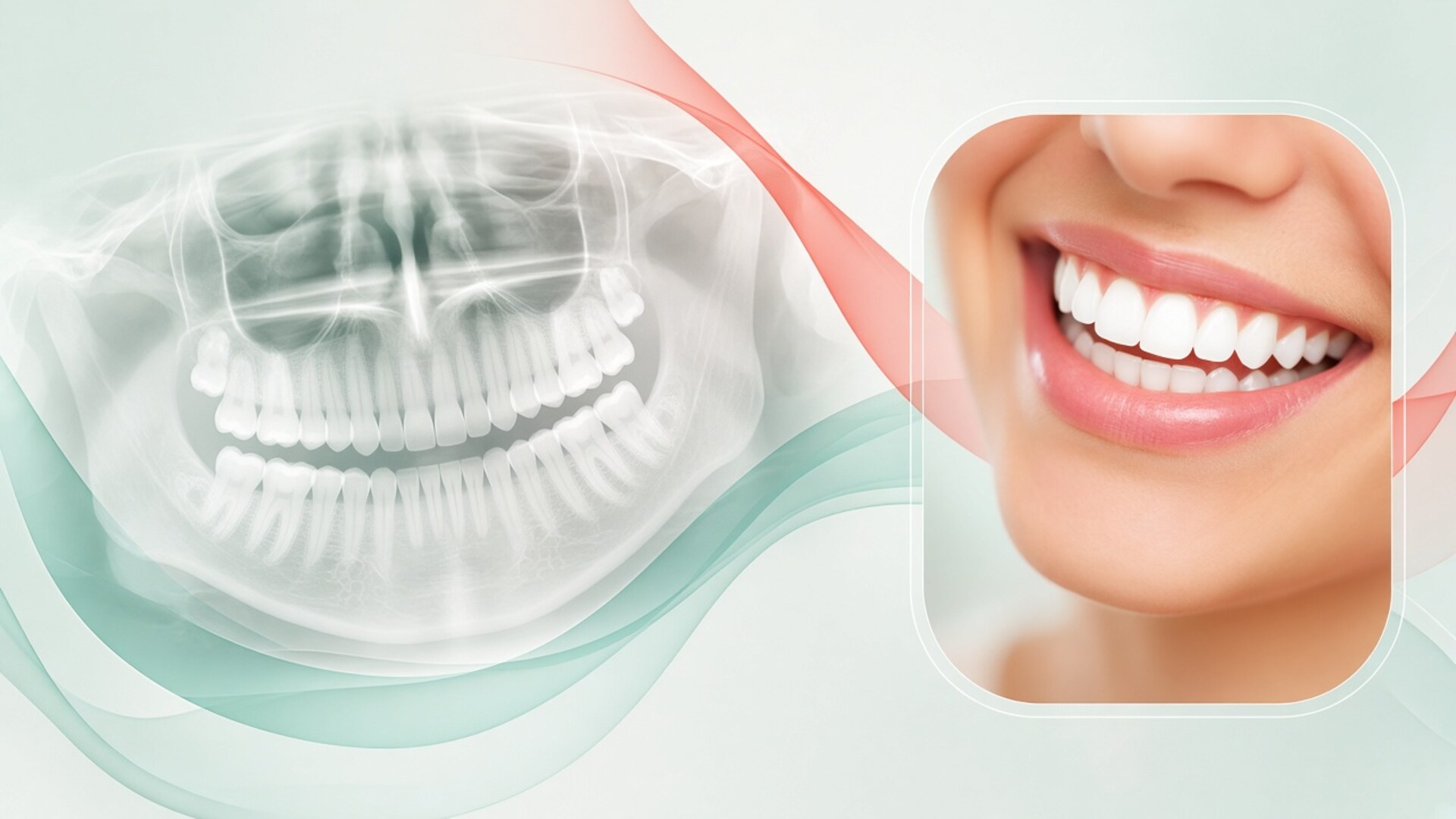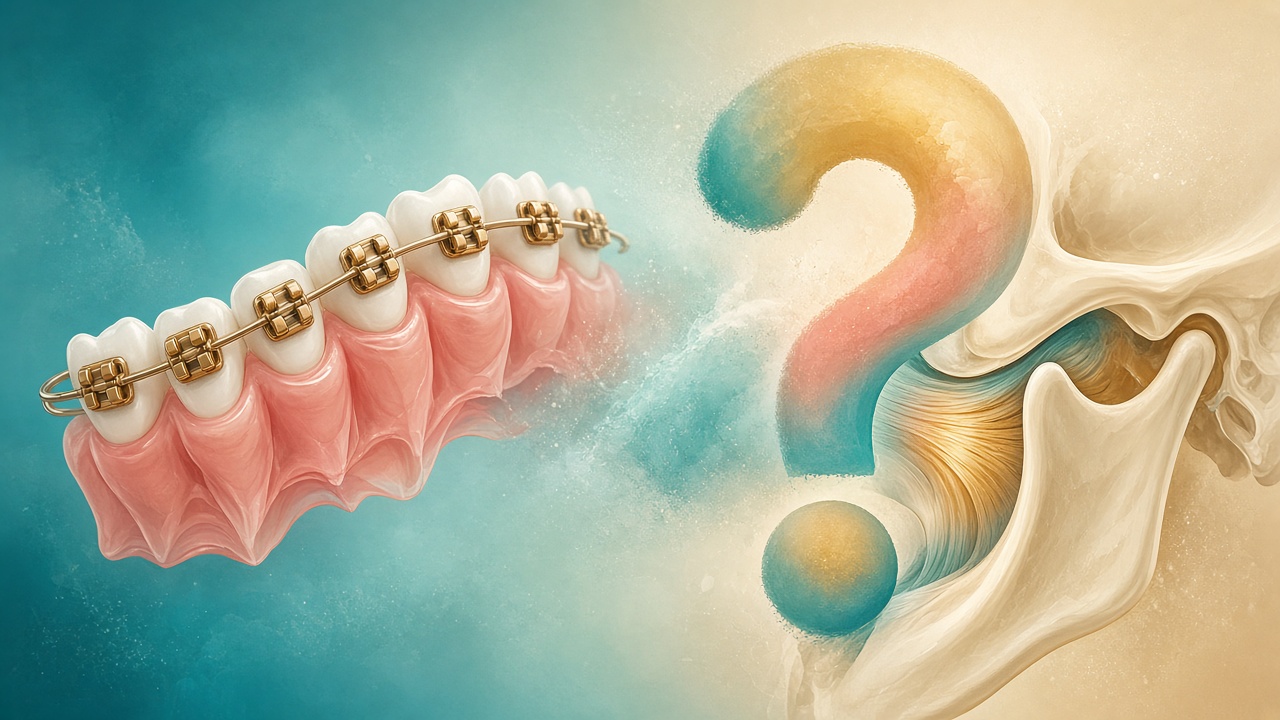
Ear noise and a blocked-ear feeling often sit next to the words “jaw” and “joint” in search. Sometimes nearby anatomy explains part of the picture: the temporomandibular joint sits close to the external ear canal, chewing muscles and ligaments can refer sensations toward the ear, and a patient with chewing pain and a click describes “my ear feels full.” Often the driver is ENT — wax, Eustachian tube, middle ear, sensorineural tinnitus, vascular or medication factors — and the joint is coincidence or a weak multiplier. I am Dr. Maksut Behruzoglu, a specialist orthodontist in Dubai; on TMJ treatment and TMJ diagnosis paths I keep the wording maximally careful: joint and muscles may contribute in some people; they are not the automatic cause of every noise and every fullness. I do not cancel an ENT exam with “it is definitely TMJ.” I do not diagnose from a phone recording of the sound. Below — when a link is plausible, when ENT should lead first, what I check in the chair, and what I refuse to promise.
Why ear and jaw get glued into one story
The joint, the external ear canal, and the chewing muscles share one anatomical “apartment” of the face. Condyle pain is pointed to next to the ear and labelled “ear pain.” Referred muscle pain, pressure, a click on opening read easily as an ear problem. Search serves reels on “tinnitus and jaw” — and the hypothesis is ready before exam. I respect that hypothesis as one working line. I do not make it a verdict for every tinnitus.
Marketing tightens the glue: “fix the bite — end the noise.” The line sells an appliance. In the chair I translate it into testable questions: is there pain and limit on chewing, does joint or muscle palpation reproduce the ear sensation, what did ENT say, how does the noise sound (constant, pulsatile, tied to chewing). Without that translation you buy an expectation the clinic does not owe.
Dubai adds flights, cabin pressure swings, dry air-conditioning, long headset hours on calls. The Eustachian tube and the hearing system react on their own. If in the same month a jaw click appears, two events fuse. My job is to separate coincidence from possible contribution. Below — how anatomical neighbourhood works without pseudoscience.
Neighbour anatomy: joint, muscles, and ear-zone sensations
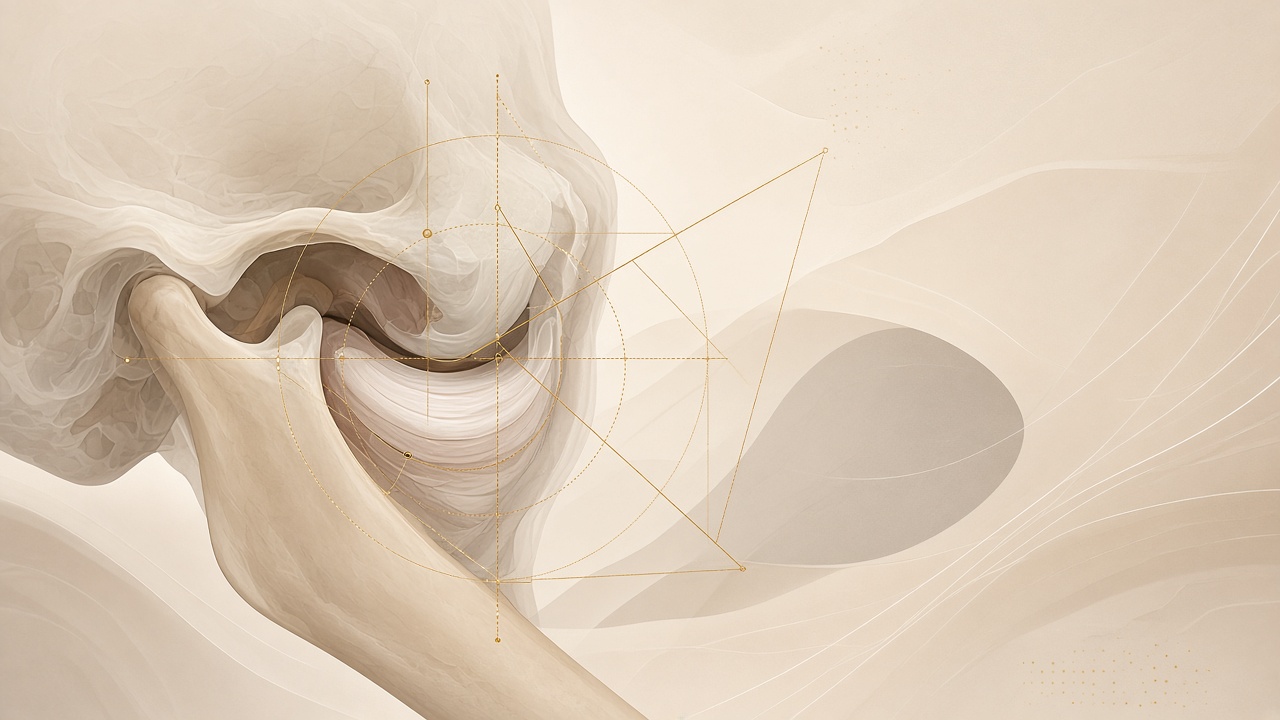
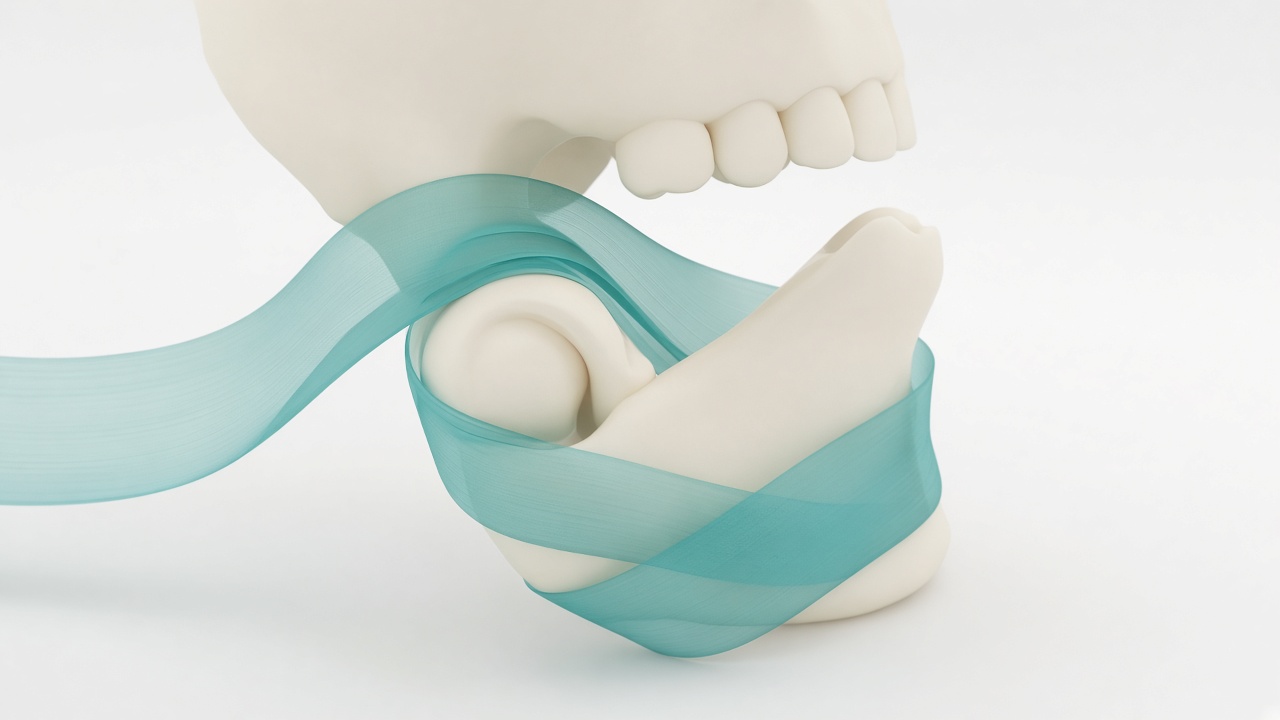
The temporomandibular joint sits anterior to the external ear canal. Condyle, disc, ligaments, and chewing muscles under overload or inflammation can give pain, pressure, a “something in the ear” feeling in some patients. That is referral and proximity, not proof that every noise is born in the joint. Classic sensorineural tinnitus has other mechanisms — cochlea, central sound processing, vessels, medicines, age, workplace noise. An orthodontist does not replace audiology. Neighbourhood anatomy explains why a finger points to the ear for joint pain, and why the clinician must split layers in words. Inside TMJ diagnosis I gather the joint and muscle layer and say clearly when ENT should lead. If today’s exam does not reproduce the ear sensation with jaw load, I record that honestly. Below — three sensation layers patients mix.
Pain and pressure “in the ear” on chewing
If the sensation rises with chewing, wide opening, clenching, or palpation of chewing muscles or the joint zone — a muscle–joint contribution becomes more plausible. If noise and fullness live their own life day and night with no jaw link, and ENT has not yet seen you — the ear route comes first. I ask patients to map gestures: where it hurts on a yawn, where on tragal pressure, where on tooth clench. The gesture map is often clearer than the word “ear.”
Swelling, discharge, fever, sudden hearing drop, vertigo with vomiting — urgent ENT and medical scripts. Orthodontic talk waits.
Jaw click and “it clicks in the ear”
A condyle click is sometimes heard “inside the ear.” That is a mechanical joint sound, not necessarily tinnitus in the audiology sense. Without pain and limits many clicks are observed; with pain and limit we deepen diagnosis. I separate “I hear a click when I open” from “a constant hiss or ring without jaw movement.” Mixing both into one phrase confuses the plan.
Patients after trauma or a long dental visit with the mouth open describe temporary fullness and fatigue. Often that is a muscle trail. If symptoms do not settle or they rise — exam, not weeks of “it will pass” while things worsen.
Fullness, “pops,” and the Eustachian tube
Fullness, a need to yawn, “pops” on swallowing more often lead to the Eustachian tube and middle ear than to occlusion. Allergy, colds, flights, pressure difference — frequent authors. The joint may coexist; it does not cancel ENT. I do not brand “tube dysfunction from the bite” as a universal label. If ENT finds an ear cause — the orthodontic plan follows dental and joint facts separately, without a promise to cure the tube with braces.
When a joint link may be plausible
A link is possible, not obligatory. A plausible chain: joint or muscle signs (chewing pain, limited opening, painful click, tenderness) plus ear sensations that rise or change with jaw load; ENT has not found acute ear disease that must lead, or ENT referred you to a TMJ clinician. The wording stays “possible contribution,” not “cause at 100%.” Response to unloading can strengthen or weaken the hypothesis. If ear symptoms stay while muscles and joint are quiet — we return to ENT. In TMJ treatment consults I name that fork before appliances. One-sidedness does not prove joint guilt: otitis is one-sided too. Bilateral ringing after years of workplace noise is a weak “TMJ only” candidate. Pulsatile noise is a vascular and ENT red flag, not a tray job. Below — three forks where I keep “may be related” tight.
Chewing pain plus ear pressure without red flags
If pressure or fullness rises with chewing and palpation, and ENT has already ruled out acute otitis and discharge, a muscle–joint contribution becomes a working hypothesis. I start with unloading and a response check, not immediate braces. I tell the patient in advance: the answer may be partial; noise of another character may remain.
A timeline after a new crown or a long open-mouth dental visit strengthens this branch. Height adjustment by the restorative dentist sometimes clears ear pressure faster than a tray. I coordinate; I do not compete.
Painful click and “noise only when I open”
A mechanical click the patient hears as “ear noise” on jaw movement often belongs to the joint as a movement sound, not to cochlear tinnitus. Unloading, range, and imaging when indicated sit on the TMJ diagnosis path. Promising that every hiss will vanish after a splint is wrong here: we address joint sound and pain when they exist.
If the click is painless and the hiss is constant with no link to movement — priority shifts to ENT and audiology, even if the joint looks “interesting” on a film.
Coexistence: ENT background and clenching together
A cold, allergy, a recent flight plus daytime work clenching often live together. Then the plan is mixed: ENT leads the tube and mucosa; the orthodontist leads muscles and contacts. I do not claim the ear stage for myself or hand chewing pain to “drops only.” Hearing two specialists in one week helps more than waiting for a winner in a messenger thread.
When ENT should lead first
ENT or urgent care lead for ear red flags and for complaints where joint contribution is weak or untestable. An orthodontist is not the first room in these plots. Even with a known jaw click, worrying ear signs outrank a TMJ reel. I record ENT visits and audiograms in the chart before discussing a long joint course for the ear. Patients sometimes arrive with “ENT gave nothing — treat the joint”; I translate that into facts: what was examined, whether audiometry happened, which red flags were ruled out. Without that translation it is easy to start a tray on someone else’s theory. If no ENT note is in hand, I still refer in parallel rather than “close the ear” with a joint label. Below — three situations where I almost always put ENT first or strictly in parallel.
Ear red flags and urgent routing
Ear pain with fever or discharge; sudden hearing loss; vertigo with nausea and vomiting; pulsatile noise; ear trauma; progressive hearing drop; neurological signs. An orthodontic slot does not replace urgent ENT or emergency care. I say that plainly even if the patient came “only to check the bite.”
Delaying until Monday for sudden hearing loss is something I do not support. The joint can wait; hearing cannot.
Chronic tinnitus without chewing clinic
Constant ringing or hiss for years without chewing pain, without limited opening, without reproducible palpation — a reason to start with audiology and ENT. I can exam the joint and muscles as a contribution screen; I do not replace an audiogram with a bite scan. An empty joint exam beside loud tinnitus is an honest result, not an orthodontist’s failure.
Patients bring a note “noise from TMJ” without ENT exam. I rebuild the base and often send to ENT in parallel. Second opinions are normal practice.
Medicines, headphone noise, and everyday amplifiers
Some antibiotics, anti-inflammatories, blood-pressure drugs (not a list for self-stopping), caffeine, nicotine, loud metro headphones in Dubai — factors ENT and the GP weigh. An orthodontist records them in the history and does not promise “remove braces and the noise ends” if the mechanism is drug- or noise-related. Turning headphone volume down sometimes helps more than a new tray, and I say that without irony.
What I check for noise and fullness
History: when ear sensations started, link to chewing and yawning, flights, colds, ENT visits, audiograms, medicines, grinding, new crowns, trauma, orthodontics. Then face, range, joints, muscles, contacts, wear. I ask whether the noise changes with opening, clenching, palpation. If it changes — muscle–joint contribution rises in test priority. If it does not — I honestly record no such link on today’s exam. When indicated — dental films, panoramic radiograph, referral for joint MRI inside TMJ diagnosis, and a clear reminder about ENT if that visit is still missing. Decision only after the contour. AED fees after a plan with a price-list date. Patients sometimes expect me to “confirm ear-from-jaw” in ten minutes; I spend time refusing that formula when the facts do not hold it. Below — three blocks before promises.
Ear and jaw timelines beat a smile selfie
Noise that began with otitis and outlived it, and fullness that appeared a day after a high crown with chewing pain, are different ribbons. I draw events on paper. Without a ribbon any click looks guilty of decade-old tinnitus.
Patients after moving to Dubai link noise to “pressure” or air-conditioning. Sometimes sleep and headphones change, sometimes ENT background. Clinical anchors beat arguing with a household theory.
Palpation and the test “does the ear change with the jaw?”
In one visit I gather a muscle and joint map and check directly: does the familiar ear sensation rise with chewing load and palpation? Yes — the hypothesis stays alive for an unloading test. No — I do not sell a long joint course for the ear. No response to a splint for ear complaints is a signal not to raise tray height at random, but to return ENT priority.
Fragmented rooms — one clinic promising “noise from the bite” without ENT, another treating the ear while ignoring clear chewing pain — leave holes. I close my contour and name who else to call.
When I postpone orthodontics
Acute ear disease, sudden hearing loss, pulsatile noise, unclear neurological pattern — a poor moment to start forces “to treat the ear.” ENT and stabilisation first. Orthodontics remains a tool for dental tasks and, when contribution is confirmed, for occlusal stabilisation — without a guarantee of silence in the ear.
What helps and what I do not promise
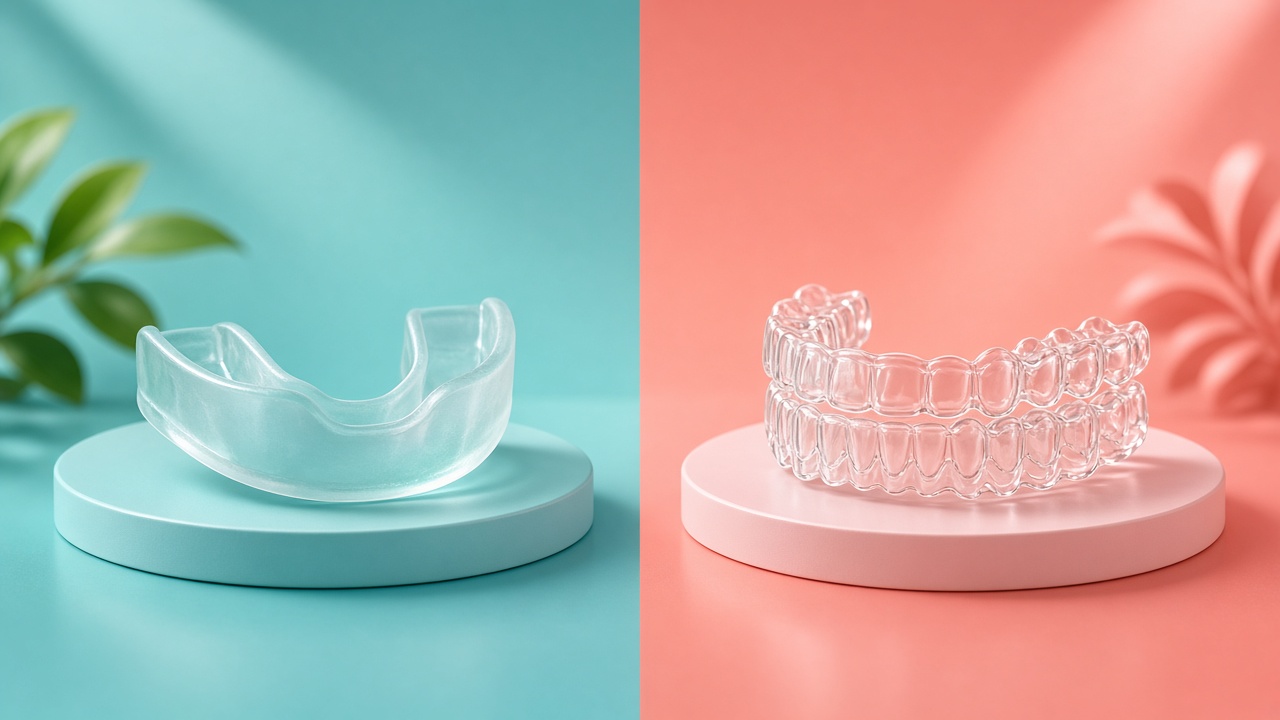
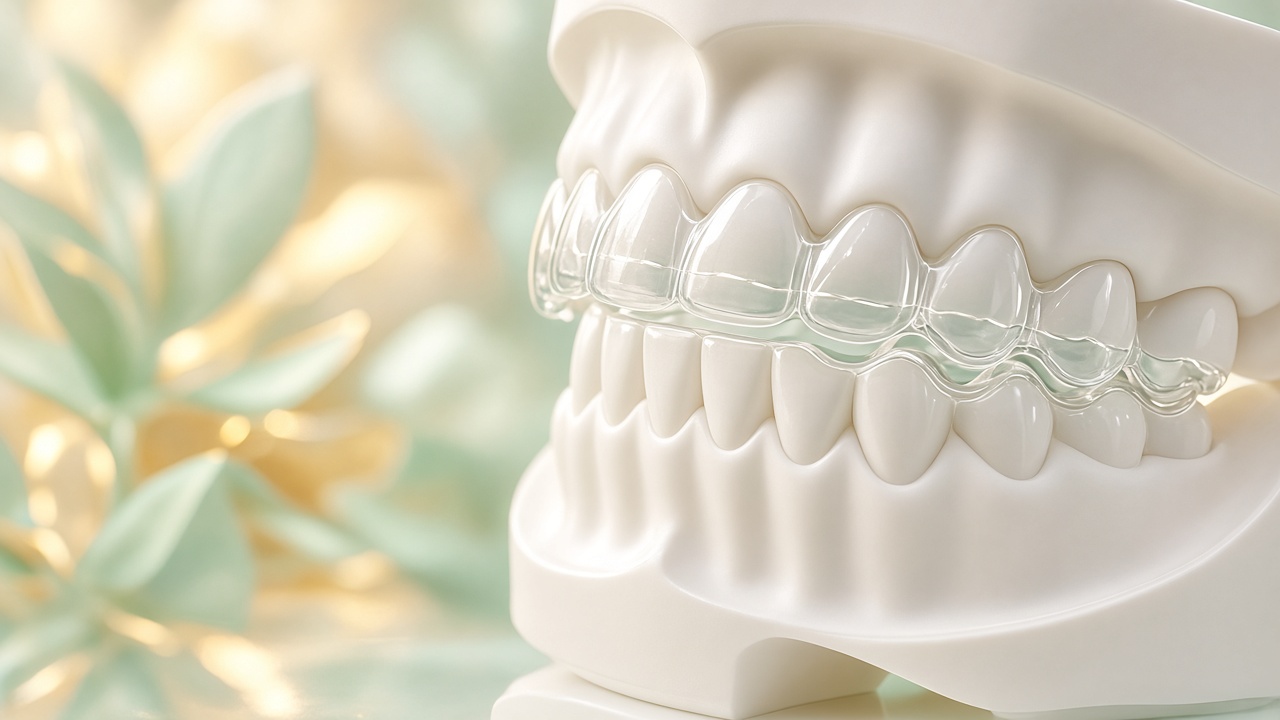
What helps addresses the layer found: ENT care for an ear cause; unloading and a splint for muscle–joint contribution when indicated; clench hygiene; correction of a clear occlusal interference; physiotherapy by referral; orthodontics for a freestanding dental task after stabilisation. Combinations are possible. I do not give a promise that “fix the joint and the noise is gone forever.”
I do not promise: treating every tinnitus via the bite; cancelling ENT; diagnosis from a phone sound file; guaranteed timelines. I promise: careful wording of contribution, response checks, and ENT referral when my specialty border is reached.
Patients after a string of “miracle jaw massages” from a feed sometimes arrive with louder noise and more pain. I do not support hard manipulations outside a clinic. If hearing drops or pulsatile noise appears after such a session — the path is urgent ENT, not a new tray “just in case.” Gentle techniques under a physiotherapist’s referral are a different talk: indications, review, and stop rules exist there.
In Dubai, city-hopping flights in one work week are common. Fullness after a third takeoff and a jaw click on airport clenching glue into one culprit easily. I draw two columns: pressure and tube on the left, chewing and joint on the right. Without columns, marketing beats facts again.
The table below is consult talk, not self-diagnosis.
| Complaint pattern | What leads first | Role of joint / muscles | Who else I call | What I refuse to promise |
|---|---|---|---|---|
| Fullness after a flight | ENT / tube | Usually weak | ENT | “TMJ” without ear exam |
| Noise + chewing pain + click | Joint, muscles, ENT screen | Possible contribution | ENT in parallel | “Tray cures tinnitus” |
| Constant bilateral ring for years | Audiology, ENT | Often low | ENT / audiologist | Braces for noise |
| Pulsatile noise | Urgent ENT / vascular path | Not the lead | Urgent routing | Home “jaw resets” |
| Ear pressure on work clench | Muscles, habit | Multiplier possible | Habits, splint when indicated | Orthodontics alone |
| Ear pain + fever / discharge | ENT urgently | Joint plan waits | ENT | Wait it out as “stress” |
| Noise after new crown + chewing pain | Height, contact, muscles | High contribution possible | Restorative dentist, ENT | Ignoring the restoration |
| Painless click + mild cold-related fullness | ENT, joint observation | Coexistence | ENT | Aggressive click treatment |
Rows are guides. Two often coexist: a cold plus clenching, a flight plus a click. The plan is mixed too. I write who leads the first week.
Borders of orthodontics for ear complaints
Orthodontics moves teeth and contacts. In some patients with confirmed muscle–joint contribution, ear-side pain and chewing-linked pressure fall. Constant sensorineural noise may remain. I build that uncertainty into consent. A beautiful arch does not equal silence in the ear.
Patients ask: “ENT found nothing — so it must be the joint?” Absence of an acute ENT finding does not automatically prove TMJ guilt. Positive joint and muscle signs are needed, and preferably a response to unloading. An empty ENT exam plus an empty joint exam lead to further search, not immediate braces.
Inside TMJ treatment and TMJ diagnosis I hold this border every day. Marketing that “ear noise is cured by the bite” is loud. In the chair, your history, palpation, and ENT notes speak louder.
Aligners and braces change contacts. If ear sensations rise in treatment, I unpack tray clenching, height, joint, and parallel ENT background — without shame that “you wear them badly.”
Children: ENT pathology and adenoids often sit closer to fullness than an adult TMJ script. I do not copy the adult label. Parents hear that “it clicks like the adult reel” after a cold more often leads to ENT than to an immediate tray “like mum’s.”
Everyday steps before appliances: teeth apart by day; less hard gum in an acute phase; no video “jaw resets”; for ear red flags — ENT, not waiting for the orthodontist. Loud headphones in traffic are not cured by a splint. Dry office air-conditioning in Dubai amplifies fullness for some people with allergy — again an ENT layer I do not mask with a joint label.
Physiotherapy for chewing muscles and gentle techniques by referral fit a muscle contribution. Hard self-massage of ear and joint to bruises I do not support. If noise or pain rises after a home session, stop and see a clinician — first the one closer to the lead symptom.
Ear drops and medicines belong to ENT and the GP. I do not invent an ear scheme by eye. Coordination matters if you already take drugs for noise or blood pressure: a splint and orthodontics sit beside that care, not instead of it.
UAE insurance codes ENT, joint MRI, and orthodontics differently. Coverage is confirmed by the policy admin or third-party administrator (TPA). If you self-pay, we rank what lowers pain and hearing risk now and what can wait without risk.
A review after unloading shows whether chewing-linked ear sensations move. If quieter — we record contribution. If the noise is unchanged with a quiet jaw — we do not enlarge the orthodontic volume for the ear; we return ENT and audiology priority. No response is a clinical fact, not a reason to “raise the tray a little more.”
Anxious monitoring of every hiss deepens suffering. I recognise that and still build the plan on clinic, not night searching. A seven-to-ten-day diary marked “linked to chewing / not linked” is often clearer than an hour of reels.
Foreign audiograms and ENT reports I read to the extent they are readable. Bring originals and DICOM if joint films exist. A poor translation is worse than an honest “data are thin.”
Speed expectation: muscle pressure by the ear sometimes answers in days to weeks of unloading. Chronic tinnitus keeps its own rules. Orthodontics changes contacts over months. I do not glue three calendars into one promised week.
I also fix complaint language. “Blocked like on a plane,” “thin whistle,” “noise with the heartbeat,” “crunches when I chew” — different maps. If vocabulary shifts from chewing-linked to vascular or infectious, I shift the route the same day, not wait for a “planned” orthodontic slot.
Second opinions are welcome after conflicting advice: “only a tray,” “only drops,” “braces now for the noise.” I rebuild the base without offence to prior rooms. Patients from DIFC and Marina often collect three opinions in a week of flights; I ask for all three texts, not an oral retelling.
AED fees for the ENT stage, joint diagnosis, and orthodontics I name separately, with a price-list date. Mixing “noise treatment” and “smile alignment” into one promised package without facts is not something I do. An honest estimate keeps trust longer than an ad about “ears from the bite.”
Patients after a long dental session with the mouth open sometimes think “they broke the joint and now it rings.” Often that is temporary muscle fatigue. If noise or fullness rises, hearing drops, or pain comes with fever — the path is to ENT, not only to the orthodontist who seated the crown. I advise restorative colleagues to warn patients about possible jaw fatigue after a long visit — it lowers panic and night searching.
Musicians, pilots, divers, and frequent flyers bring a special history: pressure, mouthpiece, stage. I do not turn a profession into a diagnosis, but I record the load next to the joint. Sometimes a routine change is enough; sometimes a full ENT and joint contour is needed.
I practise in Dubai after Istanbul and see the glue line in several languages: noise plus a click plus a ready culprit from a feed. The unpack takes time. Exam and the ENT route decide more than another reel about “ears from the bite.”
FAQ: ear noise, fullness, and the jaw
Can TMJ cause tinnitus?
In some people the joint and chewing muscles may contribute to ear-zone sensations, especially with chewing pain and a link to jaw movement. That is not the automatic cause of every tinnitus. The wording is “may be related,” not “always related.” Exam — and often ENT — is required.
If ENT found nothing, is the joint guilty?
Not necessarily. Absence of an acute ear finding does not prove TMJ guilt by itself. Joint and muscle signs and a hypothesis test are needed. Sometimes the search continues with adjacent specialists.
Will a splint stop ear noise?
A splint can lower muscle load and sometimes ease ear pressure or pain tied to chewing. It does not guarantee that chronic tinnitus will vanish. Response is individual.
When should I see ENT urgently?
Sudden hearing loss, pulsatile noise, severe ear pain with fever or discharge, vertigo with vomiting, ear trauma. Do not wait for an orthodontic slot.
Should I get braces specifically for ear noise?
I do not place orthodontics “specifically for noise” without a dental task and without confirmed contribution. If a dental task exists — we discuss it separately, without promising ear silence by a fixed date.
Is post-flight fullness the jaw?
More often the Eustachian tube and pressure participate. The joint may coexist. Start with ENT assessment if fullness is stubborn or painful; the orthodontist joins when chewing and joint signs are present.
Can I tell a joint click from tinnitus myself?
A click usually ties to opening and closing. Tinnitus often sounds without jaw movement. Self-diagnosis is not enough: both can coexist. You need an exam.
Can this be solved online from a noise recording?
No. A recording helps describe the sound. Palpation, ENT exam, audiometry, and the plan are in person. I do not assign “joint guilt” from a messenger file.