Adults search “braces and snoring” when a partner complains about night noise and a feed promises “straight teeth equals quiet sleep.” Fear and hope sit beside the query: align the bite and “clear apnea,” expand the jaw with trays and forget CPAP, bond braces and wake up someone else. I am Dr. Maksut Behruzoglu, a specialist orthodontist in Dubai; inside adult orthodontics I separate the dental task from the airway task. Orthodontics changes tooth position and sometimes helps conditions for nasal breathing or bite stability; it does not replace obstructive sleep apnea diagnosis and does not promise to cure snoring with one wire. If daytime sleepiness, witnessed pauses, or morning headaches are present — a sleep clinician or ENT route comes first when indicated, while we also examine bite and joint. Below — what is known, what is oversold, where the joint meets TMJ care, and why I will not approve a snoring plan from a selfie.
Why snoring entered the orthodontic conversation
Snoring is vibration of soft tissues in the airway during sleep. Causes vary: blocked nose, large tongue, excess weight, evening alcohol, soft-palate anatomy, lower-jaw position, age, and muscle tone. Bite and tooth position are one layer, not the only switch. Adults hear “orthodontics treats sleep” in ads and bring that line as an order. I hear the order and unpack symptoms: snoring alone, snoring plus choking, morning joint pain, or wear from clenching.
Dubai adds AC dryness, late dinners, flights, weight gain after a move, project stress. A partner records snoring and sends the file to the orthodontist. The file is a signal to seek sleep assessment. It does not replace polysomnography and does not prove “braces are required.” I thank them for the recording and ask about daytime sleepiness, blood pressure, nose, weight, alcohol, and prior ENT exams.
Shame blocks clarity. Adults fear the word “apnea” and want “just a straight arch — maybe snoring will leave.” I do not sell hope. I draw a fork: dental goal on its own; airway goal with specialist colleagues; joint pain separately. Paths sometimes cross. Sometimes they do not. A hotel roommate on a work trip and a partner’s sleepless night raise pressure to “do something orthodontic fast.” Fast without diagnosis moves the noise elsewhere. With bright red flags I offer screening and referral the same consultation day; the dental plan waits calmly if the dental goal is still primary.
Comparison with a friend “who got trays and stopped snoring” breaks expectations the same way stranger smile before-and-afters do. You do not see their apnea index, weight, nose, alcohol, or appliance type. Someone else’s anecdote does not replace your exam. At consultation I allow the stories and return to your symptoms and films.
What orthodontics can actually change in the airway
Tooth and jaw position influence oral volume and where the tongue “parks” at rest. Incisor retroclination, a narrow arch, deep bite, and a distal lower jaw are discussed beside snoring in recent literature in some cases. An adult skeleton is largely finished: “expand the jaw like a child” with orthodontics alone often cannot mean the same thing as in growth. Surgically assisted expansion, orthognathic surgery, and soft-tissue ENT surgery are other floors of care. I name the floor before promising quieter sleep. Dental-sleep reviews stress that a dentist may sit on a team, while airway diagnosis and effect control stay with sleep medicine. In the chair I collect airway flags first, then draw dental amplitude — so hope for silence does not replace the incisor plan. Below — three honest layers on bite and sleep at adult orthodontics consultation.
Dental volume and tongue space
Crowding and a narrow arch reduce space for the tongue to rest without pressing teeth. Some adults feel easier closed-mouth daytime breathing after alignment. That is not proof of apnea treatment. It is possible soft-tissue comfort in a given anatomy. I record the complaint before treatment and recheck after, without replacing sleep diagnosis with a “feels better” survey.
If the tongue is large and the arch narrow, the plan may include an interdisciplinary view: ENT, sometimes myofunctional care when indicated. Orthodontics alone does not shrink a tongue. A promise that “braces will seat the tongue and erase snoring” does not appear in my plans.
Forward lower-jaw posture and night appliances
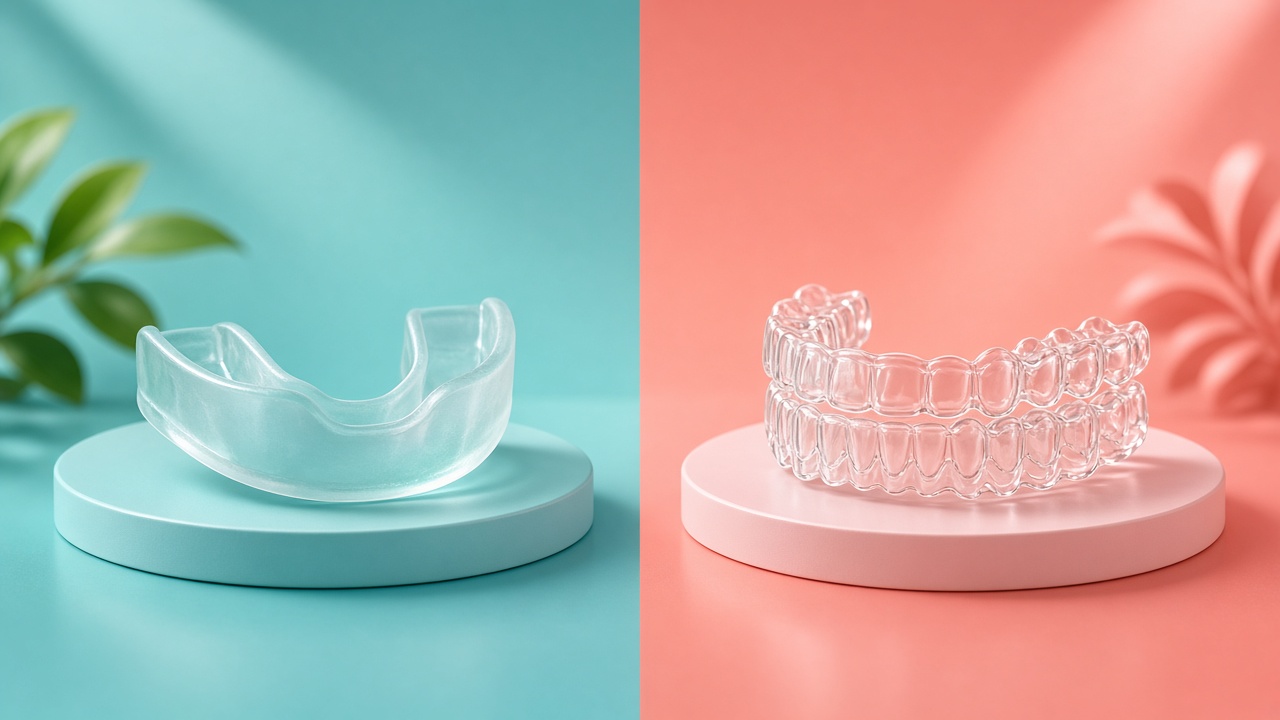
Appliances that advance the lower jaw for snoring and apnea are a separate device class, often in dental sleep medicine — not the same as alignment trays. Confusing “snoring trays” with orthodontic trays damages expectations. The first hold the jaw forward at night when indicated and after diagnosis. The second move teeth by plan. I separate those words aloud on visit one.
If a patient already wears a mandibular advancement appliance from a sleep clinician, I plan orthodontics so we do not break airway therapy without agreement. DIY bite “tweaks” for snoring without a team are a bad idea. A joint protocol sometimes includes an orthodontic pause or staging.
Surgery and the skeletal floor
Heavy skeletal disharmony sometimes links to a narrower airway. Orthognathic surgery with an oral and maxillofacial surgeon can change airway space in some patients; that is not a side bonus of braces and not a promise to drop CPAP. I refer for specialist review when skeleton and sleep complaints require that talk. Braces in surgical preparation are a stage, not a surgery substitute and not a sleep-physician substitute. Even after major skeletal work, airway control stays with repeat sleep assessment — not with a smile photo.
What is oversold: myths about braces for snoring
Ad language loves a short arrow: bond an appliance — snoring vanishes. Clinical reality is longer. Snoring can remain with straight teeth if the nose is blocked, weight rose, evening alcohol stayed, or the soft palate vibrates by its own anatomy. Snoring can ease without orthodontics if someone loses weight and treats rhinitis. Time correlation with a braces course is not causation. I ask adults not to paste someone else’s social before-and-after into their contract.
I am especially careful with lines like “aligners cure apnea” and “adult upper-jaw expansion removes CPAP.” In a growing child, expansion is sometimes discussed differently. In an adult without skeletal help, “like a child” is often false. Even with surgery, airway response is individual; effect control belongs to a sleep specialist, not to arch beauty on camera. Another myth: “if I snore, I need an orthodontist.” Sometimes you need ENT. Sometimes endocrinology. Sometimes a sleep physician and CPAP as first-line care for confirmed severe apnea. An orthodontist may sit on the team. An orthodontist is rarely the only player.
Evening alcohol, sleeping tablets, dry AC air, and daytime mouth breathing are factors patients and ENT control better than a wire. Adults blame braces when snoring returns after a holiday of late dinners. I return the talk to a habit diary beside the activation calendar. Weight loss in people with excess mass often moves snoring more than cosmetic incisor alignment in sleep research; I place that fact beside the plan without playing coach.
The table below collects typical promises and what I say in the chair. It is a talk frame, not an internet diagnosis.
| Promise in a feed | What can be true | What I do not promise | Who joins the team | Check before orthodontics | Honest limit without an exam |
|---|---|---|---|---|---|
| “Braces will stop snoring” | Tongue space / bite may change | Guaranteed quiet sleep | ENT / sleep clinician by symptoms | Nose, weight, sleep screen | Snoring ≠ apnea diagnosis |
| “Trays = apnea therapy” | Advancement devices when indicated | That aligners = apnea therapy | Dental sleep / sleep medicine | Device type and diagnosis | Confusing trays is risky |
| “Adult expansion like a child” | Sometimes SARPE / surgery | Same without skeletal help | Surgeon + orthodontist | CBCT / skeletal analysis | Growth is closed |
| “Straight arch = normal AHI” | Subjective comfort possible | Normalising apnea index | Sleep lab | Polysomnography when indicated | Selfies do not count AHI |
| “TMJ pain — braces for snoring” | Bite and joint linked in some | That snoring is cured via joint pain | TMJ assessment | Function, muscles, clenching | Pain ≠ snoring automatically |
| “No more CPAP after braces” | Rarely after major skeletal work + review | Dropping CPAP “by smile” | Sleep clinician decides | Repeat sleep test | Self-stopping is dangerous |
| “Kids get this — adults same” | Shared tissue principles | Child growth for adults | Age-stage assessment | Skeletal stage | Different protocols |
| “Snore recording = bond trays” | Recording = reason to assess | Appliance prescription by mp3 | Sleep screening | Questionnaires, oximetry when indicated | Audio ≠ treatment plan |
I allow patients to bring ad screenshots. We read a table row, not guilt about snoring. Shame moves diagnosis poorly. A symptom list moves it. I prefer a short expectation sheet on paper to a year-later fight: what we measure on teeth, what stays with sleep medicine, what the patient controls with weight, nose, and alcohol.
Snoring, apnea, and the orthodontist’s competence border
Obstructive sleep apnea is a medical diagnosis with consequences for blood pressure, heart, driving safety, and daytime life. Screening questionnaires help decide who needs further referral. They do not diagnose in an orthodontic chair. If red flags are present, I refer rather than “align first, look later.” Alignment with undiagnosed severe apnea may run in parallel only when a sleep route is already started or agreed; airway safety outranks incisor aesthetics.
Mild snoring without apnea and severe apnea are different worlds. Marketing blends them. A treatment contract should not. I state clearly: an orthodontic plan may include bite goals and team work with sleep care; a promise to “cure apnea with braces” is not in my plans. If a patient already uses CPAP, orthodontics does not cancel the mask by wish. Any change in sleep therapy is a sleep clinician’s decision after review. I can tell a colleague about planned jaw-relationship changes when relevant.
Children versus adults. A parent may bring a teen with snoring and expect “expansion as therapy.” An adult reads pediatric protocols and tries them on. Age context is mandatory. This text is about adult requests; child growth and adenoids are a separate talk with the right specialists. UAE insurance wording may cover sleep testing differently from orthodontics; the insurer’s administrator confirms cover — I do not promise payment. If polysomnography was done abroad, I ask for key-number translation and the treating clinician’s contact so we do not start a dental course in a vacuum.
An audio file proves sound exists. It does not choose between ENT surgery, CPAP, an advancement tray, weight loss, and orthodontics. Bonding braces “tomorrow from an mp3” is poor medicine. I take the recording as a screening prompt; in parallel I collect a dental complaint if one exists.
Bite, clenching, and sleep: where the joint meets the story
Night clenching and grinding often live beside sleep complaints, but they are not synonyms for snoring. Enamel wear, morning jaw-muscle fatigue, clicks, and pain near the ear are reasons to assess TMJ function and habits. Sometimes an occlusal splint for muscles and joint is the first step, with alignment later. Sometimes orthodontics enters after pain stabilises. Sometimes snoring and joint pain are independent: we treat both routes separately. I collect sleep and joint history in one visit so we do not “treat snoring with braces” when the person needs a splint and sleep assessment. I do not diagnose joint and snoring from a photo online. Below — three junctions patients most often confuse after a noisy night and morning ear-area pain.
Clenching, wear, and a false “snoring from the bite”
A partner hears sound. The patient feels tired muscles in the morning. The link “so the bite causes the snoring” is tempting. Often bruxism and soft-palate vibration run in parallel as different phenomena. A splint may cut joint and tooth load without removing snoring. Orthodontics later may remove traumatic interferences. Order follows clinic findings, not an internet scheme. Photos of worn canines and a pain diary help keep goals separate. If joint pain is loud, I do not place alignment force first without stabilisation. Stress and shift work in Dubai amplify clenching; a wire does not treat stress.
Clicks and disc displacement beside snoring
A click alone does not prescribe braces and does not prove apnea. Clinical assessment of range, muscles, and one-sided chewing habits is required. With pain and limited opening, a TMJ route outranks incisor aesthetics. Snoring at that point is a separate questionnaire, not the same diagnosis. If the click is silent and snoring carries red flags, the sleep route matters more again. I do not “treat a click” with a quiet-sleep promise. Referrals to a joint colleague and a sleep clinician can leave the same day without a turf fight.
Stress, shift work, and miracle hopes from a wire
Dubai stress, deadlines, and shift schedules are a common bruxism background. Orthodontics does not remove stress. It may remove traumatic occlusal interferences by plan after diagnosis. I remove the expectation “straight teeth equals infant sleep” before the contract. Evening alcohol and muscle relaxants increase snoring in some people and change muscle tone; adults blame a “crooked bite” until an honest evening ritual is written into the history. Jet-lag trips can add temporary sleep noise for weeks — a diary separates travel from biomechanics.
How I build a plan when snoring is in the complaint list
First, goals in the patient’s words: straight arch, pre-prosthetic setup, less wear, less joint pain, “quieter for my partner.” If “quieter” tops the list, I start red-flag screening and referrals. In parallel, standard orthodontic diagnosis: photos, scans or impressions, OPG, CBCT when needed, bite analysis. I examine the joint clinically; with pain — an extended protocol and a link to TMJ treatment. I do not start force “for snoring” without understanding airway status; written consent fixes the frame: airway effect is not guaranteed. If the dental goal is strong and the sleep route is still running, orthodontics may start in parallel only with that caveat and a sleep clinician contact. Appliance choice follows biomechanics and daily life, not a snoring slogan. Below — three practical start blocks when braces and snoring share one complaint.
Red flags where orthodontics is not first-line
Witnessed pauses, night choking, marked daytime sleepiness, sleep-related crashes, known severe untreated apnea — sleep route first. I can examine the bite in the same period, but I do not sell a wire as a CPAP or testing substitute. A referral letter with complaint wording helps the patient keep the thread between rooms. If red flags are absent, snoring is mild, and the dental goal is clear, orthodontics may proceed with an honest sleep caveat. Aligners, metal, or ceramic follow biomechanics and lifestyle — not a “best for snoring” ranking.
What we record “before” besides the smile
Weight range in the patient’s words, nasal blockage, evening medicines, alcohol, sleep side, prior ENT surgery, presence of CPAP or an advancement tray. A two-week partner snore diary beats one viral video. Full-face profile and frontal photos with relaxed lips help the jaw-position talk. I ask patients not to change sleep therapy on their own “during braces.” Marketplace “snoring trays” over a wire cause debonds and false calm.
How we measure expectation and what about retention
“Partner sleeps better” is subjective and fragile. “Close a gap and align incisors” is measurable on models. I keep separate scales. If both matter, both enter the plan with different success criteria. Mixing them into “treatment worked because snoring is quieter” creates conflict when the arch is straight and snoring remains from the nose. Course length follows tooth biology and attendance; snoring does not speed remodeling toward a wedding date. After debonding we hold the arch with retention; if airway comfort changed, we recheck over time — weight, nose, and age move. A retainer does not replace a snoring talk a year later.
Three ad slogans I unpack before the contract
Adults bring slogans from feeds as well as symptoms. Unpacking slogans before payment prevents a straight arch meeting the same snoring a year later with a sense of betrayal. I prefer short disappointment at consultation to a long conflict after debonding. Recent reviews and professional-society positions converge on caution: dental appliances have indications for certain breathing disorders, but they do not replace assessment and do not promise a universal apnea cure by smile. Patients may bring ad screenshots; we read them as marketing, not as a plan. I state refusal of a quiet-sleep guarantee aloud before payment. Someone else’s clip titled “apnea gone after trays” does not belong to you. Below — three lines that sound most often beside braces and snoring.
“Aligners will expand the jaw and open breathing”
Aligners move teeth by a set plan. In adults, skeletal transverse upper-jaw size often does not change the way childhood midpalatal expansion does. Promising “invisible trays equal child expansion” confuses mechanics. Dental tip can create a wider-looking smile without real skeletal airway gain. I show on the model what travels: crown, root, suture. If a skeletal floor is needed — we talk surgery and team, not plastic magic. Subjective tongue comfort is possible; an apnea-index report is not without sleep follow-up.
“After braces you will not need CPAP”
CPAP is prescribed and stopped by the clinician managing apnea, usually after a control study. A straight arch on camera does not equal normalised night breathing pauses. I have seen adults remove the mask themselves “because teeth are straight” and return with daytime sleepiness. My orthodontic plan states plainly: sleep therapy is not cancelled in my chair. I can inform a sleep clinician about jaw-position change if asked. Even after orthognathic surgery, CPAP decisions stay with repeat sleep review.
“A snore recording means we bond tomorrow”
Audio proves sound. It does not prove cause or choose treatment. Bonding tomorrow from an mp3 is poor medicine. I take the recording as a reason for screening and referral, and I collect a dental complaint in parallel if one exists. If there is no dental complaint and apnea red flags are bright, orthodontics waits its turn. Partner recordings still help for night frequency and alcohol links — data for a sleep clinician.
Honest limits I state before the contract
Orthodontics can be part of a team around snoring. Orthodontics is not guaranteed apnea therapy. Tooth alignment has its own indications and risks. Sleep has its own. The joint has its own. In Dubai it is easy to buy “everything at once”; I sell a frame. Second opinions are welcome. AED figures come after a plan with a price-list date if cost enters the talk; insurance is confirmed by the policy administrator.
If snoring remains after a course, that is not automatically an orthodontic failure. It is a reason to return to ENT and sleep medicine with a more stable bite — sometimes that even helps fit an advancement appliance. If snoring eased while we only changed the dental arch in mild snoring without apnea, I share the patient’s relief and still refuse a slogan that “braces treat sleep” for everyone. I do not diagnose snoring online from an arch photo. Exam, films, and red-flag screening are the minimum before any talk of wedding timelines. “Sleep and smile” ad language is fine for a website. In a contract I write two goals in two paragraphs. If the airway goal is unconfirmed by assessment, it does not become a KPI of the orthodontic act. Patients may seek a second sleep opinion before a wire starts; I support that. Self-stopping CPAP “because teeth look straight” is dangerous — only a sleep clinician decides after review.
Family trips home for a month add another Dubai layer. Adults leave with snoring and a half-finished arch, miss activations, drink more at celebrations, sleep in a hot room without AC. On return the partner writes “worse — braces are to blame.” Often the trip lifestyle is to blame. I ask for an honest sleep report from travel before changing force plans. If the dental goal remains, we adjust the calendar. If airway flags intensify, the sleep route takes priority again rather than “a harder wire.”
Common questions on braces, snoring, and sleep
Will braces remove snoring?
Sometimes tooth and jaw position change conditions for tongue and soft tissues, and snoring subjectively softens. Often snoring remains because of nose, weight, alcohol, or apnea. I do not promise quiet sleep as an alignment result. Plan decisions follow exam and, with red flags, a sleep route.
Do aligners treat sleep apnea?
Alignment trays move teeth. Night appliances that advance the lower jaw are a different task with different indications. Do not confuse them. Apnea is diagnosed and led by sleep medicine; an orthodontist may sit on the team, not instead of it.
Do I need polysomnography before braces?
Not every orthodontic patient. It is needed with apnea red flags or by sleep-clinician referral. If your main ask is “quieter sleep” with daytime sleepiness, sleep testing outranks ligature colour choice. I help with the route; I do not replace a sleep lab.
Can I wear a snoring tray with braces?
Only in an agreed protocol. A DIY tray over a wire breaks the plan and mucosa. If an advancement appliance is already prescribed by a sleep specialist, we decide stage order together, sometimes with an orthodontic pause.
Is snoring linked to TMJ problems?
Clenching, joint pain, and sleep noise sometimes live nearby, but they are not one diagnosis. Joint complaints follow TMJ treatment logic separately. Snoring with joint pain does not mean braces alone are enough.
Should I stop CPAP after teeth are aligned?
Not without a sleep clinician’s decision and control testing. A straight arch does not equal a normal apnea index. Self-stopping the mask is dangerous. I can pass bite-change data to a colleague if re-evaluation needs it.
Will adult upper-jaw expansion stop snoring?
In adults, child-style expansion is often limited without surgical help. Even with it, airway response is individual and needs follow-up. I do not promise snoring removal by expansion alone without diagnosis. Skeletal analysis and the team decide whether a surgical floor exists at all.
What should a partner who records my snoring do?
Bring the recording to a sleep clinician or screening visit, describe frequency and daytime symptoms. For an orthodontist the recording is a signal, not a braces prescription. You can also book a bite assessment if a dental or joint complaint exists — with goals kept honestly separate.