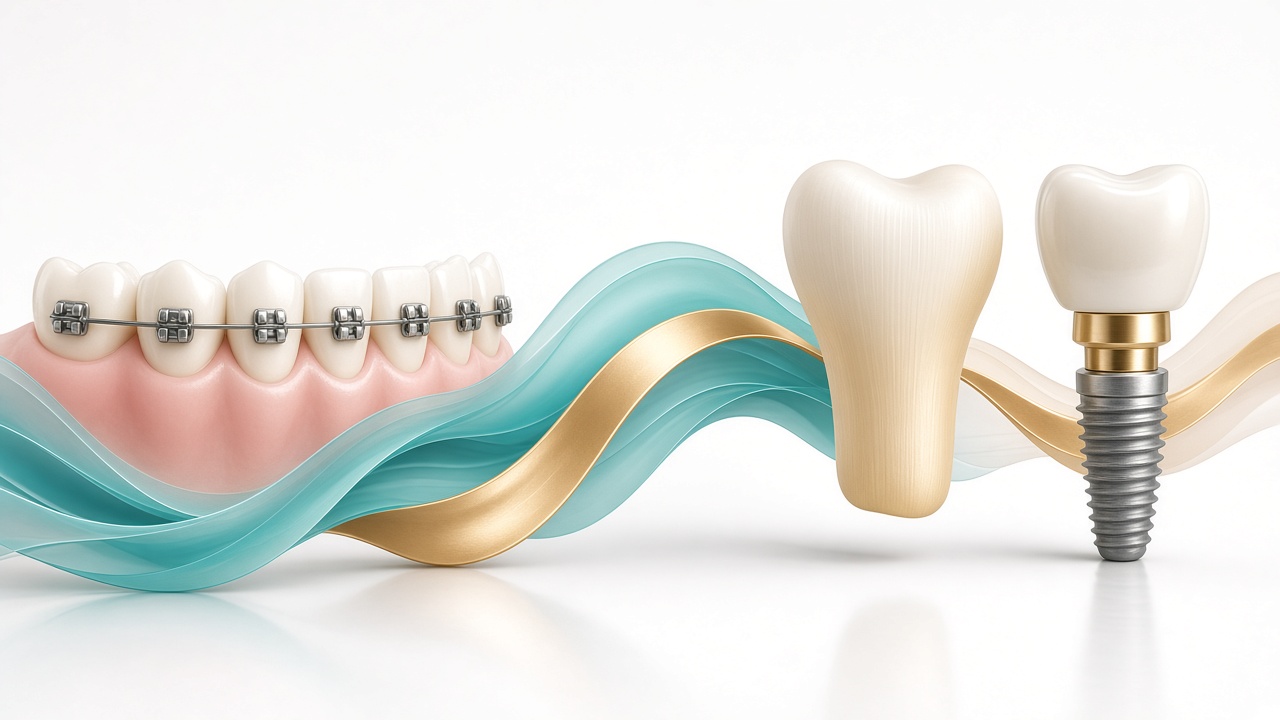
Braces diabetes questions — and the wider “can I straighten with my diagnosis” — land at orthodontist consultation almost as often as timeline questions. Diabetes, osteoporosis, long medicine lists, past surgeries — all belong in the orthodontic talk because a tooth moves in bone beside gum, not in a vacuum. I am Dr. Maksut Behruzoglu, specialist orthodontist, PhD; in Dubai I do not choose or stop your medicines. I ask for a drug list and your physicians’ contacts, examine the mouth, and decide whether force can start now or whether we pause until things stabilise. This article does not replace an exam and does not teach dose changes. Below: how general health joins an adult orthodontics plan, what I raise before bonding, and why “tell your doctors” beats any chat tip.
Patients arrive with two extremes: “I have diabetes, so braces are banned” and “teeth are separate from tablets, bond today.” Both break real mouths. Controlled diabetes and stable gums often allow a dosed course. Uncontrolled gum inflammation and swinging control are reasons to delay. Decisions follow mouth facts and, when needed, clearance from your treating physician.
Why general health belongs in the orthodontic plan
Orthodontic force starts bone remodelling around the root. Speed and safety of that response depend on gum inflammation, bone density and quality, blood supply, mucosal healing, hygiene habits, and smoking. Systemic disease and medicines can change those layers. So at the first consultation I collect not only crowding complaints but a short medical context. Without it, a plan “like my healthy classmate” risks your periodontium.
I do not diagnose endocrine disease from a jaw film. I do not interpret lab panels instead of your physician. I judge whether the mouth is ready for force today: bleeding, pockets, mobility, plaque, recession, caries, mucosal dryness. If the mouth is not ready, orthodontics waits — even if you already bought aligners abroad. A purchased tray set does not cancel biology. The same for “I already have a 3D plan from another country”: a file without a Dubai gum exam is a picture, not clearance.
Adults in Dubai often see several specialists in different languages: endocrinologist, rheumatologist, cardiologist, GP. A medicine list in three languages without doses is weak. Bring a clear list of names and who prescribed them. If you forget, request a clinic printout. Orthodontists work from facts, not a vague “something for blood pressure.” An interpreter on the visit helps when names confuse you; guessing aloud leaves holes in the chart.
Separately: shame about “telling the orthodontist about bones and sugar.” Shame here hurts. A hidden osteoporosis medicine history or a recent therapy change alters talk about jaw risk and timing of any invasive dental stages next to orthodontics. An extra question at consultation beats a mid-course surprise. I do not refuse treatment from curiosity about diagnosis; I delay start when mouth facts or unclear therapy make force unsafe.
Another layer is the expectation that “private Dubai clinics ignore health and only want a contract.” I look. A pause before bonding costs less than a year of inflamed brackets. If after an honest talk you choose a clinic that promises start without a gum exam — that is your choice; my standard differs.
Diabetes and orthodontic treatment
The search “braces diabetes” usually hides fear: gums will not hold, sores at brackets will not heal, the timeline will stretch forever. With good disease control and stable periodontium, orthodontics is often possible with dosed forces and strict hygiene; with poor control and active gum inflammation, start is delayed. I do not promise “diabetes does not matter.” I promise a readiness filter for the mouth and a request for clearance from your physician when control is unclear. Diabetes raises infection risk and slows healing, especially with long high readings; in the mouth that often means bleeding and a poorer periodontal response. Order is firm: gums first, physician coordination when needed, then force. At consultation I ask diabetes type in your words, how long you have been followed, hospital stays, daily gum status, smoking. Your physician reads lab numbers; target sugar is not chosen from a blog article. Below are three blocks before bonding day.
What I assess in the mouth with diabetes
Bleeding on probing, pocket depths, plaque at necks, mobility, recessions, mucosal dryness, caries and filling margins. If gums are angry, braces wait. If gums are stable after treatment, we discuss a dosed plan. Hygiene around brackets with diabetes is critical: plaque on the wire plus a systemic factor inflames faster than in a neighbour without diabetes using the same brush.
I show a minimum cleaning kit before bonding. A water flosser helps some patients; it does not replace brushes and floss where the appliance holds plaque. White spots and inflammation after a course hit self-image harder than the metal itself. Prevention is part of the agreement, not an optional extra. I put professional cleaning into the calendar before start, especially if the last hygienist visit was “sometime last year.”
Patients with diabetes often underestimate night plaque after a late snack. A short after-eating protocol beats one perfect morning clean once a day. I match windows to your Dubai shift schedule, not an abstract poster.
How diabetes changes calendar and forces
The course may run slower because of cautious activations and more frequent hygiene checks. I build that into the timeline talk before payment. Speeding biology with a “stiff wire for the wedding” on fresh inflammation is not allowed. A pause when gums flare is medical logic, not punishment.
Flights and diet disruption on Dubai business trips affect how you feel; the orthodontist does not keep your glucose diary. If your physician changes therapy, tell us before the next activation. Dose decisions are theirs, not the braces room. The same after hospital stays or acute episodes: write before a planned wire change. We move the visit; you are not “letting the clinic down,” you are protecting tooth support.
Comparing yourself to a teenager without diabetes in the next chair is empty. Comparing yourself to your own course twenty years ago is also weak: periodontium and systemic status differed. We build the timeline corridor again.
What I do not do and do not advise
I do not stop or prescribe glucose-lowering medicines. I do not diagnose from breath odour. I do not promise orthodontics will “improve diabetes.” I do not allow home experiments with peeling brackets “so gums can rest” without an exam. Any therapy change belongs only with your treating physician. My zone is mouth, forces, and the periodontal junction.
If after consultation your endocrinologist asks to delay elective dentistry, we listen. Orthodontics is elective. Life priorities sit above a straight arch.
Osteoporosis, jawbone, and orthodontics
Osteoporosis is a systemic drop in bone strength; the jaw lives in the same body. Patients ask whether teeth can move with “fragile bones” and whether braces are safe on osteoporosis medicines. The answer is individual and often needs the physician who manages osteoporosis. I describe a frame; I do not interpret densitometry reports and I do not prescribe bone therapy. Tooth movement relies on bone remodelling: response may be slower; support risks are discussed separately. Medicine layers matter even more — dentists discuss them in the context of extractions, implants, and jaw healing. Orthodontics is not an extraction, yet those stages often sit nearby. In adult orthodontics visits I ask who follows your bones, which medicines appear on the printout, and whether severe healing problems followed dentistry before. No data — we clarify with your physician. Below are three topics patients often mix up.
Bone density and movement speed
Slower does not mean “never.” Cautious forces, periodontal control, realistic time. I do not promise a teenage calendar to an adult with osteoporosis and a thin biotype. Review films when indicated, not “everyone every month.”
Patients compare themselves to a friend without the diagnosis and resent pace. I return the talk to tooth support: saved bone beats a race. If the goal is prosthetic preparation, we sync the calendar with the surgeon considering bone status.
Osteoporosis medicines: talk with doctors only
I do not list “stop / continue / switch” schemes in this article. Those decisions belong to the physician managing osteoporosis and to invasive-care dentists when needed. My request is simple: bring names and dates, ask your doctor for clearance for elective orthodontics and for any related extractions or implants. Do not change therapy from a blog tip. Do not compare your medicine to “the same one my neighbour has”: schemes and injection dates differ; jaw risk is personal.
If your physician asks for a pause before certain dental stages, we build the pause into the plan. Hiding a medicine “so the orthodontist will not refuse” is dangerous for the jaw later. An honest delay or refusal beats a year of force next to undeclared therapy and a surprise at extraction time.
Osteoporosis and periodontium together
Thin bony support plus gum inflammation is a bad pair for a strong wire. Stabilise periodontium first. Sometimes we narrow orthodontic volume to a compromise that respects remaining support. Compromise is spoken: which spaces remain, which incisor tip is acceptable. The illusion “move everything at any cost” on fragile support is a poor service.
Smoking raises risks for bone and gums. I record smoking status in the plan and do not promise the same prognosis as a non-smoker with the same diagnosis.
Medicines: what to tell the orthodontist without self-treatment advice
Long tablet lists are normal for Dubai adults. Blood-pressure drugs, anticoagulants, hormone schemes, osteoporosis agents, immunomodulating medicines, antidepressants — classes that may touch bleeding, dry mouth, healing, or infection risk next to dentistry. I collect the list. I do not edit it for your physician. One rule: tell the orthodontist and your treating doctors that orthodontics is planned and which stages sit nearby. Do not skip the morning tablet “for clotting at the bracket.” Do not add “bone supplements” without a prescription. Do not copy someone else’s stop list from a forum. At consultation one complete sheet beats three scraps from different clinics. If Arabic and English names blur, attach pack photos. Below are three question groups when the list is long and the mouth is almost ready for force.
How to bring a list that helps
Pack photos, clinic printouts, international and trade names side by side — normal in the UAE. Include doses if you know them, and dates of rare injections. “Something white for pressure” does not help. If a drug is injected once a year, the last injection date matters as much as the name. Metal, latex, and anaesthetic allergies are a separate line before system choice.
Patients feel shy about “loading the orthodontist with medicine.” That load is exactly what we need. A hidden drug costs more at extraction or implant time next to the course.
Dry mouth, mucosal bleeding, caries risk
Dryness from several medicines raises caries risk around braces. That is a reason to strengthen hygiene and a fluoride protocol as your dentist directs — not a reason to drop a needed drug. Mucosal bleeding on brushing and light bracket trauma is discussed with anticoagulants in mind: hygiene and wax plans, without a DIY pause in therapy. Medicine changes belong to the prescribing specialist, especially before invasive stages.
I check lips and cheeks at start: cracks and ulcers on dry mucosa change bonding timing. Sometimes we stabilise mucosa with a therapist first, then bond.
What you must not decide from a blog
You must not pick a “safer” drug from someone else’s list. You must not sync a stop with bonding day without your physician. You must not take a stranger’s antibiotic “just in case” for a tingle at a bracket. The orthodontist treats the bite; systemic therapy belongs to your doctor. My line in the chair is flat and correct: tell your doctors. If two specialists give different verbal tips, ask for short written alignment. Averaging chat forums does not treat.
Separately: supplements and “bone” products from the metro pharmacy. Report those too: they sometimes overlap prescription schemes. I do not recommend specific supplements in articles or visits without a prescribing role.
When we delay start: medical clearance and stop factors
Elective orthodontics waits when the mouth or systemic status is not ready. Active periodontitis, acute oral infections, recent serious decompensation in your physician’s words, unclear critical medicines, refusal to share medical context — stop. I prefer a pause before bonding to removing an appliance a month later after a flare. Medical clearance is your physician’s agreement to elective dentistry in the current window, not a stamp “healthy forever.” Form may be a letter, message, or chart note; content and date matter. In Dubai, pressure to “start today, flight tomorrow” with doubtful context does not cancel mucosal healing. A ready aligner set from another country does not cancel the filter either. Below are three forks before contract within adult orthodontics.
Mouth not ready, systemic side relatively stable
Treat gums, caries, acute foci. Reassess. Then orthodontics. A systemic diagnosis alone does not cancel that order. Endocrinologist clearance does not replace pocket probing: both layers matter.
A patient with “good labs” and bleeding gums still waits for periodontal care. I explain without morality: force on inflamed support is a poor service to the tooth.
Systemic side unstable in your physician’s view
We wait for their window. We can discuss future plan volume in words, take records later, and not start force. Visa deadlines do not pause sugar and bone by magic. Clearance form — letter, message, chart note; content and date matter.
If your physician asks to stabilise readings first, we listen. Orthodontics is elective. Oral pain and acute infection outrank a straight arch; elective bonding does not.
Extractions or implants next to orthodontics
Then clearance and coordination widen: surgeon, prosthodontist, physician. Orthodontics prepares space, yet invasive stages live by their own risk rules. A hidden medicine from a “bone” list matters especially here. Tell every doctor in the chain. One written sequence saves a year of remakes.
| Topic at consultation | Bring | Orthodontist decides | Treating physician decides | Common stop before start | Do not do at home |
|---|---|---|---|---|---|
| Diabetes | Printout / clearance if needed | Gum readiness and force plan | Disease control, clearance | Active periodontitis, unclear control | Change doses from a blog |
| Osteoporosis | Medicine list and dates | Movement volume, timeline | Bone therapy, dental limits | No medicine data | Stop injections/tablets yourself |
| Anticoagulants | Name, who prescribed | Hygiene plan, mucosal bleeding risk | Therapy changes for invasive stages | Elective extractions without coordination | “Skip the morning tablet” |
| Dry mouth from medicines | Medicine list | Caries risk with appliance, hygiene | Drug change if possible | Multiple caries without cleanup | Drop a needed drug |
| Immunomodulating therapy | Printout | Timeline and oral infection control | Clearance for elective dentistry | Acute ulcers, fever | Self-start antibiotics |
| Smoking + systemic factor | Honest status | Periodontal prognosis | Quit support if wanted | Refusal to discuss status | Ignore bleeding |
| Pregnancy / planning | Timeline and obstetric advice | Window for elective activations | Clearance for films/procedures | DIY X-rays | Stop prescribed care without a doctor |
| Many specialists | One medicine list | Mouth plan junction | Alignment among themselves | Conflicting verbal tips without notes | Average forum advice |
Hygiene, in-course control, and honest limits
Perfect clearance will not save a course if plaque sits on brackets for days. With diabetes and osteoporosis I speak even harder about hygiene visits and about reporting bleeding before the monthly slot. Inflammation is a signal to pause activations, not “endure until the wedding smile.” A patient proud of “I’ve bled on brushing for three weeks” gets a pause and a periodontal referral, not praise for toughness.
Plan limits: no promise of zero recession risk; no teenage speed promise; no promise that orthodontics will cure systemic disease; no online clearance from lab photos in chat without a mouth exam. There are dosed forces, periodontal junction, requests to your doctors, and readiness to stop the course on a flare. A written limit list at start later prevents “I thought dental health was separate.”
I do not invent AED prices without a dated fee list. Insurance covers orthodontics differently — check on your side. Medical policies and dental clauses in the UAE are read by the policy administrator; I do not replace that administrator.
Ramadan, shift work, and flights change hygiene windows and your usual medicine timing. The orthodontist does not rebuild drug schemes. Align timing with the prescribing doctor; tell us if oral bleeding or healing changes. On trips take a minimum cleaning kit and wax; hotel pliers remain a bad idea. A photo of a broken bracket helps decide whether to come early.
Separately: smoking with diabetes or osteoporosis. Periodontal prognosis is worse; I record status honestly. A promise to “quit tomorrow” without fact does not change today’s force plan. If you quit, say so: the risk talk changes, though there is no magic instant “non-smoker since childhood” effect.
With a systemic factor I sometimes set reviews more often at the start while we watch gum response to the first wire. That is not a way to “sell visits.” It is a way to stop in time. If you skip reviews for projects, the course stretches and inflammation risk rises — simple maths.
Retention after debond on thin support is discussed more firmly: night wear, reviews, fast visits if a retainer loosens. Ligament and bone after force do not “remember” the arch alone. Systemic background does not cancel that mechanics. Lost retainers on trips are a common expat story; a spare tray and knowing whom to message at night save months of “it drifted a little.” I issue the protocol before appliance removal, not after a “freedom from brackets” party.
How to prepare for consultation with a disease list
A short checklist saves a second visit. Diagnoses in your words. Medicines with doses if known, and rare injection dates. Names and contacts of key doctors. Recent dental printouts. Jaw films if you have them. Orthodontic goal: aesthetics, function, prosthetic prep. Dubai life horizon: one year, three, unknown. At orthodontist consultation I gather mouth and this context, then state: we can start, gums need care first, clearance is needed, plan volume is full or compromise. The adult orthodontics page sets the service frame; medical context makes the frame personal. Bring questions as a list — memory on the visit is selective. Below are three prep blocks that most often save a month of post-visit messages.
Questions to ask your treating physician before braces
Is elective orthodontics suitable now. Are there timing limits relative to your therapy. What must the dentist be told. Is a follow-up with them needed after start. Keep wording simple; write answers down. I do not dictate schemes to your endocrinologist or rheumatologist — I need clarity for the mouth plan.
Questions to ask the orthodontist
How the diagnosis changes forces and timeline. Which symptoms to message early: bleeding, pain, ulcers. Whether a periodontist belongs on the team. How films and review visits join. What happens if gums flare mid-course.
What to expect from an honest plan
Written limits. Colleague list. Realistic timeline corridor. Hygiene protocol. Understanding that pauses are possible. No guarantee “like a healthy influencer.” The choice to start or wait stays yours after facts. If after consultation night impulse says “bond everything tomorrow without clearance,” brake. If impulse says “never, because diabetes” with stable gums and clear clearance, revisit mouth facts, not chat fear.
Expats often ask whether braces with diabetes happen “back home.” They do, with control and ready periodontium. The filter everywhere is tissues and systemic stability. Dubai daily life differs in policy language and the habit of treating with five rooms without one shared file. Build the file: diagnoses, medicines, doctor contacts, dental printouts. One file saves a month of cross-clinic messages.
If after reading you want to “stop a medicine for a month yourself and arrive ready,” do not. Come with a list and questions. Orthodontics will wait for the window your doctors agree. A straight arch is not worth self-treatment. The same for “I’ll add a bone supplement from the metro pharmacy without a doctor”: report it; do not prescribe yourself a course from advertising.
FAQ
Can I get braces if I have diabetes?
Often yes, if your treating physician judges the disease controlled and gums are stable. Active periodontitis and unclear control are reasons to delay. Decision after mouth exam and, when needed, clearance. This article does not replace an endocrinologist.
Does osteoporosis affect orthodontics?
It can affect bone prognosis and timeline. More important: report medicines and align the plan with the physician who manages osteoporosis, especially if extractions or implants sit nearby. I do not prescribe or stop bone therapy.
Must I stop medicines before braces are placed?
Do not decide from a blog and do not stop them yourself. Tell the orthodontist the names and ask your treating physician whether changes are needed for elective dentistry. Bonding brackets and complex surgical stages are different risk levels.
Why does an orthodontist ask about tablets if they only treat teeth?
A tooth moves in bone beside gum. Medicines can change bleeding, healing, dry mouth, and infection risk. The list is for plan safety, not curiosity.
Can I start if labs are “almost normal” by my reading?
Lab interpretation belongs to your treating physician. The orthodontist judges mouth readiness. “Almost” without clearance under doubtful control is a weak base for a year of force. A short pause beats removing an appliance after a flare.
Are aligners safer than braces with diabetes or osteoporosis?
Sometimes they help hygiene. Sometimes biomechanics needs fixed appliances. Diagnosis alone does not choose the system. Task, periodontium, and wear discipline after clearance do.
What if osteoporosis or diabetes therapy changes mid-course?
Tell the orthodontist before the next activation and ask the prescribing doctor whether the change affects the dental plan. Do not wait for the monthly visit if new healing or bleeding symptoms appear in the mouth.
Can you decide by message whether braces are possible with my disease list?
No. Mouth exam, films when indicated, and clear medical context are required. Messages help you book consultation. Plan and clearance grow in the chair and, when needed, in your physician’s office — not in a chat with pack photos and no gums in frame.