Adults arrive with two household questions in a row: can you smoke with braces, and must coffee stop for the whole course. The query “smoking and braces” usually hides fear for gums, white spots after debonding, and a timeline that “will stretch because of habits.” I am Dr. Maksut Behruzoglu, a specialist orthodontist in Dubai; inside adult orthodontics I treat smoking and coffee as risk factors for periodontium, hygiene, and bond strength — not as a moral label. Nicotine and combustion products hit blood flow and mucosal healing; coffee and tea stain plaque around brackets and can mask early demineralisation. Neither factor bans treatment by default. Both change the talk about goals, time, and cleaning discipline. Below — what I state before bonding adult braces, where honest plan limits sit, and why I will not approve “allowed / banned” for your mouth from a photo. The exam decides.
Why smoking and coffee share one braces conversation
Patients rarely bring a journal paper. They bring a morning coffee before a board call, an evening cigarette after a deadline, and fear that the orthodontist will “ban life.” I hear it in English, Russian, and Turkish the same way. Smoking hits tissues and healing. Coffee hits visible hygiene and enamel aesthetics at the bracket base. Together they amplify each other: a smoker more often shows an inflamed gingival margin, coffee stain masks bleeding, and the adult decides “it is only coffee colour.”
Dubai adds shisha, flavoured mixes, late office shifts, and coffee-to-go between meetings. I do not deliver a wellness lecture. I place habits in the plan beside bone thickness and appliance type. If the goal is a straight arch for a wedding in a year on a thin periodontium and a pack a day, I name the risk aloud before the contract. If the goal is to upright teeth and reduce toothbrush trauma on existing recession, habits still enter the maths for time and periodontal visit frequency.
Another layer is shame. Adults fear a scolding. I ask for numbers: cigarettes or shisha sessions per week, coffee and tea cups per day, whether vaping exists. A number beats “I almost quit.” Without a number I build a plan on someone else’s fantasy of discipline.
Comparison with “a friend who smoked through braces and was fine” also breaks expectations. You do not see his periodontium, bone thickness at the incisors, debonds, or white spots after removal. Someone else’s anecdote does not replace your chart. At consultation I allow the stories and return to probing depths and hygiene. If the goal is a camera-ready arch on a pack a day, we talk recession risk and periodontal recall frequency before we talk ligature colours.
A partner at home adds another layer. One person cuts down; the other still smokes on the balcony; the smell and ritual remain. I do not run family politics. I ask what the patient controls: own frequency, own clean after shisha, own refusal to vape with a tray on the teeth. Controllable behaviour enters the plan. Someone else’s behaviour stays background.
Smoking, periodontium, and tooth movement
Tooth movement leans on the periodontal ligament and controlled bone remodeling. Smoking enters that biology through vessels, immune response, and healing. Recent periodontitis-and-smoking reviews agree: smokers lose support more often, respond worse to therapy, and mask bleeding because of nicotine’s vascular effect. Orthodontic force in active or hidden inflammation raises the risk of faster bone loss. So in the chair I read the periodontium first, then the wire. Age, coffee, and “I smoke little” do not cancel that order. Periodontal guidance in recent years links smoking with disease severity and treatment response; orthodontics is a neighbouring stage after stabilisation, not an exception. Habits enter amplitude and timeline maths the same way bone thickness at the incisors does. Below — three layers I open with when adults ask about smoking and braces.
Vessels, inflammation, and a “quiet” periodontium
Nicotine narrows vessels. A smoker’s gingiva may bleed less on probing than a non-smoker with the same inflammation level. The patient hears “almost no blood” and assumes the gums are healthy. I read pocket depths, plaque, mobility, odour, tooth-loss history — not only a red margin. If the picture is unstable, I delay bonding. Force on a tooth through active inflammation is a bad deal even with a perfect aesthetic goal.
After stabilisation a smoker stays on supportive visits more often than the imaginary “ideal” non-smoker. I state that as part of the course, not as punishment. Sometimes hygienist visits every three months suffice; with a heavy history, more often. The number follows probing, not a slogan for all smokers. Same-angle gum photos every few months catch decline before the patient feels mobility. If smoking drops only in words while plaque and pockets stay the same on review, I stop racing aesthetic goals and return periodontium to the centre of the plan. A wire does not cure a pocket.
Bone, recession, and movement amplitude
Smoking links to more aggressive periodontitis courses and a poorer soft-tissue outlook. If recession already exists, ambitious smile widening in an adult smoker gets a more careful talk: bone reserve at the incisors may be thin, and mucosal healing slower. I show on film where the root can travel. I do not promise gums will “lift because of braces.”
Sometimes the goal is to move teeth into the arch and reduce brush trauma. Then smoking is not a ban; it is a reason for softer forces and a stricter photo protocol: we fix “before” frames so a year later the eye does not rewrite memory. CBCT when indicated, not for everyone: if clinic and OPG already show a thin envelope at the incisors, a 3D film clarifies where a millimetre remains. Aggressive labial tip for a “Hollywood” smile on a thin plate in a smoker is a common price of someone else’s Instagram.
E-cigarettes and shisha
Patients often park vapes and shisha outside the story: “these are not cigarettes.” For the plan I still count nicotine load and mucosal heat. Orthodontic data on vaping are still gathering; clinically I see dryness, plaque, and hours-long “pulling.” Shisha in Dubai is a separate household anchor: long sessions, sweet mixes, late return home without cleaning. I ask for frequency. “Rarely” without a number does not live in a plan.
If someone will reduce load during active movement, I record that agreement and revisit it on reviews. If not — goals stay more modest on amplitude and gingival aesthetics. “Nicotine-free” mixes do not zero the talk: heat, session length, and hygiene after still sit in the plan. “Weekends only” can still outweigh short weekday cigarettes when sessions run long — we count the sum.
Nicotine, mucosal healing, and debonds
Bonding and wire changes trauma mucosa in the first days. In smokers ulcers and rubs heal slower, and smoke irritation adds discomfort. I warn before start so the adult does not decide in week three that “the appliance is not for me.” Wax, a soft brush, skipping hot smoke right after activation — boring advice that keeps the course alive.
Debonds in smokers show up more often with poor hygiene, hard “on the go” food, and chewing a mouthpiece or pen. Each lost bracket costs a slot and risks shifting the plan. I show which jaw habits and snacks hit adhesion. Coffee itself rarely “rips” a bracket; force on the bracket edge plus plaque at the base does.
After surgical steps beside orthodontics — extraction, soft-tissue graft, miniscrew placement — smoking gets a separate talk. Healing worsens; complication risk rises. I do not moralise. I set a pause or a stop-smoking window for healing as a stage condition, or I postpone the stage. Retention after debonding is also habit-sensitive. A smoker with unstable periodontium more often needs strict retainer control and periodontal visits. A straight arch without tissue support is a short joy.
Smell and camera shame matter in adult life. Metal plus tobacco plaque makes people feel “everyone sees.” Part is hygiene truth; part is anxiety. I do not promise a neutral smell on daily smoking. I promise under-wire cleaning teaching and a professional hygiene rhythm that cuts plaque volume. Alcohol mouthrinses on dry smoker mucosa sometimes burn and never replace an interdental brush. If the plan needs a miniscrew, hygiene around the screw head gets its own warning: smoke, dryness, and plaque there are a common comfort problem.
Coffee, tea, and staining at brackets
Coffee does not stop tooth movement the way smoking hits periodontium. It changes visible hygiene and aesthetics. Pigments settle on plaque around the bracket base and under the wire. Months later an adult sees a “brown smile” and thinks enamel is ruined forever. Often it is removable plaque and polish after debonding; sometimes white demineralisation spots that coffee colour hid. So in the adult braces talk I link coffee to cleaning and caries control, not to banning the drink itself. In Dubai coffee often arrives with office dates, sweet evening tea, and caramel syrups “for mood” — carbs at the bracket work faster than pigment alone. I ask for the real cup rhythm before any lecture on paste. Below — three household layers I unpack on the first visit after bonding.
When to drink and when to clean
The ideal “quit coffee for two years” rarely survives Dubai work life. A working minimum: water after the cup, then cleaning in the next real window you can build into the day. If you drink three espressos between meetings and clean only at night, plaque at brackets accumulates on schedule. I ask for a ritual you will do, not a dream ritual.
Tea with milk, cardamom, saffron, matcha, berry smoothies — the same pigment-on-plaque principle. I do not issue a forever ban list. I issue a list of what deepens stain when cleaning fails.
Sugar in the cup and white spots
Syrup lattes, date syrup, caramel iced coffee — colour plus carbs at the bracket. White spots after debonding hit adult self-image harder than metal during treatment. Fluoride as planned with your dentist, interdental brushes, restorative checks — part of orthodontics, not a perfectionist add-on. Night coffee snacks on remote work plus sleep without cleaning are a fast path to chalky zones. I ask for that ritual by name.
Aligners and coffee: a separate trap
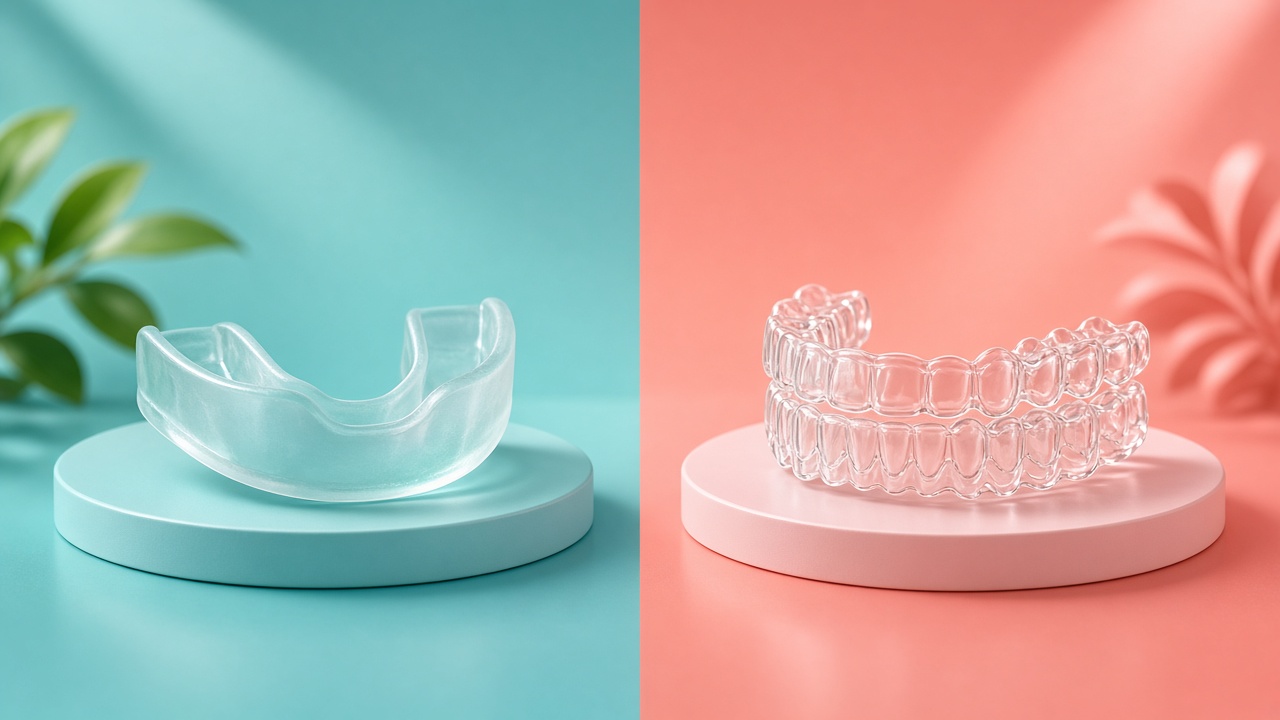
With trays the rule is harder: trays off, drink, clean teeth and trays, trays on. Coffee “through trays” stains plastic and holds sugar on enamel. Adults break this between meetings. I state it plainly: either removal discipline, or fixed appliances, or acceptance of stained trays and enamel risk. Choose before start, not after the third brown tray.
Hygiene: a minimum kit with coffee and cigarettes
Smoking and coffee do not need a space-age pharmacy kit. They need a repeatable minimum an adult will actually run in Dubai between metro, office, and school runs. I build the kit on the first visit after bonding and check technique in the chair. The table below is a talk frame, not a sacred ritual for every mouth. Your periodontium may need more hygienist visits; your calendar may need a shorter morning block and a stronger evening one.
| Habit / risk | What I see in the mouth | Home minimum | What worsens it | When to call before the visit | Honest limit without an exam |
|---|---|---|---|---|---|
| Daily cigarettes | Dryness, plaque, “quiet” gums | Brush + interdentals + water after | Skipping clean after shisha | Pain, mobility, pus | “I smoke — braces forbidden” is false; risk is higher |
| Shisha 1–2×/week | Late plaque, odour | Full clean the same evening | Sleep without cleaning | Ulcer lasting a week | Frequency beats mix brand |
| All-day vape | Dryness, sticky plaque | Water, brush 2×, interdentals | Sweet liquids | Burning mucosa at bracket | No “safe” data for the chair |
| Coffee 2–4 cups | Brown rim at bracket | Water after + day window clean | Syrup, night latte | Sharp cold pain | Colour ≠ caries automatically |
| Tea / matcha | Pigment on plaque | Brush under the wire | Sweet office tea | Chips at enamel edge | Polish after course often clears plaque stain |
| Debonds | Repeat brackets on molars | No ice, pens, mouthpiece chewing | Hard flatbread edges | Bracket swallowed — urgent | Coffee alone rarely debonds |
| White-spot history | Chalky zones before start | Fluoride per dentist plan | Sweet coffee without cleaning | New sweet sensitivity | No guarantee of zero spots |
| Thin periodontium + smoking | Recession, thin bone | Soft brush, perio control | Hard horizontal brushing | Clotted bleeding | Amplitude needs films |
I ask the adult to pick one weak hour of the day and close it with a ritual. For many in Dubai that is the evening after return home: interdentals under the wire, paste, irrigator if it actually helps rather than gathers dust. Morning can be shorter — brush and leave — if evening is complete. Two lazy “a little” cleans without an interdental brush hold plaque at the bracket better than any lecture. Whitening during active braces is not my race for Instagram; hygiene and demineralisation control come first, colour talk after debonding with your dentist.
Aligners versus fixed appliances with habits
Appliance choice in a smoking, coffee-heavy adult follows diagnosis and discipline, not fashion. Fixed braces hold force without removal; the price is hygiene around brackets and visible metal or ceramic. Aligners come off for coffee and cigarettes; the price is wear hours and honesty. I lay both paths out at adult orthodontics consultation before payment.
If someone smokes on the balcony every two hours and will not clean before trays return, aligners collect plaque and smell. If someone drinks coffee five times a day and hates interdentals around metal, trays may be more honest — if removal is real. Sometimes ceramic upstairs and metal downstairs closes camera shame better than an ideology of “only invisible.” I ask not to smoke with a tray on the teeth: heat, smell, plastic warp, crack risk.
Smoking does not magically double treatment time by itself. Debonds, inflammation, missed visits, and poor hygiene do. Coffee lengthens through the same mechanisms plus restorative visits for stain and caries. I budget calendar buffer when risk is high and say so before start. Ceramic beside pigmented plaque shows ritual failure faster than metal; ligatures pick colour from curry, berries, and coffee and swap on visits. A work-trip week of nightly shisha without interdentals is a classic collapse — pack a travel kit before departure.
Dubai life: office, night shifts, shisha lounge
Adult orthodontics in the Emirates lives inside a calendar that rarely looks like school. Night shifts in medicine and logistics, early flights, Ramadan with a different food and coffee rhythm, long dinners with shisha after ten — I hear all of it on visit one. Habits are not an add-on to the plan. They are the environment where the wire works or stalls.
I ask for one ordinary weekday from wake to sleep: where coffee, where cigarette, where cleaning, where an interdental brush is impossible. If cleaning is only possible at home at 23:40, we build the ritual around that hour and stop pretending an office “after every cup” block is realistic. If someone steps to the car park five times between meetings to smoke, we discuss water and at least two short cleans plus a full evening, or molar plaque is predictable.
Insurance and “fast courses” create pressure. Sometimes a patient wants to finish before a move and asks to race wires on a thin periodontium while smoking. I do not speed biology for a visa date. A short honest stage or a delayed start beats a collapsed full course with support loss. AED figures come after a plan with a price-list date if cost enters the talk; policy cover is confirmed by the insurer’s administrator. A ban without a periodontal exam is a slogan; permission without a risk talk is hollow. I prefer a written list: what we reduce, how we clean, how often we see a periodontist, which smile amplitude goals stay modest.
Honest plan limits and retention
Before the contract I collect a short limit list. Smoking does not make orthodontics pointless. Smoking raises risk for periodontium, healing, and result stability. Coffee is not banned as a ritual. Coffee needs a cleaning ritual. An adult in Dubai may keep habits; I may name the tissue and aesthetic price. A paper list removes shame better than a sermon: what we reduce, how often we see a periodontist, which smile goals stay modest, what retention looks like after debonding. I read the list aloud before payment. Second opinions are welcome; someone else’s ban without risk numbers does not belong to you. The patient signs a frame, not a hope for perfect gums on a pack a day. Below — three limits adults most often confuse with “the doctor is just strict.”
What I can promise
I can promise a force plan on a stabilised periodontium, chairside hygiene checks, an honest talk on recession and spots, and a route when a bracket debonds. I can promise that reducing smoking in the active window improves healing conditions — without guaranteeing “ideal gums.” I cannot promise the arch stays ideal if support is lost and retention is skipped. I cannot promise coffee colour vanishes by itself because of a wire.
Retention in a smoker
After debonding, a bonded retainer and a night tray are a common scheme; details depend on the case. A smoker with periodontitis history more often needs a strict control calendar. A tooth without support does not “hold straightness” from wishful thinking. I link retention to periodontal visits when those visits are already indicated. If an adult drops retention because “the coffee tray smells,” we fix tray hygiene and material rather than abandon arch hold.
When I ask for a pause before start
Active periodontitis, pus, unstable sugar, refusal of any hygiene, and “bond faster before holiday” on thin bone and a pack a day — reasons to delay bonding. A pause protects support; it is not punishment. After stabilisation a course remains possible inside adult braces or another appliance by plan. Second opinions are welcome. Someone else’s timeline from a clinic chat does not belong to you.
Common questions on smoking, coffee, and braces
Can I smoke while wearing braces?
Physically a cigarette does not switch a wire off. For tissues, periodontal and healing risk is higher. I ask for lower load in the active movement window and stricter hygiene. Start decisions follow a gum exam and films, not a chat-group tip. If someone smokes a pack and wants maximum smile widening on thin bone, I name the goal conflict before payment.
Must I quit coffee for the whole course?
Full refusal is rarely mandatory. You need a ritual: water after the cup, cleaning in a real day window, interdentals under the wire. Sweet syrups and a night latte without cleaning hit harder than espresso alone. With aligners, coffee only with trays off. If you drink six cups and clean once a day, the talk is harder than the fact of caffeine.
Why can a smoker’s gums not bleed yet still be unhealthy?
Nicotine affects vessels; bleeding is masked. I lean on pocket depths, plaque, mobility, and films. “No blood” is not “healthy gums.” Force needs a stable picture first. A home test “I brushed — no blood” often lies in smokers; chairside probing lies less.
Does coffee stain teeth forever because of braces?
Often plaque around brackets takes the colour; after debonding and professional hygiene the shade evens out. Sometimes white demineralisation sits under pigment. Cleaning and caries control matter more than fear of the cup itself. I do not promise a model ad shade on daily caramel lattes.
Is vaping safer than cigarettes for orthodontics?
I do not treat it as a safe substitute in the plan. Dryness, plaque, nicotine, and long sessions stay in the risk talk. We still record frequency. I have no chair-ready data that “vape equals zero periodontal effect.” If a vape replaced a pack and frequency falls — that is a different numbers talk, not device magic.
A bracket debonded after late shisha — what now?
Keep the bracket if it left the mouth. Protect a sharp edge with wax. Message the clinic and come to the next working slot. Do not “speed treatment” with hard farewell food. Repeat debonds lengthen a course more than one cigarette. A well-lit arch photo helps decide if an urgent extra visit is needed.
Do whitening pastes help during treatment?
Abrasive pastes on a thin neck and at the bracket edge can add sensitivity and wear tissue. I prefer fluoride care agreed with your dentist and careful interdental technique. Whitening “to catch up” waits until after debonding and enamel review. Home strips over a wire are a poor idea: uneven contact, gum risk above benefit.
Does smoking after braces removal spoil the result?
Retention and periodontal state hold the result. Smoking raises support-loss and inflammation risk, so an arch can drift even with a retainer. Gum control and wearing retention as planned matter more than the debond date on a calendar. If a retainer breaks and the visit waits “because of a work trip,” write immediately — an empty hold interval costs more than one cigarette in incisor millimetres.