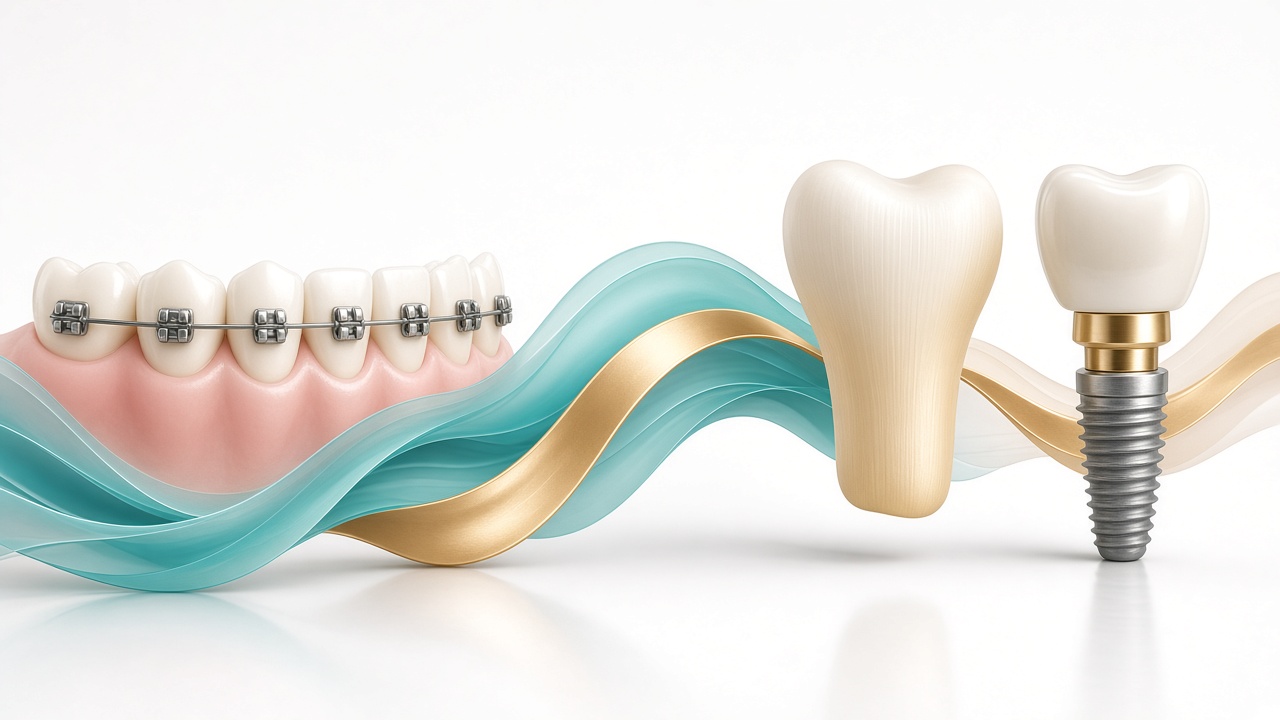
Lingual braces sit on the tongue side of the teeth. From the street the smile often looks free of hardware; inside the mouth you live with brackets, a wire, and a new tongue map for speech and swallowing. I place and run lingual braces in Dubai, and on consultation I separate the wish for invisibility from readiness for an adaptation window. The package floor on the site is from AED 27,000 — an entry line for the course, not a final invoice for your mouth. Below: how the first weeks feel, which sounds usually blur, how long speech recovery takes for most people, how lingual hygiene works, and which full-course timelines I name without ad copy. We lock a start only after examination and imaging, not after a stranger’s chat review.
What “invisible braces” actually mean
Patients arrive with one picture: “hidden braces — and nobody will notice.” The picture is half true. Outside, brackets stay off the smile line. Inside, hardware appears that the tongue hits on every word and swallow. Lingual appliances are full orthodontic systems: force travels from wire through bracket to tooth; bone remodels under the same biology as outer (labial) braces. What changes is soft-tissue contact and the lifestyle contract: speech, cleaning, lab workflow, repair logistics. I do not rank lingual against other systems as better or worse. I ask whether your calendar can absorb early weeks of a lisp and more careful hygiene. If yes, we unpack the protocol. If not, we look at outer aesthetics or another path after diagnostics. Three layers below show what you pay for before the first bracket touches the tongue.
Tongue side instead of cheek side
Labial braces sit on the cheek side. Lips and cheeks adapt to them. Lingual brackets sit where the tongue finds support for consonants and for swallowing. In the first days the tongue bumps metal, searches for a detour, and sometimes rubs on a wire end or bracket wing. The feel is closer to a new bonded retainer or a thick tray than to “nothing happened.” I name this before the lab scan: outward invisibility is bought with inward noticeability for the tongue. For many patients the trade is fair. For presenters, litigators on hearings, language teachers, and people with a very sensitive tongue, a speech buffer belongs in the calendar before the contract.
Custom laboratory workflow
Many lingual systems are custom-made: scan or impression, digital setup, bases shaped to each tooth, sometimes robot-bent wires. Fit precision rises; so does attachment to a lab protocol. While the lab works, you still have no brackets. After bonding, repair and doctor changes are harder than with a common outer system and off-the-shelf parts. On consultation I explain what lab prepayment covers and which cancellation window the contract states. For an expat who may relocate, that is a separate question: will files and parts travel with you to another city.
How lingual differs from outer aesthetics
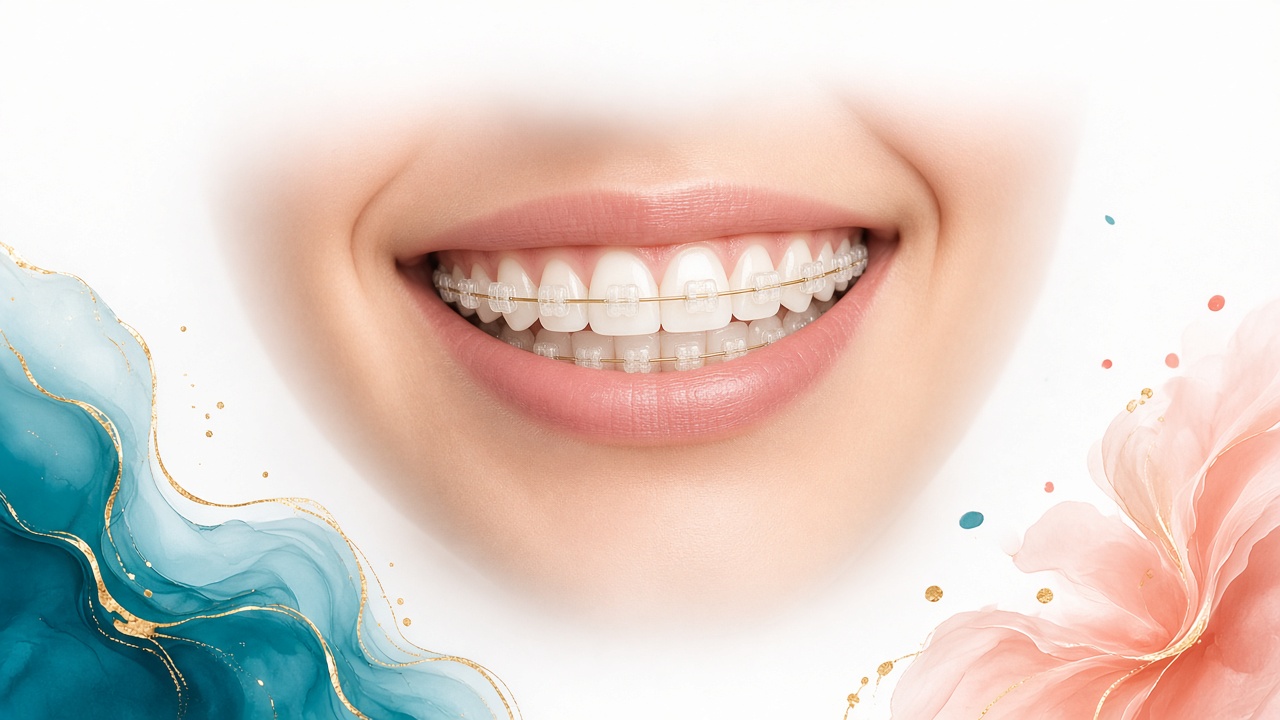
Ceramic and sapphire on the outer face also quiet the “metal in the photo” look. They leave the tongue freer and usually keep a simpler supply chain. Lingual removes brackets from the smile zone entirely. The choice is not a brand league table; it is a surface choice: which face of daily life you hand to the appliance for 12–24 months. Five camera days a week and a hard ban on outer brackets — a common entry to lingual. Masked lab work, contact sport, and weak hygiene at the start often steer the talk elsewhere. I write priorities down: visibility, speech in months one and two, hygiene, budget, relocation.
The first days after bonding
A braces installation visit for lingual runs longer than “we stuck metal on and sent you out.” Diagnostics, scan, lab wait, and logistics already sit behind you. In the chair I bond on the tongue side, place the first wire, check edges, hand over wax and a home sheet. You leave feeling the mouth has become crowded. That is expected. The job of day one is not to panic at the new tongue map and not to peel wax every five minutes “just to check.” Most first-week surprises are predictable when you know three lifestyle zones. I name them in the chair so midnight chat searches become a short checklist. Below: tongue, food and saliva, and when to message earlier than the planned review.
Tongue and sore spots
The tongue is the main “patient” of the first days. It touches metal on every word. Small sores on the tip or sides are common. Orthodontic wax softens a sharp wire end or bracket corner. I show where to place wax and warn: wax is temporary cover, not a substitute for a visit if an edge keeps cutting. Warm rinses without harsh alcohol help mucosa. If an ulcer grows, bleeds, or blocks eating for more than three or four days — write. Sometimes we smooth an edge or change a ligature. Waiting “until next month” with an open tongue wound is not required.
Adaptation arrives in layers. The first hours are tactile surprise: the tongue maps every bracket. By evening tongue muscles tire — you speak and swallow more deliberately than usual. On days two and three some people note a light lisp and irritation on the sides. By the end of week one many can separate “familiar rub” from acute trauma. I ask for a short diary only if anxiety is high: date, what bothers you, whether you eat and sleep. At review that speeds the talk. Without a diary, three honest answers still help: sharp or dull pain, whether speech blocks work, whether ulcers refuse to heal.
Food and saliva
Saliva often feels excessive for a few days: the mouth reacts to a foreign body. That usually settles. Food needs a soft start: soups, yoghurt, eggs, soft rice, well-cooked vegetables. Hard, sticky, and “bite off a huge chunk” habits wait. Crusty bread, nuts, crackers, and chewy sweets raise debond and trapping risk. Chew on back teeth; cut food small. Coffee and tea are fine; hygiene after them matters because plaque on the tongue side hides from a casual mirror. By the end of week one or two the menu usually widens. If you still eat only puree from fear after two weeks, we check at the visit whether a mechanical cause remains.
When to message before the next visit
A planned activation rhythm does not cancel early contact. Write if sharp pain ignores ordinary comfort measures, if a bracket debonds, if a wire end cuts tongue or cheek, if swelling or fever sits outside light post-bonding discomfort. A well-lit photo of the tongue side helps decide whether you need an urgent slot. I do not diagnose from one selfie; I triage urgency. In Dubai people often fly out right after bonding — keep 48–72 hours at home after fixation so the first sharp edge does not meet you in the airport queue.
Speech: what changes and for how long
Speech is the main fear before lingual and the main theme in honest reviews. The tongue builds consonants against palate and incisors and shapes the gap for sibilants. Brackets on the tongue side redraw that map. Studies and clinical practice show speech changes with lingual appliances appear more often and more clearly than with labial ones. That is not a sentence. It is a reason to book a buffer and practise speech instead of waiting for magic with zero effort. On consultation I ask about work: how many hours a day you speak on camera, lead negotiations, or teach. The answer decides whether we bond before a heavy speaking season or shift fixation by two or three weeks. An honest speech talk saves more nerves than any “premium” slogan. Below I unpack sounds, a realistic adaptation corridor, and camera weeks.
Which sounds blur most
Sounds that need the tongue near the incisors and alveolar ridge suffer most: sibilants, sometimes “t,” “d,” “l,” “r” — the set depends on your language and your habitual articulation. English office weeks in Dubai often highlight “s” and “th” first; multilingual speakers notice different weak spots in each language. I do not promise “your accent will not change for a single day.” I say: plan one or two weeks of slower speech and short aloud drills. Ten to fifteen minutes of reading aloud, a phone voice note every other day, a frank friend who says whether clarity improved. That is home practice, not speech therapy by default. If after a month diction still breaks your job, we open the next step in the chair.
Most patients describe a light lisp, “cotton” sibilants, and the sense that words need more attention. Some colleagues never notice. Some notice in week one and stop noticing by week three or four. A minority adapts longer and asks to revisit the bonding side. I name that tail before lab prepayment. Better to hear the risk early than to demand “put everything back” ten days after bonding without understanding lab costs.
A realistic adaptation corridor
The corridor I name most often: noticeable speech friction — days and the first one or two weeks; clear improvement for most people — by the end of weeks two to four; fine tuning toward “feels like mine” — up to six to eight weeks in sensitive cases. These frames are not a guarantee. Age, bracket bulk, wire height, prior retainer experience, and anxiety change speed. Comparative work on labial versus lingual appliances documents stronger early speech effects with lingual — with improvement as adaptation proceeds. I use that as expectation, not as a promise that Wednesday will be perfect.
Work, camera, and public speaking
If you have a live show, a thesis defence, a negotiation series, or a wedding speech in the first ten days after bonding — say so before the scan. Sometimes we shift installation. Sometimes we cut load: less improvisation in week one, more prepared text, mic closer, calmer pace. Better to delay bonding two weeks than to wreck a live broadcast. I do not write “medical adaptation” notes unless you ask. If HR or a producer needs a short line, we draft it together. For hosts and language teachers I flag the risk aloud: if diction is your income tool, a buffer is mandatory. Otherwise lingual turns from “secret smile” into daily work stress.
Hygiene on the tongue side
Hygiene decides whether lingual stays a manageable course or becomes a gum war. The tongue side is harder to see in an ordinary mirror. Plaque hides in contacts and toward the palate. Patients check the outer smile — “clean” — and miss the inner layer. At review I inspect the lingual surface as strictly as the outer side on labial systems. If hygiene on consultation is already weak, we fix habits and caries first, then talk expensive invisibility. Invisibility does not cancel inflammation. People underestimate cleaning time more often than post-activation ache. I would rather hear “I hate irrigators” before the contract than see bleeding gums in month three. Honesty here costs less than rebonding and inflammation. Three home nodes below: the mirror, cleaning tools, gums and enamel.
Why the mirror lies
Portrait-mode selfies show lips and outer enamel. The tongue side stays in shadow. I ask for a weekly photo of the inner surface with the lip retracted and good light — for you, not for Stories. Dense white plaque at the gumline or daily bleeding on brushing is a signal earlier than “the tooth hurts.” At the visit I compare your photos with the chair view. The gap between “I thought it was clean” and “inflammation here” is a common find in early lingual months among people who cleaned “as before, only outside.”
A home kit for lingual is usually wider than the travel toothbrush. Soft brush, single-tuft brush or interdental brushes sized to your spaces, superfloss or a stiff-end floss, irrigator on a moderate setting. Paste without weekly acid “whitening attacks.” I show the approach angle on a model; a small mirror and good bathroom light help. Dubai takeaway coffee and hot-weather snacking are not bans — they are reasons to rinse and clean after the snack instead of waiting for night.
Irrigator, brushes, and floss under the wire
An irrigator flushes what the brush misses between wire and tooth. Start on low power so gums are not battered. Size the interdental brush to the gap: too thick wounds, too thin skips plaque. Superfloss helps thread under the archwire. This takes longer than cleaning without braces. Budget five to ten minutes morning and night. If your real schedule is “two minutes and run,” lingual will punish gums before your smile selfie shows it. At activation I check not only tooth movement but tissue around brackets.
Gums and white spots
Bleeding on brushing, swelling, and odour call for stronger home care and, when needed, professional cleaning. White demineralisation spots on the tongue side appear when plaque sits. The outer smile can stay “ad ready” while inner enamel already suffers. I pause stronger orthodontic load if the periodontium is active. Tissue first, force second. That lands badly for someone who bought invisibility for a wedding calendar. Safer to delay an activation than to move teeth in inflammation.
Realistic timelines for the full course
Patients often confuse speech adaptation time with bite-treatment time. Different clocks. Diction for most people settles in weeks. Tooth movement runs for months. On the service page I list an 18–36 month orienter for a lingual course — comparable to a solid labial system at similar complexity. The corridor is wide because cases differ: mild crowding and a skeletal background live in different halves of the range. I name a timeline only after diagnostics: imaging, models or scan, goals, willingness for extractions or elastics when needed. I do not echo ad “one-year guarantees” without an exam. Timeline belongs in a written plan, not in a shrug of “about a year and a half.” Biology and discipline shift the edges; a written range beats a verbal “roughly.” Below: what stretches the calendar, how visits run, and how the course ends.
What stretches the calendar and what holds it
Poor hygiene, frequent debonds, missed visits, mid-course goal changes (“now I also want something else”), and travel pauses without a plan stretch time. Predictable mechanics, elastic discipline, and problems caught early hold the graph. Lingual is not “faster by premium magic.” A custom lab raises start precision; bone biology stays yours. If someone sold “lingual in a year for anyone,” read the contract and ask what happens when the course extends. At review I compare photos and occlusion with the last point: if progress stalls with a sound appliance, we change mechanics instead of waiting forever.
Activation rhythm
Activations often land every 4–8 weeks, sometimes closer during detailing. A lingual visit is frequently longer: tongue-side access is tighter, hygiene checks stricter, wire changes need care. Put the time in your work calendar. Two weeks late can be tolerable; two months silent is already risk. If you travel, write ahead: we say what can wait and what cannot. Summer and December exits from Dubai are normal; plan them before start instead of repairing chaos after.
Debond and retention
After removal comes retention: bonded retainer and/or trays per plan. Bracket type barely sets retainer duration; result stability and discipline do. Budget retainers separately from the from AED 27,000 floor. The first days without braces, the tongue is surprised by empty space — a short adaptation of the opposite sign. Wearing retainers as instructed matters more than the selfie on debond day. A broken or lost retainer is a reason to call, not to wait “until convenient next month.”
From scan to bonding
The path to lingual rarely looks like “walk in, walk out bonded the same day.” First comes consultation and diagnostics. Then we decide whether lingual fits your case and lifestyle. If yes — scan or impression, lab transfer, wait for custom parts. Only then the installation visit. I name the lab wait orienter and what happens if you change your mind after the scan: part of lab cost may not return. Read that line before payment. Rush on this stretch breaks expectations more often than it saves weeks. Patients who book two or three weeks for the lab are calmer than those who want “bond tomorrow for the wedding.” The lab window is part of treatment, not empty dead time. Use it for hygiene and caries care. Three steps below — from decision to living with brackets.
Decision and laboratory
On consultation we lock goals, speech risk, hygiene, and relocation. If lingual matches case and lifestyle, we capture data for the lab. While parts are made, you can finish caries care, professional cleaning, and shift critical speeches. I do not rush “bond this week at any cost” if the speech calendar argues against it. A written fee frame before lab prepayment protects both sides: you see what the lingual braces package includes and what sits outside.
Bonding day
On bonding day I check fit, place brackets, insert the wire, smooth sharp edges, and hand over wax, brushes, and contact rules. Day one means soft food, fewer “maximum volume” talks, and sleep with a new mouth. Message as needed over the next days. The first planned review follows the case schedule. If a bracket fails between visits, do not “wait a month on principle”: a lingual debond plus a wire that keeps pushing changes geometry. Write; we decide if you need an urgent slot.
Trips and city changes
For expats I cover work trips separately. Pack wax, a single-tuft brush, clinic contacts. A rare bracket without access to your lab system may not be repaired “as original” by another doctor. Temporary protection and a return to the treating orthodontist is common. Ask about relocation early: if another city is likely in six months, we discuss how flexible lingual is in your protocol. Sometimes outer aesthetics with a common supply chain is calmer for someone on a one-year contract with an unknown next city.
Who fits lingual in real life
Lingual fits when outward invisibility is a hard requirement, hygiene is already solid or you will raise it, speech in the first weeks has a buffer, budget accepts from AED 27,000 plus possible lab lines, and relocation is unlikely or the transfer protocol is clear. Typical portraits: camera work without outer brackets; stage and negotiations where metal on incisors is unacceptable; a personal “I want a smile without iron” request with readiness for the tongue inside. I do not sell lingual as status. I sell an honest contract: quiet outside, discipline inside.
Discuss lingual more carefully if the tongue is very sensitive, if critical talks sit in the next two weeks with no slack, if hygiene is weak and an irrigator feels impossible, if budget stares only at “from” without inclusions, if relocation is likely without access to the same system. In those cases I more often propose outer aesthetics or another plan after exam. That is not a refusal of care. It is matching tool to lifestyle. Decision follows diagnostics, not an ad reel. When you read reviews, hunt descriptions of weeks one and two — that is where expectation and reality diverge.
One more filter: willingness to spend time on cleaning and visits. Lingual saves visibility in meetings and spends minutes at the bathroom mirror. People who hate long hygiene routines disappoint faster than people with a sensitive tongue. On consultation I ask how many minutes you will really give teeth each morning. “One minute max” changes the recommendation more than any invisibility slogan.
Below is one phase table. Figures and timings are practice frames, not a promise to your mouth. After examination we narrow the corridor.
| Phase | Typical frame | What you feel | What to do at home | When to message |
|---|---|---|---|---|
| Bonding day | One fixation visit | Crowding, extra saliva | Wax, soft food, gentler speech | Sharp edge trauma, heavy swelling |
| Days 1–3 | Acute adaptation | Tongue sores, speech fatigue | Wax, rinses, shorter phrases | Growing ulcer, cannot eat |
| Weeks 1–2 | Speech buffer | Lisp, “new” sibilants | Read aloud, voice notes | Debonded bracket, poking wire |
| Weeks 2–4 | Easier for most | Speech near baseline | Full hygiene, wider menu | Daily gum bleeding |
| Weeks 4–8 | Fine tuning | Brackets rarely noticed | Irrigator as habit | Unexplained pain, mobility |
| Full course | Often 18–36 months | Pressure after wire changes | Visits on schedule, elastics | Long downtime with no plan |
| After removal | Retention per plan | Short empty-mouth surprise | Wear retainer as instructed | Broken or lost retainer |
The table does not replace a plan. It helps separate a normal first week from a red flag and keeps speech adaptation off the full orthodontic timeline.
FAQ
Are lingual braces really invisible from the outside?
In smile and conversation, tongue-side brackets usually stay hidden the way outer ones do not. I do not promise invisibility for every camera angle: a wide open mouth or an odd photo angle can reveal an edge to a sharp eye. For daily meetings and front-facing camera the effect is strong. On consultation we look at your smile type and lip line.
How long does the lisp last after bonding?
For most people a noticeable lisp eases across one to four weeks. Some carry fine speech nuances to six or eight weeks. An exact “perfect by Wednesday” date does not exist: tongue anatomy, appliance bulk, and voice load at work all matter. If after a month diction still breaks your profession, we unpack it at the visit.
Is lingual painful to wear?
People talk more about pressure after activations and tongue sores than about “24/7 agony.” Sharp trauma from a wire edge calls for wax and a message, not heroics. Ordinary comfort measures and soft food help the first days. Strong pain with swelling and fever is not a “just endure” norm.
Is cleaning harder with lingual braces?
Yes — visual control is weaker and time demand rises. Irrigator and interdental tools are baseline. Without discipline, gums inflame before a selfie shows trouble. At review I check the tongue side on its own. If hygiene is weak at the start, we raise it before we bond an expensive system.
What does a lingual course cost in your practice?
The package floor on the site is from AED 27,000. After examination the total may sit higher: complexity, lab, duration, and what the contract includes or excludes. Compare a line list, not one “from” figure. Consultation and diagnostics frame the number before lab prepayment.
Can I have lingual on the upper arch only?
Sometimes yes, as a deliberate hybrid: invisibility above, another system below. The decision follows bite, smile, and mechanics. I do not place “half lingual for a discount” if biomechanics need symmetry or if lower outer brackets still show in your smile. We decide on models and photos.
What if I never adapt to speech?
A minority adapts poorly. That is why we name the risk before the lab. Next options depend on timing, enamel, and contract: edge smoothing, speech load changes, and in rare cases a change of bonding side. The earlier you report the problem, the more room to manoeuvre. Silence for two months hoping for magic is a weak strategy.
How should I prepare for a lingual consultation?
Bring goals (what bothers you in smile and bite), speaking dates for the next month, an honest hygiene and relocation story, and films if you have them. On consultation I read mouth and lifestyle together. You leave with a clear fork: lingual with a speech buffer, outer aesthetics, or another plan — without pressure and without an online diagnosis from chat photos.