People search “braces relapse crooked again” when the school finish photo no longer matches the mirror at thirty-five. Lower incisors stack, a gap returns, the tray will not seat, a retainer debonds on one tooth. Shame and anger sit nearby: “I wore them for nothing,” “the doctor failed,” “I am guilty for quitting the tray.” I am Dr. Maksut Behruzoglu, a specialist orthodontist in Dubai; in adult orthodontics visits I unpack relapse as expected biology without retention, not a verdict on youth. The American Association of Orthodontists (AAO) and European reviews agree: arch stability after active force is unreliable without retention, especially in the lower front; for many scenarios holding is a long, often lifelong night habit, not “three months just in case.” Below — why a youth result drifts, how retainers work, when fixing retention is enough, and when a second course is needed. I do not approve a plan from a selfie. I do not litigate blame in the chair. If you are already angry at a school photo, start with an exam, not a trial of yourself.
What relapse is — and how it differs from new crookedness
Relapse is the tendency of teeth to return toward a former position or to drift into new unevenness after orthodontic alignment. It is not a moral label. It is biomechanics language: periodontal fibres and bone around roots remodel for months after appliance removal; soft tissues keep pressing; without retention, contacts crawl toward the old pattern. Long-term observations show that ten to twenty years later, ideal lower-front alignment is kept by far from all patients in study populations. Those figures orient groups; they are not your personal sentence. Your risk stacks original crowding, bite type, age at finish, retainer discipline, periodontium, and life after a move.
New crookedness on top of a past course is a different line. A lost molar, active periodontitis with a fan of incisors, wear and bruxism, an implant anchor nearby create drift you cannot honestly call “just braces relapse.” At consultation I separate those lines by history and films. The split sets volume and whether a periodontist or prosthodontist joins before force. Adults in Dubai often bring only a smile selfie; separating lines needs the lingual side, probing, and at least a panoramic when the clinic indicates it.
A common Dubai story is a youth course abroad, years without a clinic, a lost tray after a move to JLT, a wire debond noticed six months late. The patient arrives ashamed for “ruining everything.” I translate shame into a protocol: what is intact, what drifted, what we fix with retention, what needs re-alignment. I do not judge the prior clinician from afar. Someone else’s finish without models is a weak base for a courtroom. If finish models or a digital scan still exist, bring them: millimetres argue quieter than emotions.
Another confusion layer is “fake relapse.” The patient compares today’s mouth with clinic lighting on the debond photo and fears micro-millimetres no listener sees. Then I place a scan next to old models if they exist, and we decide whether we treat a mirror complaint or function. Treating for the mirror is legitimate — after an honest talk about time and new retention. Treating because a spouse said “crooked” without your own goal I pause: without a personal goal the appliance becomes someone else’s duty again, and the tray returns to a drawer.
Why a youth result does not “freeze”
A school course often leans on growth, different bone density, and parent-controlled visits. Finish looks perfect on a graduation photo. Life then hands retention to the patient alone. The ligament does not sign a contract for forever straight. Bone keeps answering light forces from tongue, lips, and chewing. Lower incisors in a narrow bone corridor leave first for many people. That does not prove youth treatment was pointless. It proves active treatment and retention are different chapters of one book. I give adults three facts without blame. First: aligning in youth was the right job for that mouth and that time. Second: holding after removal is part of treatment — sometimes explained briefly then, sometimes honestly forgotten in adult life. Third: a second course in adulthood is ordinary adult orthodontics, not punishment for a mistake.
Tissue memory after force
Periodontal fibres and bone “remember” the old geometry longer than the joy of bracket removal lasts. While remodelling continues, an arch without retention tends to slide back. That is why the first months after removal are a critical window for tray discipline and wire checks. Missing that window in a mouth with strong original crowding almost guarantees millimetres of relapse. I do not call that laziness. I call it biology’s calendar.
Growth and age after finish
In teens and young adults, residual lower-jaw growth changes arch relationships even after a careful finish. Incisors can crowd without “tray guilt” if growth continues and checks are rare. After thirty, wear, lost posterior contacts, and periodontium work more often. I do not blame “age alone for crooked teeth” — age changes the background; we find the mechanism in your mouth and retention history.
Women after pregnancy sometimes notice shift with gum swelling and hygiene changes; men after long trips without a tray see the same visual end for another reason. Life history matters as much as a film. Even when a tray “seems to seat,” I still ask high-risk lower-front patients for control photos every three to four months: we catch drift before a full second course.
Life without a clinic
Moves, job changes, a new baby, Ramadan, flights — typical moments when the tray goes into a drawer. A bonded retainer can quietly debond on one incisor. The patient notices a ladder a year later. In Dubai I see this weekly. The answer is one: put retention back into life protocol, not hunt a culprit in youth.
Another daily layer is a hygienist change without a warning about the wire. Aggressive polishing pops composite; the patient thinks “the retainer fell off from age.” I ask patients to mention the wire before cleaning and to keep the tray case in the bag always, not “when I remember after a Georgia holiday.” Small rituals hold a result cheaper than a second course.
Retention: lifelong discipline without blame
Retainers hold a finished position. They do not “treat” strong new crowding by themselves. I tell adults plainly: for many mouths night holding is years and often a lifelong mode, especially for the lower front. That is not punishment and not a marketing upsell. It is honest stability mechanics after orthodontics. AAO-oriented guidance and clinical reviews in recent years support long retention as normal thinking about stability, not as a perfectionist quirk. Shame — “I should have worn forever and I did not” — I hear often. I answer with a fact: now we collect what retention can still save and what already needs force. The past does not push a tooth back to ideal. A plan does. That honesty belongs in the first retention visit.
Bonded retainer behind the incisors
A thin wire or braided bar is bonded with composite on the lingual or palatal side — often canine to canine. The zone is hard to see in a front mirror, so a one-tooth debond is noticed late. On review I probe each tooth: one loose incisor lets neighbours wander. Hygiene around the wire is mandatory: floss threaders or superfloss, or calculus and inflammation hit both gum and bond.
If the retainer debonds on holiday, write the clinic the same day. An old tray from the finish set sometimes holds the arch until the visit. Pharmacy glue does not repair a wire. Every few months feel the composite edge with the tongue: a step means write earlier than the routine slot. Warn the hygienist about the wire before a polish: rough polishing pops fixation. After a rebond I recheck tray fit — plastic sometimes needs adjustment or night holding fights the new wire. In Dubai after beach sand and hard sport I ask for an off-plan lingual photo if the tongue feels an edge before the next review.
Removable tray and wear schedule
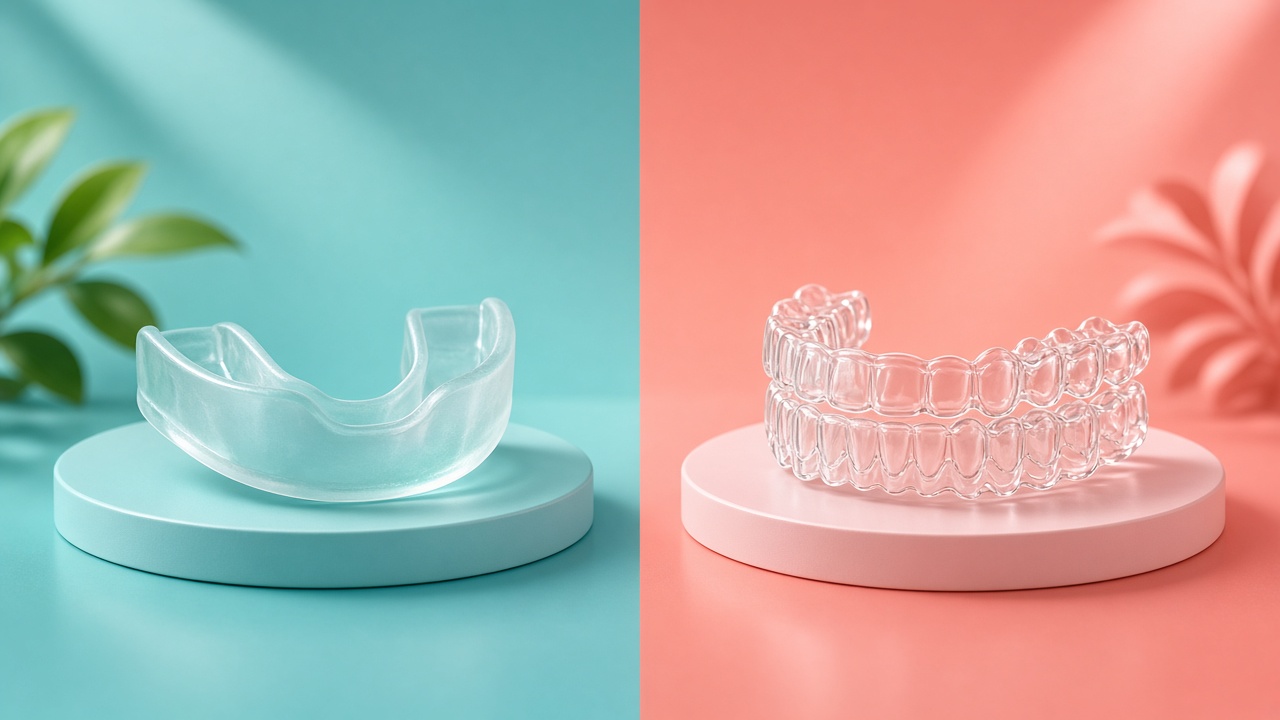
A tray from a finish imprint or scan holds the arch. Early months often mean more than nights; many later move to nights only — your exact schedule follows your plan. Skipping weeks in a high-risk lower segment delivers millimetres of unevenness. The tray should seat with a light click on every tooth. If it will not stretch onto one incisor, the arch already moved; do not force to pain — book an exam.
Store the tray in a hard case, not a napkin in a DIFC jacket pocket. Hot water and dishwashers ruin fit. On loss — urgent rescan; weeks without holding in a “risk” mouth cost more than a new tray. A spare at home or with a partner is sensible insurance for weekly flyers. I ask patients to park the case next to the phone charger: one habit anchor holds night wear better than a motivational speech on debond day.
Wire plus tray combined
A common scheme: bonded retainer on the lower front plus a night tray. The upper sometimes runs on a tray alone if risk there is lower. I do not promise lifelong straightness for any scheme. I promise a clear control protocol: when to come, what to photograph, which symptoms mean write early. Removing a wire “because I am tired of it” without a replacement retention plan is a common entry to a new ladder. If the wire blocks hygiene, we discuss a design change or stronger removable holding, not a blind removal of everything.
Patients ask whether after a year they can keep only the wire and bin the tray. Sometimes yes, after stability checks; often no — especially with strong original crowding and a thin gum biotype. Decision with measurements, not a calendar of “I am bored.” In Dubai I often keep night wear longer than a patient wants to hear after a youth line of “wear six months” — and I explain why without blaming that clinician: different tissues then, different life now, different drift risk today.
Retainer debonded, tray lost: first steps
Adults after a youth course often arrive with broken retention already, not with the question “do I need retainers.” The protocol is simple and urgent in meaning even if the slot is not tomorrow. I separate three scenarios: one-tooth debond with an arch still straight, full wire failure with a visible ladder, tray loss with an intact wire. Scenario sets booking speed and whether a rebond is enough. In Dubai, flights and the habit of “I’ll endure until a convenient month” make that habit expensive for lower incisors. Shame about “seeing an orthodontist again over a wire” I set aside: a rebond on a straight arch costs less than re-alignment. A night ladder photo from holiday is reason enough to write the clinic before return, not wait for “when there is time.
First twenty-four hours
Keep the wire piece if it came off whole and bring it. Do not bend it with pliers in a hotel. Photograph the lingual side in good light — chat triage is faster for one tooth versus a segment. Wear the old tray if it seats without pain; if it will not, do not force. Soft food on sharp edges, wax if the tongue is cut. Night pain, sharp mobility, gum bleeding at the wire — write earlier than a “convenient” post-holiday slot.
In Dubai after sand, sport, and a random ball hit I see composite fractures more often than patients notice at home. Dates and hard flatbread edges also pop bond points. That is life, not proof of “bad glue from youth.” Rebonding on a healthy straight arch is routine.
What not to do at home
Pharmacy glue does not repair a wire. A sports mouthguard from Sheikh Zayed Road does not replace an orthodontic finish retainer and can wreck contacts. Do not remove remaining bond points “to feel smoother” — you lose landmarks for the clinician. Do not stretch months of “after the project”: one loose incisor pulls neighbours faster than a front mirror suggests.
When short alignment is needed before a new wire
If the arch already moved millimetres, short alignment first, then new retention — or the wire will lock crookedness in. With a full wire failure and a growing ladder, waiting a quarter for holiday already prices a retreatment stage. Decision after photos and exam, not from a travel calendar alone. Sometimes a temporary tray holds position until the slot; sometimes the tray no longer seats — then force comes before the “ideal” calendar window.
When local correction is enough
Not every relapse needs a full teenage course again. If two or three lower incisors drifted, periodontium is quiet, and the rest of the occlusion is stable, segmental mechanics or a short tray stage with firm retention afterward can be enough. I count millimetres on a scan and check upper contacts: “lower only” without the upper sometimes leaves a heavy contact. Decision on models, not from a wish for “cheaper and invisible.” Local correction still ends in retention — or in two years the same talk returns with the same face in the mirror. Local-plan indications often look like this: clear complaint zone, no active periodontitis, no large skeletal task, patient ready for night trays and wire checks. I state that filter before any short-stage promise.
Complaint and zone
If the patient points to two incisors and the scan confirms local rotation with stable posteriors, a segment is real. If the complaint is “everything crooked like school” and both arches show it, local marketing lies. I ask for one goal sentence before brackets: “even lower on camera,” “close the gap,” “so the tray seats again.”
Periodontium and neighbouring implants
Bleeding and pockets go to the periodontist first. An implant nearby limits who can move. A local plan without those filters ends in a mid-course surprise. Adults after youth often already carry recession — we protect amplitude.
Time, shame, and retention after a segment
A local stage is often shorter than a full course, but not “two weeks before a wedding” without an exam. Shame about “braces again” I close with a concrete work phrase: “short stage to hold the result.” Trays suit some adults with public roles; fixed appliances are more honest in other cases. Choice follows diagnosis. After any force, retainers again — or a short course becomes a paid habit.
When a full second course is needed
I discuss a full course when drift hit both arches, the bite changed, prosthetic preparation is needed, periodontium is stabilised and needs axis uprighting, or a local compromise would leave a harmful contact. An adult mouth after youth often carries crowns, recession, neighbouring implants — we align the plan with the prosthodontist and periodontist. Age alone is not a ban. Thin periodontium and ambitious expansion are reasons for cautious goals. I draw the fork before agreement, not after “just tidy like the advert” has already failed. Timelines and AED figures come after diagnosis, not from a stranger’s chat. Comparison with a youth calendar is weak: growth was present then. Insurance is checked by the policy administrator. A full second course is an ordinary chapter of adult orthodontics, not proof that youth was wasted.
Both arches and the bite
If upper and lower again break the line and contacts, a six-incisor segment leaves a heavy contact and muscle fatigue. A full plan is then more honest than short shame. Scan and articulating paper settle the argument faster than a family chat.
Preparation for prosthetics
Sometimes a second course exists to create space and upright axes for crowns or an implant. Then “relapse” is an entry to rehabilitation, not only mirror aesthetics. Sequence with the prosthodontist is fixed before the drill.
Consultation fork table
The table below collects conversation accents. It is not an online diagnosis. Your case can sit between rows.
| Situation | More often local | More often full course | Role of retainers | Check before force | Honest limit without exam |
|---|---|---|---|---|---|
| 2–3 lower incisors | Yes, if occlusion quiet | If upper also drifted | New wire + nights | Old wire integrity, gums | “The tray will align it” |
| Tray will not seat | Short align → new tray | Large arch discrepancy | Scan after force | Where the seat gap is | Force an old tray on |
| One-tooth debond | Rebond if still straight | If segment already ladders | Checks + tray | Lingual photo | Pharmacy glue |
| Gaps + bleeding | Not until stable | After periodontium — by volume | Mandatory after force | Probing, panoramic | “Braces first for gaps” |
| Implant nearby | Limited plan | Often joint with prosthodontist | Hold neighbours | What anchors, what moves | “We’ll move the implant” |
| Shame / video calls | Trays when indicated | Metal/ceramic by mechanics | Any scheme needs nights | One-sentence goal | Shame = diagnosis |
| Move in 4 months | Short stage or pause | Full only with transfer plan | Protocol in hand | Life horizon in UAE | Start and abandon |
Three reading rules. First: shame does not choose volume. Second: retention after any volume. Third: an implant is not an orthodontic passenger. Same-light “before” photos and old finish models, if they survive, save millimetre arguments.
Dubai life: moves, changing clinicians, shame
Relapse after youth in Dubai is almost always about retention logistics. A patient brings a tray from another country — plastic seats worse after drift on the road. A new clinician sees a foreign wire and offers “remove everything and start over” when two teeth need a rebond. I request prior clinic contact with your consent and do not break a working retainer without cause. If the wire is dead and the arch drifted, we count volume again without a trial of youth. Shame about “metal again at forty” I close with a clinic-flow fact: adults on braces and trays in Dubai are weekday traffic, not a rarity.
We match appliance visibility to work and cameras. Flights: wax in hand luggage on an active course, spare elastics as planned, photos of a night retainer break, not hotel pliers in Marina. Ramadan and long shifts change hygiene windows around a wire — we discuss before activation, or calculus at the bar becomes a “sudden” inflammation. Life horizon in the Emirates shapes the start. If a move is six months away, a short retention stage or an honest delay of a full course beats a mid-treatment collapse. For transfer, bring films, wire history, and retainer photos; I do not scold a prior plan from afar.
English- and Russian-speaking patients often ask whether “crooked again after braces” is normal. Normal as a biological risk without retention — yes. Normal as a reason for shame — no. I return the talk to the retainers protocol and volume choice inside adult orthodontics. Second opinions are welcome: bring another plan, we unpack risks and retention, not clinic labels.
Expat families sometimes start a second course “before the child’s school year” or “after the visa.” I ask for family calendar clarity: whose holidays break whose slots. An adult parent often skips own activations for children’s — we build that into the plan before bonding. Prices after a plan with a price-list date; policy cover confirmed by the administrator.
If the night thought after consultation is “I wore braces in school for nothing,” answer with criteria: today’s millimetres, gums, willingness to wear retention going forward. The youth course gave years of a straighter arch and easier hygiene; relapse does not erase that. Retreatment continues care for the same mouth; it does not prove the past was meaningless. Booking an exam costs less than a year of anger at a teenage photo and less than stretching a loose wire “until a convenient month.” Choosing to leave a mild complaint with healthy gums is legitimate; choosing to leave a growing ladder and a debonded wire is already a talk about the price of millimetres in six months, not youth morals. An exam fixes mouth facts faster than any family-chat argument.
FAQ
Why are teeth crooked again if I already had braces?
After appliance removal, tissues and soft forces keep working. Without long retention the arch often drifts, especially lower incisors. That is expected stability biology, not automatic proof that the youth plan failed. On exam I separate retention breakdown from a new problem — periodontium or tooth loss.
How long do I need retainers after braces?
For many scenarios, years of night wear and often lifelong discipline for the high-risk zone. Your orthodontist writes the exact schedule for your original bite and retainer type. I do not support “three months and done” as a universal rule. Review visits catch a debond before a ladder.
Are retainers mandatory if the finish was perfect?
A perfect finish does not cancel holding. Right after a beautiful debond, the risk of relaxing is higher. Wire and tray hold the result while tissues settle and beyond — by risk plan. Quitting retention “because everything is straight” is a common entry to crookedness again.
One tooth’s retainer debonded — what now?
Write the clinic, send a lingual photo, do not glue the wire with pharmacy adhesive. If a tray seats without pain, wear it until the visit as instructed. One loose tooth can pull neighbours in weeks. Rebond timing is better counted in days of conversation, not months of holiday.
Do I need a full course or “just a little tidy”?
Exam and scan decide: zone, contacts, periodontium, goals. Sometimes a segment closes the complaint. Sometimes both arches are needed or a harmful contact remains. A local plan still ends in new retention. I do not confirm “lower only in a month” online without an exam.
Am I to blame for quitting the tray?
I do not litigate blame in the chair. I collect today’s geometry and life. A tray in a drawer after a move is a common expat story in Dubai. Next comes a protocol to restore retention or apply force again. Anger at yourself does not move an incisor.
Can relapse be fixed with clear trays?
Often yes, if the biomechanics allow it and you wear trays for the planned hours. Sometimes a fixed system is more honest for control. Choice follows diagnosis, not “invisibility” advertising. After any force, retainers again — or the circle repeats.
What should I bring after a course in another country?
Old finish photos, films if they survive, the tray, retainer type info, a list of prior debonds. Prior clinic contact — with your consent. More finish facts mean a cleaner split between “fix retention” and “new course” inside adult orthodontics. If files are gone, still come: we start from today’s mouth, not a perfect archive folder. In Dubai a lingual wire photo in chat before the visit prepares the slot; it does not replace an exam.