You left a retainer in a hotel napkin, cracked it at dinner, or watched a fixed wire peel off mid-flight. Expats and tourists hit this scene often. Without retention, teeth drift toward their old positions: some people notice a gap in days, others in weeks. I treat patients in Dubai after trips like these. First I sort urgency (sharp wire, pain, visible shift), then temporary stability, then a path to a new set. On the site, retainers start from AED 2,500, impressions / 3D scan from AED 1,500, and orthodontist consultation from AED 500. The American Association of Orthodontists (AAO) states retention as part of treatment, not a bonus after the smile photo. Below is a step-by-step plan: first hours abroad, relapse risk, temporary options, fixed-wire debonds, removable trays, and fabricating a new retainer in Dubai. I do not diagnose online; timing and appliance type follow an exam.
First hours after you lose or break a retainer
In a foreign city the first impulse is panic or “I will deal with it when I get home.” Both extremes cost time. In the first hours you settle three points: whether a fragment injures the mucosa, whether teeth already show a shift, and how soon you can reach an orthodontist locally or back in Dubai. AAO patient notes on retention ask you to tell your doctor about loss or breakage at once, not to wait for a routine review months later. I split scenarios by appliance type. A full lost tray differs from a fixed wire that has peeled on two teeth and scrapes the tongue. Clear photos and a short message to your previous or local orthodontist save a day of guessing. The next steps cover the first day; they do not replace a visit.
Stop trauma and record what you see
If a fixed retainer has partly debonded and a wire end digs into the tongue or lip, cover the spot with orthodontic wax if you carry any. Hotel pharmacies and pharmacies across Europe, Asia, and the Middle East usually stock wax near toothbrushes; brand rarely matters. Do not bend the wire “flat” with your fingers without a doctor’s instruction: you can pull the remaining bond and free a larger segment. Take three or four photos: smile at rest, bite from the left and right, close-up of the break. For a cracked removable tray, photograph the pieces if you still have them; the frames show whether the crack runs the full arch or only an edge. Note the date and city. Those frames later feed a photo protocol in Dubai and help compare tooth positions “then” and “now.”
Soft food for 24–48 hours cuts load on mobile incisors. Hard crusts, nuts, and biting into a whole apple can wait. Pain relief follows the product label and your contraindications; I do not prescribe regimens in chat.
Message your doctor before you shop clinics abroad
A short note beats a long essay. Template: “Lost / broke retainer. Type: removable / fixed / both. Date braces or aligners finished, or last retention check: … City now: … Pain / sharp edge: yes/no. Photos attached. I can be in Dubai in N days.” If your previous doctor in another country replies slowly, book a local orthodontist slot in parallel for trauma assessment and temporary stability. AAO describes patient transfer as normal practice: the receiving doctor reads status and decides what to do today. Seeking help for a sharp wire in another country does not “betray” the first doctor.
In Dubai, on consultation (from AED 500 on the site price list) I separate urgency from planned replacement. Sharp edge and visible shift get an earlier slot. Lost tray with no symptoms and no obvious gap between teeth can wait a few days, not months.
Choose the route: local repair or return to Dubai
If you fly home in 48–72 hours and the mouth is calm, wax and a return visit to your own doctor often beat starting a full new retainer in a random airport clinic. If return is two or three weeks away and you lost the tray in the first months after braces came off, relapse risk rises: a local temporary tray or an urgent Dubai visit beats “waiting out the holiday.” The call depends on time since active treatment, retention type, and how tight the teeth sat at the last check. That is chair territory, not messenger advice.
Relapse risk: how long can you go without a retainer
Relapse means teeth return toward their old places or settle into a new unstable arrangement. Ligaments, gingival fibers, and muscle balance pull units for months and years after braces or aligners finish. AAO educational material for patients ties long-term results to wearing retainers as prescribed. There is no universal count of “safe days without an appliance.” I see patients who open a midline gap within a week without a tray. I also see people with almost no change after a month, usually late retention and a quiet bite. Shorten the window without support. An average from the internet does not describe your biology.
Adults after a long course often feel “the teeth are mine now” and delay replacement. Biology disagrees. Below is how I rank urgency by time since finish and by type of shift.
First months after braces or aligners come off
This is the most sensitive window. Bone still remodels; gingival fibers remember the old position. Losing a removable tray or peeling a lower fixed wire in the first 3–6 months after finish is, for me, almost always a near-term booking: next working days, not “when I return from leave in a month.” If you are abroad and Dubai is far, a local orthodontist can smooth a sharp fixed wire or make a temporary tray from an impression. You often remake the final set with the doctor who runs your retention, yet temporary support beats an empty gap.
Patients ask “how many millimetres will teeth move in a week.” Online prediction fails. Clinicians weigh original crowding, age, whether one jaw still has a fixed wire, and wear schedule on the other. Heavier pre-treatment crowding of the incisors makes me restore support sooner.
A year or more after finish
Risk sits lower than in the first months and still above zero. Many adults by then wear a tray only at night. Skipping a few nights rarely wrecks a smile. Weeks and months without an appliance tell another story: slow drift of incisors, rotation of one unit, changed contacts. If a tray no longer seats after a trip, teeth have already moved relative to the model used to make it. Forcing a tight tray risks periodontal trauma. You need an exam and, most often, a new scan.
A fixed wire that stood for a year and then peels on two teeth also does not “wait until New Year” if the edge cuts or the segment swings free. Wire without bond stops holding and starts acting as an irritant.
Signs that shift has already started
A midline gap that was absent on your last photo. A “step” along the incisal edges. A sense that lower incisors crowd again. A tray that once clicked firm and now rocks or fails to seat on one tooth. Light mobility of incisors you had not noticed before. Any of these accelerate the booking, even when the smile still looks “almost straight.” On a photo protocol (from AED 500 on the site) we lock status and compare with your travel shots. Urgent replacement, a temporary tray, or watchful waiting is a chair decision only.
Temporary options abroad until you reach Dubai
A temporary fix holds teeth and removes trauma until a lasting set is ready. It is a bridge for days or a couple of weeks. A full “start over” course in an airport clinic is seldom what you need. I am calm when a patient abroad covers a sharp edge, gets a simple temporary tray, and arrives for a proper scan and final retainer. I am less calm when someone walks two weeks without support and hopes adult teeth “will stay put.” In early retention that bet often ends with a gap or a rotated incisor that a night tray alone will not hold. Choice depends on country, language of care, orthodontist access, and whether your appliance is removable or fixed. A three-day tourist and an expat on long assignment solve it differently.
Local orthodontist: short urgent visit and temporary tray
A short urgent visit (comfort visit) covers exam, smoothing a sharp wire end, removing a freely swinging segment if it is unsafe, and directing an impression or scan for a temporary tray. In many countries a general dentist can also clear a traumatic edge; an orthodontist matters when tooth position and new retention are the issue. At reception say: “retainer broken / lost, need urgent assessment.” Show photos and state the finish date of active treatment. If a clinic pitches a full expensive “new braces course” before reviewing retention status, pause. You need support while teeth still sit inside a retainable result, not a new two-year plan.
A temporary tray comes from an impression or intraoral scan. It may feel thicker and rougher than a final aesthetic set. For two or three weeks on the road that is often enough. Keep it in a hard case; a paper napkin in a restaurant remains the main enemy of removable appliances in travel.
Spare old retainer or the last tray from a set
If a previous tray sits at home or in the suitcase, try it gently. Seats without pain or heavy pressure: wear it as a bridge until the visit, especially at night. Fails to seat, blanches the gum, or pops off one tooth: do not force it. Last year’s tray after relapse sometimes seats worse than nothing: it locks an outdated position. Wear-or-not in doubtful cases stays with an in-person doctor; I do not bless that choice in chat.
A duplicate the lab made with the first set simplifies trips. If you lack one, after we fabricate a new retainer in Dubai I often discuss a second set for travel.
What not to do with “household fixes”
Do not glue a crack with cyanoacrylate and do not “repair” wire with pliers from a minibar kit. Do not order a tray “from an internet model” without a doctor: a lifeless selfie model does not control the bite. Do not wear a spouse’s or friend’s retainer; each arch form is unique. Do not ignore a sharp edge for days: a tongue ulcer slows recovery and spoils a holiday week more than an hour in a local orthodontist’s chair.
If you have no doctor access abroad at all, wax, soft food, photos, and a ticket toward the next orthodontist on your route are the minimum. Back in Dubai, book consultation and a retainers plan.
Fixed retainer: debond, sharp edge, partial loss
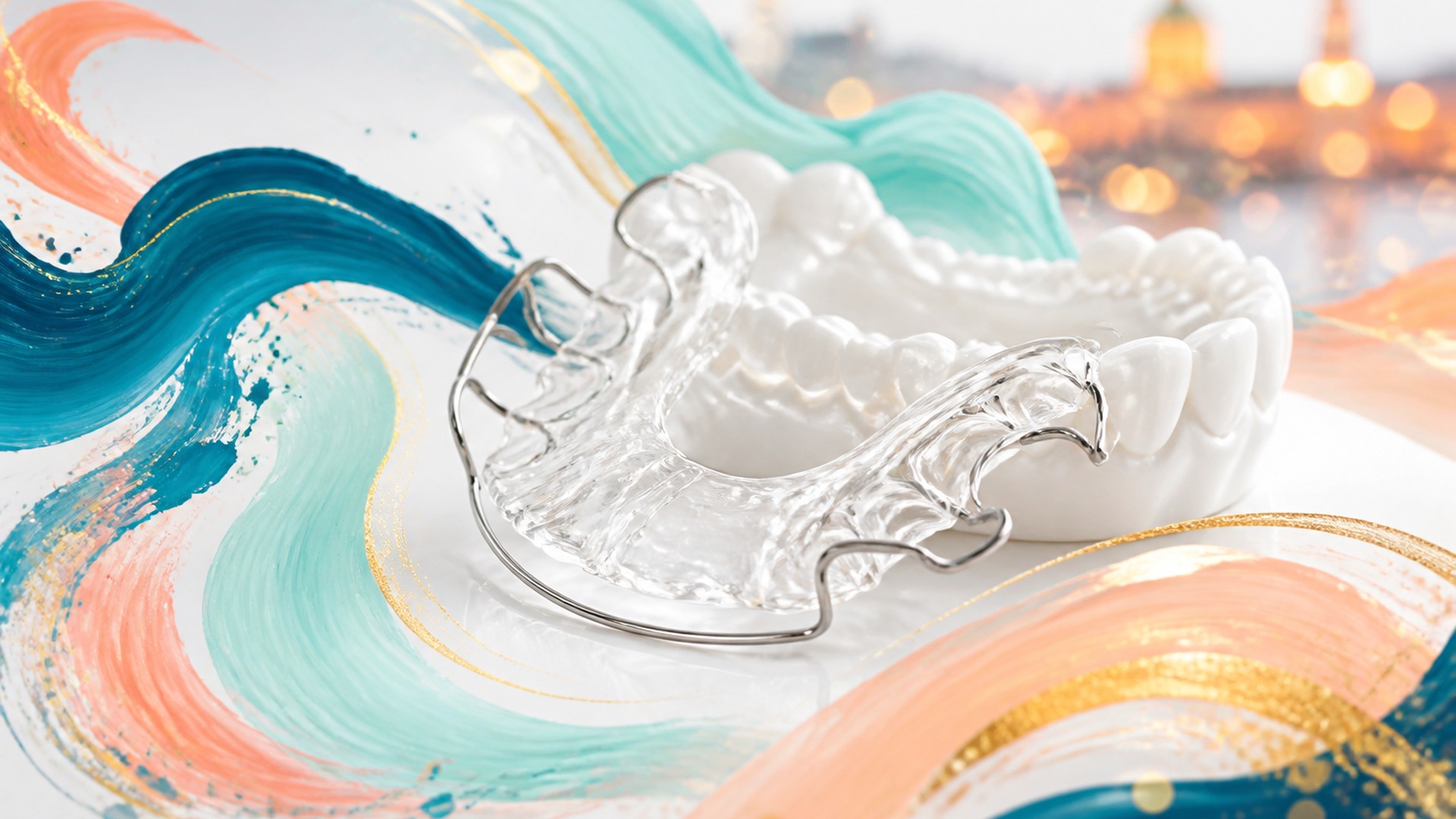
A fixed wire usually sits on the lingual side of the incisors, more often on the lower arch, sometimes on the upper. Composite holds the wire to enamel. Debond often starts on one tooth: floss catches an edge, or the tongue finds a step. Full segment pull-off across several teeth in one meal also happens, especially if the wire is fatigued or took a hit. Abroad the scene feels worse because “your” doctor is far. Logic matches home: remove trauma, count how many teeth lack support, then decide temporary tray plus repair on return versus urgent rebond on site.
I rarely advise “wait until it all peels by itself.” A free wire end scrapes. Teeth without fixation in the debond zone start living their own schedule.
Sharp edge and partial debond
Cover with wax. Without wax, a clean piece of sugar-free chewing gum can bridge a few hours, not days. Book a local dentist or orthodontist to smooth or remove the dangerous segment. Sometimes the doctor cuts only the swinging portion and leaves the stable part for your permanent doctor. That is a normal temporary compromise. Full rebond “as before” in a foreign clinic without your history makes sense when Dubai is weeks away and the unsupported zone is wide. If you fly in two days, clearing trauma and heading home for planned replacement is often enough.
In Dubai I check hygiene around remaining composite, white enamel spots, incisor mobility, and occlusion. Sometimes removing remnants of an old wire and placing a new one from a fresh scan beats patching three-year-old composite piece by piece.
Full wire detachment
The wire comes out wholly or nearly so. The mouth may feel “empty” on the lingual side. Keep fragments in a case; they show construction (twisted ligature, flat chain, custom wire). For the lab that is reference material, not a required part. Without a wire, lower incisors after heavy crowding often crowd first. A temporary tray on that arch is priority until new fixed retention is ready.
Fabrication timing in Dubai depends on lab load and whether you need only a fixed element, only a tray, or both. Price-list floor for the practice: retainers from AED 2,500; exact quote follows exam.
When a temporary tray covers a zone without wire
If three or more teeth in the smile zone have debonded, or you already see a gap, a temporary tray holds the row while the lab prepares a new wire. Wear follows the schedule the doctor sets: often full-time with short breaks for meals and cleaning, then nights after the fixed element is placed. You cannot copy a hotel neighbour’s schedule. Wear matches your time since finish and the speed of shift the doctor sees in the chair.
Removable retainer tray: lost, cracked, or won’t seat
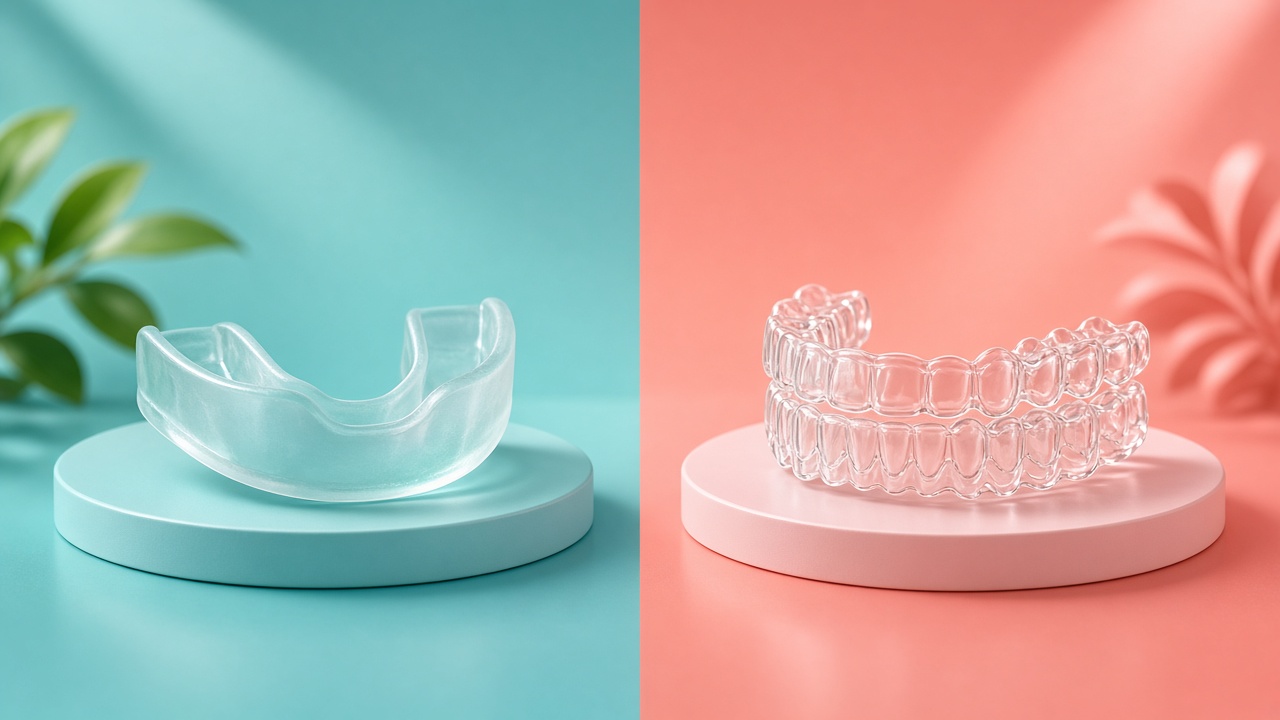
Removable retainers (clear trays or classic plates with a wire) lead travel-loss stories. People remove them before meals, wrap them in a napkin, and bin them with the trash. Or leave them on an aircraft tray. Or set a hard case on a sink edge and knock it into the bin. A midline crack after a drop on bathroom tile ranks second. Third: the tray is intact, yet after a week without it it no longer seats on one incisor: the arch moved, the appliance did not.
I ask patients to travel with the tray only in a hard case and to duplicate the set if trips are frequent. The case goes in carry-on, not checked bags: lost luggage without a retainer is a separate stress. Below is what to do in each of the three plots.
Complete loss of the tray
Searching hotel trash makes sense for the first hours; after waste collection the chance nears zero. Next: contact your doctor and map temporary or permanent replacement. If Dubai is 1–3 days away and you sit in late retention with a calm arch, flying home and scanning on arrival can suffice. If home is two weeks away and finish was recent, get a local temporary tray. Night-only wear without daytime support in early retention I often tighten to full-time while waiting for a new set; again, exam decides.
On the service path: consultation (from AED 500) → photo protocol when needed → impressions / 3D scan (from AED 1,500) → retainers (from AED 2,500). Some lines can combine in one visit; the written estimate locks before the lab starts.
Crack or break in half
Crack edges sometimes cut. Wearing halves “while they still hold” risks swallowing a piece or injuring gum. If the tray cracked yet still seats and does not cut, carry it to the doctor in a case as a sample of thickness and coverage. Labs usually build new from a fresh scan rather than glue old plastic. Home glue is unpredictable for form and hygiene.
Tray won’t seat after a pause
You walked days without it; now it jams on one tooth or seats only with force. That signals shift. Do not “seat” it with a finger slap. Remove it, keep it, book. On exam I compare fit with arch photos and decide: light position recovery still possible with a new tray from a current scan, or a short active correction stage is needed. Promising “we just take a new impression and everything returns” without an exam fails: sometimes teeth already sit beyond what a thin retention tray can hold.
How we make a new retainer in Dubai: scan, timing, fees
Permanent fabrication of a new retainer in Dubai usually takes two visits: status and scan, then delivery and fit. Digital intraoral scan now often replaces classic impressions. Impressions remain a tool when scan is unavailable or a special method is needed. On the site, impressions / 3D scan start from AED 1,500. Retainers start from AED 2,500. Consultation starts from AED 500. These are practice price-list floors on the article date, not a fixed invoice: two arches, fixed wire plus tray, lab rush, and remakes can raise the sum. A written estimate before the lab is required.
I match the new appliance type to your history: whether you had a fixed wire, what tray schedule the previous doctor set, whether relapse happened before, and how you travel. The goal is stable retention that fits your trip rhythm.
What happens on the first visit after you return
We collect complaints and the loss date. Exam covers mucosa, enamel, gingiva, tooth mobility, and occlusion. We review your travel photos. When needed, a photo protocol builds a comparison base. Decision: removable tray only, fixed wire only, combination, or a short active correction first. If the arch has already moved clearly, I say so about further treatment; I will not sell “just a retainer” over obvious relapse. Scan or impressions happen once the plan is clear. Otherwise the lab receives a model without clinical purpose.
Patients with chronic disease and complex periodontium may need a fresh panoramic film or a periodontist referral before we bond a new fixed wire. Retention does not cancel tissue health.
Lab, fit appointment, and wear schedule
Lab time in Dubai is usually counted in working days; I give an exact figure at the visit because load and job type move the number. At delivery I check tray seat, edges, speech, and adjust if needed. For a fixed wire: isolation, bonding, composite check, floss and interdental brush instructions. Schedule: in early retention often full day with meal breaks; later, nights. After a loss I sometimes temporarily tighten wear relative to “before the holiday” until I am sure the arch is stable. A review a few weeks later catches early drift.
A second tray set for trips is a separate talk: for people who fly every month or two it costs less than nerves and less than an emergency replacement in another country.
How to read the estimate and what to compare in writing
Ask for explicit lines: consultation, scan/impressions, photo protocol, lab for one or two arches, fixed wire, number of trays, rush, warranty on crack and re-seat in the first weeks. A spoken “all-in retainer” without a list is a weak anchor. The table below is what I use when a patient compares my price list with an ad for a “tray for pennies.”
| Stage | What it covers in practice | Floor on my site | Typical risk in a “cheap” ad | Ask before you pay | Timing / note |
|---|---|---|---|---|---|
| Consultation | Exam, urgency, replacement plan | from AED 500 | “Free,” but no orthodontist | Who personally examines the mouth? | 1 visit |
| Photo protocol | Before/after comparison base | from AED 500 | No status on file | Will photos enter the chart? | same / next visit |
| Scan or impressions | Model for the lab | from AED 1,500 | Impression “by eye” without control | Digital or impression? Both arches? | 1 visit |
| Removable retainer | Tray / plate | from AED 2,500 (set guide) | One tray, no fit check | How many trays? Crack warranty? | lab days |
| Fixed wire | Wire + bonding | within retainer package logic / confirm | Bond without hygiene coaching | Which teeth? Review timing? | bond visit |
| Temporary tray | Bridge until permanent | case by case | No bridge, “wait two weeks” | What do I wear while waiting? | faster than permanent |
| Re-fit visit | Adjust, trim | confirm in estimate | “It will settle itself” | How many visits in the fee? | 1–2 |
| Travel duplicate | Second tray | separate / on estimate | Not offered | Is a second set available? | on request |
A plain total of “consultation + scan + retainer” is more honest than one pretty ad number. On the article date, floors often read 500 + 1,500 + 2,500 AED and higher with combined work. The final figure sits in the written estimate after exam.
Records, photos, and contact with your previous doctor
A solid archive speeds fabrication of a new retainer. A thin archive does not block care: we capture status from today’s mouth. AAO guidance for patients in orthodontics stresses copies of records when changing doctors or relocating. Retention needs a smaller packet than an active braces course, yet finish date, retainer type, and recent photos already give a strong start. Without them I still work; with them the talk about wear and whether you had a fixed wire is shorter.
I ask patients not to fight the previous clinic over “who is to blame that the tray left with the napkin.” The napkin is to blame. The clinic needs a polite request: please send retainer type and finish date. A reply in one to three days saves extra explanations at the Dubai desk.
Minimum set on your phone
Date braces came off or you received the first retainer. Type: fixed / removable / both. Wear schedule you were given. Latest clear smile and bite photos. If you have it, a photo of the tray on plain paper. Previous orthodontist contact. Material allergies if you know them. That set keeps an orthodontist consultation from starting at zero.
What we add in Dubai
Current photo protocol, arch scan, and when indicated a panoramic or periapical films. Old STL files from another country sometimes help comparison; for a new tray the lab almost always wants a fresh model. If the previous doctor can send fixed-wire parameters, that helps. If not, I design again for today’s arch.
Hand-off of responsibility
While you see another orthodontist abroad for a temporary tray, that doctor owns that stage. When you sit in my chair in Dubai and we start a new permanent set, I own the next step. Say this clearly to yourself: a temporary doctor does not “ruin” your plan by saving mucosa and holding teeth for two weeks. A permanent doctor is not obliged to copy another brand of tray one-to-one if biology asks for a different design.
Frequently asked questions about losing or breaking a retainer on a trip
How many days can I go without a retainer after losing it?
There is no safe universal number. In the first months after braces come off I aim to restore support in days, not weeks. In late retention a few nights without a tray often pass more calmly, yet a clear gap or a suddenly tight old tray already signals shift. An exam sets the guide, not your holiday calendar.
Can any clinic abroad make a new retainer?
Yes. A local orthodontist can make a temporary or permanent set. That path makes sense when your Dubai doctor is far or trauma is present. For permanent replacement many patients prefer the doctor who runs their retention: reviews and wear rules stay clearer. Estimate and appliance type still follow the local exam.
How much does retainer replacement cost with you in Dubai?
Site floors: consultation from AED 500, impressions / 3D scan from AED 1,500, retainers from AED 2,500. The total rises with two arches, fixed wire plus tray, or rush lab work. I lock the exact sum in a written estimate after exam.
My fixed retainer peeled on a trip: is it urgent?
If the edge cuts tongue or lip, take the nearest slot at least for smoothing. If a segment peeled without trauma but several teeth lack support, accelerate the booking, especially in early retention. Rebond on site versus after return depends on flight date and width of the unsupported zone.
My old tray presses hard after a pause. Should I force it on?
No. Strong pressure after days without the appliance often means teeth already moved. Forced seating injures the periodontium. Keep the tray for the doctor and book exam plus a new scan.
Do I need X-rays and a photo protocol for tray replacement alone?
Not always a full radiographic set. Current photos and an arch scan are needed in almost every case. A photo protocol helps compare status before and after the trip. I add films when indicated: pain, mobility, or suspected root or periodontal problems.
Will UAE insurance pay for a lost retainer?
It depends on the policy wording. Orthodontic retention and tray replacement often sit outside basic coverage or hit low limits. Before the visit, ask your insurer and the clinic admin about pre-approval rules and exclusions. I do not promise policy payment without a written answer from your company.
What should I pack so this does not repeat on the next trip?
Hard tray case, orthodontic wax, a mini mirror, a spare tray if you have one, Dubai orthodontist contacts, and a short “today” photo of the arch. A napkin instead of a case is the main error. We discuss a second retainer set for the suitcase at the visit after the new one is made.