An orthodontic treatment plan is the document you will live by for one to three years. I am Dr. Maksut Behruzoglu, a specialist orthodontist in Dubai, and I hand every patient a plan on paper or as a file and ask them to read it at home without rushing. A solid plan covers eight blocks: your concerns and goals, the diagnosis, the records behind it, treatment options, the chosen appliance and stages, a time range, retention, and fees with terms. Each block answers a specific question. If a block is missing or reads as a single phrase like “retention as needed,” you have every right to ask for detail before signing. Orthodontic results depend on biology, appliance wear, and hygiene, so an honest plan states goals and time ranges and never promises a perfect outcome. Below I walk through the document line by line: what each section means, what to ask your orthodontist, and which wording should make you pause. A cheat-sheet table and FAQ close the article.
Why you should read the plan before you sign it
At a consultation you hear a lot in forty minutes: bite class, crowding in millimeters, torque, attachments, interproximal reduction, retainers. Half the words fade by the time you reach the parking lot. At home you have a document and a number. If the document makes no sense, you decide on the number and on how the conversation felt. That works for buying a car. For treatment that reshapes your bite for life, it falls short.
I ask patients to read their plan for three reasons. First, the plan records our agreement. A year in, when you are tired of aligners, the document reminds you why we started and which goal you chose. Second, the plan shows whether the orthodontist thought about your case. A half-page template with your name dropped in differs from a plan that names your teeth, your radiographs, and your trade-offs. Third, the plan gives a basis for a second opinion. Another orthodontist can read it and say whether they agree with the diagnosis and the logic.
In Dubai, patients often compare several clinics. Comparing totals without plans tells you little: the same figure can hide different appliances, a different number of visits, and different retention. During an orthodontist consultation I explain the plan out loud, and the document helps you compare offers on equal terms.
I have seen patients sign plans without opening page two. Six months later it turned out the lower arch was never included, or that additional aligner series cost extra. In those stories the orthodontist usually hid nothing: the line sat in the document. The patient skipped it, and nobody said it out loud in the room. Ten minutes at home with the plan and a pen saves months of awkward conversations.
Reading a plan needs no medical degree. You do not have to understand angles on a cephalometric X-ray or wire mechanics. Follow the logic: what is wrong now, what we want to achieve, by which method, over what time, how we hold the result, and what it costs. If the document fails to answer one of those, you have found a topic for your orthodontist.
Relocation adds one more reason. People in the Emirates change countries more often than almost anywhere. A detailed plan lets your next orthodontist continue without starting diagnosis from scratch. A three-line plan forces them to begin almost anew.
The header: concerns, diagnosis, and records
The first page looks dull, and many people skip it. Start there. The header records what brought you in, what the orthodontist found, and which data support the conclusions. An error here carries through the whole plan. Check that your concerns appear in your own words, that your age is right, and that medical conditions and medications are listed if you mentioned them. Look at which radiographs and models are listed and when they were taken. A panoramic X-ray from three years ago does not reflect today’s mouth, especially in a teenager. For digital treatment planning I need a fresh set: scan, photos, and radiographs when indicated. If you brought records from another clinic, check that they appear in the plan with dates. Below are the three parts of the header and the questions worth asking about each.
Your concerns and goals
In a good plan the orthodontist writes your concern the way you said it: “crooked lower front teeth,” “gap between my upper front teeth,” “my bite shifted after an extraction.” Next to it sit your goals: smile aesthetics, chewing, preparation for an implant or crowns, stability after previous treatment.
If the goals on paper differ from yours, say so. A patient asks to straighten her front teeth in eight months for her wedding, and the plan describes a full bite correction over two years. Both paths can be reasonable, but you make the choice after the orthodontist explains it. The plan should reflect that choice.
Diagnosis and bite class
An orthodontic diagnosis describes several planes. The front-to-back jaw relationship is recorded in classes: Class I means a normal molar relationship, Class II means the lower jaw sits further back, Class III means it sits forward. Then comes the vertical: deep bite or open bite. Then width: crossbite, a narrow upper jaw. Crowding or spacing is noted separately in millimeters, along with midline shift and tooth inclination.
A line reading “lower crowding 6 mm” says more than “crowding.” The number decides whether interproximal reduction and expansion will do or whether extractions come into play. If the plan uses only general words, ask to see the measurements on the model.
For adults the diagnosis also covers gum and bone health, missing teeth, crowns and implants, and tooth wear. Those items shape force levels and movement speed. If you have a history of gum disease and the plan says nothing about it, ask.
Records behind the plan
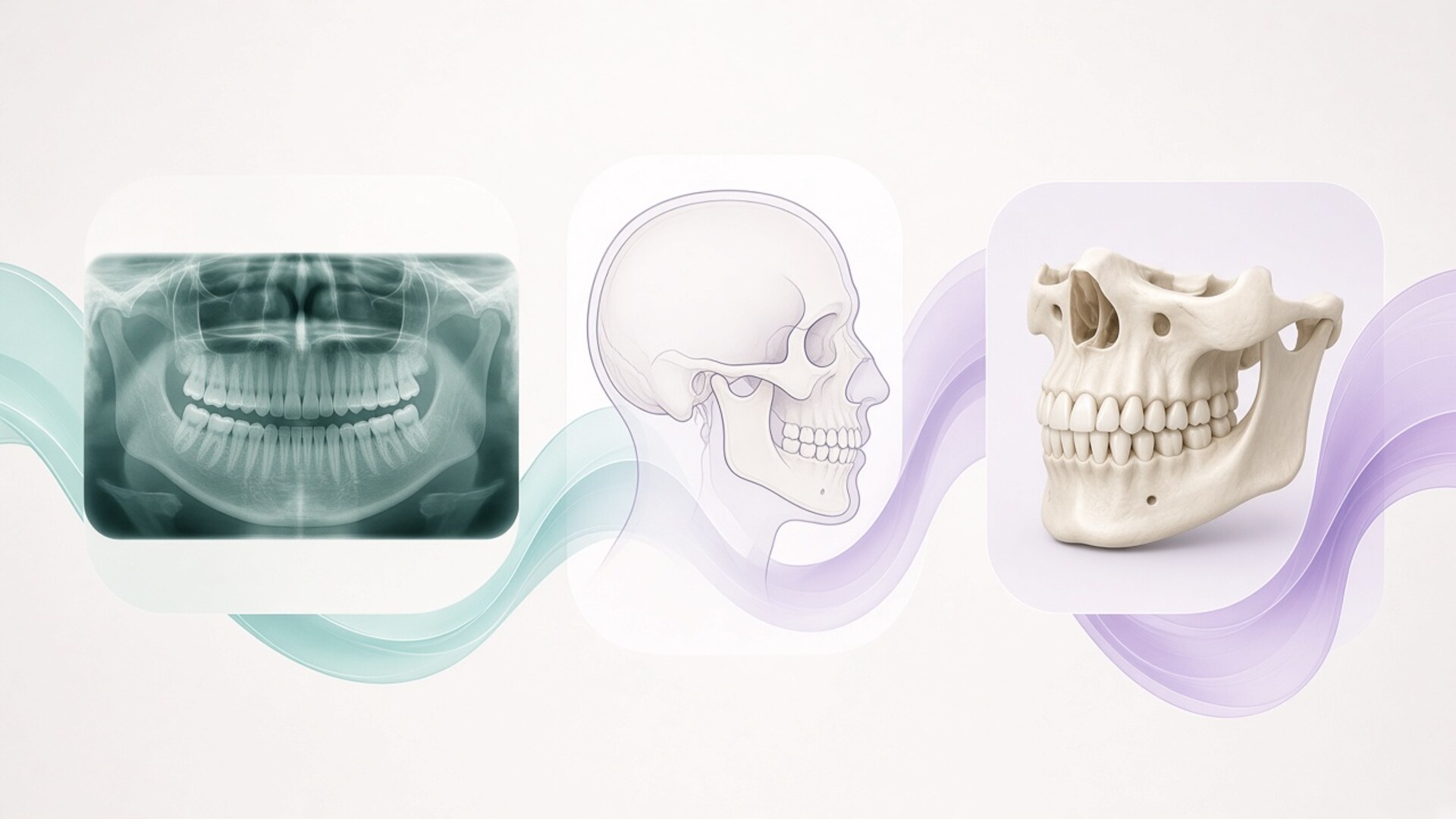
This part lists the data: face and tooth photos, an intraoral scan or models, a panoramic X-ray, a lateral cephalogram, a CBCT when indicated, and the analysis of those images. Each item should carry a date.
Not everyone needs a CBCT. I order one for impacted teeth, suspected thin bone, asymmetry, jaw joint problems, or mini-implant planning in a tight area. If a CBCT was taken, the plan should state what it showed and how it changes treatment. A scan without a conclusion is just a file in an archive.
Treatment goals and trade-offs
After the diagnosis the plan moves to goals. I write them as a list: align the upper and lower teeth, close a gap, correct overbite depth, match the midlines, open space for an implant. Each goal should be checkable. “A beautiful smile” measures nothing. “Incisor overlap of 2–3 mm” does.
An honest plan names trade-offs. An adult with a skeletal jaw mismatch may be offered two routes: orthodontic camouflage, where the teeth compensate for the jaw position, or combined treatment with a surgeon. Camouflage has a ceiling: the teeth line up, the bite works, and the facial profile changes little. Surgery carries its own risks and timeline. Both routes are legitimate. The plan should describe what each one delivers and what it leaves unchanged.
Partial goals happen too. A patient wants to straighten only the front teeth and leave the side bite alone. That can work if it does not harm function. In the plan I record that the side bite stays as it is and that the patient understands this. That line protects both sides from disappointment a year later.
Another sign of a thoughtful plan is the order of goals. With a deep bite and crowding, the orthodontist usually opens the bite first and refines individual teeth later. If you are preparing for an implant, the plan first creates and aligns the space, then hands you to the surgeon, then finishes detailing. You should be able to read that sequence from the document. If you cannot, ask your orthodontist to sketch it on paper.
Look for limitations in the goals section: short roots, thin gums, old crowns that will need replacing after alignment. An orthodontist who lists limitations tells you in advance where the result may differ from the simulation. A complex case with no limitations listed is a reason to ask.
Pay separate attention to goals about your face. Changes to profile, lips, and smile are described cautiously because soft tissue responds to tooth movement differently in each person. If the document promises a specific change in facial shape without surgery, ask what the prediction is based on.
Method, appliance, and stages
Patients read this section more closely than any other, because it says what will be in their mouth. It lists the appliance type, additional procedures, the order of stages, and the rough length of each. The orthodontist explains the choice: why aligners, why braces, why a combination. If there were several options, a good plan lists them all with their pros and limits and marks the one you chose. I ask patients to watch the verbs here. “Braces on both arches,” “interproximal reduction between lower incisors up to 0.5 mm,” “mini-implant on the upper right” describe concrete actions. “Adjustments as needed” describes nothing. Vague verbs later turn into disputes about what was included and what costs extra. Below are the four parts this section usually contains.
Choosing the appliance
Metal braces, ceramic braces, lingual braces, clear aligners, removable plates for children, functional appliances for teens. Each option fits its own tasks. I do not call one method worse than another when both suit the case. The choice depends on movement complexity, your discipline, aesthetic priorities, and budget.
For aligners, the plan should name the system and the number of trays or the estimated number of stages. For braces, the bracket system and which arches. If the plan just says “aligners,” ask which system, how many trays in the first series, and whether additional series are included.
Extractions, reduction, and expansion
Space for alignment comes from three sources: extractions, interproximal reduction (careful polishing of enamel between teeth by fractions of a millimeter), and arch expansion. The plan states which source is used and how much. If extractions are planned, the document should name the teeth and the reason.
Reduction is recorded by area and in millimeters. The safe amount is limited by enamel thickness. Expansion in adults is limited by bone, especially in the lower jaw. If the plan promises large expansion without extractions despite marked crowding, ask to see it on a CBCT or model.
Stages and timeline
A typical plan splits into stages: alignment, bite correction, detailing, appliance removal, retention. Each stage has a rough duration. The total is written as a range: “18–24 months.” A single exact figure with no range raises my eyebrows, because each person’s biology moves at its own pace.
This part also lists visit intervals: every four to eight weeks for braces, every six to ten weeks for aligners with remote monitoring. Ask what happens if you miss a visit or leave for the summer. For Dubai patients that scenario is common, and the plan should prepare for it in advance.
I ask patients to check the timeline against their calendar: a wedding, a baby, a long work assignment, a teenager’s exams. If a key event lands on an elastics phase or on debond day, we can shift the sequence or choose a different appliance. That conversation is easier before treatment starts than mid-course. Write the dates down and bring them to the plan discussion.
Other specialists involved
Orthodontics often needs a team. An oral surgeon removes teeth or places mini-implants. A periodontist treats the gums before and during treatment. A prosthodontist makes crowns or implants after alignment. A general dentist fills cavities before the appliance goes on.
The plan should name these specialists and the order of work. Their fees usually sit outside the orthodontic budget. If the document says nothing about who places the implant into the new space and when, ask: a coordination gap can create months of waiting.
Cheat sheet: plan section, question, red flag
The table below pulls the whole walkthrough into one place. Take it to your consultation or open it next to your plan. A red flag in the last column means a reason to ask. Sometimes the orthodontist has a good explanation that simply never made it into the document.
| Plan section | What should be there | Question to ask | Red flag |
|---|---|---|---|
| Concerns and goals | Your words, priorities, event dates | Do the goals in the plan match mine? | Goals missing or not yours |
| Diagnosis | Bite class, vertical, width, crowding in mm | Can you show me the measurements on the model? | One phrase like “bad bite” |
| Records | List with dates and conclusions | What did each image show? | No imaging, or images years old |
| Options | Two or three routes with pros and limits | Why do you recommend this one? | A single option in a complex case |
| Appliance | System, arches, number of trays or stages | What is included and what costs extra? | “Aligners” with no system or scope |
| Space for teeth | Extractions, reduction, expansion in mm | How much enamel will you remove, and where? | Large expansion with no rationale |
| Timeline | Range per stage and visit interval | What happens if I miss a visit or travel? | Exact finish date with no range |
| Retention | Type, wear schedule, follow-up, replacement | Who monitors me after removal, and for how long? | “Retention as needed” and nothing more |
| Fees and terms | Total, payment schedule, inclusions, price date | What could change the total mid-treatment? | A total with no list of inclusions |
| Outcome | Goals and limitations, no guarantees | Where might the result differ from the simulation? | A guaranteed perfect result |
If several rows show a red flag and you cannot get a clear answer, pause. A second opinion on a finished plan takes one consultation.
Retention: the line people skip
Retention is the period after the appliance comes off, when we hold the teeth in their new position. Teeth tend to drift back for life: gum fibers pull them toward their old spots, and the bite changes with age on its own. The American Association of Orthodontists (AAO) and European colleagues agree that without retention a large share of patients lose part of their result over time. That is why I treat the retention section as seriously as the appliance section. Weak plans reduce it to one line: “retention as needed” or “retainers after treatment.” Such a line skips the key questions: which retainer, how long to wear it, who monitors, and what to do if it breaks. I discuss retention before the braces or first aligner go on. Below are the three parts every plan should include.
Retainer type
Retainers come fixed or removable. A fixed retainer is a thin wire bonded behind the front teeth. A removable one is a clear tray or a plate with a wire. Orthodontists often combine them: a wire on the lower incisors and a clear retainer for the upper arch.
The plan names the type for each arch. Each option is valid. A fixed retainer does not rely on your discipline but needs careful cleaning and checks. A removable one is easy to clean but works only while you wear it. Ask why the orthodontist chose this combination for your case.
How long to wear it
The wear schedule changes over time. Usually a removable retainer is worn most of the day for the first months, then at night. Many orthodontists now recommend night-time wear indefinitely, because teeth keep moving throughout life.
If the plan says “wear for one year,” ask what happens after that year. If it says “for life,” ask how often the tray needs replacing and what that costs. An honest answer frames retention as your long-term job, with the orthodontist helping you do it.
Who is responsible after the appliance comes off
The plan should describe follow-up visits after removal: at one, three, six, and twelve months. Ask whether they are included, how many there are, and what to do if a retainer breaks or goes missing.
Dubai patients often relocate soon after debond. If you know a move is coming, tell your orthodontist early. I give such patients a spare retainer, a copy of the final scan, and a letter for their next orthodontist describing the retention setup.
Fees, visits, and terms
People read the fee section first and understand it least. The total means something only alongside a list of what it covers. Check whether it includes diagnosis, the appliance, all visits, additional aligner series, emergency visits for breakages, appliance removal, the first retainers, and post-treatment follow-up.
Usually excluded: cavity treatment, professional cleaning, extractions by a surgeon, mini-implants, crowns and implants, replacement of lost retainers. If an item matters to you, ask for it to be written in explicitly.
The payment schedule belongs in the plan as well: full prepayment, staged payments, or installments. Ask what happens to your money if you stop treatment or relocate. A reasonable clinic spells this out in the contract upfront.
Prices in Dubai change, so the plan should show the date of the estimate and how long the offer is valid. If you got the plan six months ago, the figure may have moved. UAE insurance covers orthodontics unevenly: some policies cover only children, others cap the benefit. Your insurer confirms coverage; the orthodontist documents clinical need.
Look at what could change the total mid-treatment. An honest plan names such scenarios: missed visits without notice, repeated appliance breakage, goal changes at your request, an extra phase because aligners were not worn enough. Each scenario should carry a clear price or rule.
When comparing plans from different clinics, list the inclusions side by side in two columns. A lower total often looks lower because retainers, additional aligner series, or post-treatment checks were left out. A higher one may include all of that plus several years of monitoring. Neither figure says anything about the orthodontist’s skill on its own. The difference becomes clear once both columns hold the same set of services.
Finally, visit logistics. How long a visit lasts, whether you can reschedule, how to reach the orthodontist between visits, who sees you when your orthodontist is on leave. For a busy professional in Dubai these lines decide whether treatment fits into life.
Red flags and questions for your consultation
Most plans patients bring me for a second opinion are written in good faith. Some wording still worries me. A red flag does not prove the orthodontist is bad. It marks a spot where you should ask a question and get an answer before signing. I list the phrases that most often cause trouble a year into treatment. If you see one, ask your orthodontist to explain or rewrite the line. A good specialist answers questions about their plan calmly and adds detail to the document. If questions trigger irritation or pressure, that tells you something too. A second opinion in a complex case is normal practice, and I offer it myself to patients who hesitate. Write your questions down beforehand. Below are four groups of red flags and questions that help you check them.
A guaranteed perfect result
Phrases like “we guarantee a perfect smile,” “results exactly like the simulation,” or “100% success” contradict medicine. Tooth movement depends on bone, age, appliance wear, and hygiene. The orthodontist answers for the quality of diagnosis, planning, and work, and cannot guarantee biology.
A commercial guarantee is a separate matter. A clinic may promise to replace a broken bracket or include additional aligner series for a set period at no charge. Those terms help when written out specifically. Ask exactly what is guaranteed and under which conditions.
Vague retention
“Retention as needed” with no retainer type, wear schedule, or follow-up is the most common gap in the plans I read. A year after braces come off, the patient returns with shifted teeth and learns that retainers and checks were never part of the fee.
Ask specifically: which retainer for each arch, whether it is included, how many follow-up visits are covered, what a replacement tray costs. Ask for the answers to go into the plan.
A plan with no diagnostic records
If you received a plan after a five-minute look with no radiographs and no scan, it rests on an impression. Aligners ordered from app photos with no in-person exam are the extreme case. Hidden problems such as an impacted tooth, thin bone, or root inflammation show up on imaging.
Ask which data the plan is based on. If there are no radiographs, ask why the orthodontist considers them unnecessary in your case. For a young child at an early stage an exam can be enough, but for an adult with visible crowding that is rare.
Pressure to decide today
“This discount ends today” or “if you do not start now, it will be too late” belong in a shop. Orthodontic treatment rarely needs a decision within days. Exceptions exist: in a growing child, the window for some appliances is limited to months. In that case the orthodontist names the medical reason for urgency and explains what the child loses by waiting.
Take the plan home, read it, show it to family or a second orthodontist. A good plan survives a week of thinking.
Frequently asked questions about orthodontic treatment plans
How many pages should a good treatment plan have?
Page count does not measure quality. A simple case fits on two or three pages; a complex one with surgery and several specialists takes more. What matters is that every section from the table above is present and written about you. A twenty-page template full of general statements helps less than a specific three-page plan.
Can I ask for a copy of the plan before paying?
Yes, and I recommend it. The plan is the result of diagnostics you paid for or received at the consultation. At home you can read it calmly and show it to a second orthodontist. If a clinic refuses to release the plan before you pay for treatment, ask why.
What if two orthodontists propose different plans?
Different plans for the same diagnosis are common, because many cases have more than one reasonable route. Compare the diagnoses first: if they match, the difference in method may come down to preference. If the diagnoses differ, ask each orthodontist to explain their measurements. The decision stays with you once you have a clear explanation.
Should the plan include an exact finish date?
No. An honest plan gives a time range, such as 18–24 months, and explains what the result depends on: appliance wear, biology, and attendance. An exact date with no range promises something the orthodontist does not control. Ask which factors could lengthen treatment in your case.
Can the plan change during treatment?
Yes, and that is normal. Teeth move at different speeds, and the orthodontist adjusts the plan at check-ups. Changing a goal at your request is also possible but may affect time and cost. A good plan describes upfront how such changes are handled.
What does the “simulation” in an aligner plan mean?
The simulation is a virtual model showing planned tooth movement stage by stage. It helps you see the goal and discuss it with your orthodontist. Real teeth deviate from the simulation, so the orthodontist checks aligner fit and orders additional series when needed. The simulation shows the plan; the result is judged in your mouth.
Do I need a second orthodontist to check my plan?
Not always. If the plan is detailed, your questions got clear answers, and you feel comfortable with the orthodontist, a second opinion is optional. With a complex case, extractions, surgery, or doubts, I suggest showing the plan to one more orthodontist. One consultation costs less than fixing a treatment that went wrong.
What should I take if I move abroad mid-treatment?
Ask for a copy of the plan, a fresh scan, photos, radiographs, and a letter describing the current stage and mechanics. If you wear aligners, ask how many trays remain and whether the case can transfer to an orthodontist in another country. For braces, the bracket system name matters because your next orthodontist may use a different one. The more detailed the records, the less time a new orthodontist spends repeating diagnosis.