Patients often expect one box of trays and a hard “done” date. In a full aligner course the mouth and bone answer differently from the screen animation: a tooth lags, goals sharpen, and the finish needs small detail work. Then the doctor takes a new scan and orders an extra tray series — a plan revision (in many English protocols this step is called a refinement). I practise in Dubai as a specialist orthodontist, and on consultation I say early: extending the course is a common clinical stage, not an automatic failure. Below is what a plan revision means, why it appears, how the path runs from review to new trays, how much time and money a round usually adds, and which contract lines to read before the deposit. Service-page floors in my practice: an aligner treatment plan from AED 600, Invisalign from AED 22,000; only an exam and a written estimate settle the bill.
What a plan revision means in the chair
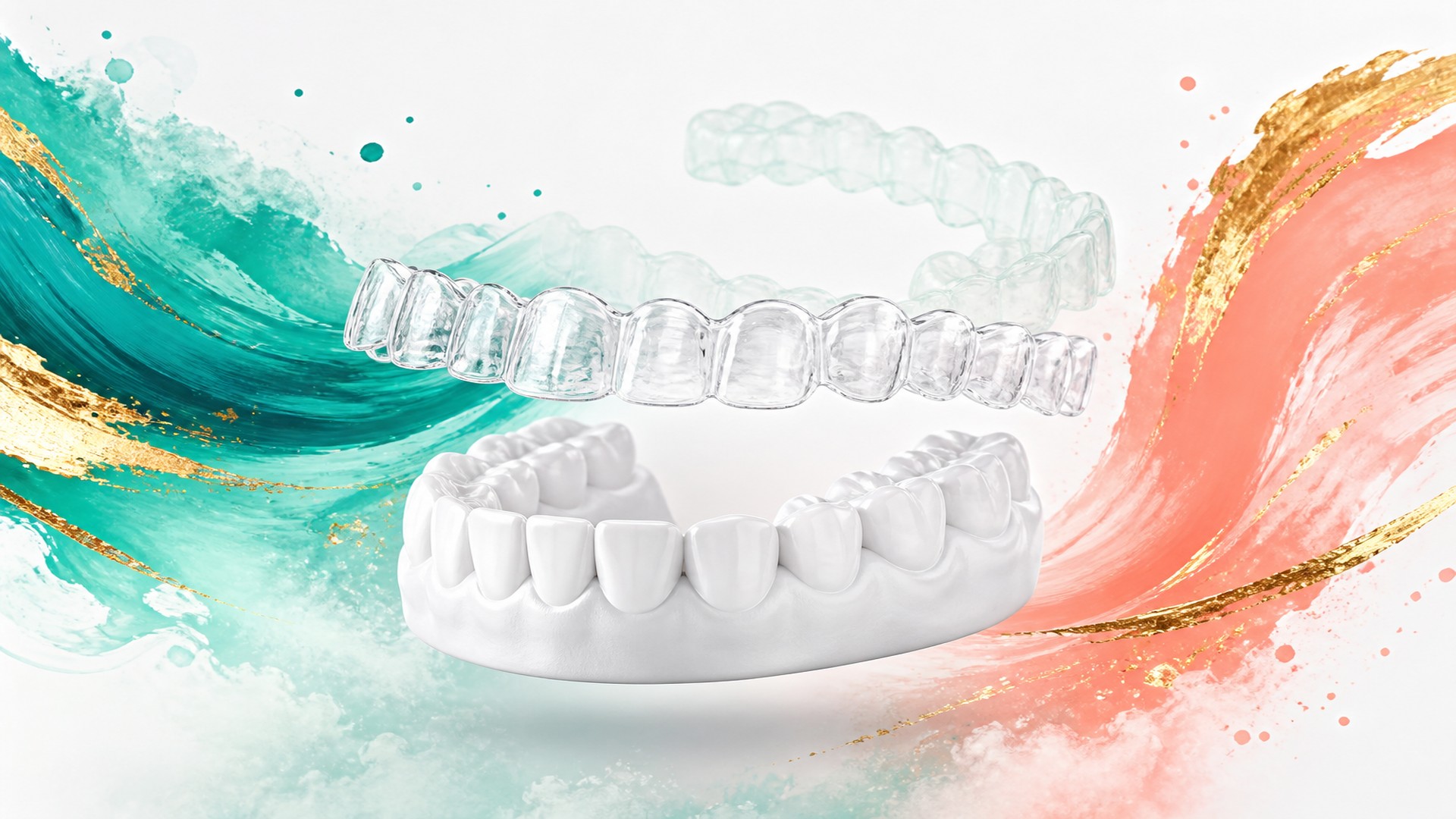
A plan revision is not “two more weeks in the same tray.” It is a fresh scan of where the teeth sit now, new 3D movement logic, and a separate tray series built from the real mouth rather than the old forecast. The first series takes you from start toward an intermediate goal. The extra tray series closes what the first series did not finish: a lagging tooth, midline, contact, root tip, small edge gap. On an aligner treatment plan I show the simulation as a path hypothesis. The hypothesis holds while the mouth follows it. When tracking drifts, we update the map instead of arguing with plastic. In ads “revision” sounds like a glitch; in full-volume orthodontics it is a normal finishing tool. Three layers below stop confusing a plan revision with starting from zero.
A new scan, not endless days on the same number
If a tray no longer seats or seats with a gap, stretching the same stage rarely pulls the tooth back onto the path. Plastic is cut for a specific stage geometry. When the tooth moved differently, the shell pushes past the target. I first check wear hours, composite button integrity, and seat at an aligner fitting visit. If the stage can still close with chewies or a drop-back to the previous tray, we do that. If a segment has already drifted, I order a scan. The scan records fact: where the teeth stand today. Without that fact any “new box” is built on an outdated model.
A mid-course rescan sometimes sits inside the package with the plan-revision round. Sometimes it is a separate line. The rule belongs in the contract before start, not in a chat in month ten.
A new tray series for the mouth you have now
After the scan, doctor and lab rebuild the plan: which teeth still move, where buttons are needed, where enamel reduction sits, where elastics join. Tray count in an extra series is often smaller than the first: finishing sets of 8–20 trays are common, not a full “second course.” Time still adds up: manufacture, shipping into Dubai, fitting, wear on schedule. Patients feel “treatment started again.” Clinically it is the same course with an updated map.
I do not promise “one plan revision and forever perfect.” A second round appears when goals change, biomechanics stay hard, or long stretches without trays stack up. The package limit on rounds protects the budget from endless photo polishing.
How a plan revision differs from a system change or a full restart
Switching brands, restarting after a year without trays, or moving to braces are different scenes. A plan revision keeps the same system and the same clinical goal inside the chosen package while round limits and time windows allow it. If you barely wore trays for six months, teeth may sit far from any plan — then we talk about new volume, not a “free round in the contract.” Adult aligners and Invisalign pages cover package levels; here the point is simpler: plan revision is a standard tool inside a course, not a brand failure.
Why the first series rarely closes the whole path
A 3D plan cuts a long path into small steps. Each step is a hypothesis about how bone and ligament answer shell force: precise on paper, approximate in the mouth. Adult bone answers more slowly than adolescent bone. Crowns move more readily than roots. A round premolar slides differently from an edged incisor. The simulation draws a clean crown finish; the clinic checks contacts, root tip, gum, and wear hours. So a full course often means a main series plus one (sometimes two) plan revisions. That is not “the doctor erred on day one.” It is the stacked gap between model and life. On consultation I plant that talk before the deposit so the surprise is round size, not the fact of extension. Three reasons below show why “one box to the smile” remains marketing fiction.
Optimistic staging and hard movements
Doctor and software try to fit the path into a sensible tray count. Larger steps shorten the on-screen series — and raise the chance a tooth will not arrive. Rotations, bodily shift, extrusion, and root-tip control need fine staging and often composite buttons. If the first series pushed an aggressive pace “for a pretty date,” mid-course tracking breaks more often. Then a plan revision restores control; it is not punishment for “bad plastic.”
I prefer a slightly longer first series with predictable steps over short marketing and two revisions in a row. Patients need an honest time corridor, not a three-month reel promise.
Finish detail the first series never sees
Near the end of the main series the front may look “almost straight” while the bite is not: a light open contact, a one-millimetre midline shift, a black triangle at the gum after space closure. Those details sell poorly in the first simulation reel and weigh heavily on the feeling of “done.” An extra tray series closes that finish: small adjustments that are unsafe or useless to “force” for months in the last tray of series one.
Sometimes you change the goal yourself: you started with “nudge the incisors,” six months later you also want canines and midline. New volume can break a short package limit — then we talk level upgrade, not a routine plan revision.
Biology does not sign the contract with you
Movement speed depends on periodontium, age, smoking, systemic factors, bone density. Two patients with similar crowding on screen can diverge by months. The American Association of Orthodontists describes orthodontic movement as a biological response to controlled force — and that response is individual. The tray sets direction. Tissue sets tempo. When tempo lags the tray calendar, a careful doctor updates the plan instead of forcing the next number onto a lagging tooth.
Tracking: when the mouth leaves the screen
Tracking means tooth position matches the plan stage. At review I compare tray seat, photos or scan with simulation frames. If the tray seats tightly, buttons click into wells, and edges show no gaps — tracking holds. If the tray rocks, an incisor lags, a button fails to lock — the path has drifted. The earlier we catch it, the cheaper the fix: drop-back tray, button repair, or a scan and plan revision. Waiting for the end of the box “just in case” is expensive. In Dubai, flights and dense calendars make a missed review of two months cost an extra series more often than patients expect. I tie tracking to every fit check, not to a rare “come back when trays run out.” Three home signals below often show up before the visit.
Gaps, flaps, and trays that pop off
A dense tray at the start of a stage seats with effort. By the end of the wear window it usually seats easier — the tooth shifted a little. If three days after a change the occlusal surface already rocks or an edge will not seat even with chewies, the stage never built contact. Message the clinic before you move to the next number. The next tray expects geometry you do not have yet.
A flap in speech or a night slip-off is also a signal. Sometimes a worn button is the cause. Sometimes under-wear. Sometimes a step that was too large. We sort it in the chair, not in a three-emoji chat.
One tooth lags while the neighbour “wins”
Classic mid-course pattern: a premolar rotates slowly while an incisor followed the plan. The tray tries to pull both and loses grip on the lagger. At review I decide: hold the current tray, drop back, restore composite, or scan. Ignoring a lagging tooth “for five more trays” almost always pulls a heavier plan revision later.
When we can still close a stage without a new scan
A short hour shortfall, a light gap in week one of a new tray, one chipped button — often fix without a full plan revision. Chewies, a few days on the previous number, a short visit to restore composite. A new scan is needed when the mismatch is structural: an arch segment off the plan, seat lost on several teeth, or goals changed. I say that fork out loud so the patient does not hear only the word “add-on fee.”
Wear hours, buttons, and travel gaps
Aligner mechanics work only with contact. Contact needs hours. Most protocols hold a 20–22 hour daily frame: trays out for meals and cleaning, then straight back. Coffee “for five minutes” five times a day becomes hours of idle time. The tooth loses the stage’s micro-shift while the next tray already expects the next geometry. In Dubai, late dinners, iftar, flights, and DIFC meetings punch holes in that frame. At the start of adult aligners I ask about the real calendar before manufacture. Planning software assumes discipline; it does not know your flight grid. If life systematically delivers 14–16 wear hours, I say so before series one — sometimes closer reviews, sometimes another tool. An honest hours talk saves months and one plan-revision round. Three everyday layers below most often pull an extra tray series.
Under-wear and nights without a tray
Night covers a large slice of the daily total. Waking without a tray short-changes the stage almost every night. Daytime under-wear stacks on top. After two or three months the mouth and plan diverge enough that “one more week on the same tray” no longer repairs it. Then we scan. I do not lecture. I count hours and watch seat. If life cannot carry 22 hours, it is calmer to discuss another tool or tighter reviews than to silently bank lag.
Chipped buttons and “no bumps for photos”
Composite buttons (attachments) give the tray purchase on the crown. Without them plastic slips on round teeth and hard vectors. A button chip on holiday without repair is a common point-failure of tracking. Refusing buttons at start “so teeth look clean on camera” raises the chance of a plan revision. I record the refusal in plan logic: which movements become less predictable. Selfie enamel and a stable finish are different bills.
Travel pauses and lost trays
Two weeks without trays “for a wedding” often costs a separate plan revision later. Teeth tend to rebound until retention is set. A tray lost in a restaurant, a cracked shell in a hot Dubai car — course life, not rare drama. Replacing one tray on lab price and revising a whole series are different estimate lines. I already broke down package inclusions and typical add-ons in what’s included in aligner treatment price; here the link to extension matters: every long pause raises the chance that series one will miss the agreed goal.
How a plan-revision round runs from review to new trays
When review makes a plan revision clear, the path usually runs: decision → scan → approve a new plan → manufacture → fit the new series → wear schedule and follow-ups. Time from decision to the first new tray in Dubai often spans weeks: lab, logistics, slots. I set the calendar at once so you do not wait for “trays tomorrow” and do not remove the last tray “because the series ended.” While you wait we sometimes keep the last well-fitting tray as a holding retainer — case by case after checking seat. If the old tray no longer holds the arch, we discuss temporary retention. While the lab works, each day without support raises the risk of losing millimetres already gained. Patients often confuse this path with a five-minute visit to “just order more trays.” Three steps below settle clinic and budget for the round.
Chairside decision and a written outline
I show where the mouth left the plan and what the extra tray series must close. We fix in writing: this is a package round or a line beyond the limit. If the limit is spent, the estimate should appear before the scan, not after the lab order. An aligner treatment plan from AED 600 on my site is the floor for rebuilding logic when a fresh written outline is needed; a full system package on restart sits at different service-page numbers.
Scan, plan approval, manufacture
The scan feeds the model. The doctor edits stages, buttons, enamel reduction. You see the updated simulation and understand the new goal. After approval the lab forms the series. Manufacture and shipping time depend on system and UAE logistics — I give a corridor for your case, not a city-wide average. While trays travel, discipline with the old tray (if it still seats) or temporary retention decides whether you keep what you already gained.
Fitting the new series and rebuilding tracking
At aligner fitting we check how the new first tray seats on the real mouth. We reset the change calendar. Early reviews after a plan revision matter most: the new series starts with a clean tracking slate. If a gap returns on tray three, we fix early. A plan revision does not cancel the hours rule. It gives a new map under the same contact physics.
Time, money, and contract lines
Extending the course hits calendar and budget. Calendar: weeks of production plus weeks or months wearing the extra series. Budget: a round may sit inside a full package with a limit, or bill separately. My site has no universal “plan revision” line — beyond package limit we bill by estimate. Practice floors for orientation: Invisalign from AED 22,000, adult aligners from AED 16,000, plan from AED 600. A stranger’s ad “from AED 2,999” rarely describes a full course with plan-revision rounds. The deeper inclusion breakdown lives in the aligner price article. Here is the table I walk through before deposit when the risk is specifically extension.
| Contract question | What to fix in writing | Typical full-package answer | Typical short-package risk | What it means for time | What it means for budget |
|---|---|---|---|---|---|
| Extra tray series limit | How many free rounds | Often 1–2 rounds | Zero or a hard cap | A second round = new months | Beyond limit — by estimate |
| Time window | Plan revision only within N months of start? | Sometimes yes | Often already | Miss the window = new volume | New volume ≠ “free round” |
| Rescan | Included with the revision round? | Often yes | Sometimes separate | No scan, no new series | A separate line builds surprise |
| Who approves the new plan | Chairside orthodontist or remote tech | Doctor owns logic | Vague | Slow approval adds weeks | Weak control = extra rounds |
| Mid-course goal change | New volume inside limit or level upgrade | Fixed in writing | Often an add-on | New goals = new path | Short packages break first |
| Lost / cracked tray | One-tray replace vs full new series | Replace limit or lab price | Often price + shipping | Wait for replace | Do not confuse with full plan revision |
| Retainer at the end | First set included? | Sometimes yes | Often no | No retention, unstable finish | from AED 2,500 with me if outside package |
| Longer reviews | What if the course runs +6 months | Written rule | “We’ll see later” | Extra visits | Visit by estimate / in package |
Read this table before you sign. “All inclusive” without a round count is nearly empty. A dirty total of “package + one likely plan revision + retainer” beats a pretty “from” in stories.
How to cut spare rounds — and what I will not promise
Cutting the chance is not zeroing it. A full course with hard movements still often asks for a finishing series: that is the gap between model and living tissue. But some plan revisions grow from holes patient and doctor can close early. I build a start checklist: realistic hours, agreement to buttons and enamel reduction as planned, flight calendar, clear round limit in the contract, early fit reviews. On consultation (from AED 500 on the site) that talk takes time — and saves months later. I do not sign “never a single plan revision forever”: biology and daily life do not live in the PDF. An honest time corridor with one likely round is calmer than a pretty date with no buffer. Three rules below really cut spare rounds without cancelling a normal finish.
Match goals and package level before manufacture
A short package under a full-course task almost guarantees an add-on or upgrade. Compare tray count on the simulation with the tariff’s tray limit. If the screen shows 40 stages and the tariff cuts at 14 trays, it is too early to sign. On the plan I tie movement volume to package level before the lab order.
Wear the protocol and repair buttons at once
Hours and intact buttons are the main levers you control on tracking. A tray in a napkin for two hours after lunch, a night without a shell, a composite chip “until the next planned visit” — a direct path to an extra series. A short unplanned visit costs less than a new round.
Catch tracking early, not at the end of the box
Reviews every six to ten weeks (sometimes tighter at the start) catch lag while it can still close. Skipping visits “because trays are still at home” is a common trap. Leftover trays do not treat by themselves. They help only if the mouth is still on the plan path. If you travel for long, set a review window before you fly: protocol photos sometimes orient us, but I decide on a scan in the chair.
Mid-course mix-ups patients bring every week
Halfway through series one, calendar fatigue and the wish to “just take them off” arrive. In that window it is easy to read a poorly seating tray as “almost finished,” or to panic at normal day-one pressure of a new stage. I separate three scenes: planned first-day discomfort of a new stage, true tracking loss, and a deliberate stop with retention. Mixing them pulls either a spare plan revision “just in case” or a refusal of a needed round. At aligner fitting we watch facts: gaps, buttons, hours, match to the plan frame. The feeling “I’m tired of this” is not a diagnosis on its own; it is a reason to come earlier and check tracking. Three mix-ups below show up almost every week in Dubai.
“The tray feels looser — teeth must already be there”
By the end of one tray’s wear window, easier seat is often normal: the tooth shifted a little and shape mismatch shrank. Looseness on day three of a new number is a different signal. Looseness with a visible edge gap while the plan still needs movement is a reason to message the clinic. Do not collect “loose” trays until the box ends. Early checking costs less than a late full-arch scan.
“The simulation already looks good — why another series?”
Series-one simulation shows the goal agreed at start. At the end of that series the mouth may sit close on the front and far on molar contacts or midline. An extra tray series exists for those millimetres. Refusing a round is possible if you consciously accept the current result and move to retention. Then we fix the new goal in writing. “Pretty on the old reel” and “done in the mouth today” are different documents.
“If it ran longer, the doctor’s first plan failed”
A plan is a hypothesis under biology and discipline. Staging errors happen: a step too large, a rotation under-read, weak anchorage control. But the fact of a plan revision more often marks an honest course correction than a “broken start.” I will unpack staging if tracking collapsed under solid hours. I will also show an under-wear diary if hours were full of holes. Without that talk, “error” stays emotion, not a clinical finding.
A clear-aligner course is a map plus contact plus bone time. Series one carries the main path. A plan revision closes what life and tissue left open. If you want your case read this way, start with an exam and records on consultation, not with buying “a box to the smile from a photo.”
FAQ
Does a plan revision mean treatment failed?
No. For full courses an extra tray series is a common clinical finishing or path-correction stage. Failure is stopping without a plan, without retention, and without an honest goal talk. I name the likelihood of a plan revision before the deposit so the word is not a surprise at the end of series one.
How long does an extra tray series usually take?
It depends on finish volume: sometimes 8–12 trays, sometimes more. Add weeks for scan, approval, and manufacture. I give a corridor after the new plan, not from a stranger’s online review. I do not set timelines from messenger photos.
Are plan revisions included in Invisalign and other systems?
In full packages often yes, with a round limit or a time window. In short tariffs — often no or tightly capped. Ask in writing for round count, whether the rescan is included, and the price beyond the limit. My site has no separate line — beyond limit we bill by estimate. Full-course Invisalign floor — from AED 22,000.
Can I refuse a plan revision if “it already looks fine”?
We can discuss stopping if function and the agreed aesthetic already sit in the target zone. Then we fix the result, remove buttons as planned, and move to retention. If the start goal was different and the mouth did not reach it, refusing a plan revision is a goal change, not a cost-free shortcut. Only an exam decides.
Why not just wear the last tray for three more months?
The last tray of series one holds what you already achieved; it does not invent a new path for lagging teeth. If a tooth is off position, months in “the same tray” more often freeze the error than fix it. A new vector needs a new plan and new trays.
Do I still need a new scan if I wore trays perfectly on hours?
Sometimes yes. Perfect hours do not cancel hard biomechanics or finish detail. Sometimes the scan is needed precisely because series one tracked well and only small adjustments remain. Discipline lowers the chance of a heavy plan revision; it does not erase a normal finishing round in complex cases.
What if the contract’s round limit is already used?
We ask for a written estimate for the next round before the scan. We compare volume, time, and alternatives: stop with retention, change the goal, and in rare cases switch tools. I do not launch the lab “on verbal credit.” Numbers after exam and estimate, not from chat.
What should I do if the course is already dragging and trays seat poorly?
Book an in-person review. Bring the current tray, the previous tray, and the contract with plan-revision limits. On consultation or a planned fitting visit I assess tracking and say whether we can still close the stage or need a scan. I do not decide a plan revision from messenger photos alone.