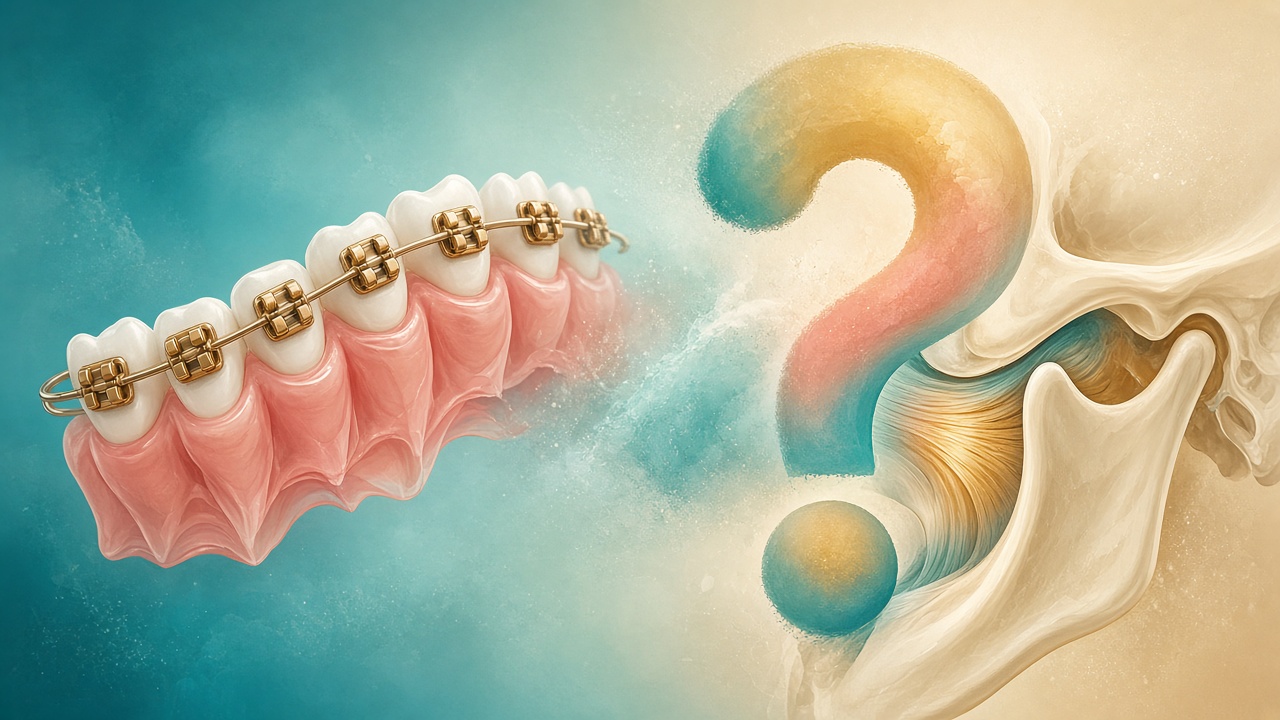
Arch wire replacement with braces is a planned step in treatment, not a random tightening. I change the wire when the current one has finished its job: leveling the arch, holding shape, or handing force to the next size. After the visit teeth often answer with dull pressure for two to five days — the periodontal ligament gets a new force level and geometry. I treat metal braces and other systems in Dubai; at each check I say what we swapped and why. Below is stage logic, what the appointment looks like, what is normal for pain and daily life, and when to message instead of waiting. Visit spacing depends on your plan; the schedule is fixed at consultation and in clinic records. I do not judge whether the wire fits or a bracket is failing from a single messenger photo.
Why your orthodontist changes the arch wire: stage logic
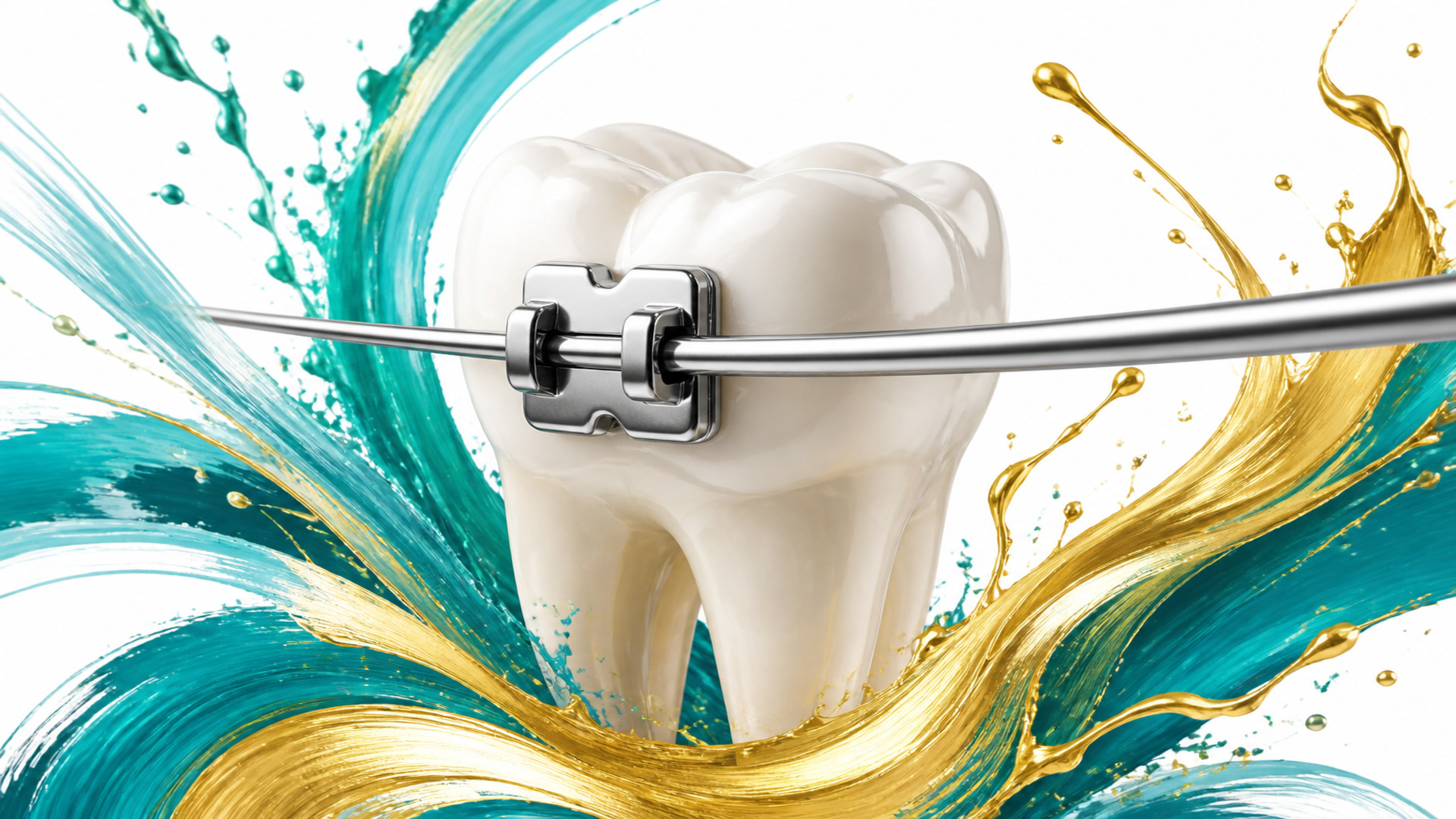
The arch wire is the active part. The bracket holds it; the ligature or self-ligating clip transfers force. Wire has shape memory: in the slot it wants to return to its set curve and pulls the tooth toward the plan. One wire rarely finishes the whole case. Early treatment often needs a flexible line that levels height and rotation without a harsh jump. Later you need a stiffer wire for arch form and space closure. Late stages add bends, elastics, or separate springs. A wire change means the previous stage is done or close, and the plan moves to the next load level. Patients sometimes think “if it does not hurt, skip the change.” Pain is a poor progress meter. Teeth move in microns per week; the ligament adapts and pressure fades while the wire still has work left. Missing a planned wire change stretches treatment and sometimes lets teeth drift back toward a mid-stage position. At each visit I say out loud what we did today, what to expect at home, and when the next check is. That cuts the panic of “activation started everything again.”
Orthodontic planning is a sequence of forces and vectors, not one endless pull. Early phase the wire often levels the row: teeth must sit on one arch before we close a space or align incisors vertically. Mid phase stiffness matters more: a thin wire no longer holds form and we step to a larger gauge or alloy. Late phase focus shifts to detail: torque, crown angulation, root movements, sometimes elastics for Class II or III. Each wire change is a mini-stage with its own goal. If you transferred care from another clinic, I first match their stage to my plan: their “thick wire” may be mid-course or early leveling with different naming. Without exam and records I do not promise your timeline matches a table from an article.
In Dubai many calendars cross holidays and flights. I plan activation a few days before travel or right after return if you want a softer entry. Emergency wire change “because it hurts too much” without an exam is rarely the right move. Wax, soft food, and a symptom call often suffice. Swapping to a softer wire without indication rolls a stage back. I separate planned activation from relief after a bend or breakage — different chair scenarios. Below is a typical visit and what happens in the slots.
Leveling the arch and first wires
First wires after bonding are often flexible: nickel-titanium or thin low-stiffness alloy. They level “tooth to tooth,” reduce obvious crossbites, and let the ligament enter rhythm. Pressure is real but I rarely place a full stiff steel arch in month one. When the row stabilizes, the flexible line loses purpose: it no longer adds needed stiffness. The next wire change is a gauge that holds arch form harder. “It pulls again” is expected: new wire, new curve. Do not compare it only to week one after bonding; that was ligament shock, this is a planned step.
Arch form, spacing, and closing gaps
Once the row is level, spaces may open or arch width must change — case dependent. Springs on the wire, power chains, and selective ligatures work with wire size. A thick rectangular wire gives rotation control: the tooth moves and turns on its axis. Wire change here may coincide with a spring or new elastics. Force spreads across several teeth; one tooth may ache more — often the one moving now. If a space does not close for months on the same wire, I revise the plan instead of endlessly twisting ligatures.
Finishing detail and holding form
Before debond, wires often carry bends: loops, steps, custom settings. Late wire changes are not always “even thicker” but “more precise vector.” Patients report short waves of pressure on single teeth. After braces come off, a retainer holds the result; the arch wire no longer works. Skipping late activation and debonding “as is” sometimes leaves minor crowding or an open bite level that two more visits could close. I show photos and models why finishing wires matter when “it already looks fine.”
What happens at an arch wire replacement visit
A planned wire change takes less time than bonding. You are in the chair; I check brackets, gums, hygiene, and movement against plan. I remove ligatures or open self-ligating doors, take out the old wire, change springs or chains if needed, insert the new wire, secure it, and check that the wire does not pop out on soft chewing. I trim or tuck wire ends so distal teeth are not stabbed. Sometimes new colored ligatures — cosmetic only. On exit: soft food two to three days, wax if a sharp end, when to message. In Dubai many patients come at lunch; a standard change without extra parts fits in twenty to forty minutes.
I do not change wire silently. I say “today 0.018,” “spring on 14,” “same size, new alloy.” If you heard no explanation, ask. Stage clarity helps you tolerate pressure without “the doctor broke something.” Same-day before/after photos rarely show shift: movement is microscopic. Progress shows over months and on radiographs.
Self-ligating and classic metal brackets differ in how we open the slot, but wire logic is the same. On self-ligating systems I open the clip without removing a full ligature. On classic brackets I remove the ring, pull wire, insert new, tie. Ceramic on anterior teeth gets the same stages; ceramic does not cancel activation, only demands care when removing ties. If a bracket debonded before the visit, I fix retention first, then change wire — sometimes one appointment, sometimes cement today and wire tomorrow.
After the change I ask you to run a checklist: tongue does not catch a sharp end, wire sits in distal slots, soft chewing does not eject the wire. At home mirror-check the same in the first hours. The American Association of Orthodontists (AAO) patient handouts repeat: sensitivity for a few days after an orthodontic visit is an expected tissue response, not “wire allergy.” If sensitivity climbs after day three without cause, message.
Removing the old wire and checking brackets
Access starts at the slot. I look for plaque at bracket wings — sometimes a hygiene visit precedes activation if home care slipped. Old wire comes out smoothly; with springs or chains I remove in order so hooks do not tear tissue. Exam: all brackets present, gums not acutely inflamed, no hidden decay at margins. Debonded bracket: I recement before or after wire per situation. Travel patients sometimes come only to rebond; we postpone planned wire if re-debond risk is high.
Seating the new wire and trimming ends
New wire has a gauge and cross-section. I seat from one end to the other. Distal ends often extend past the tube — I cut with a wheel or tuck inward. Sharp end is a common first-night call after the visit. Wax is temporary; trimming is in the chair. Do not bite wire with scissors at home: you leave a burr or shift geometry. After trim I ask you to open and close several times and check cheek and tongue contact.
Ligatures, colors, and added parts
Colored ligatures are patient choice when steel is not required medically. Open or closed coil spring, chain for closure, hook for elastics — placed per plan, not by eye. If elastics were already on, I repeat the wear chart. New wire plus new elastics is double activation; pressure may feel sharper two to three days. I give a paper or chat chart: upper/lower, side, day/night pattern.
Why teeth feel tight after a wire change
Pressure after arch wire replacement is a biomechanical response, not “the doctor cranked it angry.” Seated wire applies force to the root. The periodontal ligament carries it to bone; bone remodels slowly. New wire resets force above what the ligament adapted to on the old line. Nerve endings in the ligament signal: load changed. Patients describe pulling, dull ache, sometimes “the tooth throbs when I bite.” Peak is often twenty-four to seventy-two hours, then background drops. A thick wire or gauge jump gives a sharper peak than same size with new alloy.
“Tight” does not mean “the tooth moved a millimeter today.” Movement is weeks. Feeling runs ahead of visible shift. Some patients feel almost nothing after activation — the ligament is quiet, stage still runs. Others feel every change. Both show up in my chair. I do not use pain as success KPI.
If pressure does not fade by five to seven days, worsens on one side only, or one tooth has sharp cold pain — that is a contact scenario, not endurance. Possibilities: wire end in cheek, debonded bracket, decay under bracket, gum trauma. I do not diagnose online from one photo; I ask for description and schedule exam.
Pain relievers per your physician’s scheme sometimes help the first day; I do not prescribe in an article. Soft food lowers peak chewing load. Cool water and chilled foods without chewing ice often change sensory background — no magic, just sensation. Chewing gum “to loosen” after activation is a bad idea: it sticks to ligatures and pulls brackets.
Sensitivity peak by day
Visit day: light pressure, sometimes “teeth feel hollow” on touch. Night: build when you try firmer food. Days two to three: peak for many — soft food, avoid biting hard with incisors. Days four to five: background falls; some return to normal menu with care. Day seven plus: if still “like activation day,” message. I compare with prior activations in your chart.
When tightness stacks with elastics and springs
Elastic traction adds a vector the wire alone does not give. A coil spring pushes along the arch. After placement or change, pressure sums. I warn: “wire and elastics today — expect three soft days.” Removing elastics “so it does not pull” without agreement stalls the stage. If wear is impossible from pain, message; we may adjust scheme or temporarily soften the appliance in the chair.
Normal pressure versus red flags
Normal: diffuse pull on several teeth, worse on bite, fades over days, mucosa without growing ulcers. Red flags: one tooth “high” with sharp pain, gum swelling with foul taste, wire out of the tube, bracket off with wire attached, fever, pain that blocks sleep night three. Red flags mean today, not “until next planned visit in a month.”
Wire sizes, materials, and what each step means
Wire naming confuses patients: 0.014, 0.016, 0.018, 0.019×0.025, NiTi, steel, TMA. Logic matters more than the manufacturer chart. Thin flexible wire — start and leveling. Mid gauge — transition. Rectangular section — rotation and arch control. Nickel-titanium holds shape with more flexibility; steel is stiffer and more precise. TMA sits between for custom bends. When I say “we moved to 0.018,” that is the next stiffness level in your system, not “double the pain.”
Bracket brands have slightly different slots; 0.018 in one system is not always the same work as the same number elsewhere. On transfer cases I match slot and wire history, not only the number in the chart. Patients on metal braces and ceramic incisors often share stages; differences are bracket strength and ligature aesthetics.
The table below is a typical sequence for full treatment on a metal system with classic ligatures. Your plan may differ: retraction, open bite, surgical prep, sectional arch on one jaw — all change rows. Use it as a question map at visits, not “everyone must match this.”
| Stage (typical) | Example wire | Main job | What patients often feel after change | Typical stage length |
|---|---|---|---|---|
| Start after bonding | 0.014 NiTi, flexible | Level into arch, adaptation | Pressure 3–7 days, soft food | 4–8 weeks |
| Early leveling | 0.016 NiTi or 0.016×0.016 | Continue leveling, light rotation | Again 2–5 days pressure | 4–8 weeks |
| Mid course | 0.018×0.025 steel | Arch form, space closure, stiffness | Sharper peak, especially with springs | 8–16 weeks |
| Late detail | 0.019×0.025 with bends | Torque, final mm, root work | Point pressure on single teeth | 4–12 weeks |
| Pre-debond | Custom / finishing | Hold form before retainer | Short waves 1–3 days | 2–8 weeks |
At the visit ask: “Which row am I on and what happens at next activation?” The answer should be spoken, not only chart shorthand.
Patients with jaw joint noise and clenching sometimes feel activation in muscles too — tooth position shifts and chewing patterns adjust. That is not “wire pressing the joint” directly but timing can coincide. If clicking starts only after visits and does not settle, tell me; we separate orthodontic response from joint findings at exam.
Smoking and shisha after activation do not “relieve” pressure; they irritate gums and mask inflammation. In the first days after wire change smokers’ gums often look redder — hygiene and skipping shisha for a couple of days lower painful inflammation at the bracket.
Nickel-titanium and early months
NiTi wires are flexible and shape-memory, good for early leveling. They change force less abruptly than steel. Patients underestimate the stage: “wire is so thin — why change.” Step to steel or larger section is the logical next move when the flexible line finished its job.
Steel and rectangular sections
Steel arches are stiffer. Rectangular section twists the tooth in the slot — controlled in all planes, not a loose “bolt.” Round to rectangular is a common “it pulls again” moment. I warn at the prior visit.
Custom bends before debond
At the finish wire may not be “from the box” but with loops and steps. Changing that wire is precise work; the visit runs longer. Do not judge the smile the first evening; gums and teeth respond and micro positions still settle.
Soft food and daily life the first days after activation
After wire replacement I recommend soft food mode two to four days, not two weeks. Goal: do not debond a bracket and do not load a steak at peak sensitivity. Soup, yogurt, eggs, soft pasta, stew, soft fish, bananas — same kit as early bonding days. Nuts, chips, whole apple, hard crust, sticky caramel — pause until sensitivity drops. In Dubai delivery and office lunch break the routine easily; book soft lunch on visit day.
Brushing does not pause after activation. Plaque at brackets with warm soft gums inflames faster. Interdental brush under the wire, soft toothbrush, rinse. If gums are sore, do not scrub hard, but touch every bracket. Irrigator on low power supplements, does not replace brushing.
Speech usually does not reset if braces are past week one. Exception: new hook or high wire at incisors — tongue catches. Wax and a couple adaptation days. Do not stack critical calls in the first hour after the visit if you know you are sensitive.
Non-contact sport by comfort. Contact sport at pressure peak — wait a couple days or use a mouthguard per agreement. Swimming is safe for the appliance.
Keep wax in your bag. Trimmed wire end sometimes “walks” on day two when chewing muscles shift the line. Pea on the end, clinic message if it will not hold.
Parents of teens: after activation kids often “forget” soft rules at school because pressure is milder than bonding week one. Chips in the canteen debond on day three. Backpack soft snack and water. Adults on remote work sometimes skip lunch and chew gum — gum sticks to ligatures and pulls brackets; especially wrong after wire change. Water and yogurt an hour after the visit if lunch is late.
How often wires change and what to do around travel
Typical planned visits every four to eight weeks. More often early leveling or active springs; less often late finish when wire is stable and the job is micro-hold. Skipping a month without contact risks: wire finished work, teeth partially relapsed, stage lengthens. If you leave the UAE, say early: I give date windows “before trip” or “after return,” debond instructions, photo contact.
Cost of wire replacement in Dubai often sits inside a treatment package; per-visit activation fee depends on clinic and contract. A separate activation visit in private practice may run from a few hundred to around a thousand AED in 2026 if treatment is not packaged — confirm at consultation; prices shift. I do not fix tariffs here as a promise.
Moving a visit one to two weeks with stable appliance is usually fine. Moving months without a plan needs talk. Sometimes I place a holding wire or elastics temporarily.
If the visit lands on a cold and chewing hurts, we can postpone activation when the appliance is intact. Fever and heavy illness — not a chair day. Mild malaise — your choice; I do not force activation.
Two-jaw cases sometimes confuse upper and lower visit rhythm. One check may change only upper wire; next only lower, or both same day. If only the top “pulls,” lower may be unchanged — normal. Ask what was activated today so you do not expect symmetric pain on both jaws.
On transfer from another country wire archive matters more than calendar. I match last wire in records to what is in the mouth. First Dubai visit may be stabilization and plan: “four weeks to next gauge.” Do not demand “change today because Moscow changed a month ago” without exam — nomenclature and slots differ.
When to message the clinic after a wire change
Planned pressure two to five days — wait. Sharp wire end wax will not hold — message today. Debonded bracket — message even if painless. Wire out of distal tube — do not force it back; photo and contact. Sharp pain one tooth with swelling — today. Fever, pus at gum, facial trauma — today.
Message should include: visit date, what changed if you recall, what hurts, one side or all, wax holding or not, photo if possible. I decide trim, recement, decay check, soften wire, pain protocol per physician.
Do not bend wire with fingers or cut with scissors. Home mechanics break plan and tissue.
If you wear elastics, do not remove them “to rest” the first night after wire without agreement — vectors sum. If wear is impossible, message; we may leave wire only temporarily or change elastic scheme. Weekend self-removal often rolls back a month of spring or elastic work.
Summary: arch wire replacement is the heartbeat of braces rhythm. Teeth feel tight because the ligament learns a new load again. Soft food, wax, hygiene, and visit cadence keep treatment on track. Stage questions belong at consultation and every check aloud, not in midnight anxiety without data.
Frequently asked questions about arch wire replacement with braces
How often do you change the wire with braces?
Usually every four to eight weeks at a planned visit. Early leveling sometimes more often; late finish less. Your timeline is in the treatment plan. Skipping without contact lengthens treatment.
Why do teeth hurt after a wire change?
New wire applies different force on the ligament. Peak often days two to three, then background falls. Expected tissue response, not “breakage.” If pain climbs after day five or is one-sided with swelling, message the clinic.
How long does a wire change visit take?
Often twenty to forty minutes for a standard change without complex springs. Custom finishing wires and multiple parts run longer. Fits a lunch break for many Dubai patients.
Can I eat normal food on wire change day?
Soft food from evening visit day is safer. Hard and sticky food wait two to four days until sensitivity drops. Nuts and chips debond brackets at activation peak.
What if the wire end pokes after the visit?
Wax on the end, photo to clinic. Do not bite wire at home. Trim is a short visit or same day if a slot exists. Wax is temporary.
Must we change the wire if nothing hurts?
Yes when the planned stage is complete. Pain is a weak indicator. Wire may have delivered its force while teeth are not yet at target. The doctor reads movement, not only complaints.
Is wire replacement included in treatment cost?
Often inside a package. Per-item billing charges activation separately. Confirm at consultation before start. Dubai prices in 2026 vary by clinic.
Can I move my wire change visit before vacation?
Yes, discuss early. Sometimes we activate before travel, sometimes after return. Give flight dates and away dates when scheduling. Long trips may need a holding wire or travel elastic scheme — only per doctor order, not forum advice. Bring wax and soft snacks in hand luggage if you fly soon after activation; cabin dry air and skipped brushing make gums angrier at wire ends.