Braces and sports work together when you plan mouth protection and a clear path after a hit or a loose bracket. The appliance does not cancel the gym, the pool, or combat classes. It changes the rules: you need a mouthguard that covers the brackets, you need hygiene after chlorinated water and sweet sports drinks, and you need a short clinic-contact protocol if a wire pokes or a bracket comes off mid-session. I treat braces in Dubai, including metal braces, and at consultation I ask about your sport before bonding — otherwise patients discover mouthguards after the first sparring round. The American Association of Orthodontists (AAO) recommends a mouthguard for contact load while brackets are on: metal edges cut soft tissue harder than bare teeth when the face takes a blow. Below is a practical map: how to choose a braces mouthguard, how contact differs from lane swimming, what chlorine does day to day, when to message me, and when to go to ER. Your plan belongs to an exam; I do not give a final trauma call from a locker-room photo alone.
Sport with braces: what actually changes
You keep training after bonding. What changes is the risk list and the habits around it. Brackets add landscape: lip and cheek meet sharp corners when an elbow, ball, glove, or forearm arrives. A wire can shift or pull a bracket off on impact. Tooth sensitivity after a wire change makes hard protein bars and ice-cold drinks less friendly. In Dubai that meets hot pitches, dry mouth, and sweet isotonic drinks between sets. I do not ask you to quit sport for the whole course. I ask you to put a mouthguard, water, and a quick mucosa check into the bag ritual. Below — three pillars from consultation: facial impact, appliance breakage from habits, and plaque after training. Without them, “can I play” stays abstract until sparring without protection.
Facial impact and soft tissue
The main difference between braces and bare teeth on impact is cutting edges. Brackets have wings. A wire end can leave the slot. On a hit, the lip or cheek rides onto metal: the wound runs deeper, bleeding is stronger, healing takes longer. A mouthguard spreads force and keeps soft tissue off the brackets. Without one, even a “light” football or basketball contact leaves a rub that costs the next sessions. I tell teens straight: the mouthguard is kit, like shin pads — not “kids’ padding.” Adults in partner drills get the same rule. If a hit still lands, stop bleeding first and check breathing and awareness; orthodontic repair comes after head and jaw safety.
Appliance breakage without a “big” hit
Debonds happen without drama: a hard bar after lifting, chewing the mouthguard out of boredom, a bike tip onto the chin, a racket bouncing into your own teeth. Metal brackets handle load well, but cement and enamel have limits. Repeat small debonds on one tooth stretch the timeline and eat appointment slots. After strength or contact work I ask you to run the tongue along the wire once: any loose bracket, any poking end. Two minutes in the changing room save a week waiting for a rebond. If a bracket wobbles — wax, soft food, photo to the clinic; no household glue.
Plaque, drinks, and white spots
Sport raises white-spot risk around brackets when isotonic drink or gel sits for hours after training. Acid plus plaque plus mouth breathing on a run is a working formula for demineralisation. A water rinse right after the session and a proper clean at home beat an “ideal” brush left in the gym bag. Fluoride toothpaste your dentist already agreed stays. Harsh whitening paste after every workout is unnecessary. If you sip sports drinks through the whole hour, alternate with water and do not hold the liquid in the mouth “for taste.” Gels and chewable carbs on a long run belong in a short window, then water; sticky sweetness around metal brackets lasts longer than it feels in the locker room.
Sports mouthguards over braces: how to choose and wear them
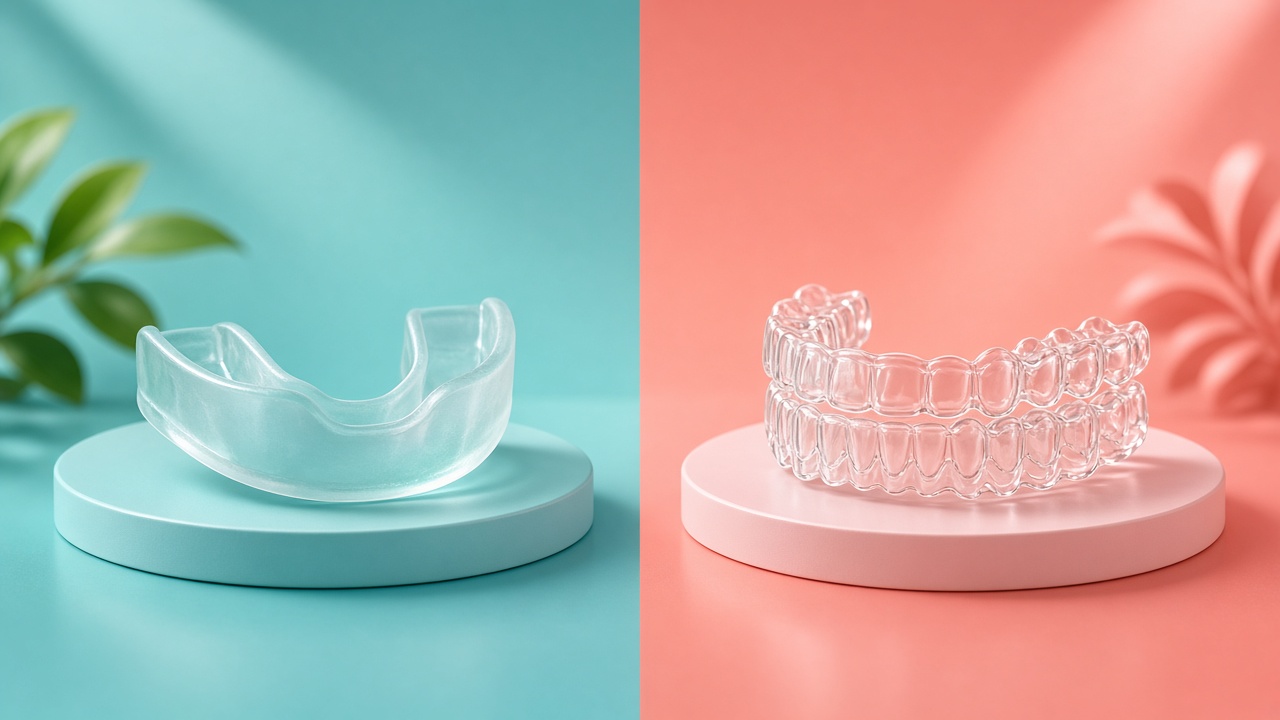
A mouthguard with braces is its own protection class — not the same thin pharmacy tray made for straight teeth. It must cover the upper brackets (often the lower too, by sport and advice), avoid crushing the wire, and stay put while you breathe. AAO patient materials stress a mouthguard during contact orthodontic treatment; selection belongs with your orthodontist, not a teammate’s spare. In Dubai, braces-ready guards appear in sports shops and online; some medical-grade silicone models seat without boiling and tolerate tooth movement. Boil-and-bite trays can press on brackets if formed too hard. I walk three questions: sport and rules, upper only or both arches, willingness to replace the guard as stages change. Below — types, fit, and care. A mouthguard does not straighten teeth; it lowers soft-tissue injury and appliance breakage.
Types: shop guard, braces-specific, custom
A generic shop guard is often thin over the incisors and fails to clear bracket wings: on impact the lip still meets metal. Braces-marked models are thicker on the outer faces and built for appliance bulk. A custom guard from a scan or impression fits tighter, yet on active tooth movement you replace it more often: what sat perfectly in January may press a new crown tip by May. For growing teens with frequent wire changes I often start with a quality braces silicone guard and watch how it holds in drills and sparring. For adults with fewer corrections and high impact risk (hockey, rugby, boxing) we discuss custom protection separately. Dubai prices swing by brand and lab — from inexpensive shop options to several hundred AED for custom. I fix the recommendation after exam and a sport talk, not from a single price line in an article.
Fit: what feels normal and what is unsafe
The guard should stay when you open the mouth a moderate amount and take a light mouth breath, without constant hard clenching. If you must clamp the jaw the whole session to keep it in, the fit is weak or the size is small. Pressure on one tooth or a sense that the wire is being driven inward means remove the guard and message: better to adjust protection than loosen a bracket. After fresh bonding or a wire change the first day can feel different: mucosa is tender, lips mildly puffy. Do not force a fit through pain. For helmet sports pick a tether that matches rules; for gym and combat without a helmet, skip a strap that snags. Speech with a new guard sounds muffled for the first sessions — expected; most people settle by session three or four.
Care, lifespan, and smell
After every session rinse the guard with water and brush it with a soft brush without abrasive toothpaste (paste scratches and speeds smell). Air-dry it and store it in a vented case, not a sealed wet bag. Once a week use a mild mouthguard cleaner per the maker’s sheet; boiling water often damages braces silicone. Replace the guard for cracks, chew-through grooves, a smell that survives cleaning, or a new press after an activation. Growing teens replace more often. Do not chew the guard between rounds out of boredom: you thin the material and shift the seat. Do not share one guard between two athletes — hygiene and size differ. The evening before a key match, check the case at home: morning panic (“it’s in the other bag”) almost always ends in contact without protection.
Contact sports and martial arts with braces
Contact is where braces without a mouthguard most often end in a bleeding lip and a loose bracket. That list includes boxing, kickboxing, MMA, wrestling, rugby, hockey, hard contact football, basketball with elbows at face height. Dubai gym rules vary: some require a guard for entry, others leave it to “common sense.” Orthodontic logic is one: if a jaw hit or face clash is possible, wear the guard every session, not only on fight night. I train Wing Tsun myself: close-range work puts a partner’s forearm near the face. With braces I would not enter partner drills without mouth protection — patients hear the same without swagger. A braces course and sparring can share a calendar; “check the guard later” plus first hard contact cannot. Below — coach talk, sparring, and the check after a hit.
Talk to the coach before bonding and after
Before bonding, tell the coach braces are coming. Ask whether a mouthguard is mandatory, whether you can train without one, and how the gym handles a pause for rebonding. After bonding, bring the guard to the first session even if “today is technique only.” Technique days still produce accidental elbows. For teens’ parents: one calm coach call prevents half the “forgot the guard, went in anyway” fights. If a coach pushes “tough it out without a guard, everyone starts that way,” change the tone of the talk or the gym: an orthodontic appliance does not build character through a lip wound. On request after consultation I can write a short note that the patient is in treatment and needs oral protection.
Sparring, competition, and a “day without a guard”
For sparring and competition with braces, the mouthguard is mandatory. A day the guard stayed home is a technique day without facial contact — or a skip. Do not borrow a teammate’s guard. Orthodontic wax is not a substitute for impact: wax covers a spot rub at home, not a glove hit. If the guard cracks mid-season, stop the contact block until you replace it. For sports with mouth checks (some wrestling rules require full cover of upper brackets), test the model against the rule early. Before a tournament in another emirate, pack a spare in carry-on: losing the main guard in a hotel is a common story.
After a hit: a two-minute check
Remove the guard. Look in a mirror or ask a partner: lip or gum bleeding, a tooth that shifted, a loose bracket, a poking wire, face asymmetry, inability to close as usual. Rinse with water; cold outside the lip for swelling (not ice hard on mucosa). If a tooth moved, bleeding will not stop, breathing is hard, consciousness faded, or strong nausea followed a head hit — ER first, not “orthodontist in the morning.” If only a bracket loosened and soft tissue is intact — wax, photo, clinic message, soft food. I handle orthodontic breakage; concussion and jaw fracture belong to emergency care.
Swimming, chlorine, and the pool with braces
Swimming itself does not harm the appliance: water does not wash cement off or dissolve the wire. Chlorinated pool water dries lips, changes mouth taste, and can irritate mucosa that is already rubbed — especially in the first week after bonding or a wire change. Sea water tastes milder, but sand and wave hits near a wall are a separate facial risk. A mouthguard in the pool is usually unnecessary unless you play water polo, do contact synchronised work, or dive where a face hit on a wall or another swimmer is plausible. Water polo follows contact logic: protect the mouth by team rules and elbow risk. In Dubai, building and hotel pools are daily habits for many patients; I do not ban lanes because of metal braces. I ask for a short rinse ritual after water and attention to the lips. Below — chlorine, open water, and what to do when a rub flares after laps.
Chlorine and pool chemicals leave a film and a familiar smell. After the session rinse with fresh shower water, then brush and use interdental brushes at home. Do not leave “pool taste” until evening: plaque around brackets plus chemical residue irritates gum. If lips dry, use a plain balm; avoid licking lips so street balm crumbs mix with plaque. Long sets in cold water raise tooth sensitivity on an active wire — the feel eases as you adapt. Swap ice-cold drinks right after laps for room-temperature water. Goggles and a cap are unrelated to braces; a nose clip is too. A white plaque rim at the brackets after the pool raises white-spot risk: a mirror after the gym shower helps more than switching paste for “freshness.” For school swim lessons I ask the same minimum: fresh water in the shower room and a proper clean at home, even when the hour is late.
In open water watch waves and people nearby. A face hit on a kickboard or a hard raft edge is the same story as a gym elbow. After seawater, rinse with fresh water: salt dries tissue. Chewing a hard snack on a sunbed with wet hands and no clean — a common path to rice and sesame stuck in brackets all day. Teens in school swimming get the same rule: water does not cancel evening cleaning. If mucosa is already ulcerated from brackets, shift an intense lane day by twenty-four hours and cover sharp points with wax while it settles — comfort logistics, not a forever ban. Wind after open water cracks lips faster: balm and water beat “I’ll manage until night.” One-sided sharp tooth pain or gum swelling at one bracket after the pool is a message signal — that is beyond “chlorine.”
Gym, running, cycling: non-contact training
Running, cycling, elliptical, yoga, pilates, and most strength work without partner facial contact fit braces without a mouthguard. The risks differ: dry mouth, sweet gels, hard bars, a chin-first bike fall, jaw clenching on a heavy set. A clean gym usually needs no guard. CrossFit with a real risk of a bar or plate near the face is the rare case — talk spotting with the coach. For runs under Dubai sun, carry water; mouth breathing dries mucosa and wax holds poorly on a rub. After lifting, skip nuts and crackers “on adrenaline” — next-day debonds often start there. A protein shake without ice cubes and hard crumbs sits better than a rock bar from the backpack.
On bikes and scooters a helmet protects the head; chin and mouth stay exposed on a forward fall. If you are new to sandy paths and kerbs, lower speed while braces are fresh and lips are still learning bracket clearance. On a climbing wall watch straps and edges on a fall; a guard is optional by risk feel. Tennis and padel: a ball to the face is uncommon but real; a guard is optional, especially for children in group lessons. The non-contact rule is hygiene and food texture, not a mouthguard on every cardio day. For braces in the gym, water, a soft snack, and not opening packets with your teeth after a set are enough.
When to message the clinic after training
Clinic contact after sport is not a “I trained” report. It is for appliance breakage, a growing ulcer, pain in one tooth, or a hit with possible tooth shift. The sheet after braces start and the consultation list the red flags. A well-lit photo, the side (upper/lower, right/left), what happened in training, and whether wax holds — enough for a first call: advice, a slot tomorrow, or ER. Do not wait a full week if the wire cuts the cheek at every meal. Do not go to ER at night for one ligature that slipped without pain or bleeding. Below — everyday breakages, when emergency care wins, and what to pack in the sports bag. This block lowers panic for parents and adults who first mix sparring with braces in one season.
Everyday breakages: bracket, wire, ligature
A bracket off but still on the wire — slide it to tooth centre with clean hands, cover with wax, chew on the other side, message the clinic. Fully free bracket — remove into a container and bring it to the visit. Poking wire end — wax; if wax will not hold and eating is impossible, book a trim within about a day. One ligature gone, wire still seated — usually low urgency, next working day. Repeat debond on the same tooth after training — message sooner: we check bite and habits, not only “glue again.”
When ER beats the orthodontist
A facial hit with loss of consciousness, vomiting, strong headache, bleeding that pressure will not stop, a tooth that shifted or pushed in, inability to close the mouth, suspected jaw fracture — emergency care. The orthodontist joins after stabilisation. On a tournament in another emirate, use local ER; then send me the discharge note and photos when safe. Do not wait for clinic morning with rising facial swelling, fever, and a purulent taste — that is beyond a sports scrape.
What to keep in the sports bag
Orthodontic wax, a small mirror, a container for a loose bracket, a spare mouthguard in its case, water, soft tissues, clinic contact in the phone. For teens — a second wax pack in a jacket pocket: the main one often stays in a school locker. After contact training, twenty seconds of mouth check in a mirror. If the guard is in another bag — do not spar “just once.”
| Load type | Mouthguard | Main braces risk | After-session hygiene | Message / ER |
|---|---|---|---|---|
| Boxing, kick, MMA, wrestling | Every session | Lip/cheek cut on bracket, debond, tooth shift | Water, mouth check, home clean | Debond/poking wire — clinic; hit+tooth shift — ER |
| Rugby, hockey, contact football | Required (often by rules) | Impact, clash, wire break | Water, wax check | Same |
| Basketball, handball | Recommended | Elbow to face, rubs | Water | Growing ulcer / debond — clinic |
| Water polo | By team rules / risk | Contact + chlorine | Fresh water at once | As for contact |
| Pool lanes | Usually no | Dry lips, plaque, mucosa irritation | Fresh water + clean | Growing ulcer — message |
| Run, gym, no contact | Usually no | Bars, dryness, clenching | Water, soft snack | Debond after hard food — clinic |
| Bike / scooter | By fall risk | Chin-first fall | Check after a fall | Fall+tooth shift — ER |
| Tennis / padel | Optional | Rare ball to face | Water | As for impact |
Competition season, teens, and the treatment calendar
Athletes think in seasons. Orthodontics thinks in wire stages and reviews. Those calendars can stack if you name the tournament before an activation. At consultation I ask: championship date, camp, federation exam, flight to training. I try not to place a major wire change the day before a sparring camp: sensitivity peaks and food mistakes rise. A light review without a heavy wire near departure is easier. If the tournament is already booked and bonding is still ahead, it is more honest to shift bonding a week after the final than to hero through a bleeding lip on the mat. The same idea covers a school league final and an amateur half-marathon: the date on the calendar beats “get braces on by Monday.”
Teens in Dubai school leagues need a double contract: guard in the backpack, and “forgot” means no contact. Parents should not promise brace removal for a photo-match without an exam: biology sets the timeline, not the poster. Adult martial-arts hobbyists often feel shy about a “kids’ ” guard — I reframe it as kit and course protection. If you mix treatment with frequent competition flights, keep wax, a spare guard, and clinic contacts in carry-on; rebonds belong in the city that leads your care, not a random chair without records. Before camp, a short visit helps: trim a potential poking end, check loose ligatures, refresh wax in the bag. That is calmer than hunting a clinic in a strange city on weigh-in day.
Before the season starts, one dedicated talk pays off: sport type, sparring frequency, willingness to wear the guard, rebond allowance in the agreement. It takes less time than repair after the first unprotected hit. I stay on the side of both sport and the appliance — if the guard is in the bag and red flags do not wait until Monday. On a dense season, keep two or three mental spare slots for small repairs: orthodontics rarely breaks on schedule, and sport does not wait for a perfect day.
FAQ
Can you do martial arts with braces?
Yes, if every contact session and competition uses a mouthguard that covers the brackets, and you have a plan for a loose bracket. Without a guard, lip cuts and appliance breakage risk rise sharply. Discuss the sport at consultation before bonding: that shapes guard choice and activation timing. I train Wing Tsun partner work myself and do not romanticise sparring without mouth protection.
Do you need a mouthguard for pool swimming?
For normal lane work — usually no. For water polo and situations with a face hit on a wall or partner — yes, by risk and rules. After the pool, rinse with fresh water and clean at home: chlorine does not replace hygiene. If mucosa is already ulcerated, cover sharp points with wax and shift an intense set by a day if needed.
Which mouthguard works over braces?
Look for a braces-ready model or a custom guard your orthodontist recommends. A thin generic tray often fails to clear bracket wings. Fit should not drive the wire inward or fall out on a light mouth opening. Recheck fit after a treatment stage change. I lock the choice after exam and a sport conversation.
What if a bracket comes off during training?
Slide it to centre or remove it into a container if free. Cover sharp edges with wax, switch to soft food, photograph, and message the clinic. Do not use household glue. If a hit shifted a tooth or bleeding is heavy — ER. Rebonding happens in the chair, not in the locker room.
Can orthodontic wax replace a mouthguard in sparring?
No. Wax protects mucosa from a spot rub at home. It is not built for a glove or elbow. Enter contact only with a mouthguard. If the guard is forgotten — technique without facial contact or skip the day.
Does pool chlorine damage braces?
It does not wash cement off or “ruin the wire” by itself. It dries lips, irritates already injured mucosa, and leaves taste and film if you skip a rinse. The real harm is skipping cleaning after training and parking sweet drinks around brackets. Fresh water after the pool shower is the minimum.
When do you message the orthodontist after sport, and when do you go to ER?
Message the orthodontist for a debond, poking wire, growing ulcer, or repeat breakage on the same tooth. Go to ER for a hit with loss of consciousness, heavy bleeding, tooth shift, suspected fracture, or breathing trouble. If you doubt the head or jaw after impact, choose emergency care before a morning rebond.
Should you pause braces treatment for a competition season?
Usually no. More often we time activations around tournaments and tighten the mouthguard protocol. A full treatment pause belongs to clinical reasons seen on exam, not “just in case until the final.” Bring the season calendar to consultation before a major wire change.