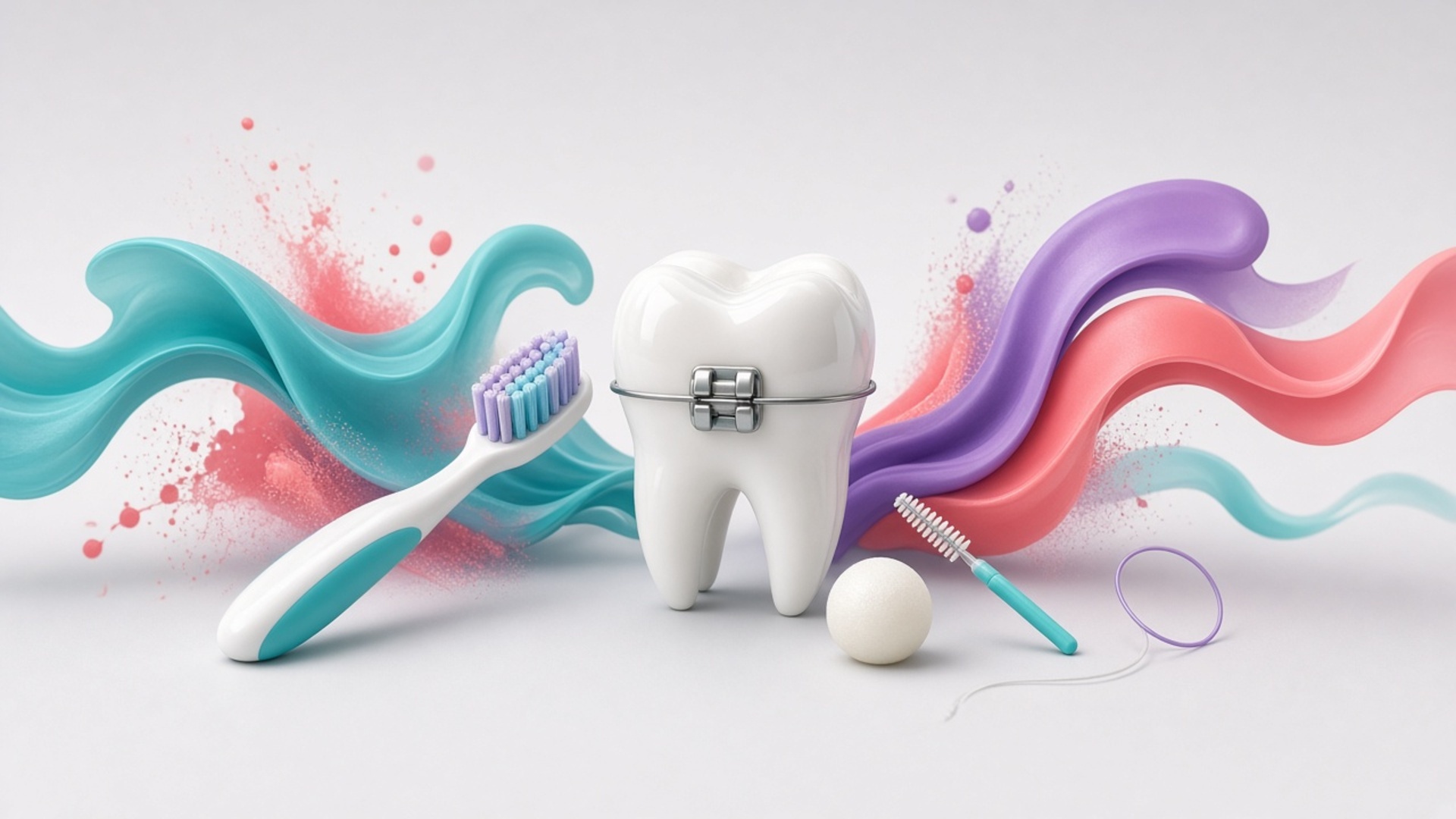
How to brush teeth with braces is not a question about filling an entire pharmacy shelf. It is about a short kit you actually carry and use every day. After braces installation the mouth gets new topography: brackets, wire, ties or self-ligating doors. Plaque builds at the base and under the wire faster than before the appliance. I run braces treatment in Dubai and, on bonding day, I assemble a minimal kit with the patient: toothbrush, two sizes of interdental brushes, floss or superfloss with a threader, fluoride toothpaste, orthodontic wax, and a travel pouch. A water flosser is a useful add-on, not a substitute for hands. Below: what goes in the bag, the cleaning order, how to fit the routine into office, school, and flights, and what I check on consultation before we start. I do not diagnose gums or caries from a chat photo; technique is fixed in the chair with a mirror.
Why a minimal kit beats a full pharmacy aisle
Patients often leave bonding day with sample bags and lose half at home within two weeks. Others buy ten products and use none steadily. I build a minimum covering three jobs: clear biofilm from open surfaces, clean pockets under the wire and between teeth, and protect enamel with fluoride plus mucosa with wax when an edge is sharp. Anything that skips your bag for three days barely changes the outcome. Dubai life adds office lunches far from a sink, dry AC, and trips between emirates — so the travel pouch belongs in the kit rules, not as a perfectionist extra. Below: how I define the kit, how home differs from the bag, and why a costly water flosser “instead of interdental brushes” breaks the logic. These rules keep hygiene working across a full braces course, not only in week one.
Three cleaning jobs with braces
Job one is the facial and chewing surface around the bracket — the toothbrush at the right angle. Job two is the space under the wire between brackets — almost unreachable without an interdental brush. Job three is the contact under the wire — floss with a stiffened end or superfloss. Fluoride in paste works after the film is gone. Wax does not clean; it covers a sharp edge so you can clean without pain and without skipping a zone. If one of the three jobs drops for weeks, plaque picks the weak spot — often the gum edge on incisors or the pocket under the wire on molars.
Home versus bag: two layers of one kit
Home layer: full-size brush or charger for an electric head, spare interdental brushes, floss, paste, a mirror at the sink, water flosser if you want one. Travel layer: mini brush or spare head, two to four interdental brushes, small wax, mini paste or a travel tube already in use, threaders in a zip bag. A bag without home stock empties fast; a home without a bag leaves lunch in the mouth until evening. I ask patients to build both layers on bonding day while motivation is high. Pharmacies in Dubai Marina and near the metro usually stock interdental brushes in the evening — but at midnight after iftar you will value the spare box in the bedside drawer more.
What you can skip at first
Whitening abrasive pastes, alcohol rinses “for freshness,” hard brushes “to go faster,” five interdental sizes “just in case” — common extras. Colored brushes for a teen’s mood are fine if the size is correct. A water flosser can wait until hands own the brush and interdental pass; otherwise it becomes an alibi for skipping mechanics. Marketplace “everything for braces” boxes need a contents check: if the right interdental caliber is missing, the box looks pretty and still has holes.
The toothbrush: how to brush teeth with braces by zone
The brush is the first tool in the cycle. An orthodontic brush with a V-cut or a soft regular brush both work when technique is sound. An electric brush with an orthodontic head shortens wrist fatigue for many people; you still control pressure. The American Association of Orthodontists (AAO) advises brushing long enough to clear plaque — usually two minutes minimum, often longer with braces. At installation I run the brush on your teeth and ask you to repeat in the mirror. Below: gumline angle, top and bottom of the bracket, inner surfaces. Without those three passes, “I brushed” often means only the middle of the bracket wing. Budget extra time early on: skill speeds up, enamel does not wait. A sink mirror is mandatory — without it, far molars stay in shadow even when you try hard.
Gumline angle and bracket perimeter
Hold bristles at about 45 degrees to the gum edge. Small strokes along the gumline sweep the plaque that drives bleeding. Then circle the brush around each bracket perimeter: people often brush “along the wire from above” and miss the mesial and distal edges of the base. Check the mirror: a white rim at the gum after the cycle means the angle was flat or the zone was skipped. Hard bristles on inflamed gums only anger the tissue; soft bristles with regularity beat heroics. On the upper jaw, lift the lip slightly with the free hand to see the margin; on the lower, ease the lip down. If the hand tires, split the arch into four segments with a rinse pause — quality beats a nonstop marathon.
Top and bottom of the bracket at the wire
Aim bristles downward onto the top of the bracket so filaments slide under the wire from above. Then aim upward from below onto the lower face. That clears the shelf where rice lands. On the lower jaw the logic mirrors. Do not press until bristles fold into a bow — you bruise the gum and clean no better. With an electric head, use slow contacts on the same zones, without “polishing” one tooth for a full minute. After a wire change or chain placement, access can shift: if an interdental brush suddenly fails where it passed yesterday, do not force it — message and we sort it at the visit.
Chewing surfaces, tongue side, and tongue
Chewing grooves collect plaque on their own — brush them horizontally. Patients with braces forget the tongue/palatal side more often than before bonding because attention stays on the front mirror. Decay happens there too. Pass briefly over the tongue: it cuts odor and soft film. If a pasty taste remains at the brackets after the cycle, rinse and look again — often a white film sits on one or two teeth. Far upper second molars love leftovers: turn toward the light or use a pocket mirror from the other side.
Interdental brushes, floss, and superfloss: what the toothbrush misses
The toothbrush does not replace the pass under the wire. The interdental (proxy) brush is the hero of a minimal braces kit. I size it in the chair: ISO marks or brand colors matter less than the feel — light resistance, cleans, does not tear. Floss with a threader or superfloss closes the contact where an interdental brush along the wire cannot always reach. A water flosser rinses food debris; it removes surface biofilm less well than mechanics. I see the same mistake: buy a water flosser, abandon interdental brushes, catch matte zones at the brackets three months later. Below: how to run the interdental brush, how to thread floss, and which office compromise works without a sink. These skills decide whether “how to brush teeth with braces” stays a leaflet theory or becomes daily hand work at the mirror.
How to use an interdental brush under the wire
Hold the handle, slide the bristle under the wire between two brackets, and stroke along several times without forcing into the gum. Change size if the wire bends in a tight spot or rattles without contact in a wide one. Replace the brush when bristles splay or the metal stem bends — usually sooner than a regular toothbrush. Store clean ones in a case, not loose with keys. For teens, label the size on the pouch: grabbing a parent’s thick brush injures the gum and kills motivation. If a stem bends on a trip, do not finger-straighten it to “perfect” — the shape already lies; take a new one from stock.
Floss threaders and superfloss
A threader is a plastic loop: thread floss through the eye, pass under the wire, pull floss into the contact, clean as usual, and withdraw. Superfloss already has a stiff end: pass under the wire, clean with the spongy middle, finish the contact with regular floss. Once a day at night is enough for most people; crowding and inflammation sometimes add a short second pass. Do not compare speed with “before braces”: the first evenings are slow; by week three the hands accelerate. Floss that snaps in a contact is not a disaster — ease it out without yanking the wire down. If floss keeps breaking in one spot, say so at the visit: a hook or sharp bracket edge may be involved.
Water flosser as a supplement
I add a water flosser after mechanics are owned. Start on low power, aim along the gum and under the wire, not into a pocket on full blast. Compact models help travelers; watch liquid rules in hand luggage or fill water after security. If the budget forces “interdental or water flosser,” choose interdental. If both fit, use both in order: mechanics first, then the jet. Change tips per the maker’s sheet; a dirty tip in a sink cup spreads plaque as reliably as a dirty brush in a pocket.
Fluoride, wax, and the Dubai travel pouch
Fluoride toothpaste is the daily chemical shield after plaque removal. Wax is a practical shield when mucosa is rubbed, so cleaning does not collapse from pain. The pouch turns the kit into a habit outside the home: DIFC office, Jumeirah school, airport transfer. Without a pouch, the cycle lives only at the home sink and falls apart by month three. I do not lock you to one paste brand in this article: fluoride agreed with your dentist matters, and aggressive whitening during active braces usually waits. Use orthodontic wax, not modeling clay or chewing gum. Any sturdy pouch that actually goes in the bag works. Below: how to choose paste and wax, what belongs in the travel layer, and how not to lose the kit in a family with kids. This block ties the pharmacy shelf to a Dubai calendar.
Fluoride toothpaste: baseline, not display
Most adults do well with a regular fluoride paste their dentist already approved. A pea on the brush, focus on the gum edge and bracket perimeter. A huge water rinse after the night clean can wash fluoride away — follow your sheet. Children need age-based amounts and swallow control. Prescription high-fluoride pastes fit high risk; do not self-add “another tube from fear.” Whitening abrasives during active braces I usually pause. Weak foam does not mean a weak paste: foam is marketing; fluoride contact on clean enamel is the point. Mini tubes belong in the travel layer — people actually pack them, unlike the giant home tube they swear they will “throw in tomorrow.”
Wax: so cleaning does not stop
Cheek rubs in the first days and after wire changes are a common reason someone “did not brush today — it hurts.” Wax covers a sharp bracket corner or wire end: dry finger, dry spot, pea, press. Keep stock in the pouch and by the bed. If wax will not hold and the edge cuts again, message the clinic — a trim may be needed. Wax does not replace a visit for heavy swelling, bleeding, or a debonded bracket. Do not blanket a whole tooth “just in case”: plaque thrives under a solid wax mask. Spot cover on the sharp corner — yes; half-arch armor — no. After meals wax often shifts; refresh before sleep if the cheek is already red.
What goes in the travel pouch
Minimum: brush or head, two sizes of interdental brushes with two of each, wax, mini paste, two or three threaders or a superfloss length, pocket mirror if possible. Add elastics in a clean separate bag if they are in the plan. The pouch lives in the work bag or backpack every day, not “when I remember.” After gym and beach — same pouch: salt, sand, and a sweet drink without cleaning film the bracket fast. Once a week run a home audit: what ran out, what broke, what sat in the office drawer. An empty pouch on Friday evening means a pharmacy stop on the way, not a wait until Monday. For young children an adult packs the pouch; for teens, a weekly contents check without a “did you even brush” interrogation.
Full-cycle order: morning, lunch, night
Order beats brand. I give patients one scheme and ask them not to invent a “shortcut magic” without agreement. Morning: full cycle before or after breakfast — whichever lets you chew, but leave home with a clean mouth. Lunch: water plus interdental brush as the floor; full brush if a sink exists. Night: the fullest pass, including floss. After a sweet snack — at least water at once. The table below is the kit-and-time checklist; photograph it into your phone. If the cycle takes more than ten minutes at first, that is normal; by a month many land in four to seven minutes without losing quality. Teens need a timer and a mirror; adults on call stacks need a calendar slot after lunch. In Ramadan, place the full night cycle after iftar even if you want to sleep immediately: overnight plaque on a sweet table works against enamel like any other month.
I walk the morning block separately with people who “are always late.” If you will not brush before coffee, brush after a light breakfast but leave buffer before the parking garage. Dry mouth after sleep plus takeaway coffee without water is a poor start for the gum edge. The night block is longer: floss, interdental brushes on every segment, a mirror check of upper incisors in good light. If you see a white rim, give that zone another minute — not “tomorrow.” Lunch in an office without a nearby sink is not a dead end: a business-tower restroom almost always exists; the pouch in the bag decides whether you go.
| Item | Why | Where to keep | Replace / refresh | Daily minimum |
|---|---|---|---|---|
| Soft / ortho brush / electric head | Clear plaque from surfaces and bracket perimeter | Bathroom + travel layer | Every 2–3 months or sooner if bristles splay | 2 full cycles |
| Interdental brushes, 2 sizes | Pockets under the wire | Pouch + home stock | When stem/bristles deform | After meals / at least night |
| Floss + threader or superfloss | Contacts between teeth | Home + 2–3 in pouch | As used | 1× night |
| Fluoride toothpaste | Enamel protection after mechanics | Home + mini in pouch | As used | Every full clean |
| Orthodontic wax | Cover sharp edge so cleaning continues | Pouch + bedside | As used; if it fails — message | As needed |
| Pocket mirror | See plaque rims | Pouch | — | Every full cycle |
| Water flosser (optional) | Rinse debris after mechanics | Home / compact for trips | Tips per instructions | 1× if on plan |
| Pouch / zip bag | So the kit travels with you | Bag every day | Replace if torn | Always on you |
After the table, talk through a “red day”: debonded bracket, sharp wire end, strong gum pain. Cleaning does not stop that day — careful brushing around the problem zone, wax, and a clinic message. Skipping hygiene “until the rebond” for three days builds a dense film that hurts more to clear later. If rebond is tomorrow, still interdental-clean neighboring teeth and rinse: a single loose bracket is not a free pass for plaque on the whole arch. The night before professional cleaning, home does not “rest” — the less calculus and film you bring, the more precise the hygienist can work at the bracket edge and the more useful the technique talk afterward.
Common mistakes and building the habit in Dubai
Mistake one: brushing only what looks good in the mirror and skipping the interdental brush. Two: dropping floss for a month because it “takes forever.” Three: keeping the kit only at home. Four: heavy pressure instead of time. Five: sweet drinks sipped between calls without water. Dubai adds food courts with no time, a driver and “I’ll clean at the villa tonight,” and dry parking garages and AC. I fix mistakes at checks without shame: technique, interdental size, pouch contents. If gums bleed from plaque, keep gentle cleaning — bleeding often settles in days; rising swelling and pus need an earlier visit. Professional cleaning during the course supports home care; it does not replace it. On consultation before bonding, ask yourself honestly: will the pouch live in the bag for a year and a half? If not, build the habit first, then bond — enamel will thank you.
Families do well with a shared bathroom caddy plus personal pouches. For Ramadan, place soft interdental brushes and wax near iftar: hunger plus a sweet table without cleaning often hits the gums. On travel weeks, hand luggage gets the full travel layer before you leave home, not “I’ll buy it in Duty Free if I remember.” People on long construction or hotel shifts keep a second pouch in the locker: one home kit rarely survives a twelve-hour day without a lunch clean.
Teens and supervision need a calm line. A parent should not brush a sixteen-year-old’s teeth every night, but can stand beside them for the first week or two and look in the same mirror: “white rim there — one more pass.” A two-to-four-minute phone timer ends the “I’m already done” bargain. A school pouch with wax cuts the “forgot at home” excuse. If a teen is shy about cleaning at school, agree on water and an interdental brush in the restroom after cafeteria — the full ritual can wait for home, but the pocket under the wire after rice should not wait until evening.
Adults in open offices sometimes feel awkward about a pouch. I reframe it as logistics: five minutes in the restroom after lunch costs less than white spots and inflamed gums before a wedding or a shoot. Colleagues are usually busy with themselves. If it still feels exposed, water and an interdental brush without paste already cut damage; finish paste and the full cycle at home with no discount.
Gym and sport: a protein bar after training sticks to brackets like halva. Soft protein plus a pouch in the sports bag protects bracket and enamel. The pool does not cancel cleaning: chlorinated water does not sterilize plaque at the bracket. After the beach with a sweet fridge drink, use the same short pass you use after an office lunch.
Another Dubai trap is the “day without a bag”: beach, yacht, desert birthday where the pouch stayed home “for a couple of hours.” In those hours a sticky snack and sweet tea settle at the bracket. Put a mini kit in whatever bag that day uses, the way you take car keys. If you forgot, buy an interdental brush at the first pharmacy on the way — do not wait for the usual evening.
Professional cleaning and kit checks at visits
The home minimum carries the day. Professional hygiene during a braces course removes what hands missed and gives me a reason to recheck technique. I do not set one interval of “every six months” for everyone: inflamed gums, heavy plaque, and high caries risk bring earlier visits. On activation checks I also look at the gum edge and pouch contents — an empty bag explains matte rims better than any lecture. Parents of teens benefit from attending one of those visits so the child hears technique notes outside the home. Adults with packed calendars book hygiene in the same day cluster as activation to avoid extra emirates driving. Below: why professional cleaning matters with an appliance, what to bring, and how to link the visit to the home cycle so the habit does not collapse a week after the chair.
Why a hygienist if you clean at home
Even careful patients leave film in hard spots: at elastic hooks, under chain, at far molars. The hygienist clears mineralized deposits and polishes reachable surfaces without breaking brackets. After the visit, gums often answer home cleaning more calmly. That is not a free pass to skip the night before: the cleaner you arrive, the more precise the work at the bracket edge. If every prophy finds a thick layer, we do not scold — we change interdental size, brush angle, or the lunch cleaning plan.
What to bring to the appointment
The pouch you actually use: your interdental sizes, brush or head, wax. I check bristle wear and bent stems — people often clean with a “dead” tool and wonder about bleeding. If elastics are in the plan, show where you store the supply: a dirty trouser pocket and a clean zip bag are different hygiene worlds. At installation I build the starter kit with you; at later visits I check whether it lives in the bag, not only in the bathroom at home.
After the visit: keep the skill
Leave with one short written fix: “floss upper incisors at night,” “thinner interdental lower left,” “lunch — water + interdental.” One concrete line sticks better than a list of ten. If hygiene is booked in three weeks, set a phone reminder on activation day — otherwise the slot vanishes between calls. After chairside plaque removal, enamel and gums are open for strong home work: that is a window to reinforce the habit, not to relax because “someone already cleaned me.”
Bottom line: the minimal braces hygiene kit is brush, interdental brushes, floss, fluoride, wax, and a pouch in a clear order. Braces change the landscape; hands take control back. Assemble the kit on bonding day and check its contents at every visit the way you check the next wire date. When the pouch runs low, refill that evening: “I’ll buy it on the weekend” in Dubai often becomes a week of rice under the wire.
FAQ: how to brush teeth with braces
How many times a day should I brush with braces?
At least a full cycle morning and night, plus water and an interdental brush after the main lunch. After every meal is the ideal; in a packed calendar, protect the night cycle without discounts. If the day is sweet and sticky, add a short pass — do not park everything until bedtime. Overnight plaque at the bracket sets harder in eight hours of sleep than the morning mirror suggests.
Can I use an electric toothbrush with braces?
Yes — many people find it easier. Use a gentle mode and a head that clears the bracket, without heavy pressure. An electric brush does not replace the interdental pass under the wire. Replace heads by wear as strictly as a manual brush. If a head shreds in a month at normal pressure, check technique: you may be driving the body into the metal bracket.
Is a water flosser mandatory?
Not as a required minimum. Start with brush and interdental tools. A water flosser helps as a supplement, especially with crowding and food debris. If the budget buys only one add-on, invest in interdental brushes and skill, not a machine “instead of hands.” A water flosser bought and forgotten in a cupboard does not protect enamel.
What toothpaste should I use with braces?
A fluoride paste agreed with your dentist. Harsh whitening abrasives during the active phase are usually unnecessary. Prescription formulas belong only when high risk is diagnosed — not “just in case” from an ad. Dubai pharmacies offer wide choice: follow fluoride content and your written sheet, not the tube price.
Why do my gums bleed when I brush?
Often from plaque at the margin: tissue is inflamed and answers with blood. Careful regular cleaning usually lowers bleeding in days. If swelling grows, pus appears, or pain is strong, book sooner than the planned visit — do not pause hygiene for a week. Blood is a cue to clean more precisely, not to “rest the gums from the brush.”
What should I pack for a weekend trip?
Travel pouch: brush, interdental brushes, wax, paste, floss/threaders. In hand luggage, not only the checked bag. In the hotel after a sweet dinner, run the same full night cycle as at home. A pharmacy in a new district is a backup plan, not the main plan. At an airport layover, water after a snack already beats nothing until the villa.
Do I need to clean the braces separately from the teeth?
You clean teeth and bracket perimeters as one system. You do not need to “polish the metal” with abrasive. The goal is biofilm off enamel and out of appliance pockets, not a selfie shine on the bracket at the cost of the gum. Shiny metal in a photo is not the same as clean enamel at the base.
When should I bring the kit to an appointment?
At installation and at checks, showing the pouch helps: I verify interdental sizes and technique. If something is missing, we fix it immediately instead of waiting a month for matte rims. A new kit after a trip loss is also worth showing at the next visit. An empty promise to “buy tomorrow” gets noted and checked next time.