A holiday or work trip with braces rarely follows the “nothing will go wrong” script. More often a small part fails: a bracket debonds, a ligature slips, or the archwire slides out of the last lock and scratches the cheek. The American Association of Orthodontists (AAO) tells patients that most of these mishaps feel miserable and still do not threaten life; true medical urgency is bleeding, facial trauma, breathing trouble, or a tooth displaced after a blow. Below is a working travel guide: what wax can cover, how to calm a sharp edge, when you can wait for your own doctor, and when to seek an urgent slot or ER under the rules of the city you are in. I do not diagnose online. Figures after you return to Dubai are “from” prices on my service pages: consultation from AED 500, arch-wire replacement from AED 700, braces installation from AED 3,500 for a full system start or restart; a single-bracket repair is priced after exam. This text lists no addresses of clinics abroad — you choose those on site.
What actually broke: bracket, wire, ligature, or band
Travelers type the same line: “broken bracket while traveling.” That phrase hides four failures. The answer decides whether wax buys a week or you need a doctor today. Look in a mirror under good light, take a photo, and name the part: lock shifted, wire out, elastic off, molar band rocking. A precise description opens a comfort or emergency slot instead of a routine consult weeks out.
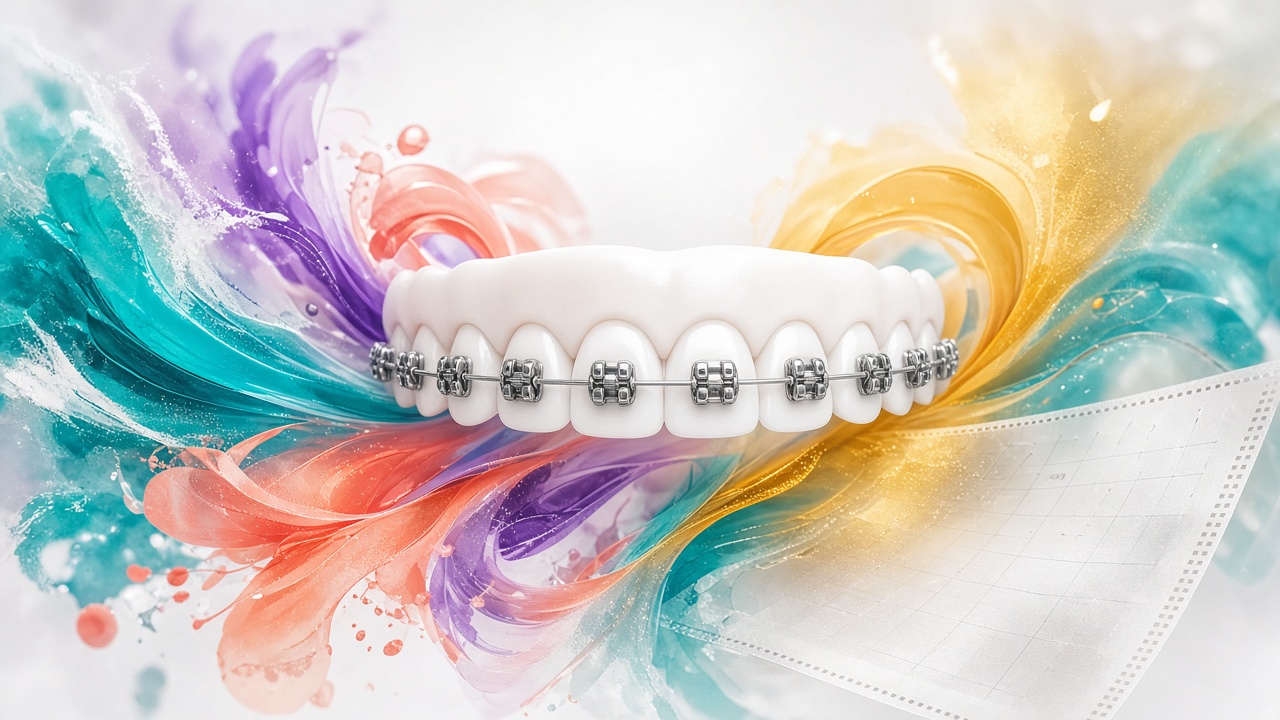
A bracket is the pad on the tooth. The archwire runs through the slots; a sharp tip after it leaves the last bracket cuts harder than a quiet mid-arch debond. A ligature holds the wire in the slot. A rocking molar band sits higher on my urgency list than one calm mid-row debond. Pictures below do not replace an exam; they help you pick the least action and the right message.
Bracket came off and hangs on the wire
The most common chat and search line: the bracket came off and hangs. The lock lost its bond to enamel, yet the wire still runs through its slot. You feel movement under the tongue or lip. AAO home-care notes suggest sliding the bracket gently toward the center of the tooth with clean fingers, covering it with wax, and telling the office. Do not pull the bracket off the wire “for memory,” do not bite it free, and do not glue it with superglue or pharmacy denture cement. Homemade adhesive damages enamel and blocks a clean rebond later.
If the loose lock interferes with bite, chew soft food on the other side, keep a thick wax pad, and book repair at the first chance. One calm debond on a short trip often waits until you return if the mucosa is quiet and you stay in touch with your doctor. Three or four debonds in a row, or a failure on a tooth that drives the current movement, change the calendar: force control slips, and waiting “three weeks until home” can cost extra months of treatment.
Archwire slipped from the last bracket or pokes
The wire end slides out of the last bracket — a classic problem in the chewing zone and on far back teeth. The sharp tip scrapes the cheek every time you open your mouth. Wax works less well here than on a flat lock: the pea slides off a thin wire. First try a clean cotton applicator or a pencil eraser (as in AAO patient notes) to press the tip toward the tooth so it re-enters the slot or at least lies along the arch. If that works, add wax on top and message your doctor. If it fails, wrap wax around the protruding segment, eat soft food, and seek an urgent local dentist or orthodontist if pain blocks eating and sleep.
I do not recommend cutting “on luck” with travel nail clippers. A trimmed tip can become shorter and sharper, harder to catch with proper instruments in the chair. If your treating doctor already gave written instructions and mini cutters for your system, follow that plan. Without instructions, stabilize and see a professional.
Ligature off, band loose, elastic lost
A colored elastic slipped — discomfort and looks, rarely acute trauma. If neighboring ligatures still hold the wire in the slot, wax on any sharp corner and a next-business-day visit often suffice. A thin wire ligature that unwound and pokes sits closer to the poking-wire scenario: cover with wax, do not bite it off. A molar band that rocks or fell off speeds the visit: without a stable molar anchor the mechanics drift, and a sharp band edge cuts the gum. Interarch elastics that tore on the trip are not fixed with glue; use a spare pack of the same size if your doctor issued one, or pause wear until you confirm — I do not prescribe a random pharmacy size remotely.
Home minimum: wax and what you can do yourself
Home care on a trip reduces mucosal injury and holds the appliance until a doctor sees you. It is not DIY braces treatment. AAO patient notes repeat a short set: orthodontic wax, soft food, warm salt rinse, a message to the clinic, and pain relief only as the package allows if you have no contraindications. Name the failure first, then act: wax without a photo and without a call plan turns a holiday week into a chronic cheek ulcer.
Pack the kit before you fly. Pharmacies in large cities usually stock wax, soft brushes, and interdental brushes. If wax is missing, medical ear silicone or sugar-free gum can bridge hours — a crutch, not a full-trip replacement. Dry cabin and hotel air speed rubbing: drink water. The steps below cover small failures, not facial trauma, strong swelling, or bleeding.
How to place wax correctly
Wash your hands. Dry the teeth in the problem zone with a tissue: wax sticks poorly on wet enamel. Tear a pea-sized piece, warm it between fingers until soft, and press it over the sharp spot so the edge disappears. If the bracket is mobile, slide it to the tooth center first, then cover. Change the wax after meals and brushing. At night check whether the lump slid off: the tongue removes it faster in sleep than by day.
Do not smear a thick coat across the whole arch “just in case.” Cover the trauma point. If an ulcer already exists, still place wax — it cuts repeat friction while mucosa heals. A warm salt rinse two or three times a day helps comfort; alcohol mouthwashes on an open ulcer often burn without benefit.
Food and hygiene for 48–72 hours after a break
Soft, cut food. No biting a whole apple, no caramel, popcorn, nuts, hard crackers, or sugared chewing gum. Hard snacks on a trip are a frequent cause of a second debond the day after a temporary wax fix. Brush carefully around the broken site: plaque on a loose bracket and around it speeds gum inflammation. Keep interdental brushes and superfloss in the routine you already use; stopping cleaning from fear that “something else will fall off” is a poor trade for enamel.
If you wear elastics and your doctor did not stop them, continue the old scheme while the elastic does not snag the broken part. If the elastic catches a mobile bracket and raises pain, remove that elastic for a day and write your doctor. Do not add force yourself to “catch up vacation days.”
What not to do even “for one night”
Do not glue the bracket with superglue, nail glue, or over-the-counter crown cement without a prescription. Do not bend the wire with hardware-store pliers. Do not remove neighboring brackets to “free” the loose one. Do not swallow small parts on purpose — if a bracket is fully free and about to go down the throat, remove it from the wire with clean fingers, store it in a container, and bring it to a doctor rather than risk aspiration in sleep. Do not start an antibiotic “for swelling” on chat advice: facial swelling and fever belong in an in-person exam, not pharmacy self-treatment.
If pain rises after the home minimum, wax will not hold, a foul taste appears, or swelling spreads onto the face, you have left the “wait until Monday” basket. Move to the urgency section.
Poking wire: calming the tip without blind cutting
A sharp wire end frightens people more than a hanging bracket. Patients search “poking wire braces” at night in a hotel when the pharmacy is closed and the cheek burns. Return the tip to the tooth or cover it, tell your doctor, then decide on a local specialist. Cutting is a last chairside tool, not the first hotel-bathroom step.
The wire leaves the slot after hard chewing, pen-biting, tooth movement that lets the wire slide distal, a broken last-tooth ligature, or trauma. Travel adds a dry mouth and tougher holiday food. A break is a known risk of active treatment; shame only delays the call that speeds the slot.
The order below matches public AAO patient notes and what I give patients before they fly. A personal instruction for your system outranks this general text.
Return the tip first, then cover
Stand at a mirror with good light. Find which side the wire pokes. With a clean cotton applicator, pencil eraser, or a gloved finger, press the tip toward the tooth along the arch so it enters the last bracket slot or at least lies flat. No sharp jerks. If it works, a thin wax layer and before/after photos for your doctor. If two calm attempts fail, stop: repeated tries tear the ulcer open.
Sometimes the tip pokes on the tongue side of lower front teeth and cuts the tongue. Same logic: press, cover, do not saw with manicure scissors. Manicure clippers leave a ragged edge.
Wax, silicone, cotton — what holds better
On a thin wire, ordinary wax slides off. Make a small sausage around the poking segment and catch the neighboring bracket for support. If you have no wax, clean cotton reduces trauma for a short time, then soaks and smells — a bridge to the pharmacy, not a week-long fix. Medical ear silicone holds longer than cotton for some patients; remove it before meals and brushing. Sugar-free gum is only an emergency hour while you hunt for wax.
At night, if the tip escapes again, do not wait until morning on principle. Replacing wax takes a minute and protects sleep. A chronic cheek ulcer from five holiday days heals longer than it feels on the first evening.
When a doctor still needs to cut
Cutting is indicated when the tip will not return to the slot, wax fails, and your own orthodontist is days or weeks away. A dentist or orthodontist does it with proper tools and length control. After a cut they may place a protective tip or bend the remainder. A local doctor may not continue your full plan — in a travel scenario the job is often comfort: remove trauma, stabilize, send you home to the treating specialist. That is a normal, ethical role. I do not expect a colleague in another city to redesign your entire course in one visit without records and history.
If someone offers to “remove all braces today and place ours later,” pause and ask why that is required today to stop acute trauma. Full removal is a separate decision, close to braces installation again, not to emergency comfort. On a second opinion consultation those forks get a calm review without night pressure.
When to wait for home, and when you need urgent care or ER
Travel breaks the habit of booking your own doctor next week. I sort symptoms into three baskets: stabilize and keep your itinerary; see a local dentist or orthodontist within about a day; go to ER or urgent dental care under local rules. AAO separates orthodontic discomfort from life-threatening states. Confusion either sends people to ER for a slipped elastic or makes them endure a cutting wire for days.
I publish no clinic addresses abroad. Urgency criteria travel with you. Find a doctor through travel insurance, hotel reception, a regulator directory, or your orthodontist’s referral. After Dubai return the path to a consultation is clear; abroad, stabilize first. Read the baskets with the table at the end of this section next to the breakage photo on your phone.
Basket: keep the itinerary
Intact appliance, light rubbing, one calm wax-covered debond, a slipped ligature without a sharp edge, mild ache without swelling — message your doctor, keep wax, eat soft food, return for planned repair. If home is three days away and mucosa rests under wax, a local visit is often unnecessary. If home is three weeks away and the bracket is critical to mechanics, local comfort beats three weeks without control on a key tooth.
Basket: local doctor within about a day
A sharp edge wax will not cover; a mobile bracket that blocks bite; a rocking band; inability to eat or sleep; repeat debonds on the same tooth in a short time. Look for a dentist or orthodontist used to braces. At the desk say: “orthodontic emergency / comfort visit, broken bracket / poking wire.” Attach photos. Ask whether they will stabilize only, without locking you into a full new course. An honest colleague usually understands the travel scenario.
Basket: ER and urgent care
Bleeding that will not stop; facial or jaw trauma; a tooth luxated or displaced; breathing difficulty; fast-growing facial swelling; fever with feeling severely unwell. That is an emergency route, not a braces tweak. Staff stabilize general condition and trauma under local protocol first. The orthodontist joins later. I do not override local ER rules with Dubai habits: follow the triage desk.
Swelling “only from a bracket” without general symptoms more often leads to an urgent dentist than to ER. If you sit between baskets, choose the more urgent one and describe symptoms at the desk. An extra exam beats a night with breathing risk.
| Situation | What you can do | Where to go | Timing | Bring | Avoid |
|---|---|---|---|---|---|
| Bracket off, hangs on wire, does not cut | Slide to center, wax, photo to doctor | Own orthodontist on return or planned slot | Days–weeks if mucosa calm | Wax, photos, system name | Superglue, biting the bracket off |
| Bracket free, blocks bite | Wax fix / remove to a container | Local dentist/orthodontist | 24–72 hours | Container, passport, insurance | Swallowing “on luck” |
| Wire pokes, wax holds | Press tip, wax, soft food | Planned / next business slot | 1–3 days | Wax, applicator | Manicure-clipper cutting |
| Wire pokes, wax fails, cannot eat | Stabilize as far as you can | Urgent dental visit | Hours–a day | Photos, medication list | Enduring until the tour ends |
| Molar band loose / off | Avoid chewing on that side | Urgent slot | 24–48 hours | Occlusion photos | Ignoring “home in a week” |
| Strong tooth pain under bracket, hot/cold reaction | Soft food, contact doctor | Dentist (possible pulp care) | As it worsens | Treatment history | Heating the cheek without exam |
| Face blow, bleeding, tooth shifted, swelling grows | External cold per ER advice | City ER / urgent care | Now | Passport, insurance | Waiting for it to pass |
| Fever, facial swelling, foul taste | No self-medication | ER or urgent dentist | Now | Allergy list | Antibiotic “just in case” without a doctor |
| Colored ligature off, wire in place | Wax if needed | Planned | When convenient | Spare elastics if issued | Panic, removing neighbor brackets |
| Elastic lost / pack empty | Write your doctor | Clarify scheme | Per doctor’s reply | Photo of size pack | Random pharmacy size |
How to explain the problem at a foreign clinic without fighting your doctor
A travel visit can turn into a courtroom: “they treated us wrong,” “we will redo everything here.” My position stays fixed: I do not publish named critiques of other doctors and I do not build trust by humiliating a colleague. AAO describes transfer as shared work that needs facts, records, and respect for continuity. On a trip your job is narrower: stop trauma, keep the appliance, return with a clear report.
Send a short message to your orthodontist before or right after the local visit: what happened, photos, what was done locally, which wire or bracket was involved. Then the treating doctor does not learn about the break a month later from a “suddenly crooked” tooth. If you have no contact, bring a note or receipt. Below is how to speak so you get comfort, not an accidental full restart.
What to say at the desk in sixty seconds
“I have active braces; my treating doctor is in another city. Right now: a bracket came off / a wire is poking. I need stabilization and trauma relief. I am not planning a full new course today. I have photos and the system name if known.” That frame saves time. The desk understands the slot type. The doctor understands the task border. If a clinic only takes full “start from zero” cases and refuses travel comfort, that is their model; look for another office instead of arguing for hours.
Passport, travel or medical insurance card, medication and allergy list speed registration. Emirates ID and a local card do not matter if you are a tourist. Emergency visits often bill directly; confirm coverage with the insurer separately from desk promises.
What to ask for — and what to postpone
Ask for: removal of the sharp edge, rebonding a bracket if safe without rewriting the whole plan, securing a band, a written or digital note of what was done. Postpone: a change of treatment philosophy, extractions teeth “while you are here,” full system swap without contact with the treating doctor, a promise to “finish in two weeks since you already came.” Those decisions need imaging, a plan, and consent to a new scope. On holiday they rarely burn as hot as a cutting wire.
If the local doctor finds caries or pulp inflammation under a bracket, restorative care can become necessary urgency for the tooth’s health. Ask how the step will affect the bracket and wire, and pass the report to your orthodontist.
How to avoid a review war after the visit
Different schools and systems use different repair tactics. Metal bonds differently from ceramic; a self-ligating lock behaves differently from a ligated one. If temporary stabilization looked unlike “home,” that is not automatically a medical error. Your treating specialist judges the outcome after exam. A public review war the night after a trip rarely fixes the bite and often warps facts. Facts fix the plan: what debonded, what was done, how mucosa looks, which mechanics sit now.
After you return to Dubai, a calm review at a consultation or in a second opinion format helps more than social-media threads. I look at the mouth and the files, not the comment feed.
After you return to Dubai: repair, wire, consultation, and prices
The home clinic after travel closes two tasks: restore appliance control and check whether the plan drifted during the pause. Sometimes one rebond is enough. Sometimes you need arch-wire replacement if the wire was cut, bent, or left the activation schedule. Sometimes several anchors failed on holiday and a partial rebond is cleaner than patching patchwork mechanics month after month.
Figures below are “from” prices on my service pages, an orientation on the publication date, not a fixed invoice. The exam total can sit higher or lower by volume. Another clinic’s ad for “repair from AED 99” describes another price list; comparing it to my service floor without line items is empty.
On the site: orthodontist consultation — from AED 500. Planned arch-wire replacement — from AED 700 when billed separately. Braces installation — from AED 3,500 as a starting procedure for a new launch or full system restart; that is not the price of “glue one bracket in travel mode.” Spot repair and emergency chair time are billed by work done. If your course runs as a package, ask whether emergency rebonds sit inside the contract limit.
Bring travel photos, the local doctor’s note, the system name, and the date of the last activation before the trip. Fuller intake shortens the visit. I do not promise “fix it from a WhatsApp photo”: adhesive and bracket height need a dry field and height control.
If the trip made you doubt the whole plan, the honest format is a second opinion with imaging, not a night clinic switch born from anger at one debond. A holiday break alone rarely proves the plan was wrong. It proves the appliance is vulnerable to food, impacts, and pauses without wax in the bag.
Travel kit and pre-flight checklist
Most travel mishaps cost less to prevent with a ten-minute packing ritual than to treat as a cheek ulcer on the last night of the tour. I ask patients to pack an orthodontic minimum next to the charger and passport.
The list below is household, not brand advertising. If your doctor issued a personal kit with cutters and instructions, pack it on top, not under the suitcase floor.
- Orthodontic wax — main pack plus a spare.
- Soft toothbrush and travel interdental brushes / superfloss.
- Mini mirror and phone flashlight (for breakage photos).
- Cotton applicators or clean cotton swabs.
- Lidded container for a lost bracket.
- Spare elastics in the size your doctor prescribed (if you wear them).
- Written or PDF clinic note in English: system name, contacts, what to do on a debond.
- Medication and allergy list; usual pain relief only if already cleared for you and without contraindications.
- Copy of the latest plan / arch photos from trip start — to compare after return.
- Your orthodontist’s contacts in a channel you can reach (phone, email, clinic messenger).
Twenty-four to forty-eight hours before flying, check the mouth in a mirror. If a bracket already rocks at home, repair before the airport. If activation sits one day away and the trip is long, ask whether to move the visit or get a travel instruction. Drop hard snacks from carry-on on purpose: half of debonds start with a “quick bite.”
For sport and active holiday days, use a mouthguard over braces if your doctor recommended one. A ball to unprotected brackets ends in the urgency table more often than people expect on the beach.
Frequently asked questions
Below are questions I hear before holidays and in the first week after return. Answers stay short by format; a personal decision still needs an exam. Read them as action orientation on a trip, not as a remote diagnosis.
What should I do if a bracket comes off on holiday and hangs on the wire?
Slide the bracket to the tooth center with clean hands, cover with wax, photograph it, and write your orthodontist. Eat soft food on the other side. Do not use superglue and do not bite the bracket off. If it blocks bite or swings freely, speed a local visit or remove the bracket from the wire into a container so you do not swallow it.
Can I fly with a loose bracket?
Often yes, if mucosa is covered with wax, the bracket is stabilized, and you accept the risk of more rubbing in flight. Dry cabin air increases friction — wax and water are mandatory. If the edge cuts and wax will not hold, stabilize with a dentist first, then fly. An exam decides for the specific tooth, not airport chat.
How do I cover a poking wire if I have no wax?
Short term — sugar-free gum or clean cotton until a pharmacy; better find orthodontic wax or medical ear silicone. In parallel, try pressing the wire tip toward the tooth with an applicator. Do not cut with manicure clippers without your doctor’s instruction. If the edge reopens and you cannot eat, seek an urgent dental visit in the city you are in.
When after a braces break do I need ER instead of an orthodontist?
ER — for bleeding, facial trauma, a tooth displaced after a blow, breathing difficulty, fast facial swelling, severe fever. A slipped ligature and a calm hanging bracket are not ER cases. Orthodontic urgency is mucosal trauma and loss of appliance control; medical urgency threatens general condition. When unsure, take the more urgent route and describe symptoms at the desk.
How much does repair cost after returning to Dubai?
Orientation from my service pages: consultation from AED 500, planned arch-wire replacement from AED 700 when needed and billed separately. Spot rebond is priced by visit volume; full installation from AED 3,500 applies to system start or restart, not every travel repair. Exact sum follows exam and estimate; a package contract may include emergency rebonds inside a limit — read your agreement.
Can a foreign clinic “just tighten” braces like a planned visit?
Planned activation and emergency stabilization are different jobs. On a trip the sensible goal is trauma relief and keeping the appliance. A full wire change under someone else’s plan without history and imaging can shift biomechanics. If a local doctor offers activation “while you are here,” ask why it is needed today and how to report to your treating orthodontist. Comfort without force acceleration is often enough.
What should I tell my doctor after a local repair?
Send the visit date, what was done (rebond, wire cut, temporary fixation), after photos, which teeth were involved, and any advice given. Keep the receipt or note. At the next home visit that saves time and lowers the risk of a repeat error on the same bracket. A calm report tone speeds plan adjustments.
Do I need a second opinion if someone abroad offered to remove all braces?
If the offer is full removal and a new system here and now only because of one break, pause and ask what medical need exists today. After return, review on exam or in a second opinion format with imaging and the local note. Sometimes removal is justified. Sometimes a spot repair is enough. An in-person review decides, not fear in a foreign chair the evening before a flight.