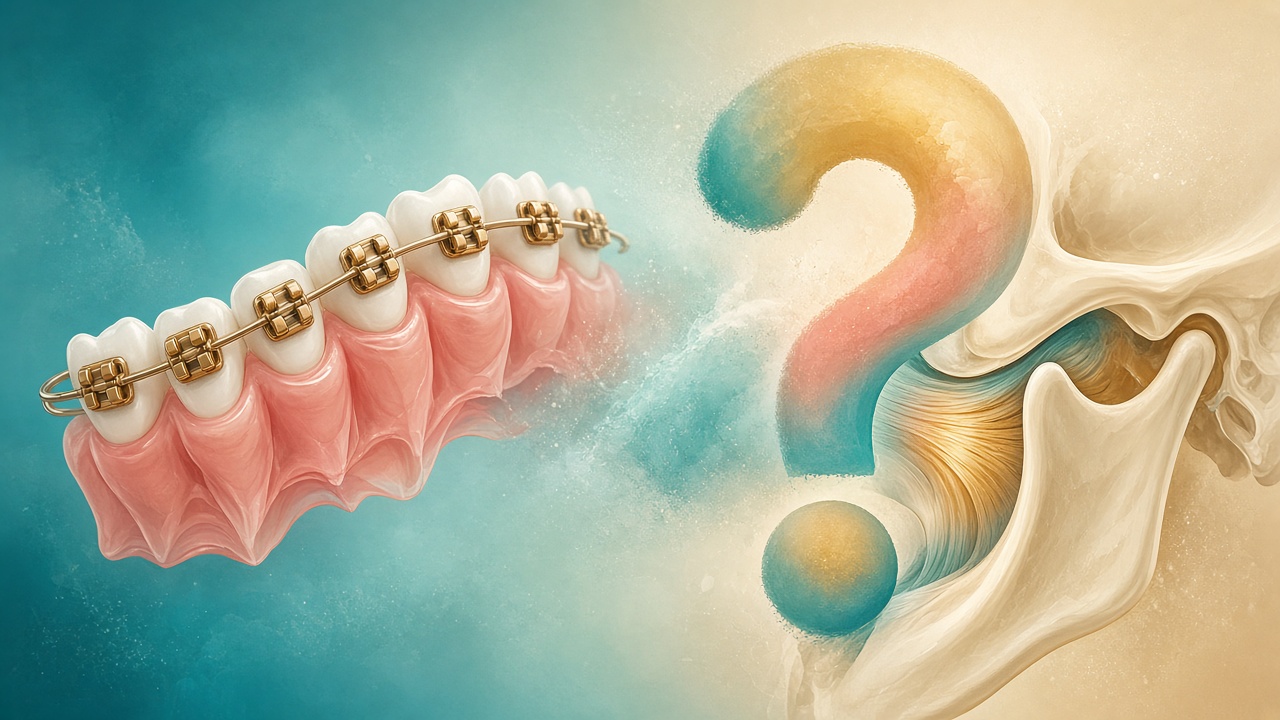
“Can braces cure TMJ?” arrives almost every week — sometimes as hope, sometimes as blame after someone else’s course. I am Dr. Maksut Behruzoglu, a specialist orthodontist in Dubai; I provide both TMJ treatment and adult orthodontics. The honest short answer: orthodontic treatment is not a reliable way to “cure” temporomandibular joint dysfunction. It moves teeth and changes contacts. The joint, disc, and muscles live their own biomechanics. Sometimes the muscle background feels calmer after alignment. Sometimes click, pain, or limited opening remain. Sometimes any forces are early during an acute joint phase. Below — where a useful coincidence ends and a marketing promise begins, when orthodontics should wait, what I tell patients before agreement, and why “fix the bite and the joint will heal” does not enter my contract language.
What people mean by “cure TMJ”
Patients pack different goals into one phrase. For some, “cure” means silence the click forever. For some, remove temple pain. For some, eat a steak without fear. For some, gain a guarantee that braces will not “destroy” the joint. I ask them to unpack expectation into concrete symptoms: sound, pain, opening, morning stiffness, locking, evening muscle fatigue. Otherwise the talk collapses into abstract “make the bite normal.”
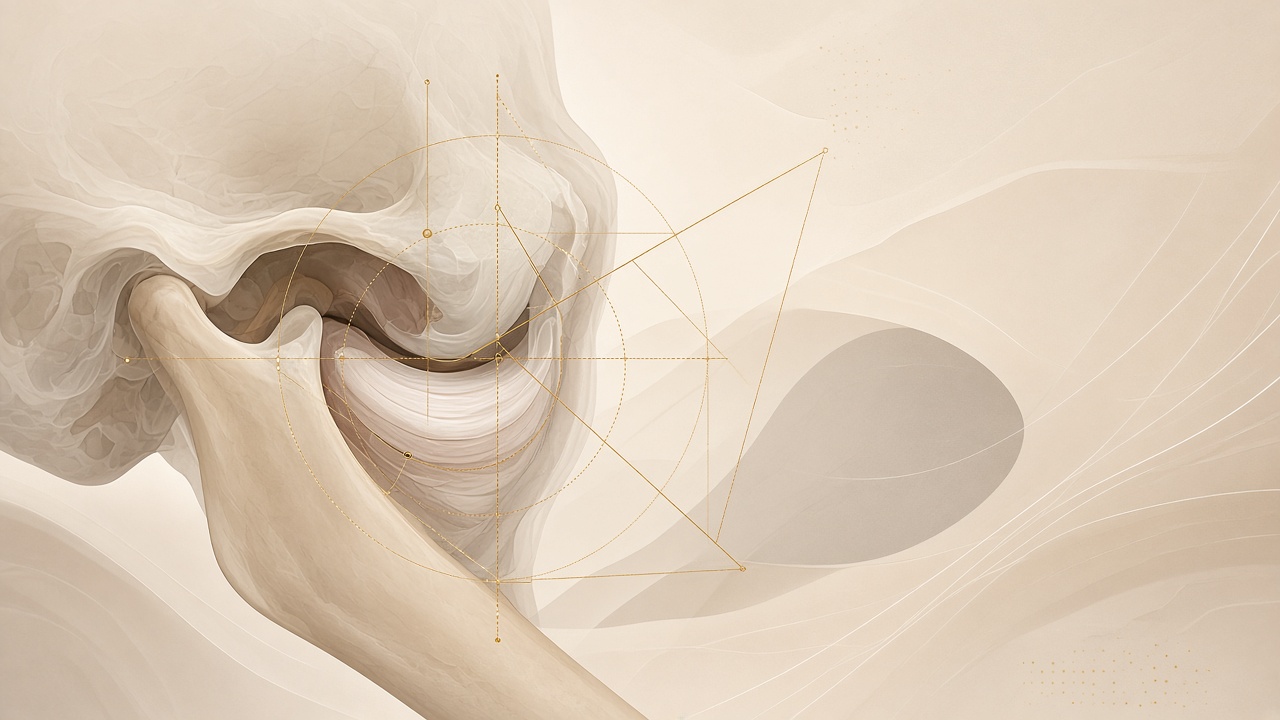
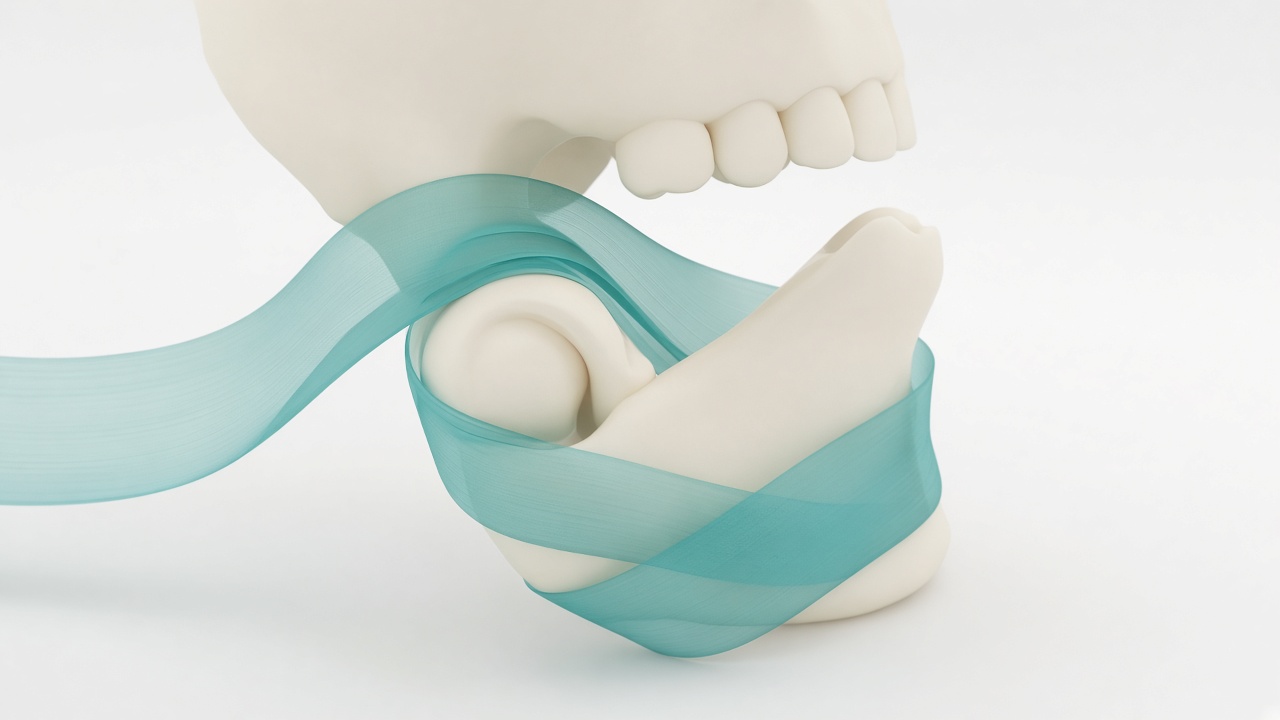
The TMJ is a joint with a disc, capsule, ligaments, and neighbouring muscles. Orthodontics works on tooth position in the jaws and on occlusion. Those systems connect through load and lower-jaw posture, yet the link is not a formula “straight teeth = healthy joint.” People with ideal arches still click and hurt. People with crowding live years with quiet joints. Chair statistics confirm that more often than clinic slogans.
I separate three scenarios. First: tooth indications for orthodontics exist, joint complaints are mild or absent — the plan is about teeth; we document the joint. Second: joint complaints dominate, the tooth request is secondary — stabilise joint and muscles first; orthodontics stays in question. Third: both requests are strong — phasing, honest result borders, sometimes parallel care without promising that a wire “heals the disc.”
Dubai adds language and insurance layers. A patient hears “braces cured my TMJ” from a friend and expects the same package. Another hears “braces kill joints” and fears any start. Both stories are anecdotes without your timeline. I return the talk to exam: what hurts now, what range exists, which phase you are in, which tooth goals are realistic.
Another confusion source is the word “bite.” In daily speech it covers smile aesthetics and any jaw discomfort. In clinic I clarify: tooth contacts, skeletal jaw relationship, joint complaint, or all at once. Until words split, the promise “we will cure bite and TMJ in one course” sounds attractive and stays unsafe.
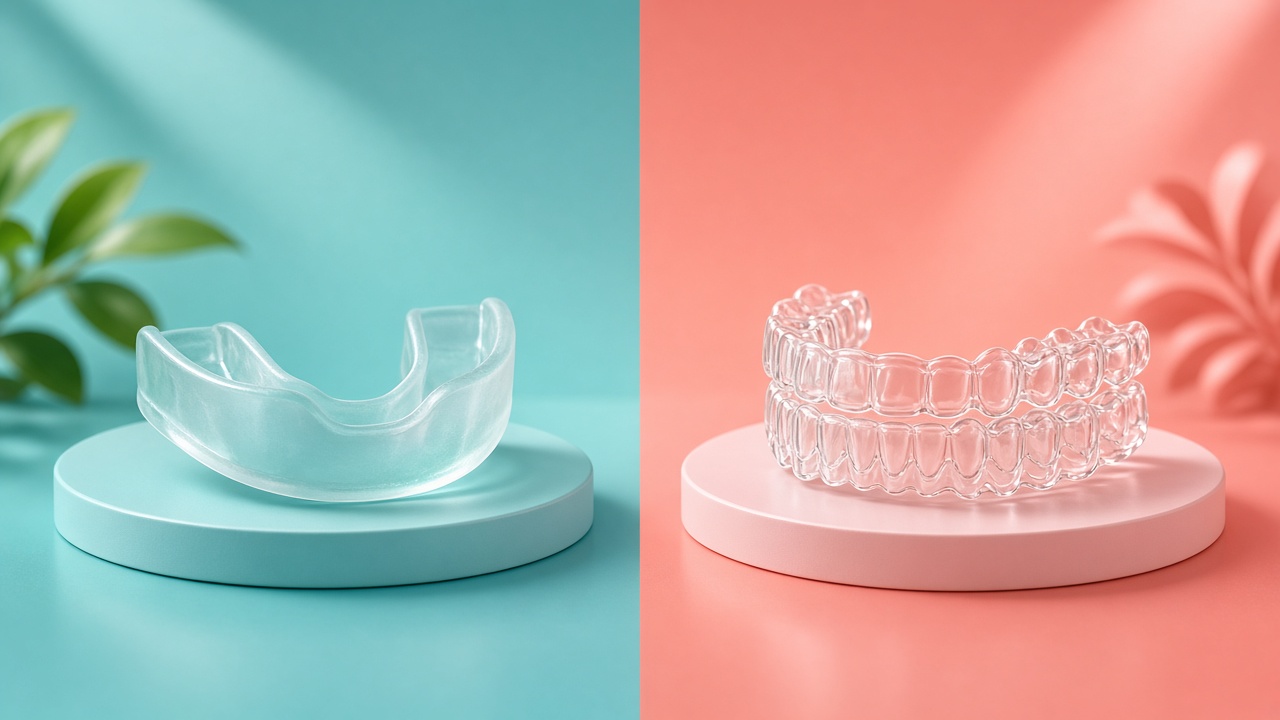
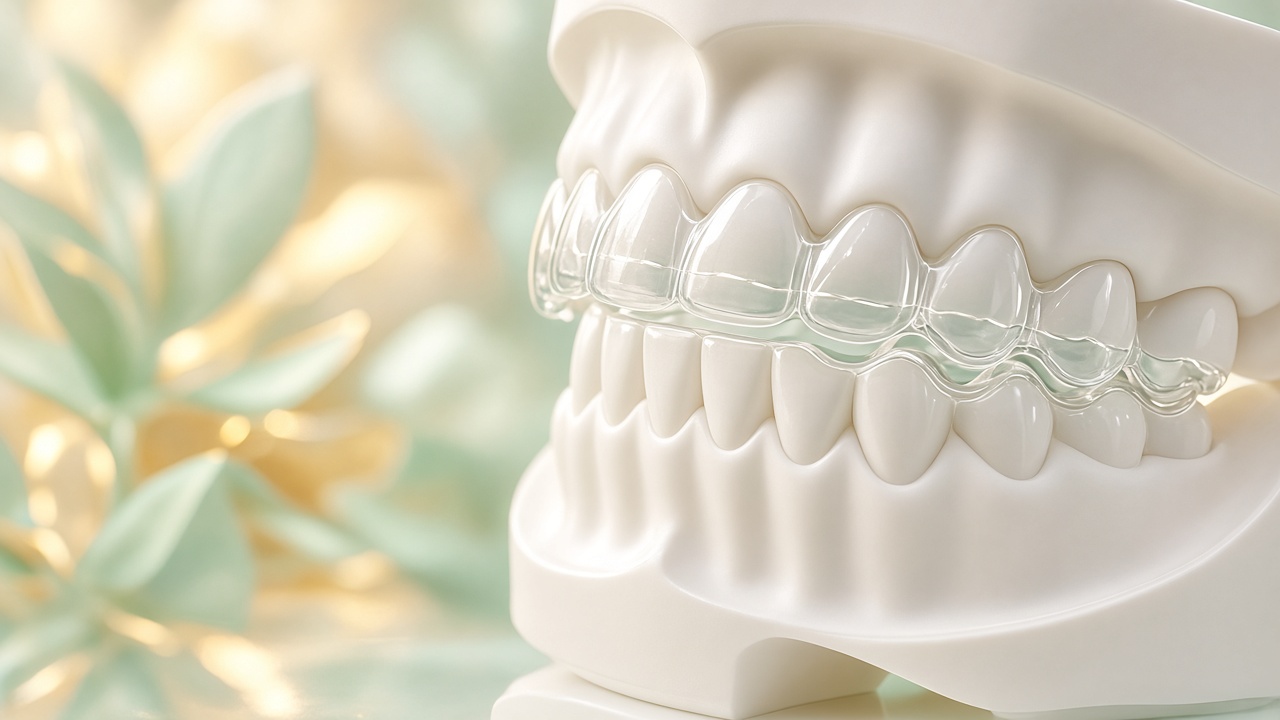
I also hear “put me in aligners instead of braces — they are safer for the joint.” Appliance format alone does not turn treatment into TMJ therapy. Braces and aligners both change tooth position by plan. Safety depends on joint phase, force magnitude, monitoring, and honest goals — not on the marketing name of trays.
Parents of teens sometimes add “align now so adult TMJ never appears.” Prevention of future dysfunction by a straight arch is not proven as a universal law. A teen may have excellent tooth reasons for orthodontics — crowding, trauma-prone incisors, a skeletal task in growth. Those reasons stand alone. I will not bolt on “so TMJ never starts later”: that mixes honest adolescent orthodontics with fear marketing.
Another common entry: the patient already bought an idea from a blogger or a prior consult and arrives for confirmation, not for review. I still examine. If there is nothing to confirm, I say so. Better to lose an easy sale than spend a year later unpacking “you treated my TMJ with braces.”
Why braces are not joint therapy
Orthodontic mechanics move teeth through bone and periodontal ligament. The course goal is a coordinated arch and occlusion by the plan we agreed. The goal of TMJ care in an acute phase is to lower pain, improve function, remove excess load, sometimes stabilise lower-jaw position with a splint, and work on muscles and habits. Tools overlap rarely and carefully. Mixing them in one advertising sentence serves the patient poorly.
When contacts are traumatic, alignment sometimes lowers local overload. Muscles may tire less. The patient notices less morning stiffness. That is a valuable outcome. It is not proof the disc “seated forever.” I record improvement when it appears and do not sell it as a pre-start guarantee.
Below — three points I speak before agreement when the request is specifically “cure the joint with braces.”
I record joint status before wires start: later we can see what changed during orthodontics and what lived its own life.
Orthodontics changes teeth; it does not warranty-repair a disc
Even an ideal final occlusion does not promise joint silence. The disc may have had its own history before any course. Muscles may keep clenching at night after braces come off. If a click remains while teeth meet the plan — manage the joint separately rather than declare automatic orthodontic failure.
A calmer background is a bonus, not a contract line “TMJ cured”
If after alignment chewing feels easier and temple pain fades — good. I share that win. In informed consent I still separate tooth goals from joint expectations. A bonus does not become a legal or marketing guarantee of curing dysfunction.
Acute joint phase and active forces mix poorly
Pain, lock, sharp limited opening — a stop for ramping activations toward a wedding smile in a month. Stabilise first. The orthodontic calendar shifts. Better to say that before payment than halt wires mid-course under “you promised the joint.”
I sketch mechanics on paper in plain words: teeth sit in sockets; a wire or tray sets a vector; bone remodel over months. Meanwhile the joint keeps opening, closing, and taking night load from clenching. We do not “reflash” a disc with orthodontic wire. We change how teeth meet. Sometimes the meeting is kinder to muscles. Sometimes joint history continues beside a neat arch. Patients need that sketch before a “cure” expectation hardens.
If the history already includes guards, osteopathy, “bite adjustments,” muscle injections, massage courses — I collect the list not to judge, but to see which background we inherit. Orthodontics after five recent interventions without a clear diagnosis needs even more caution in promises.
When pain comes from an irritated joint or strong muscle spasm, active forces can aggravate the background. Then “treating TMJ with braces” at the peak of complaint is a phase error. Leave the acute ditch first. Then, if tooth indications remain, discuss orthodontics separately. Literature on orthodontics and TMJ is mixed: there is no simple rule that “braces cure” or that “braces always harm.” Clinical practice needs individual assessment. I lean on exam, phase, trauma and bruxism history — not on a clinic slogan.
When orthodontics still belongs next to a TMJ complaint
There are cases where a tooth plan is needed regardless of the joint: crowding that wounds soft tissue, preparation for prosthetics, pathologic wear from harmful contacts, an adult aesthetic request with a stable joint. Then we are not “treating TMJ with braces.” We treat a tooth task and monitor the joint in parallel.
There are cases where orthodontics should wait: acute lock, rising limitation, unclear pain not yet reviewed, hope that “braces replace MRI and exam.” Waiting is not a permanent refusal. It is phasing.
In adult orthodontics and TMJ treatment patients benefit from seeing related but different shelves in the same practice.
Below — three practical forks on consult.
Before choosing a path I ask for one main goal in a single sentence: teeth, pain, sound, or “everything.” That sentence sets stage order.
Strong tooth indications, quiet joint
We document a painless click if it exists. We explain that sound may change while teeth move — quieter, louder, or unchanged. We start orthodontics with monitoring. Pause criteria are spoken early: pain, lock, falling opening.
Acute joint phase, teeth can wait
First joint and muscle exam, protective regime, sometimes a splint, habit work, other specialists when needed. We do not sell orthodontics as analgesia. When the phase is calmer — return to the tooth plan if it still matters.
Both requests are strong
We write stages: what happens in months 1–2, what counts as joint success on that stretch, when wire start is allowed, which symptoms stop activations. Without that map the patient hears only “we will start and see,” then feels deceived even if clinic ran reasonably.
Sometimes staging includes a short joint contour without orthodontics, a review visit, and only then scanning and braces or aligners. Sometimes with a very quiet joint and strong tooth pain from crowding we start orthodontics earlier, but with joint check-ins and the patient’s right to say “pause activation.” Protocol flexibility beats a pretty “all inclusive” slide.
I also warn about retention: after braces come off, teeth tend toward partial return; retainers hold the result. The joint does not receive a magical health seal. If night bruxism remains, we may talk separately about night protection — that is not orthodontic failure and not proof we “should have treated TMJ harder with wires.”
There are cases where occlusal trauma clearly feeds muscle pain: a heavy contact, a deep traumatic incisor path, one-sided contact after tooth loss. Here orthodontics or a combination with prosthetics may be part of load reduction — after or beside stabilisation, not instead of a joint diagnosis.
What I do not promise — and what not to expect from braces
I do not promise click disappearance. I do not promise temple pain will leave “because the bite will be correct.” I do not promise aligners are safer for the joint by themselves. I do not promise a short aesthetic package will close a joint question. I do not promise that refusing orthodontics forever protects the joint — joints hurt for their own reasons without braces.
I promise something else: split goals; measure and record baseline joint status; avoid starting forces at the peak of acute lock without need; stop activations if the joint flares; say honestly when a splint or another specialist is needed instead of a new wire.
Patients sometimes want the clinician to “take lifelong responsibility for the joint” in exchange for orthodontic fees. Responsibility for plan and safety on the stage — yes. Responsibility for disc biology as a warranty product — no. That honesty is awkward in ads and useful in the chair.
I quote AED fees after volume is clear: orthodontics separately, joint contour separately, imaging when indicated. Date and clinic affect numbers. Insurance is confirmed by the policy administrator. In a blog I do not sell a package “braces + TMJ cure guarantee.”
Home chaos around the topic also hurts: a hard marketplace guard “while I save for braces,” self-filing contacts, forceful exercises “to open the joint before bonding.” That changes the background and blurs what was primary.
Separately on timelines. A patient wants to “close teeth and joint in one Dubai leave.” Adult orthodontics often runs many months. Joint stabilisation may take weeks or longer and still not deliver full silence. Crushing both contours into two weeks for a flight date is a recipe for disappointment. An honest minimal safe step now plus a continuation plan beats a full “cure” promise by departure day.
How I structure the talk before agreement
First the complaint in your words. Then exam of teeth, muscles, joint, opening measurement. Then translation into goals: what orthodontics can realistically change, what belongs to a joint plan, what stays under observation. Then risks: sound change, temporary discomfort, need for a pause. Then alternatives: observation, splint, physiotherapy by referral, declining orthodontics for now.
I welcome second opinions. I dislike pressure of “pay today or the joint dies.” Joints rarely need that marketing. If the situation is acute — urgency is explained by symptoms (pain, lock, limitation), not by an installation discount.
Below — three questions I ask aloud before a plan is signed.
I briefly record answers in the chart: later it is easier to return to the original expectation agreement.
Which symptom is main for you?
If the main issue is a painless click, orthodontics purely for joint silence is a weak reason. If the main issue is crowding and lip trauma, orthodontics is appropriate with a quiet joint. If the main issue is pain and lock, joint first.
What counts as success in 18 months?
Straight teeth with a rare click remaining? No pain with imperfect aesthetics? Total joint silence at any cost? The third option is often unrealistic. Better to say so now.
Will you accept an orthodontic pause if the joint flares?
If not — starting on a doubtful background risks trust. If yes — we can move more carefully and honestly.
I add a fourth practical question about money and time, prosaic as it sounds: will you pay for and attend a joint contour separately if needed, rather than expect it “included in braces”? Budget clarity lowers conflict six months later. An orthodontic agreement covers orthodontics. Joint visits, splints, indicated imaging are separate lines when needed.
In multilingual Dubai I repeat key borders in the patient’s language. The English word “cure” and absolute promises sound larger than clinic allows. I replace them with “lower pain,” “improve function,” “align teeth,” “observe the click.” Precise words reduce disappointment a year later. If the patient already wore braces and links joint worsening to the course, we unpack chronology without putting a colleague on trial: what existed before, which forces, whether a splint existed, whether trauma or bruxism were present. Sometimes time coincidence is not causation. Sometimes forces on a bad background played a role. Without that review we cannot honestly decide whether to repeat orthodontics.
Myths that block a good decision
Myth one: “a perfect bite automatically cures TMJ.” Load and symptoms sometimes connect. Automatism does not. Myth two: “any braces are dangerous for the joint.” Without phase and mechanics that is a scare line. Myth three: “aligners treat the joint because they are removable.” Removability is not disc therapy. Myth four: “if a click appeared after braces, the doctor had to forbid the course in advance.” Sometimes a click arrives with bruxism and stress independent of wires; sometimes the background was unstable and forces added irritation. Fact review beats a blame label.
Myth five: “splint and braces forever exclude each other.” Sometimes a splint is a stage before orthodontics. Sometimes night protection is still needed after. Sometimes regime without an appliance is enough. Decision follows diagnosis, not a marketing method duel.
Myth six: “filing two teeth instead of orthodontics will calm the joint.” Irreversible grinding at the peak of unclear pain is a common road to new problems. Find the complaint source first.
Myth seven: “the more expensive the braces, the better TMJ is treated.” Appliance price reflects materials, lab protocol, experience, and service — not a magical ability to heal a disc. An expensive course in the wrong phase remains the wrong phase. A modest course with honest borders is sometimes kinder than a premium slogan.
Myth eight: “if an orthodontist will not promise to cure TMJ, they are underqualified.” The opposite is often true: refusal of an absolute promise signals maturity. Qualification shows in diagnosis, phasing, and the ability to say “here orthodontics is not the tool.”
I do not rank one legitimate method as “worse” for school rivalry. I ask whether the tool fits phase and goal. For acute pain a indicated splint sits better than a new wire. For crowding with a quiet joint, orthodontics sits better than endless “just in case” guards.
In Dubai practice I often see patients after care in another country: part of the file in another language, part of the promises oral. I ask for everything available and rebuild today’s status. A prior course is not automatically “bad.” It simply finished in another context. A decision about new orthodontics rests on current teeth and current joint, not on a wish to “prove” a previous clinician wrong.
What an honest phased plan looks like
On paper I often draw three columns for the patient: now, in a few weeks, across orthodontic months. In “now” — pain, opening, click, tooth request, what was already tried. In “a few weeks” — criteria that allow wire start or continued joint-only care. In “months” — tooth goals and, on a separate line, joint expectations without the word “cure.”
Phase A: reduce acute overload. Soft diet briefly, jaw pauses, sleep without constant pressure on the joint, sometimes a splint when indicated, sometimes referral. Orthodontic activations are not the main tool here.
Phase B: confirm stability. Pain is manageable, lock does not repeat, opening is not falling, the patient understands borders. Only then scanning, wire or aligner planning, time discussion.
Phase C: orthodontics with monitoring. On review visits I ask not only about elastics and hygiene but about mornings, chewing, click, temple. Lock appears — return to phase A even if aesthetics need “just a little more.”
That frame sounds slower than “start tomorrow and close TMJ.” It sits closer to how joint and teeth actually coexist. Patients who accept phasing return less often with the grievance “you treated the wrong thing.”
I also say phase A is sometimes enough: pain left, function returned, the tooth request proved secondary. Then orthodontics may not start — and that is still a successful consult outcome, not a “lost case.”
Patients who compare clinics only by the slogan “we treat TMJ with orthodontics” get another selection criterion from me: can the clinician split goals on paper and stop forces when the joint flares. That skill protects more than a pretty smile “before/after” with no mention of a click. If a consult promises full cure of dysfunction with one braces course — ask about phase, pause criteria, and what happens if sound remains. Those answers matter more than an installation discount.
The table below collects expectations and honest borders. It does not replace an exam.
| Patient expectation | What orthodontics actually does | TMJ link | When appropriate | What I do not promise | Parallel care |
|---|---|---|---|---|---|
| Silence click forever | Moves teeth, changes contacts | Background sometimes quieter; sound often remains | Tooth indications + quiet joint | Silence guarantee | Document sound before/after |
| Remove temple pain | May lower traumatic contacts | Indirect, not always | After acute phase exclusion | “Braces = painkiller” | Regime, sleep, muscles, sometimes splint |
| Open the mouth wider | Not an orthodontic goal | Forces early during lock | After function stabilises | Range gain from wires | TMJ exam, not home “stretching” |
| Aesthetic smile | Direct goal when indicated | Joint monitoring | With stable background | Disc therapy “as a gift” | Honest informed choice |
| “So the joint will not destroy itself” | Indirect load control | Slogan prevention unproven | Individual | Fear marketing | Exam facts, not forums |
| Short course “plus joint” | Short package = limited tooth goals | Joint rarely “closes” on Express logic | Only clear small tooth tasks | Double result in short time | Split goals in writing |
| Aligners “safer for TMJ” | Change teeth in another format | Safety = phase and plan | As with braces — by indication | Automatic tray priority | Case-based comparison |
| Retreatment “will fix the joint” | May improve occlusion again | No joint-outcome guarantee | After prior timeline review | Redemption of a past course | Phasing; sometimes splint first |
Frequently asked questions
Below — answers I give to “can braces cure TMJ.” This is not an online diagnosis and not a result promise. If you have pain, lock, or sharply limited opening — start with a joint exam, not a brand debate about braces. Use the rest as a consult checklist: which goals to split on paper, which pause criteria to agree, what not to expect from wires.
Questions mirror pre-agreement talk; details depend on your phase and tooth indications. I leave room for doubt: an honest reply sometimes means “you need an exam and phasing, not a slogan from an ad.”
If anxiety remains — a normal reason for a consult with split goals, not for choosing a clinic by the slogan “we cure TMJ with orthodontics.”
Can braces cure TMJ?
As a reliable way to cure joint dysfunction — no. Sometimes muscle background and chewing comfort improve. Sometimes joint signs remain. Orthodontics solves tooth tasks; we manage the joint separately or in parallel without a “cure” guarantee.
Can a click disappear after alignment?
It can. It can stay. Sound character can change. I do not build a plan on a silence promise. I document sound before start and watch the trend.
Can I get braces if TMJ already bothers me?
Depends on phase. With acute pain and lock — stabilise first. With a quiet background and tooth indications — possible with information and pause criteria. Decision after exam, not after an ad.
Are aligners better for the joint than braces?
Not automatically. Both methods change occlusion. Appliance choice is about task, hygiene, control, and case biomechanics. Joint status matters more than a marketing format duel.
If a past course coincided with worse joint symptoms — is orthodontics banned forever?
Not always. Timeline and current status matter. Sometimes we repeat more carefully after stabilisation. Sometimes we close the tooth request another way. I do not stamp “banned forever” without an exam.
Does a splint replace braces for a TMJ complaint?
A splint does not align teeth. Braces do not replace a splint in an acute phase by default. Different tools. Sometimes sequential. Sometimes only one. Sometimes regime without an appliance.
Does orthodontics make sense “to prevent TMJ”?
As the only motive — weak. Preventing dysfunction with straight teeth is not a universal law. You need tooth indications or clear occlusal trauma, plus an honest joint talk.
What should expectations say before agreement so disappointment stays low?
Split tooth goals (arch, contacts, aesthetics) and joint goals (pain, function, sound). Note that joint outcome is not guaranteed by orthodontics. Agree pause criteria. That paper beats the slogan “we will cure TMJ.”
If you want to hear about your specific click and your arch — come for an exam. The article clears marketing fog. A plan appears only after I see teeth, muscles, and joint together, not separately inside advertising promises. Braces solve orthodontic tasks. TMJ needs its own review. The honest answer to “can braces cure TMJ?” stays the same: as reliable treatment of joint dysfunction — no; as part of a larger picture in the right phase — sometimes alongside, without a cure guarantee.