“Buy a night guard tonight” usually means the same story: grinding you can hear, flattened edges, morning jaw tightness — and a pharmacy shelf that promises relief before bed. A store-bought guard and a dentist-made guard solve different jobs. The first is a quick plastic barrier between the arches. The second belongs to a plan: material, thickness, arch coverage, bite contacts, and a review after you have worn it. I am Dr. Maksut Behruzoglu, a specialist orthodontist in Dubai; I see bruxism patients inside TMJ treatment and splint therapy. Below is a straight comparison: what you get over the counter, where OTC and mail-order guards cause harm, when a pharmacy guard is a short bridge, how a custom night guard differs from boil-and-bite, and how not to confuse a grinding guard with a TMJ splint. I do not diagnose from a chat photo; an exam writes the decision.
What a night guard does for bruxism — and what it cannot do
A night guard is a removable plate between the teeth. In bruxism its job is to take friction and clenching load so enamel and restorations wear more slowly, and so the chewing muscles do not meet tooth-on-tooth for eight hours. The guard does not switch bruxism off as a sleep or stress phenomenon. It changes contact mechanics. If you expect the cause of grinding to vanish after one night, the guard will disappoint you. If you expect surface protection and a calmer morning with a sound fit, the expectation is closer to clinical reality.
Bruxism splits into daytime clenching (often at a laptop) and sleep bruxism. A night guard works in the sleep window. By day it is usually off unless a clinician set a daytime protocol in an acute phase. Noise that wakes a partner is a load signal, not a diagnosis by itself. Flattened incisal edges, enamel craze lines, chipped composite or ceramic, morning masseter tightness, temple ache — those are clinical traces. Clicking or pain near the temporomandibular joint pushes the talk beyond “buy a guard” into TMJ assessment and care.
A night guard does not straighten a bite. It is not a retainer after braces unless your clinician said so. It does not treat obstructive sleep apnea: mandibular advancement devices for OSA are a different appliance class, chosen under a sleep protocol, not from a pharmacy aisle. Mixing “grinding guard” with “snoring/apnea appliance” is unsafe; goals and risks differ. A guard also does not replace hygiene: plaque on the fitting surface plus a warm moist case is a fast path to odor and gingivitis at the margin.
Dubai life adds fuel: deadlines, late flights, evening coffee, dry air-conditioning. I ask about sleep, snoring, morning headache, and the list of crowns and veneers before we talk hardness of plastic. Without that conversation, buying “the thickest one” at the pharmacy is a lottery.
I also look at veneers, crowns, implants, and large fillings already in the wear zone. Ceramic and composite answer a night hit differently from natural enamel: a chipped veneer edge or an open crown margin costs more than any guard. If a partner hears grinding while the teeth still look quiet, waiting for a visible disaster is a poor plan. Early protection is cheaper than remaking a smile row. Below — OTC types, then what a clinician builds differently.
Pharmacy guards: stock fit and boil-and-bite
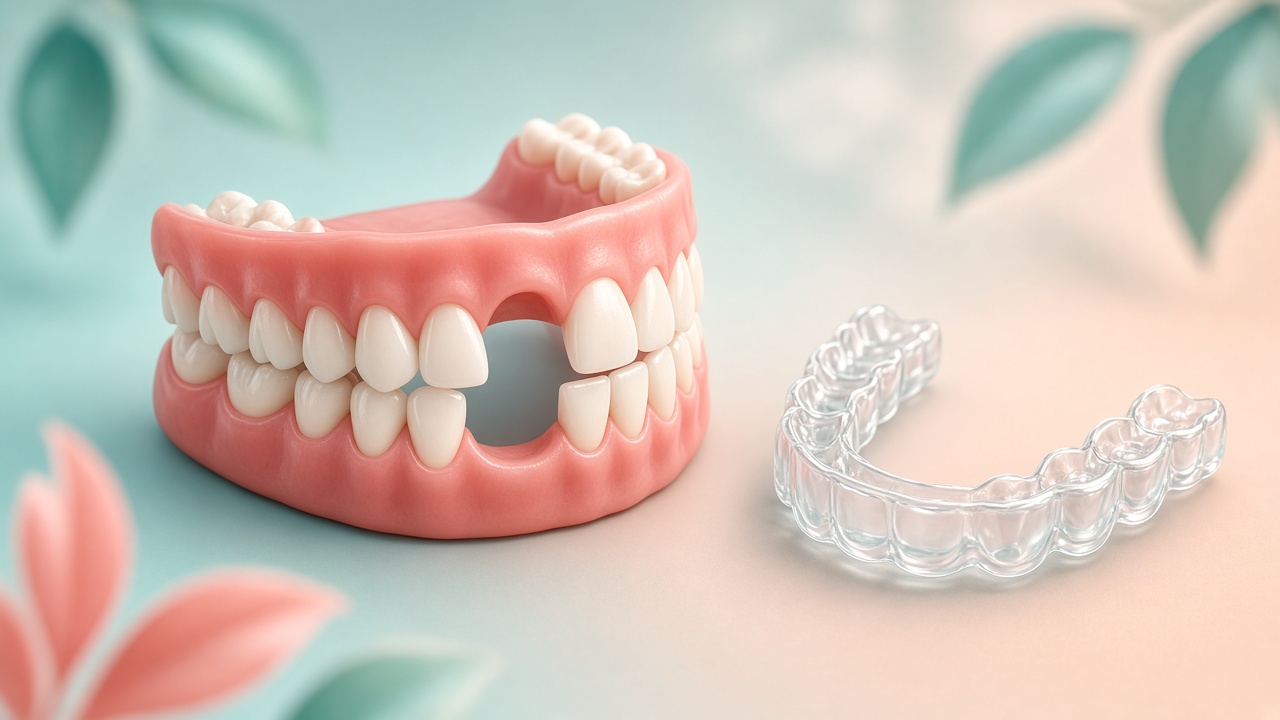
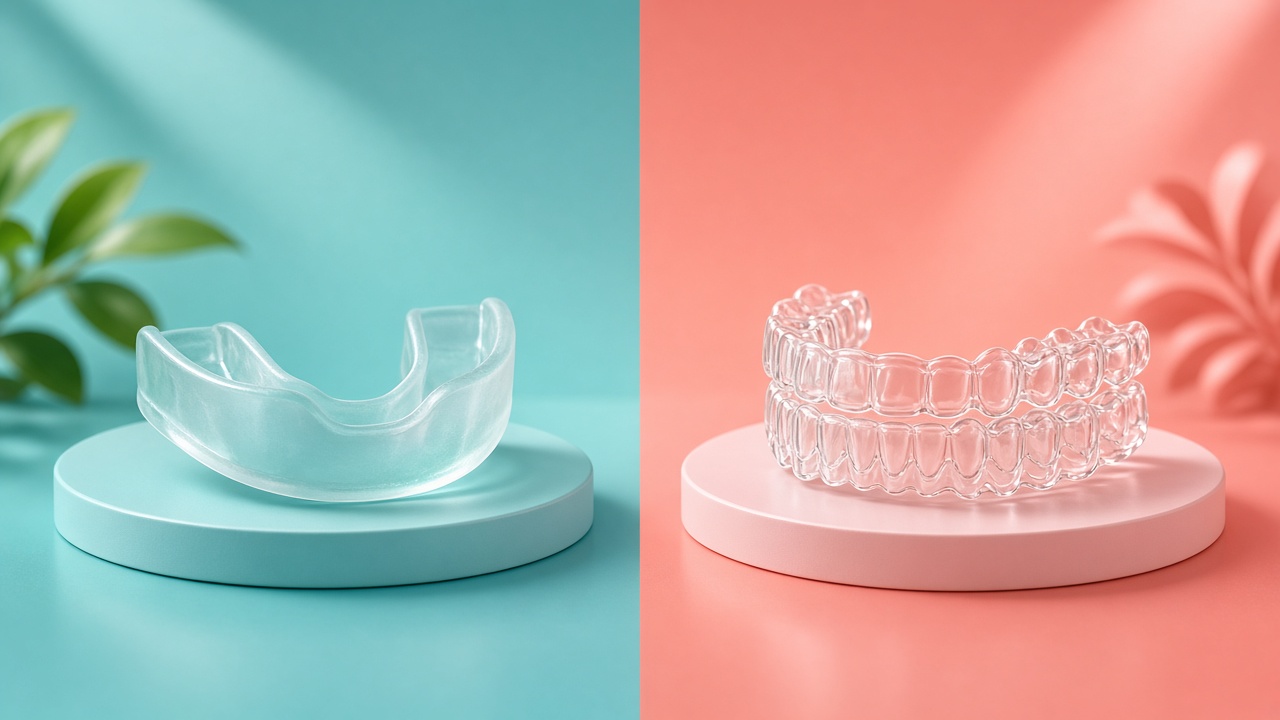
Pharmacies and marketplaces sell two main formats. Stock (“one size fits many”) is a ready shape in soft or semi-rigid plastic, sometimes labeled S/M/L. Boil-and-bite is warmed in water; you bite into it so the material partly copies your tooth relief. Both are sold as night guards for grinding. Both can be bought without an exam. Both answer the transactional urge to purchase tonight.
Stock is cheaper and simpler. Retention comes from elasticity and bulk. If your arch is narrower or wider than the “average” mold, margins dig into the gum, the guard pops loose when you open slightly in sleep, or it sits so loose it drifts toward the soft palate. Loose fit frightens patients more than tight fit: a free piece of plastic in the mouth at night is a risk. Labels say “not for children” and “remove if painful”; people read the small print after the first bad night.
Boil-and-bite gives the feeling of a custom fit. You do leave a tooth print. Thickness after the bite is often uneven: thinner at the canines, thicker at the molars, or the reverse. Patients press harder where they already clench. The guard’s contact relief then copies the bruxism habit instead of spreading load. Overheating in boiling water makes the material too soft; the fit “floats.” Underheating leaves a floppy shell that will not hug the teeth.
Mail-order kits with a home impression sit next to the pharmacy path. You pour a tray at the kitchen table, ship it, and wait. Quality hangs on how you held the tray, whether the material tore, whether the rim folded. Without a chairside try-in, fit correction is email and reshipping. Patient-facing summaries that cite work discussed in the British Dental Journal link poorly fitted online guards with soft-tissue injury, unwanted tooth movement with bad designs, and retention failures that raise a choking concern. I do not ban the internet as a delivery channel. I ban treating a home impression as a substitute for an exam when you have joint pain, mobile teeth, new crowns, or suspected apnea.
Pharmacy prices in Dubai often sit in the range of a few dozen AED, higher for branded boil-and-bite. A clinic-made guard runs into the hundreds of AED and up, depending on material, lab, and whether bite adjustment visits sit in the plan. Figures move with the price list and the date; I quote after an exam, not in a message thread. The low sticker at the pharmacy is clear. The open question is what you pay in enamel and joint load if coverage is partial or the fit skews contacts.
Another Dubai pattern: someone buys two or three OTC guards in a year because the first cracked, the second stayed in a suitcase, the third smells. The sum of those receipts approaches one proper custom cycle — and still no clinician has seen the bite or the joint. Bring the guard you already wore to the visit: wear facets show where night force lands, margins show where it rubbed, color and odor show how hygiene went. An old pharmacy guard is useful evidence, not a confession of “self-treatment.”
Custom night guard: scan or impression, lab, and review
A custom night guard starts with “why,” not with the color of the case. I check wear, restorations, mobility, periodontal status, opening range, muscle palpation, joint sounds, snoring history, and daytime sleepiness. Sometimes a panoramic film or periapicals help; a joint picture may route into TMJ care rather than “a guard on the shelf.” When the goal is enamel protection in confirmed bruxism without acute joint drama, we choose arch coverage, stiffness, and thickness for your mouth. You leave with a familiarization window and a review date, not only a case in the bag. I do not promise a fee without an exam: material and visit count depend on what is in the mouth today. Below — three steps that separate a chairside guard from the aisle.
Impression or scan: why an accurate model matters
An alginate or silicone impression, or an intraoral scan, builds a model of your arch, not a generic size. On that model the technician sets controlled thickness and margins that do not cut the frenum or crush the gingival edge. Digital files go to the lab; classic workflows use poured or printed models. Home-impression errors (voids, tray shift, short borders) are caught before fabrication when I see the impression and can remake it. A kitchen kit does not give that safety net.
I ask about upcoming orthodontics. If clear aligners or braces start next month, a rigid “forever” guard on today’s bite may age fast. A temporary plan with a named end date can be smarter. If orthodontics is already running, a night guard and aligners are different appliances; wearing both “just in case” without a scheme is wrong. Coordination happens in the chair.
Soft, hard, dual-laminate: material and coverage
Soft guards feel kinder on night one, yet heavy clenchers wear them through faster, and soft bulk can invite more chewing reflex in some mouths. Hard acrylic or dense thermoplastic holds shape longer and spreads load better, with a longer adaptation curve. Dual-laminate designs pair a soft inner layer with a harder outer shell. The choice is clinical, not a “premium” label. Thickness at incisors and molars follows how you close and where chips already sit.
Full-arch coverage (or coverage we chose on purpose) lowers the risk that uncovered teeth erupt relative to covered ones. Partial designs that shield only the front teeth and leave molars free appear in complication reports on splints and OTC guards — including anterior open bite after long wear. Pharmacy models sometimes copy that partial look “for easier breathing.” Breathing comfort bought with bite geometry is a bad trade. A custom guard is designed with that risk in mind.
Try-in, contact adjustment, and a check in weeks
I try the finished guard in the mouth: margins, retention on moderate opening, evenness of contacts. Spot grinding the bite is ordinary work, not a lab failure. Without it, one high spot can load a joint or a single tooth every night. I explain insertion, hours of wear, cleaning, and daytime storage. At one to three weeks we review: morning tightness, ulcers, whether daytime contact without the guard feels different.
Rising joint pain means the guard comes out and the plan is rewritten. A guard worn through in a short time means high force, a material or thickness change, and a talk about sleep and stress. Custom lasts longer than OTC under the same bruxism, yet it is not eternal: cracks, odor after cleaning, lost retention — reasons to remake. Follow-up is part of splint therapy, not a one-time plastic sale.
Care is simple and often broken. Rinse after the night, brush with a soft brush without coarse toothpaste, dry, store in a vented case. Boiling water and dishwashers warp many materials. Alcohol-heavy mouthrinses can cloud plastic — read the insert for your appliance. Bring the guard to review visits with you: I look at the mouth and the device. A guard left in a drawer “for emergencies” while enamel keeps wearing is not doing its job.
Honest risks of OTC and online night guards
The risk of a pharmacy guard is not that “everything from a pharmacy is harmful.” The risk is buying a mouth device without a map of your bite, joint, and restorations. A ready-made piece can feel acceptable on night one and unsafe in month three. Mail-order adds impression quality as a variable: the lab is far away, and correction travels by courier. I unpack risks without banning the pharmacy as a channel; the ban is long random wear with pain, partial coverage, and ignored snoring with breathing pauses. Patients often arrive after two or three “failed” boxes and decide guards are useless; what failed was fit without a diagnosis. Below — four zones I open with people who bought a guard “to try” and then showed new pain or enamel wear where the arch stayed uncovered.
Partial coverage and bite shift
Designs that cover only the front and leave molars without support change vertical relationships with long wear. Posterior teeth can over-erupt; anterior contact is lost — an open bite forms. Clinical case reports in US dental journals describe anterior open bites after OTC night guards with partial coverage; some stories ended with removal of over-erupted third molars and further rehab. Rare, heavy. I do not scare for sales. I ask: if the packaging shows molars outside the plastic, do not wear it for months because breathing felt easy. Breathing is discussed on a full-coverage guard with sane margins, not bought with bite geometry.
Even full coverage with uneven boil-and-bite thickness creates a high island. One tooth or a group takes the hit every night. Morning local pain follows; weeks later — mobility or a chip. Chairside adjustment catches those peaks. Filing a guard at home with a nail tool usually makes the relief more chaotic.
Soft-tissue irritation, weak retention, overnight shift
Sharp stock margins rub the cheek and frenum. Soft plastic takes odor and turns rough. Patients endure a week, quit, and conclude “guards do not help.” Help was never tested; tolerance of a random shape was. Weak retention lets the guard drift toward the soft palate or lie loose. For adults with a normal gag reflex that is discomfort; for light sleepers it is a panic wake. Reviews of poorly fitted online appliances link tissue trauma and theoretical aspiration risk when retention fails. Practical line: if the guard will not stay on calm daytime opening, night will not improve retention.
Joint and muscle pain after a “helpful” purchase
Some patients wear a thick soft guard and within nights get worse TMJ pain or masseter ache. Soft bulk can invite more clenching. A hard, poorly chosen vertical opening parks the joint in a posture it will not hold for eight hours. If morning tightness was mild before purchase and after you hear a click, chewing gum hurts, or opening shrinks, remove the guard and book an exam. Self-upgrading to “thicker and harder” at that point adds damage.
Masking apnea clues and a false sense of control
Night grinding can sit next to obstructive sleep apnea. A bruxism guard does not treat apnea. It can create the feeling that “I am doing something for sleep” while daytime sleepiness, loud snoring with pauses, and morning headaches continue. The American Dental Association and sleep societies stress sleep evaluation when apnea is suspected; OSA oral appliances are custom devices under clinical control, not OTC shelf stock. If a partner describes breathing stops, I push a sleep conversation before selling “just a guard.” Buying a grinding guard and ignoring apnea covers a small screen over a large one.
When a pharmacy guard is a fair short bridge
I do not demand that every patient wait for a lab if enamel is already chipping and the next exam slot is ten days away. A short bridge is possible: a full-coverage pharmacy guard for a few nights while a custom is made, if there is no acute joint pain, no mobile teeth, no brand-new uncemented crowns, and you know the stop rules. Stop rules: joint pain or rising muscle pain — out; ulcers at the rim — out; no retention — out; daytime bite feels different — out and show a clinician. A bridge is days to a couple of weeks, not months of “I will book later.”
A pharmacy guard also works as temporary cover on a work trip when a custom cracked and the lab is far. The goal then is not perfect bite balance; it is “do not shear ceramic before the visit.” Choose full-arch coverage; skip mini front-only designs. Heat per the insert; do not invent “longer boil for better fit.” Store in a case; clean with a soft brush, not abrasive paste.
A pharmacy guard is a poor sole multi-year plan for confirmed heavy bruxism, multiple restorations, active orthodontics, and TMJ complaints. In those stories the cheap first purchase often turns into remade ceramics and a longer splint path. I say it aloud: saving on diagnosis rarely saves the mouth budget.
The opposite extreme exists too: months of chips and headaches because “pharmacy guards are unserious, and a doctor visit feels dramatic for grinding.” Bruxism is not petty when it eats edges and wakes the household. A short OTC bridge plus a near-term exam is a sane pair. Long inaction from perfectionism is not.
Splint therapy and TMJ: how a splint differs from an aisle guard
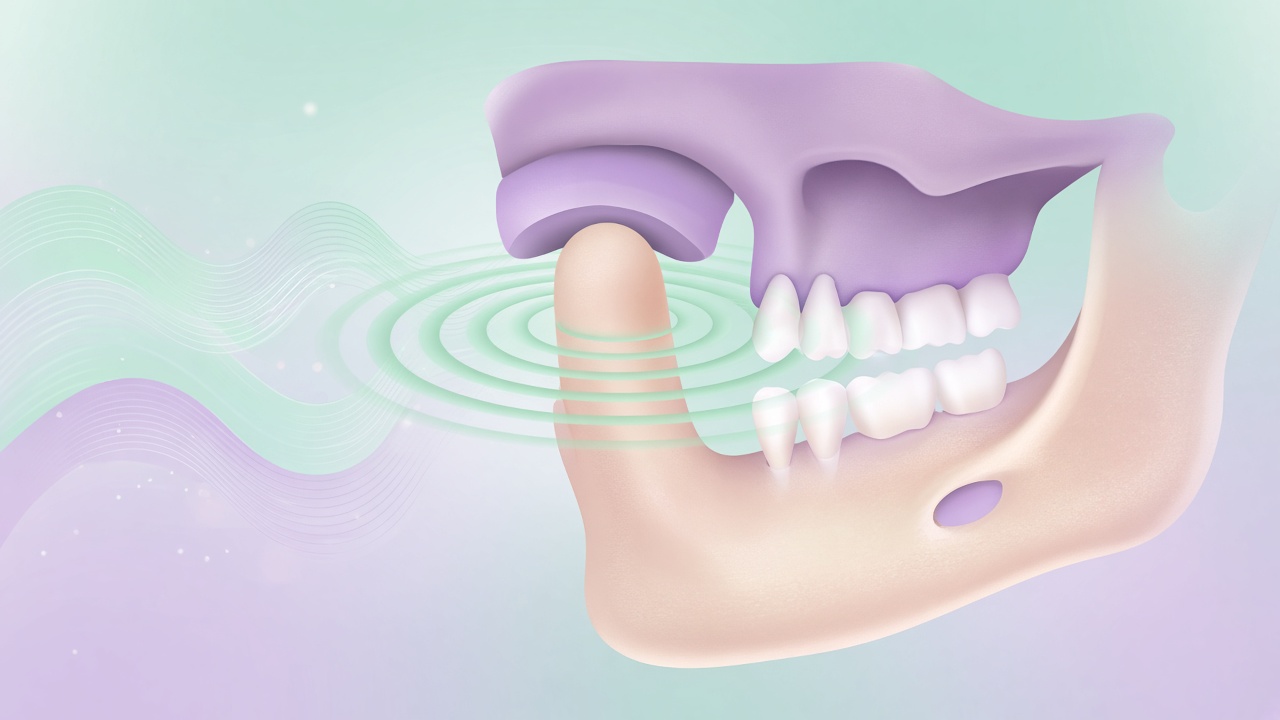
In everyday English “night guard” means any plastic worn to sleep. In clinic a splint is an appliance with a job: unload muscles, set safer contacts, protect teeth, give the joint a quieter regime for a planned period. Splint therapy includes reviews, adjustments, sometimes physiotherapy, habit work, and orthodontics. A pharmacy guard is a product without that frame. The difference is not the price tag. The difference is whether a clinician owns the appliance and a timeline owns the goal. Patients say “I already have a guard” and wonder why the joint still clicks: the device protected enamel; nobody built a joint plan. I name those goals on visit one so expectations match the plastic in the mouth by the first week. Below — three layers where the mix-up breaks plans.
Joint pain: map first, plastic second
Ear-side pain, painful clicks, limited opening, morning “lock” — starting with a pharmacy guard skips diagnosis. Inside TMJ treatment we separate muscle pain from joint pain, decide on imaging, and rule out acute lock. A splint here is a plan tool, sometimes weeks, sometimes months, with adjustments as symptoms move. An OTC “grinding” guard may help muscles by chance or worsen the picture by chance. Chance is a poor method.
Orthodontics and a splint: two talks in one mouth
Patients in braces or aligners grind too. Night protection during active movement must respect changing tooth positions. A hard guard from three months ago can press on new crown inclinations. I refresh protection by stage or pause the protocol. A pharmacy sports mouthguard over braces is a different story (impact protection ≠ sleep bruxism). For night grinding in orthodontics, the orthodontist running the arch decides — not the checkout shelf.
How long to wear and when to stop
Splint therapy has review points. “Wear forever with no visits” fails even with custom appliances when the patient vanishes for a year. Pharmacy guards invite that failure more: buy, leave in a drawer, wear when you remember. I set a calendar: adaptation, review, extend, remake, or move to another stage (orthodontics, restorative work, sleep referral). Without a calendar the plastic becomes a charm.
Buying in Dubai: exam, AED ranges, insurance
The buy-intent query in Dubai is answered by pharmacy chains, sports shops (people confuse sports mouthguards with sleep guards), delivery apps, and clinics. A sports mouthguard for impact and a night guard for bruxism differ in thickness, coverage, and duty cycle. Gym plastic need not balance a night bite. A night guard need not survive an elbow in sparring.
The path I offer most people with grinding and wear: exam → decide if a guard/splint is indicated → if yes, custom fabrication → try-in → review. If the slot is days away and chip risk is high — a short pharmacy bridge under the rules above. If joint pain dominates — lean into the TMJ path, not the cheapest guard near the metro.
Cost ranges in Dubai (no single number for every mouth; lists change): pharmacy models often tens of AED; custom night guards and splints from a few hundred AED upward by material and lab; a package with adjustment visits prices differently from “guard in hand, no review.” Exact figures belong in clinic with a price-list date. Insurance cover for guards and splints in the UAE depends on the policy and administrator; some plans treat a TMJ splint differently from a “night guard for grinding” line in the schedule of benefits. Verify with the insurer before assuming cover.
| Factor | Stock OTC | Boil-and-bite | Mail-order home impression | Custom at the clinic |
|---|---|---|---|---|
| Time to receive | Minutes–1 day | Minutes–1 day | Days–weeks | Often 1–3 visits + lab |
| Fit | Average mold | Partial print | Depends on home tray | Scan/impression + try-in |
| Bite control | None | None / DIY | Rare | Clinician adjustment |
| Partial-coverage risk | Common | Common | Possible | Designed on purpose |
| Role in TMJ pain | Chance | Chance | Chance | Part of splint therapy |
| Dubai price band | Low | Low–mid | Mid | Higher + review visits |
| Fair use | Short bridge | Short bridge | Caution, no joint drama | Main path for persistent bruxism |
| Typical failure | Poor retention, sores | Uneven thickness | Bad impression, no try-in | No follow-up if patient disappears |
The table is a talk filter, not a diagnosis. The “fair use” row shrinks with your joint, restorations, and sleep history.
Before you buy at a pharmacy near the metro, spend one minute on the pack: full-arch coverage or not, age limits, what it says about pain and removal. If the copy promises to “cure bruxism forever” or “replace a dental visit,” treat that as advertising, not a protocol. A guard is a barrier and sometimes part of therapy. It does not cancel an exam when the mouth already hurts or wears.
FAQ
These are the questions I hear after “I already bought a pharmacy guard” or “I want to buy one myself and skip the appointment.” Answers stay short; your mouth may need a different step after an exam. Acute symptoms — pain, swelling, cannot open — do not wait on an FAQ queue; book an in-person TMJ visit or go to urgent care if the picture is severe. For a planned choice between aisle and lab, the eight blocks below usually stop a third random box in a row. I keep the wording everyday on purpose: that is how patients write at 23:00 when a guard has rubbed the cheek raw on a work night before a morning flight.
Can I just buy a night guard at the pharmacy and skip the dentist?
If the goal is a few nights until your appointment and there is no acute joint pain, a short full-coverage OTC guard can work as a bridge. If grinding and wear have lasted months, you have chips, crowns, TMJ pain, or snoring with breathing pauses — you need an exam. A pharmacy cannot see your bite or adjust contacts.
Why is a custom guard different from boil-and-bite if both “fit my teeth”?
Boil-and-bite leaves a print without controlled thickness or clinician adjustment. Custom is built on a model, covers an agreed arch, and goes through try-in. The gap is load predictability, not brand magic. With heavy bruxism that gap changes lifespan and which teeth take the hit.
Can an OTC night guard ruin my bite?
Yes — especially with partial coverage and long wear: back teeth can over-erupt, front contact can disappear. Uneven thickness also overloads single teeth. If daytime closing feels different, remove the guard and show a clinician. That is not an internet myth; cases sit in clinical reports.
Are a night guard and a TMJ splint the same thing?
Everyday language mixes them. A splint inside splint therapy lives inside a treatment plan with reviews. A pharmacy night guard is a ready product without that plan. Sometimes a custom night guard plays a protective splint role. The exam and the goal decide, not the box title.
How much does a night guard cost in Dubai?
Pharmacy models are usually far cheaper than clinic work. Custom guards and splints sit in the hundreds of AED and up by material, lab, and adjustment visits. Ask for a price-list date at consultation so the invoice matches the talk. Insurance may cover differently under a TMJ code; check the policy.
What if my jaw hurts more after an OTC guard?
Remove it. Soft diet for a day or two; skip gum and hard nuts. If pain rises, opening shrinks, swelling or fever appears — do not wait to “get used to it”; book a TMJ exam. Painkillers without an exam do not replace finding the cause.
Does a night guard help daytime clenching?
A night guard works in sleep. Daytime clenching at a screen needs habit awareness, short breaks, sometimes a daytime appliance when prescribed, and stress work. Wearing a night guard eight hours at the office without indication is awkward and often pointless. At consultation we split day and night scenarios.
Does a child who grinds need a night guard?
Childhood grinding often tracks age, mouth breathing, and bite change. An adult pharmacy guard is the wrong size and risk profile. A pediatric dentist or orthodontist decides after an exam. Buying “like the adults” off the shelf is a poor start.