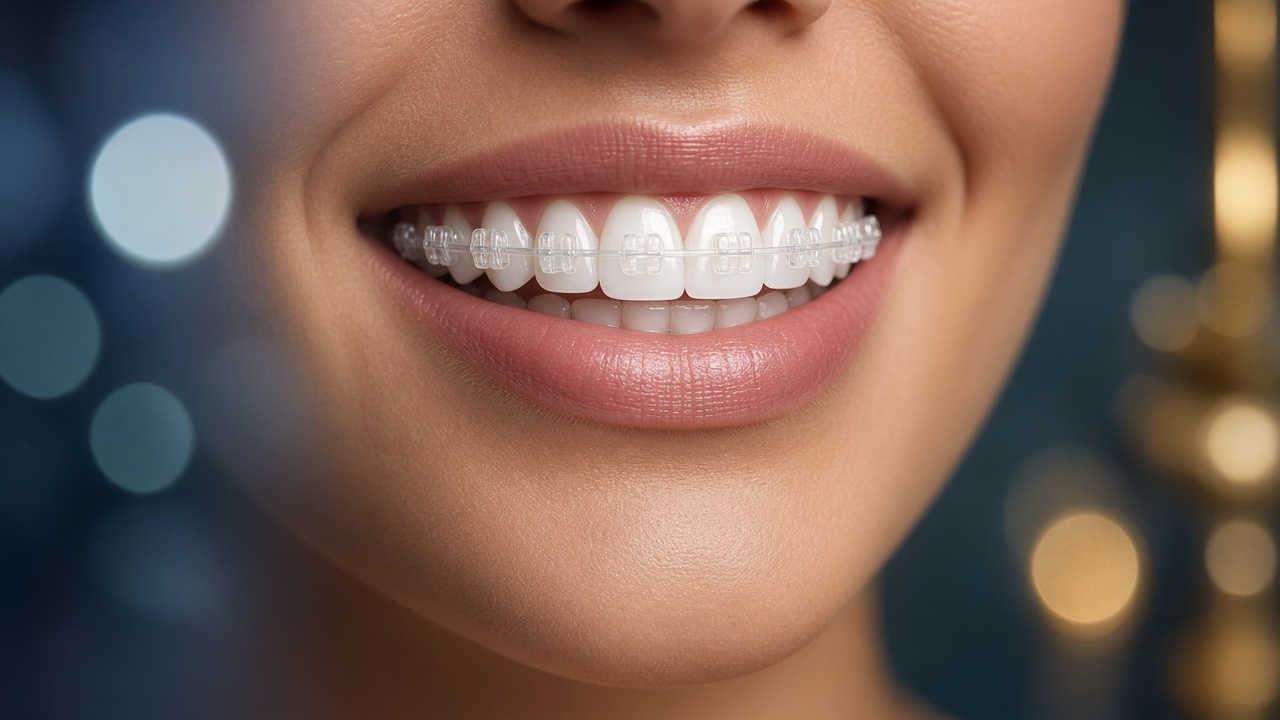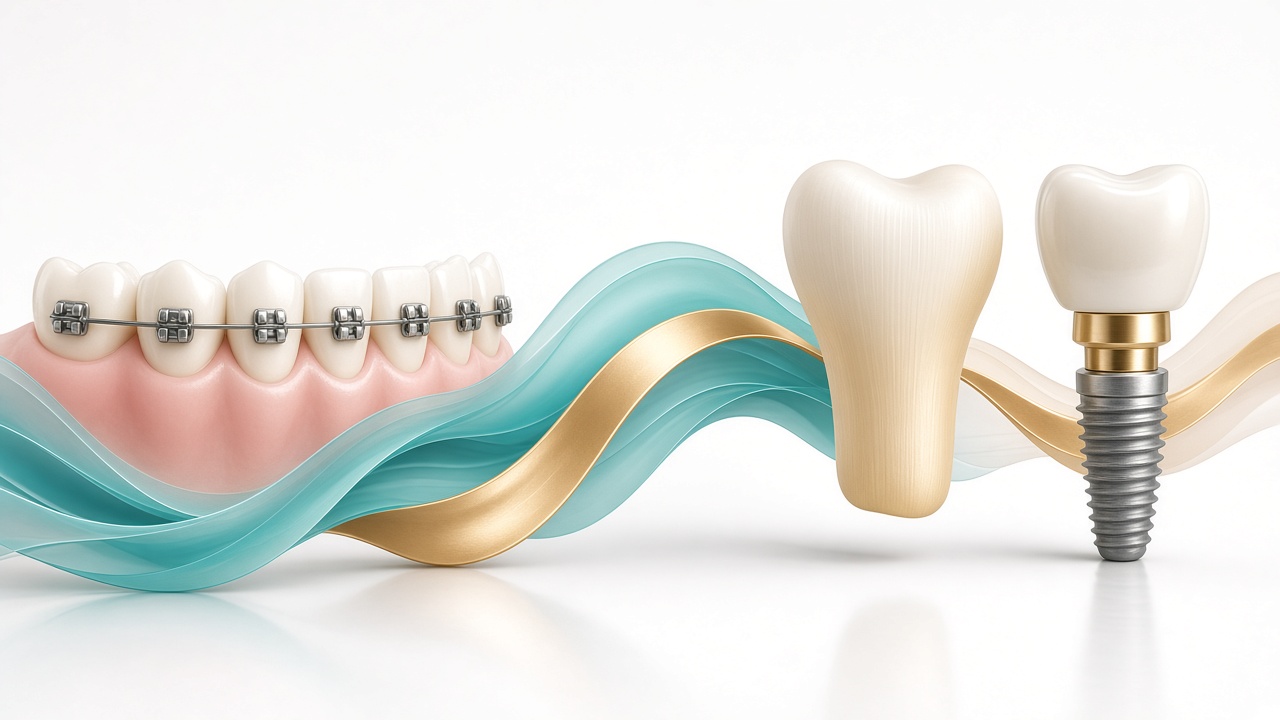
Parents google crooked baby teeth in two moods: calm (“they’ll grow out of it”) and urgent (“a plate yesterday”). Both moods show up in the same Dubai week after one school photo. I am Dr. Maksut Behruzoglu, a specialist orthodontist in Dubai; at pediatric consultation I most often unpack this exact question: which unevenness in the baby dentition is a normal change stage, and which is a reason to look sooner. “It will straighten itself” is not a magic line in orthodontics. Sometimes growth and tooth change truly soften the picture. Sometimes a habit, a crossbite, or space loss locks the problem in, and waiting “until every permanent tooth is in” only hardens the path. Below — how I separate those plots, which myths I hear from families after Istanbul and Dubai, and when early intervention fits. I do not diagnose from a selfie; exam and films when indicated decide.
Why crooked baby teeth scare families
Parents see the baby row every breakfast. Any rotated incisor feels like a verdict. Advertising feeds the fear: a perfect smile from age three, a plate “just in case,” chat stories of “we missed it.” Opposite advice lives beside it: “baby teeth are not treated,” “orthodontist only after sixteen.” Between those poles a simple clinical idea gets lost: the primary bite is a temporary structure whose job is to hold space and function while jaws grow and permanent teeth prepare.
Crookedness in baby teeth has different causes. Sometimes it is normal eruption physiology: a tooth came in slightly rotated and will settle. Sometimes it is shortage of space on a small arch. Sometimes it follows thumb, tongue, or long pacifier use. Sometimes it follows early neighbour removal and drift. The same “crooked” look on a photo needs different answers. I ask families not to diagnose themselves by comparing with a sibling or a classmate. Comparing smiles on stories is especially misleading: another child may be a year ahead in dental age with the same passport age.
In Dubai a move layer appears. The family heard “wait” in one country and “start now” in another, then brings the child with two conflicting papers. I match today’s growth to prior advice; I do not pick “which school to respect.” Crooked baby teeth are read from this child’s mechanics in the chair, not from the stamp country on a note. If the old clinic is gone from the messenger, still bring what you have: extraction dates, old films, appliance names. An empty history forces diagnosis from scratch and delays clarity.
Another confusion source is gaps between baby incisors. Parents call them “crookedness,” yet gaps often reserve space for larger permanent teeth. A tight “perfectly even” baby row without spaces can be more worrying than a “crooked” row with gaps. I explain that inversion on a model at almost every first visit. A parent who spent years proud of “even baby teeth without gaps” is sometimes surprised when permanent incisors crowd. The pride was aesthetic; the space forecast is separate arch maths.
Fear also grows from rushed dental checks. A short decay visit does not always include an orthodontic look at growth. A dentist’s silence about crooked baby teeth is not a multi-year “all fine” verdict. If a photo bothers you, that is enough for pediatric consultation. A referral is not required. I see more families who came “early and calmed down” than families who regret a calm age-7 screen.
What “it will straighten itself” means in orthodontics
The phrase sounds like a promise without a date. In the chair I translate it into three testable meanings. First — a temporary eruption picture that changes over months without an appliance. Second — mild unevenness compatible with timed observation. Third — a plot where nothing useful happens alone: habit, functional shift, space loss. Mixing those meanings is risky. A family leaves hearing “it will straighten itself” when I meant “observe with a date,” or waits for a miracle where a short phase is due. At pediatric consultation I name the basket aloud: observation, early intervention, or wait for a full course later. “Itself” lives in the first basket and partly in the second. Below — three anchors for talks about crooked baby teeth: normal change stage, how I test the “itself” forecast, and why photos cannot replace it.
A normal change stage and an “ugly” moment
Permanent incisors are larger than baby ones. They often erupt rotated, with gaps, or in a fan while side teeth are still primary. The parent sees the worst growth frame and decides “already crooked forever.” I compare skeletal age, side symmetry, and arch space. Sometimes a year later the picture softens without an appliance. Sometimes space is already critical — and “wait for a pretty smile” only deepens crowding.
How I test the “itself” forecast
I check habits, breathing, crossbite, protrusion, early losses, eruption asymmetry. If films are needed, I explain why. A panoramic shows buds and impaction risk. Without a film in a worrying history I do not promise “surely itself.” Photo trends across a year make the talk clearer than one anxious story frame.
Why messenger cannot set the timeline
One smile angle hides a side crossbite and a jaw shift. Filters and camera angle lie. I can help shape visit questions from a photo, yet the “wait / treat” plan appears after exam. I do not give an online diagnosis of crooked baby teeth — a hard rule of this article and of practice.
When baby-tooth crookedness is more often temporary
Some plots make me offer timed observation more often than an appliance next month. That is not a guarantee it will “dissolve.” It is a clinical likelihood that growth and change will move the picture usefully while harmful factors are absent. Parents need both halves: “this looks like a temporary stage” and “return on this date if red flags appear.” Without the second half, “temporary” becomes a forgotten phone note. In Dubai families often leave for two or three summer months. If we choose observation, I say early whether review can shift after holidays or whether we should see you before departure. Observation is still a plan, not a brush-off. Below — three typical temporary pictures. They do not replace your child’s exam; they show what I think when parents ask if crooked baby teeth will straighten alone.
Large permanent incisors on a “child” arch
Central permanent incisors just erupted, laterals still baby, the row looks fanned. Space forecast is fair, no crossbite, no habits, nose breathing. I often set review in 6–12 months with photo comparison. An appliance “so the incisors look like an ad at once” is often spare here.
Physiologic gaps between baby incisors
Gaps scare aesthetics and help the space forecast. I explain in a mirror: permanent teeth are wider. A tight baby row without gaps sometimes needs a closer crowding forecast. “Crookedness” that is only gaps is rarely a reason to bond something urgently.
Mild rotation without crossbite or habit
One baby incisor sits slightly rotated, contacts are calm, the child chews on both sides, no thumb. That frame is often watched. If rotation grows over six months, a midline shifts, or an open bite appears — we change the basket. The review date exists for that.
When waiting for “itself” is risky
The other side is plots where hope for self-correction ignores mechanics working against the child. I do not scare with surgery or sell urgency with a discount. I show on a model what will not “dissolve” from a birthday. The American Association of Orthodontists (AAO) recommends a first check no later than age 7 to catch these plots in time — sometimes earlier than seven when signals are clear. Crooked baby teeth here are the visible tip: under them may sit a functional crossbite, space loss, habit, or mouth breathing. Waiting “until every permanent tooth is in” with an active habit or jaw shift is a hope strategy, not a plan. Below — three groups where I least often agree to endless waiting without a review date, without red flags for early return, and without an honest talk about risk.
Crossbite and lower-jaw shift
Teeth meet “past” each other; the chin drifts on biting. At rest the jaw sits nearer the midline — a forced-shift clue. That pattern does not heal itself by waiting for the teen years. Muscles lock the preferred side, and asymmetry on front photos grows year by year. After exam the path may be expansion or another short task; I do not assign type remotely. But “wait, crooked baby teeth will grow out” is usually a weak chat tip. If the shift is already clear, I more often discuss timing for a short phase than endless “itself.”
Thumb, tongue, or long pacifier habits
Crookedness with an active habit often means open bite and a narrow upper arch. While the habit lives, “itself” works against you: load hours every day. I build a stop plan and decide whether an appliance is needed now. Shouting at home rarely equals therapy. An honest habit-hour diary beats a pretty promise of “nearly stopped.” Sometimes the habit ends and the gap stays on a skeletal base — then tactics change, and exam decides again, not parental hope.
Early baby-tooth loss and space closure
Neighbours drift into an empty socket, the row “slides,” the permanent tooth has nowhere to go. Waiting for change without a space maintainer or plan is a common path to impaction and a harder course later. Crooked baby teeth are secondary here; corridor loss is primary. Bring extraction dates and prior appliance notes. In Dubai after a move families often forget whether a maintainer was placed; an empty socket without history warrants a film, not another year of “it will straighten itself.”
Gaps, crowding, and “ugly” front teeth in mixed dentition
A separate confusion block is mixed dentition, when some teeth are already permanent. Parents still say “crooked baby teeth,” though the front plane is permanent incisors. The question stays the same: will it straighten itself. The answer depends on space for canines, upper width, and habits. I often show a panoramic: a canine in bone may aim toward the palate while the smile only looks “a bit crooked.” Without a film the family argues about front aesthetics and misses a plot that decides years of treatment later.
International schools in Dubai make smile comparison start early. Pressure to “even it by September” pushes toward an early full course before teeth are ready. I separate the social ask from the clinical window. Sometimes a short phase reduces trauma-prone protrusion or crossbite. Sometimes it is fairer to say: incisors are still erupting, review in six months, full course later. Both lines can be medicine; exam chooses. I respect school calendars for review dates, yet I do not place braces “for the school photo” if teeth are not ready.
Crowding in mixed dentition is not “braces tomorrow.” Sometimes guided baby-tooth removal when indicated and watch. Sometimes expansion. Sometimes wait. Leftover crooked baby teeth beside permanent incisors are part of the map, not the only diagnosis. I ask families not to extract baby teeth “to make space” without an orthodontic plan: chaotic extraction creates crookedness where none existed. The dentist removing a decayed molar and the orthodontist thinking about the permanent corridor should talk — at least through a note in the family’s cloud folder.
Another common story: “after baby teeth, they came in even crookeder.” Permanent incisors are larger; the first look is often worse than the baby row. That is not automatically a failure of self-correction hope. It is a reason to refresh the screen: is there space, is there crossbite, is the habit alive. Without that refresh the family either panics or calms down blind. I ask for smile photos before and after change: phone dynamics often beat the memory of “it was always like this.”
In mixed dentition it also matters not to confuse a temporary “ugly duckling” of incisors with an open bite from tongue posture. A front gap with back teeth closed is a different mechanism from a crowded fan. The first more often links to habit and breathing; the second to space. Treating both with the same plate “because it looks crooked” leads to disappointment. At exam I name the mechanism in plain words first, then the appliance if one is needed.
Habits, breathing, and crookedness as a consequence
When parents bring only an appearance question about baby teeth, I still ask about sleep and habits. Crooked baby teeth with mouth breathing are a different task from mild rotation with calm nose breathing. Snoring, dry morning lips, an open mouth on the sofa — red flags I do not dismiss as “just how they sleep.” Orthodontics here often sits beside ENT care. Ignoring snoring “until teeth straighten themselves” is a weak strategy: the arch already adapts to function.
A pacifier past four to five, a thumb “only when stressed,” tongue between teeth on swallow — load hours on the arch. I ask for real hours, not the softened version for the doctor. That number decides whether an appliance talk belongs this quarter or whether habit rules come first. Families sometimes feel ashamed of a habit; shame does not treat. A honest one-week diary gives more than “nearly stopped.”
In Dubai, air conditioning, allergies, and frequent flights affect nasal congestion. Families get used to “always a bit sick.” If a child mouth-breathes for years, expecting crooked baby teeth to “stand up alone” when permanents erupt is naive. Exam links the smile to breathing — that is part of the answer to “will it straighten itself.” Sometimes I write a plan reminder: ENT review if snoring. Teamwork is shorter than arguments over “whose child” it is.
Speech enters the picture too. Tongue between the teeth supports open bite. A speech therapist and an orthodontist together beat a one-year queue of “teeth first or sounds first.” If a therapist already works, bring notes to consultation. If speech is not on the plan yet and a front gap holds with closed back teeth, I still watch tongue rest and swallow. Crooked baby teeth in that plot are a function sequel, and “itself” without a function change rarely works.
Sport and pools in Dubai add a practical layer: protruding incisors with a habit chip more often. Even if a full orthodontic course is early, a contact mouthguard and an honest protrusion talk belong in the crookedness answer. Tissue protection is treatment in a wide sense, not only “an even row for graduation.”
What I do at the exam and how I pick a basket
The visit starts with complaint and history: when crookedness was noticed, extractions, trauma, plates abroad, snoring, thumb. I look at the face, lips, breathing, habitual bite. In the mouth — contacts, midline, gaps, crowding, gums and hygiene. If a film is needed, we discuss before exposure. Not every calm case needs a full package the same day. For an anxious child I split the exam into short steps and show instruments before they approach the mouth.
Next — the basket. Observation with a date and a red-flag list. Short early intervention for a narrow task: habit, crossbite, space, protection of protruding incisors. Delayed full course when the permanent dentition is ready. I say aloud the chance of a second phase if we start early: a plate rarely means “orthodontics never again.” Families with an honest map feel less deceived. Families who pay for phase 1 hoping to “close the topic forever” leave disappointed more often — not because the doctor “lied,” but because the expectation was wrong from day one.
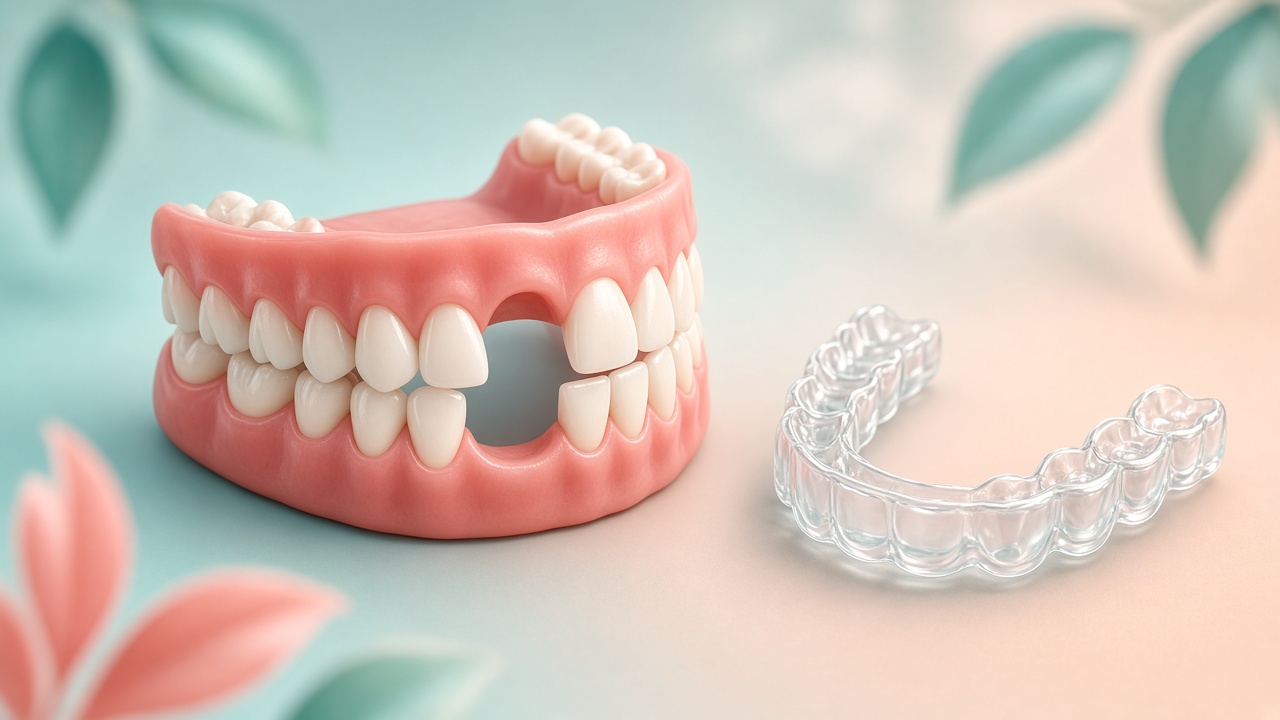
Hygiene enters the choice. Heavy plaque without an appliance — cleaning and decay first. Otherwise any phase risks white spots. Temperament too: a removable system without home discipline does not treat. Sometimes it is fairer to choose another method or wait for readiness than to sign a contract that a nanny and a second home will not keep. I ask aloud: who owns wear hours on weekday evenings? If there is no answer, a removable plate is a poor first choice even if crooked baby teeth on a photo desperately want to look even by September.
After exam the parent leaves with one summary line the child can hear: “we wait and take photos,” “we briefly fix task A,” “full course is early.” Without that line the visit turns to fog. With fog families return to chat and google “will it straighten itself” again — after the doctor could have given clarity. My job is clarity; an appliance appears only if clarity leads there.
| Situation with “crooked baby teeth” | What families often see | What I check | Chance of “itself” without appliance | Common path | Bring |
|---|---|---|---|---|---|
| Gaps between baby incisors | “Holes” in the smile | Space, hygiene | High with quiet growth | Observation | Photos over a year |
| Incisor fan in mixed dentition | Permanent “fan” | Space forecast, canines | Medium | Review / film | Eruption timing |
| Mild crookedness, no habit | Slightly uneven row | Contacts, crossbite | Medium–high | Timed observation | Question list |
| Crossbite / jaw shift | Chin “drifts” | Functional shift | Low | Early phase if indicated | Front photos |
| Thumb / pacifier / tongue | Habit + gap | Load hours | Low while habit lives | Stop plan ± phase | Habit diary |
| Early baby-tooth loss | Arch “slid” | Space on OPG | Low without space plan | Maintainer / plan | Extraction date |
| Snoring, open mouth | Dry lips, snoring | Breathing, arch width | Low without ENT review | ENT ± orthodontics | ENT notes |
| “Worse after baby teeth” | Large permanent incisors | Space, asymmetry | Case by case | Refresh screen | Old films |
The table is a talk guide, not a remote diagnosis. Your child may combine rows; exam sets priority.
After the table I ask families to mark one “closest” row and one “fear” row. Fear of “we’ll miss it forever” with calm gaps is often spare. Fear of “they’ll force treatment at five” under plate ads is also. Reality usually sits in the middle: screen at pediatric consultation, a clear date, treatment only for a defined task.
In Dubai keep films and plans in one dated cloud folder. Before a long trip, ask whether review can wait. If a removable appliance is already in play, wear hours beat brand. A broken plate a month in a suitcase is a lost stage. Crooked baby teeth are a reason for a clear talk, not a vote in a parent chat.
Practical next steps for Dubai families: from photo to review date
The algorithm is simple and repeatable. Write what you see: rotation, gaps, teeth meeting “past,” habit, snoring. Note how long it has been on photos. Take two or three smile frames front and profile without filters. Write questions on paper. Book the exam. Do not buy a plate from an ad “just in case.” Do not assume crooked baby teeth “must” straighten alone if the picture has worsened for six months and a jaw shift or snoring is present.
At the visit I will say whether this looks like a temporary stage or a short-phase task. Urgency is concrete: progressive crossbite, space loss, trauma-prone protrusion, breathing. “Urgent” rarely means “full metal today.” More often — a film, a plan within weeks, sometimes a start of early intervention, sometimes parallel ENT. If you fly in ten days, we honestly split what to finish before departure and what to start after, so an appliance does not live in luggage.
Dubai school calendars are dense: IB, holidays, heat, sport. I suggest tying observation reviews to holidays, and red flags to early booking without waiting for a “convenient September.” For an anxious child a short honest line at home beats a fairy tale: the doctor will look at how teeth grow and say whether something is needed now or later. After the visit, repeat the outcome in plain words and say the return date aloud — otherwise “we observe” dissolves between flights to relatives and a change of nanny.
Agree separately who is the adult “regime owner” if a removable appliance appears: mum, dad, weekday nanny. Several homes without one owner turn treatment into an expensive drawer souvenir. I prefer an honest refusal of a plate in favour of another method or waiting for readiness over a contract the family cannot keep through Ramadan or exam season.
One more practical layer — insurance and films. Coverage rules in the UAE depend on the policy; I do not invent tariffs in an article. Exact need for films and a fee range follow the exam. Bring the policy if you plan to claim the consultation. Keep OPG copies with dates: when clinics or countries change, that saves weeks of guessing and repeat exposures “because the file is gone.”
Crooked baby teeth in Dubai are a common reason for a first orthodontic visit among expats and local families. My goal on that visit is clarity: itself with review, brief intervention, or a calm wait for the next growth window. Clarity costs less than a year of parent-chat messages and two conflicting tips from different countries without one exam of the same child in one chair with one doctor.
FAQ: crooked baby teeth and self-correction
Do crooked baby teeth always straighten on their own?
No. Sometimes growth and change soften the picture. Sometimes habit, crossbite, or space loss locks the problem in. Exam answers — not a general chat tip.
Should uneven baby teeth be treated if they will fall out anyway?
Sometimes yes — when function, space for permanents, trauma risk, or habit is at stake. Sometimes no — when it is a calm stage with a fair forecast. “They fall out anyway” does not cancel space loss after early removal.
From what age should we show crooked baby teeth to an orthodontist?
AAO guidance is a first check no later than age 7; earlier with clear signs. At three to five, a strong habit or crossbite still warrants a strategy talk without automatic appliances.
Can a photo show whether it will straighten itself?
No. Photos help prepare questions. The “wait / treat” plan appears after exam and indicated films. I do not diagnose online.
Are gaps between baby teeth bad?
Often the opposite: gaps reserve space for larger permanent teeth. A tight row without gaps can be more worrying. The exam decides.
If permanents look crookeder than baby teeth — did we miss it?
Not necessarily. Permanent incisors are larger and often look worse at first. That is a reason to refresh the screen, not to panic or close the topic.
Is early intervention required whenever baby teeth are crooked?
No. An early phase is for narrow tasks: crossbite with shift, habit, space, incisor protection. Crookedness alone is not an appliance prescription.
What should a Dubai family do right now?
Write what you see and for how long. Take two or three unfiltered smile photos. Book pediatric consultation. Bring notes and films if you have them. At home do not buy a plate “just in case,” and do not wait years if snoring, jaw shift, or early tooth loss without a space plan is present. After the exam, tell the child the outcome in plain words and put the review date in the family calendar next to the school check — so “we observe” does not dissolve between flights and a nanny change.