With clear aligners you can eat almost everything you ate before treatment. The real limit is timing: trays come out for food and for most drinks, then go back after a short clean. Room-temperature water usually stays in with trays on; coffee, tea, juice, soft drinks, and hot beverages do not. This is not a “braces diet” and not a banned-food list. It is about plastic, staining, acid under the shell, and wear hours. I treat adult aligners and Invisalign in Dubai, and at almost every review I hear the same fears: “coffee will ruin the trays,” “hot water will melt them,” “a straw makes everything fine.” Below: what is truly off-limits, where myths run hot, how to fit coffee into a 20–22 hour day, and when I rewrite the handout at aligner fitting. Your mouth decides the final regimen; I do not sign drink rules from a selfie.
The daily rule: remove, eat or drink, put trays back
An aligner is removable. Force runs while plastic sits on the teeth. Remove it — force stops. Food and coloured drinks need a pause. Makers, including Invisalign, usually allow only plain water without sugar or dye while trays are in, and not scalding hot. Everything else means remove, rinse or brush, then reseat. Dubai breaks the simple formula with long breakfasts, coffee on calls, and “five more minutes without plastic” after dessert.
I explain the rule at consultation before start, not after the first yellow tray. You keep favourite meals; you lose latte-for-hours with trays in. A 20–22 hour target leaves about 2–4 hours for food, non-water drinks, and hygiene. Three meals plus two coffees fit if removals stay short. Stretch them — hours drop and tracking lags. Below are three layers that keep the rule from chaos.
Why aligner food rules are not braces diet rules
With braces, the wire and brackets stay in. The list is hard: crunchy, sticky, nuts, hard crusts — bracket risk. With aligners you remove the shell and chew freely. Apple, steak, crisp bread — without a classic braces menu. Mixing the two handouts hurts: people either fear normal food or eat inside trays because “braces forbade this, plastic must be fine.” Both errors show up every week.
Removability is the win and the risk. Win: almost no foods banned for lock mechanics. Risk: every removal spends hours, and food or drink under a tray holds sugar and acid on enamel. So this article is about when to remove and what you may drink with trays in, not which porridge to avoid. If you need a braces food list, that is another appliance and another talk. At start I ask whether you already read a braces diet page. If yes, we cross out biscuit panic and keep aligner rules — so you stop breaking the regimen “with good intentions.”
What happens if you chew with trays on
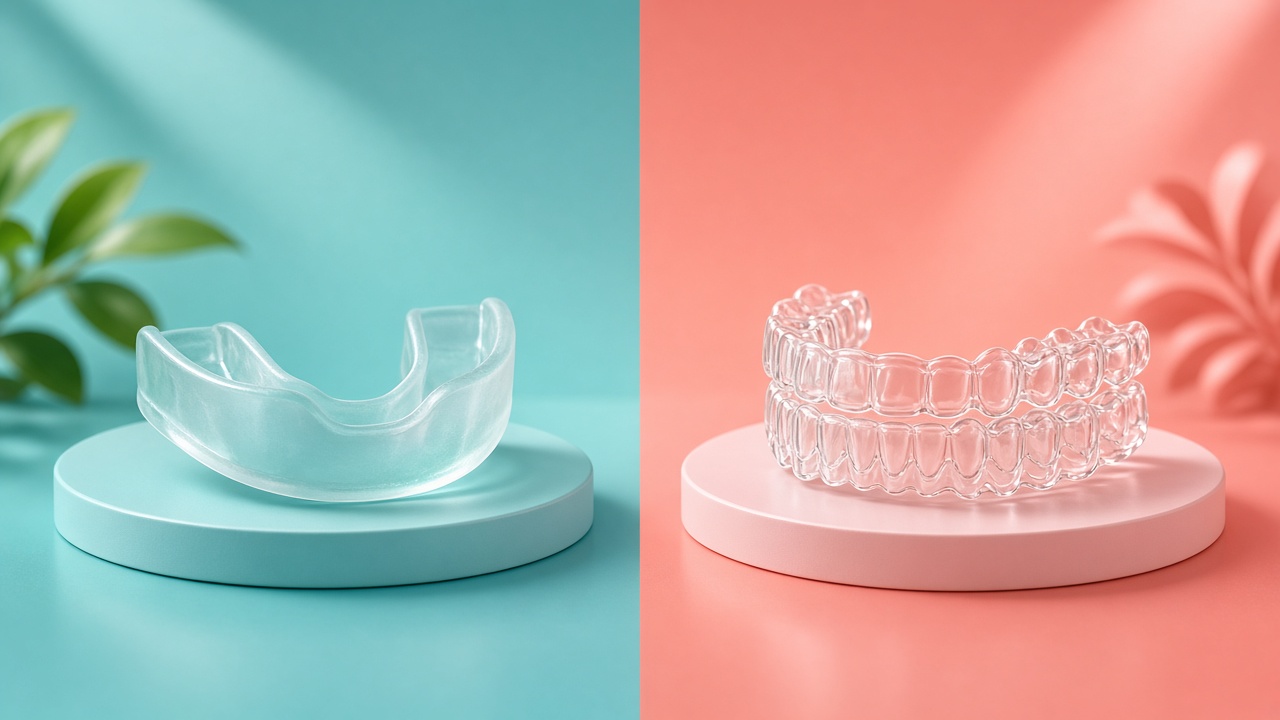
Aligner plastic is not a sports mouthguard. Hard food crushes edges, tears thin spots, and warps fit. Soft food packs crumbs against the inner surface. Fit drifts, attachments take extra stress, the tray “floats.” I have seen cracked trays after “I just finished the salad without removing.” Replacing a stage costs time and money; removal is cheaper.
Hygiene is the second layer. Food trapped under the shell sits at the gum longer than food without a tray. Caries and gum irritation on course often track this scene more than “bad plastic.” On review I look at plaque at the tray edge and ask plainly whether you ate with trays in. “Sometimes” already changes the talk on hours and cleaning.
How to count removal minutes without kidding yourself
Trays out — start a timer. Trays in — stop. Sum at day’s end. Coffee for 40 minutes, lunch for 50, dinner for 70 already clears two hours. Add “sat without trays after” and you live at 16–18 hours against a 20–22 goal. I ask for a one-week log when the next tray feels tight. Numbers often disagree with “I barely took them out.”
A practical fix: the case stays within reach. A tray in a napkin ends in the bin. After food or drink, rinse first, brush when you can, then reseat. If you cannot brush, rinse well and put trays back, then brush at the next sink. Waiting an hour for a “perfect clean” while trays sit out is worse than a rinse and reseat once food is gone.
Food truths: what is off-limits and what is free
The truth is short. Do not eat with aligners in. After removal you may eat almost anything your general dental status allows. Rare personal exceptions exist: acute soft-tissue trauma, brand-new attachments on day one, soreness during a large movement — then I soften texture for a few days without “banning life.” Clear aligners do not turn you into a purée-only person and do not cancel a steak in Dubai Marina.
Patients want a braces-style yes/no list. I give another list: scenes that break plastic or burn hours. Chewing in trays. Crushing ice in trays. Leaving a tray in a restaurant napkin. Forgetting a tray in a café cup on Sheikh Zayed Road. Those are lifestyle fails, not diet science. Below are three Dubai patterns I see more often than search-theory.
Restaurants, buffets, and “just a little more”
In a restaurant, trays out before the first bite. Case on the table or in the bag — not loose in a soft jacket pocket. After the main course many leave trays out “for dessert and tea.” Dessert plus tea plus talk easily costs an hour. On a 22-hour target that tail is expensive. I suggest: main and dessert in one window; tea as a short separate removal, or water with trays if tea is optional.
Hotel buffets invite five mini-removals. One 30–40 minute pass beats five tens with forgotten reseating. Flights out of Dubai follow the same logic: airline food means trays out; water usually stays in per your handout.
Snacks and the office calendar
Five cookie-and-coffee breaks kill wear faster than three solid meals. If work runs on mini-snacks, batch them into two windows. Otherwise the log shows a quiet hole. At aligner fitting I sometimes change the tray-change rhythm when someone lives in permanent snack mode and cannot honestly hold 21 hours. The appliance must fit your calendar, not an ad reel.
Sweet bars and “focus” sweets without removal are a bad idea. Sugar under a tray works longer. Better: remove, eat, rinse, reseat — or choose a less sticky snack and still remove.
Gum, shisha, sports drinks
Gum in trays mashes plastic and glues the inner surface. Without trays, your call and your hygiene — but minutes still count. Shisha and smoking with trays in wreck smell and material; remove them and own the hour cost. Isotonic drinks and protein shakes are sugary or acidic drinks: trays out, rinse the mouth. A “clear” colour does not make a drink water.
Drinks: water yes — almost everything else after removal
Water is the work drink of the course. Room temperature or cool, no syrup, no dye, no “almost zero” lemonade. Everything else is a removal zone. Brand patient FAQs say so; my handout says so. Three reasons: plastic stain, acid and sugar on enamel under the shell, heat risk to thermoplastic. Those risks are not equal in every sip, yet together they explain why I refuse “just one coffee sip with trays in” as a daily norm.
In Dubai, water is everywhere — use it. Plain sparkling water is fine for some patients and acidic for others; I decide on exam. Flavoured vitamin water, kombucha, matcha latte, hibiscus tea — not water, even when the label whispers “natural.” Below is a calm group-by-group read: tray colour shows fast; acid on enamel under the shell does not.
Coffee and tea: stains, heat, and the hour budget
You may drink coffee and tea. With trays in — no, as a course rule. Invisalign links coffee to staining of trays and teeth and asks you to remove trays, then brush or at least rinse before reseating. Colour-stability lab work in 2025 again puts coffee near the top of stain drivers for some polyurethane trays, with tea and cola close behind. That is about clarity of plastic, not “espresso stops tooth movement.” Movement slows when wear hours fall, not because of caffeine itself.
Hot coffee adds heat risk to thermoplastic. Cold coffee without removal still carries pigment and acidity under the shell. A straw does not seal the tray margin. I tell coffee people calmly: drink with trays out; cut a forty-minute sitting to fifteen–twenty; put trays back. Two short coffees fit a day. Four hour-long lattes fight 20–22 hours.
Tea follows the same rule. Black and deep red stain more than green, yet green with sugar or lemon is still not water. Bright herbal blends act like dyes. After tea — rinse, preferably brush, then trays.
Juice, soft drinks, energy drinks, smoothies
Acid and sugar under a tray are a fast path to demineralisation. The shell holds liquid on enamel longer than an open-mouth sip. So juice, cola, energy drinks, and sweet lemonade with trays in stay a bad idea even if plastic still looks clear. Smoothies are thicker: particles settle inside. Remove, drink, rinse, brush when you can, reseat.
Diet soft drinks keep acidity. They feed bacteria less sugar, yet enamel still takes the hit. Do not promote zero-cola into a “trays-on” exception.
Alcohol and sweet cocktails
Wine or beer means removal. Colour, acid, cocktail sugar. At an evening event, build a window: trays out, drink and eat in a sensible block, hygiene, trays back. Stretching a reception to three tray-free hours spends wear on purpose. I do not lecture about alcohol. I count hours and enamel risk. Dubai mocktails with syrup stain and feed plaque as well as wine: a clear glass does not equal water. If the evening matters more than a perfect 22, tell me on review; better to lengthen the current tray honestly than hide a three-hour gap.
A common fail: trays beside the glass “for a minute,” then a long talk. A case in the bag saves more trays than willpower. Next morning, check fit; if the tray suddenly feels tight or floats, message before the next planned change.
Myths I hear every week
Myths grow from forums, friends’ stories, and fear of “ruining expensive plastic.” Some warnings help: heat and pigment are real. Some inflate — as if any warm sip instantly turns a tray into film. I sort them calmly: what I confirm in the Dubai chair, what people exaggerate, what depends on your written plan. The goal is to cut spare fear and keep rules you can keep on a normal weekday. If a myth pushes latte-in-trays “because straw” or removal for every plain-water sip, it hurts the course more than a stain on tray eight.
Four scenes follow: the straw, hot water melt panic, “already yellow so keep drinking,” and “one sip does not count.” They sound convincing in chat. In the chair, removal discipline, post-drink hygiene, and an honest hour log usually win.
Myth: a straw makes coffee safe with trays in
A straw reduces contact with front teeth. It does not seal the tray edge. Liquid still seeps, especially when you talk and swallow. Pigment and sugar reach the inner surface. I do not ban straws after trays are out — some people prefer them. I do not accept a straw as a substitute for removal.
Iced coffee through a straw with trays in still breaks the handout. If you have done it for years and trays “look fine,” you may have been lucky on pigment or frequency. On exam I still see plaque and smell more often than a perfect life hack.
Myth: any warm water instantly ruins the tray
Thermoplastic minds heat. Boiling water, tea straight off the boil, soup with trays in — bad idea: shape can drift and fit fails. The line “any water slightly above room temperature instantly melts Invisalign” is overblown. Makers ask for water that is not too hot. I translate: drink ordinary comfortable water; do not rinse trays under boiling tap water; do not leave the case on a July Dubai dashboard.
Warping from a mild warm water sip shows up less often than daily coffee stains inside trays. Patients fear the kettle and calmly drink caramel latte with trays on. Flip those priorities.
Myth: if the tray is already yellow, drinks no longer matter
A yellow tray does not cancel acid and sugar. Looks already suffered; enamel has not finished the story. Until that number’s wear period ends, the shell still sits on teeth. Keep removing for coloured drinks until the change. Do not paint the next set with the same habit.
Heavy stain is often a discipline marker. On review I ask about drinks and hours together. Yellow plastic and poor tracking often travel as a pair.
Myth: “one sip” and “just for the call” do not count
They count. Sips add up. A one-hour tray-free call is one hour. Three calls dig a hole in the log. I prefer honesty: big presentation today, forty minutes out, catch up tonight. Hidden “small” gaps hurt more than a planned pause. The same goes for “just finished coffee in the car”: JLT to DIFC can spend twenty–thirty minutes if the tray sits in the cup holder. Reseat in the car park, not after “one more espresso at the desk.” City hops are a common reason someone swears they wear 22 while tracking says otherwise.
Staining: what is true and what is oversold
True: pigmented drinks stain clear plastic. Coffee and tea lead in daily life and in lab colour comparisons. True: a stained tray shows more — the aesthetic point of the course suffers in photos and meetings. Oversold: “one stain means treatment failed.” Tooth movement follows fit and hours, not tray tint in a selfie. Oversold: “cleaner tablets restore factory clarity after a month of latte inside.” Surface film partly leaves; deep pigment often waits for the next number. Trays also do not bleach teeth by themselves.
I separate plastic colour from enamel colour. Trays change on schedule; your tooth stays for years. After coffee you need rinse and brush before reseating. At fit check tray colour marks habits; tracking and attachment contact mark the clinical result. Yellow tray with good tracking — talk drinks. Yellow tray with poor fit — hours first.
What cleaning can fix — and what it cannot
A soft brush, water, non-aggressive paste, and sometimes a brand soak remove plaque and surface stain. A hard brush and kitchen whitening powder scratch plastic; scratched trays stain faster. Hot water “to clean better” risks warp. I give a short clean protocol and ask you not to invent home chemistry.
If tray 3 is brown by day three, we change the drink habit, not buy a tenth cleaner. Later numbers will match the same script.
Teeth and the “greenhouse” under the tray
Under a tray, humidity rises and saliva clearance falls. Pigment and acid linger. That is why I still ask people who “do not care about tray colour” to remove for coloured drinks — for enamel and gums. High caries-risk patients get a stricter handout: no compromise soft drinks in trays, brush after sweets.
Smoking and shisha add their own pigment and smell. Remove them. Count those minutes too. If you smoke often, log the pauses in week one — otherwise tracking on review disagrees with “I barely took them out.”
Fitting food and drinks into 20–22 hours
The maths is simple. At 22 hours, two hours stay outside the mouth. At 20, four remain. Those windows must cover breakfast, lunch, dinner, coffee, tea, snacks, and cleaning. Dubai dinners that run 90 minutes need discipline: trays out with the first bite, back after hygiene, no long sit with an empty case on the table edge. At the start of adult aligners I say this arithmetic out loud. If it will not hold, we discuss another appliance or tray rhythm — we do not sell a pretty tray into planned under-wear.
A practical tip: cluster drinks with meals. Coffee right after breakfast in the same removal window. Tea with dinner. Water between windows. You cut “tails” and keep force on teeth most of the day. Below: a reference table, a Dubai coffee-morning pattern, and office-plus-flight scenes.
Practical table: food, drinks, minutes
The table is a working map, not a law of nature. Your plan may differ with elastics, stage, and soft-tissue sensitivity. Use it to plan the day before a yellow tray surprises a selfie.
| Situation | Trays on? | After | Typical time cost | Main risk |
|---|---|---|---|---|
| Plain water, comfortable temperature | Usually yes | Nothing special | 0 min out | Heat / syrup / lemon turns “water” into an exception |
| Black coffee / tea | No | Rinse, preferably brush, reseat | 15–40 min | Pigment, acid, heat, under-wear on long sittings |
| Iced coffee “with a straw” | No (as a norm) | Same as coffee | 15–30 min | False safety, seepage at the margin |
| Juice / soft drink / energy drink | No | Brush or rinse thoroughly | 10–25 min | Sugar and acid under the shell |
| Full meal | No | Clean teeth and trays | 30–60 min | Talk “tail” without trays |
| Cookie snack | No | Rinse + reseat, brush ASAP | 10–20 min | Many mini-removals in one day |
| Glass of wine | No | Rinse / brush | 20–45 min | Pigment, acid, reception hours |
| Soup / hot drink | No | Keep heat away from plastic | as the meal runs | Warp if hot liquid sits in trays |
| Chewing gum | No | — | as used | Mashes plastic if chewed in trays |
| Tray left at a café | — | Spare tray / contact doctor | hours–days | Lost stage form, timeline slip |
A Dubai coffee-morning pattern
Common fail: trays out from 7:00 to 9:30 “for breakfast and two coffees.” That is already 2.5 hours before the workday starts. Lunch and dinner then have nowhere to go. Fix: a dense 30–40 minute breakfast, one coffee right after, trays until lunch. Second coffee — a short post-lunch window. Water between. People hold 21 hours without heroics that way.
If a quiet hour with coffee is sacred, put it in the log and shorten evening removals. An honest budget beats a shy “I wear 22.”
Office, prayer times, flights
Keep a case on the desk. A “five-minute” removal without a case ends in the cleaner’s bin. On a long call, speech with trays after a week of adaptation beats a daily hour out. Flights: water with trays, airline food means removal, case in carry-on. Ramadan iftar windows need a planned eating map — we build it at consultation so a month does not erase tracking.
Hygiene before reseating: the minimum that protects enamel
Ideal: trays out → eat or drink → brush teeth → rinse trays → reseat. Airport reality: trays out → drink → water rinse → reseat → full brush at the next sink. I accept that hierarchy. Worst case: reseat on sweet residue or a coffee film and wear that stack until evening. Then the shell turns a short sip into a long enamel bath. On Invisalign and other trays I repeat this every other visit: plastic clarity and enamel health are different bills, yet hygiene serves both.
Skip harsh abrasive pastes and kitchen “whitening” mixes on trays. Scratches invite faster stain. Floss and interdental brushes around attachments — yes, especially after meals. Plaque on composite buttons is a common find when people drink sweet drinks and brush lightly. Rough, plaque-coated attachments pass force poorly and smell sooner. At fitting I clean contact zones and show a two-minute technique you can finish between calls.
Tray odour almost always points to hygiene and to food or drinks in trays, rarely to a “bad batch.” Rinse, brush, check the case: a damp soft pouch grows bacteria quietly. Once a day, let tray and case air-dry while you brush. If smell and white curd-like film stay after normal cleaning, come before the planned visit. Sometimes the issue is a crack, sometimes hidden caries or gum inflammation — that needs an exam, not an article tip.
Dubai practical note: hand wipes do not replace brushing after a food-court lunch. They leave fragrance and miss gum-line plaque. Bottled water plus a real brush at the first chance beats a wipe. If you are out all day, pack a mini brush and paste next to the case — one kit saves more than a third tray cleaner in the drawer.
FAQ: food and drinks with clear aligners
Questions I hear in the chair and in messages. Short answers. Personal exceptions need an exam; I do not hand them out online.
Can you eat with aligners in?
No, as a course rule. Chewing warps plastic, crumbs stay under the shell, fit suffers. Remove, eat, clean, reseat.
Can you drink coffee with Invisalign or other clear aligners?
Coffee itself — yes. With trays in — no: pigment, acid, often heat, plus wear minutes. Remove, drink, rinse or brush, put trays back.
Does hot water instantly destroy trays?
Boiling water and very hot drinks in trays risk shape. Ordinary comfortable drinking water is the working standard. Do not boil trays “for sterility,” and do not leave the case in a baking car.
Does a straw let me drink coffee with trays on?
Not as a substitute for removal. The tray edge is not sealed. A straw after removal is comfort, not a bypass of the handout.
What if I sometimes drink tea with trays in?
Plastic yellows faster; pigment and acid linger longer. A one-off slip rarely wrecks a course. A habit hurts tray looks and raises enamel risk, especially with sugar.
Do I need a special “aligner diet” like with braces?
No braces-style banned-food list. The limits are: remove for meals and for drinks other than water, hit wear hours, keep hygiene. Hard and sticky foods are fine with trays out if your dental status allows.
Can I drink sparkling water with trays in?
Plain sparkling without flavour is sometimes allowed; acidity still sits higher than still water. With syrup or fruit flavour — remove. Confirm in your handout; I set this case by case.
What if a tray stained badly in one week?
Keep removing for coloured drinks until that number ends. Clean without boiling water or harsh abrasives. On review we unpack hours and habits; sometimes we tighten the handout. The next tray will stain again under the same script.
If you recognised your “coffee on the call” or fear of any warm water, bring the questions to consultation. For tray courses see adult aligners and Invisalign; we lock drink rules and fit at aligner fitting. This article gives the frame. Your mouth and your day confirm it in the chair.