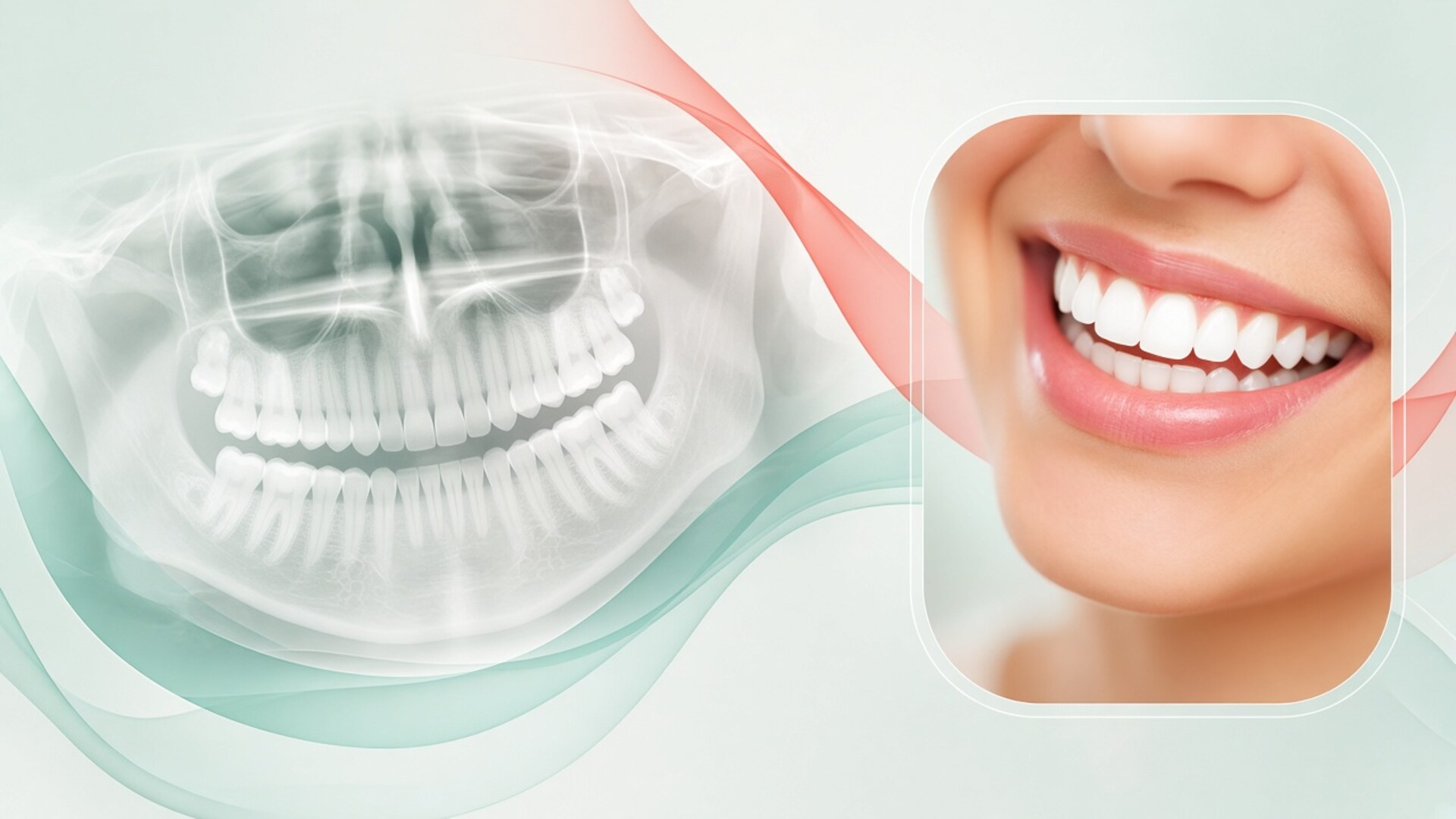
Temple headaches are often blamed on the bite after a video or a friend’s tip. Sometimes occlusion and chewing muscles truly contribute. Often the driver sits elsewhere: migraine, tension-type headache, neck load, sinus issues, stress, short sleep, medication patterns, hours of laptop clenching. I am Dr. Maksut Behruzoglu, a specialist orthodontist in Dubai; in TMJ symptom and TMJ treatment visits I handle the link carefully: the bite can raise muscle tension and provoke pain in some people; it is not the automatic cause of every temple ache. Recent reviews on temporomandibular disorders and headache stress overlap between muscle–joint factors and primary headaches — without giving orthodontists a licence to “fix migraine with braces.” I do not assign a cause from a smile selfie. Below — when a bite link is plausible, when neurology should lead, what I check in the chair, and what I refuse to promise.
Why temples and bite get glued into one story
The temporalis muscle sits under the temple skin and helps close the teeth. When it overworks, pain feels “in the temple” and reads as a headache. You search “headache from bite,” arrive with a ready culprit. I respect that hypothesis as one working line, not a verdict.
Wear, a joint click, crowding, a deep bite — markers that often sit in the same smile. The mind likes a clean line: “crooked teeth, therefore head pain.” Clinic is messier. Crowded teeth live for decades without temple pain. Straight teeth after orthodontics sometimes sit beside heavy clenching and pain. The bite is one node in a network of load, habits, and the nervous system.
Dubai adds deadlines, flights, time-zone shifts, long video calls with a locked jaw. Those factors raise muscle tone on their own. If in the same week a new crown leaves an uneven contact, two events fuse into one story. My job is to separate coincidence from contribution.
Another glue comes from marketing: “fix the bite — end the headache.” The line sells an appliance. In the chair I translate it into a testable hypothesis: which muscles hurt, which contacts interfere, what changes after unloading, whether a neurologist should work in parallel. Without that translation you buy an expectation the clinic does not owe. Below — how the muscle road runs from jaw to temple.
Temple muscles, chewing, and tension: how pain reaches the temple
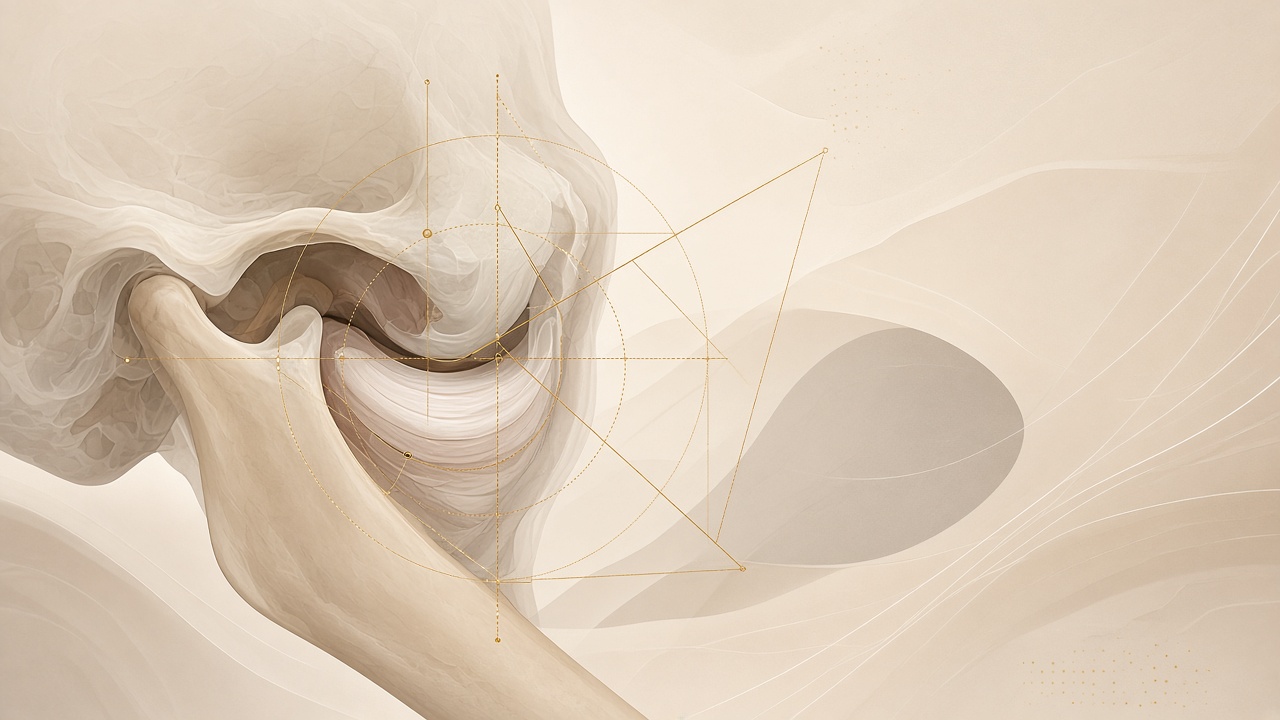
The chewing system includes temporalis, masseter, pterygoids, ligaments, and the temporomandibular joint. Temporalis lifts the lower jaw; its fibres lie where people point for “head in the temples.” Long clenching, grinding, one-sided chewing, and early contacts can raise tone in sensitive people. Pain on palpation, evening build-up, morning stiffness raise a muscle hypothesis. That is not a sentence for every imperfect contact: sensitivity threshold, sleep, stress, and migraine change the answer. The joint sits nearby — sometimes quiet while muscles burn, sometimes not. In TMJ symptoms I separate layers on examination. Patients often bring one search label; I return the talk to chewing, yawning, meeting clench, and whether palpation reproduces the same pain. Without that step it is easy to prescribe a tray or braces on someone else’s theory. Below — three muscle layers people mix with “just a headache.”
Temporalis and a “band” or a point in the temple
Temporalis pain can be local: a point above the zygoma or above the ear, pressure, fatigue from chewing gum. Sometimes people describe a band around the head — then tension-type headache rises, and the orthodontist does not own the whole diagnosis. I palpate both temples and compare sides. If muscle palpation reproduces the familiar pain more than joint palpation, the muscle contribution rises in plan priority.
A partner hears night grinding; you feel morning temple fatigue. A night guard can protect teeth and lower load; it does not treat grinding as a sleep-medicine or stress topic by itself. I explain both roles before we make a splint.
Two patients with similar contact maps can live in different symptom worlds. I do not treat a contact scan in a quiet mouth, and I do not promise vanishing migraine to someone with classic aura because a canine sits a little tight.
Masseter, cheek, and the jaw angle
Cheek and jaw-angle pain get labelled “wisdom tooth” or “ear infection.” Hypertonic masseter refers here and upward. Palpation, a clean tooth film, and a link to meeting clench help. Restorative dentists and ENT stay on the route when clinic points there. I do not cancel their exam with “it is definitely muscle.”
Years of one-sided chewing make one side stronger and more sensitive. Retraining chewing is part of the talk; instant change is naïve. Orthodontics can remove a dental interference on the “awkward” side if the obstacle is dental. If the obstacle is habit and stress, braces alone are thin.
Pterygoids and “pain inside”
Pterygoids join lateral motion and opening. Their dysfunction feels deeper, nearer the joint, sometimes referred toward the ear. Patients are sure the joint is “broken.” Exam and, when indicated, MRI separate muscle from intra-articular contribution. Until that split exists, promising a bite cure is early.
Referred molar pain without decay is the trap again. Repeated treatment of one tooth with no relief is a reason to return to the muscle map. Bring the endodontic history: “three retreatments” often speaks louder than a panoramic film.
When the bite may contribute
The bite may contribute when a plausible chain exists: changed contacts → higher muscle activity or a forced jaw position → pain in masseter and temporalis zones that rises with chewing, clenching, or wide opening. Chronology beats a pretty smile photo. Checking is not an immediate brace start: unloading, a splint when indicated, correcting an obvious restoration interference, and reading the response often come first. If pain falls after contact unloading, the hypothesis strengthens. If pain stays with quiet muscles, we look further. Reviews stay cautious: “fix the bite — end the pain” is not a universal law. Some people gain from contact stabilisation; some keep the same pain with an already “straight” arch. I state that fork early so the agreement is not built on an advert promise. Below — three situations where I test occlusal contribution with special care.
New crown, bridge, or bite-height change
A high crown that “lights” the temple within days; a new bridge with an early contact; a sudden height change after worn teeth and full-mouth restorations — classic timelines. I check height, paper contacts, muscles. A precise restoration adjustment by the restorative dentist often helps. I do not start orthodontics “while we are here.”
Patients feel awkward telling a dentist “it got worse after the crown.” I ask them to say it plainly: without that sentence we treat the wrong layer.
Orthodontic activation and contact shift
A sharp contact shift after wire activation or aligner change can coincide with temple pain in a sensitive patient. Sometimes timing is coincidence. I rebuild the activation calendar, range, muscles, and stress clenching during treatment. Force can be softened or paused; that is not a claim that “orthodontics always ruins the joint,” and not a reason to quit without a plan.
Adults in aligners sometimes bite trays as a stress toy. Then the pain is not “the bite as a diagnosis,” but the habit. The clenching talk matters more than swapping clear plastic.
Deep bite, crossbite, and chewing asymmetry
Deep bite with palate trauma, crossbite, marked chewing asymmetry — situations where I test occlusal contribution carefully. Bruxism and clenching amplify any imperfect contact: here the bite is a multiplier, not the sole author. Removing the multiplier with orthodontics while ignoring habit and sleep often yields a partial answer. I say that plainly in TMJ treatment consults.
Some patients gain from occlusal stabilisation and orthodontics when indicated; some do not. I plan response as a hypothesis with review, not as a guarantee. A pretty arch alone does not prove past dental “guilt” for your migraine.
When the bite is not the villain: other temple-pain roads
Migraine has criteria: attacks, nausea, light sensitivity, sometimes aura, family background. An imperfect bite in a migraineur is common — as in people without migraine. Orthodontics does not replace neurology and does not promise classic attacks will vanish. I can lower a muscle background when it exists; I do not sell “migraine treatment with braces.”
Tension-type headache is another frequent road. Pressing quality, link to stress and posture, often bilateral. Neck and shoulder muscles often join. The orthodontist may help unload chewing muscles; he is not the only clinician. Office workers from Dubai Marina and Business Bay describe the same evening pattern: six hours of video, shoulders at the ears, jaw locked, temples buzzing. The bite in that story may be a quiet background.
Sinus disease, eye and orbit issues, temporal arteritis in older age groups, neuralgia, drug side effects, caffeine withdrawal — an incomplete list, not for self-diagnosis. Red flags (sudden “worst pain,” neurologic deficit, fever with stiff neck, progressive asymmetry, unexplained weight loss) go to urgent care, not an aesthetic tray talk.
Tooth pain and cracked teeth mask as temple pain through referral. A restorative dentist and a periapical film stay the first filter when the clinic looks dental. I do not compete for the right to “leave the tooth alone” — we clarify the source together.
In Dubai, patients sometimes bring a note “headache from bite” from a clinic that never examined the joint or screened neurology. I rebuild the base. A second opinion is normal practice, not an insult.
Hormonal cycles and perimenopause change headache frequency for some women; orthodontics does not cancel those cycles. I record the background and do not promise a straight arch instead of endocrine care. If you already see a gynaecologist or endocrinologist, coordination beats competing theories.
Alcohol, dehydration in UAE heat, skipped meals in Ramadan or on deadline weeks — everyday triggers people forget to mention. I ask without moralising. Sometimes “bite temples” are espresso-and-no-water temples.
What I check when temples hurt
History takes as long as palpation. Onset, cycles, link to food and chewing, sleep, grinding, new crowns, orthodontics, trauma, ENT episodes, neurology visits, medications. Then face exam, range, joints, muscles, contacts, wear. When indicated — tooth films, OPG, neurology referral, or TMJ MRI. I ask you to describe pain in your words: point, band, pulse, nausea, light. If the description is migrainous, I recommend neurology in parallel. If it is muscular and chewing-linked, I deepen the occlusal work-up. A splint trial when indicated tests unloading response. Your case is decided only after this contour: I do not assign a cause from a temple selfie online. Second opinions welcome if you already heard opposite advice. AED figures come after a plan with a price-list date if cost enters the talk. Below — three blocks before promises about “bite guilt.”
Chronology beats a smile selfie
Pain two days after a high crown and pain for ten years beside family migraine are different stories. I draw an event timeline on paper or in the chart. Without a timeline every crowded canine looks guilty. With a timeline you see coincidence versus plausible contribution.
After moving to Dubai, people blame “the local water” or “the AC.” Sometimes sleep and stress changed, not the bite. I do not fight household theories head-on; I add clinical anchors.
Palpation, range, contacts — one visit
In one visit I gather a muscle map, joint sounds, range, paper contacts or a scan. Split offices where one clinician sees only teeth, another only “the head,” a third only trays leave holes. I close the orthodontic contour and name who else to call.
If opening is sharply limited and pain is joint-led, the path differs from free opening with burning temples after Zoom. Both appear in TMJ symptoms; treatment is not copied.
No response to a splint is not “tray failure”; it is a signal to change the hypothesis. A response does not prove “two years of braces are required” — it proves load and contacts participate. Then we decide whether splint and habits suffice or a dental goal needs orthodontics.
When I delay orthodontics
Acute severe pain, unclear neurologic pattern, red flags, unstable locking — a poor moment to start force “to cure the head.” Stabilise and route first. Orthodontics remains a tool for dental and skeletal goals when the acute phase is controlled and the goal is clear. I do not sell alignment as a universal temple medicine.
What helps and what I will not promise
Help addresses the mechanism found: unloading and a splint for muscle overload; correcting an obvious occlusal interference; daytime clenching hygiene; sleep and sleep medicine when indicated; physiotherapy; neurologic care for primary headache; orthodontics when a dental goal stands on its own and occlusal contribution is confirmed by unloading response. Combinations are common. One magic method is rare.
I will not promise: migraine vanishing after braces; a guarantee that click and temples leave in a month; treatment from a photo; diagnosis without exam; that every uneven arch caused your pain. I will promise: an honest fork of hypotheses, response checks, referral when my specialty border is reached.
AED prices come after a plan with a price-list date. Insurance cover is confirmed by the policy administrator or third-party administrator (TPA). Second opinions are welcome.
The table below gathers consultation landmarks. It is not self-diagnosis and not a substitute for examination.
| Complaint pattern | What I check first | Bite role | Whom else I involve | What I will not promise |
|---|---|---|---|---|
| Temples by evening after clenching | Muscles, habit, contacts | Possible multiplier | Physiotherapy when indicated | “Braces alone will do” |
| Pulsing + nausea + light | Neurology screen | Often background, not cause | Neurologist | “Straight teeth end migraine” |
| Pain after a new crown | Height, early contact | Contribution may be high | Restorative dentist | Ignoring the restoration |
| Morning fatigue + grinding | Bruxism, splint trial | Load multiplier | Sleep physician when indicated | A tray cures stress |
| Pain on yawn + click | Joint, range | Separate from “crooked teeth” | MRI when indicated | Click equals need for braces |
| Tooth pain without decay | Referred muscle pain | Possible | Restorative dentist | Drill “just in case” |
| Band + neck + office | Posture, neck, tension | Weak or moderate | Neurology / physio | Orthodontics alone |
| Pain rose on aligners | Tray clenching, contacts, stress | Multiplier possible | Force plan review | “Trays are always guilty” |
| Pain a year after braces | Retainer, relapse, muscles | Contribution possible | Review visit | Blame only past treatment |
Table rows are talk landmarks, not a home test. Two rows often coexist: migraine plus clenching, crown plus short sleep. Then the plan is mixed too. I record the first-step priority so we do not treat everything at once in chaos.
Orthodontics and headache: an honest border
Orthodontics changes tooth position and contacts. In some patients with confirmed occlusal contribution, that lowers muscle background and temple episode frequency. In some it does not, because the leading mechanism was elsewhere. I build that uncertainty into consent before force starts. A pleasing arch remains valuable on its own when the goal is aesthetic or dental function; it must not replace care for primary headache.
Patients ask: “if temples settle on a splint, why braces?” Sometimes splint and habits are enough. Sometimes a dental goal (crowding, palate trauma, prosthetic prep) still stands — then we plan orthodontics separately without promising it will “finish the head.” Sometimes unloading shows a contact worth removing with orthodontics or a precise restoration tweak. Decision follows tissue response, not precedes it.
In TMJ treatment I hold this border every day. Marketing “fix the bite — end the headache” is loud in feeds. In the chair, your history and palpation speak louder.
Children and teens with temple complaints need caution: growth, ENT, school stress, appliances. I do not copy the adult “bite is guilty” script. Parents get routing without panic and without promises from adult Reels.
Aligners and braces can both change contacts. System choice on consultation follows the dental goal, hygiene, and wear discipline — not a slogan that trays treat heads better than brackets. If temples rise mid-course, I do not shame “you wear badly.” I rebuild the hypothesis: clenching, height, joint, sleep, neurology.
Patients after bracket removal sometimes expect the headache “should have gone.” If pain was migraine, the arch did not cancel it. If pain was muscular and contacts stabilised, the background may fall. I compare starting complaint notes with today, not someone else’s social before/after.
Retention also changes contacts. A broken retainer, a lost night tray, crowding relapse remap closure. Temple pain a year after removal is a reason for exam, not an instant blame of “bad orthodontics” or “only the bite.” Chronology and muscles again.
I quote orthodontic fees and joint-phase fees in AED separately, with a price-list date. I will not merge “head treatment” and “smile alignment” into one promised package without diagnosis. An honest estimate keeps trust longer than any advert.
Everyday steps I discuss before appliances sound prosaic and work more often than marketing. By day, catch the clench: tongue at rest, teeth apart, lips together. On calls, stick a reminder on the laptop bezel. Swap all-day hard gum for pauses. Night grinding is not cured by willpower alone; a splint and a sleep talk fit when a partner hears grinding or mornings feel stone-hard in the temples.
In an acute phase, eat softer food, avoid wide burger yawns, skip hours of seeds that work the jaw. That is not a forever diet; it is a window while muscles cool. Caffeine and alcohol in Dubai heat raise dehydration and sometimes episode frequency — we record the fact without lectures.
Physiotherapy and gentle techniques have a place when the muscle component is clear. Hard self-massage to bruises and “jaw cracking” from a feed video I do not support. If home work worsens pain, stop and come in.
Pain medicines belong with a GP or neurologist. I do not invent an analgesic scheme “by eye” in the orthodontic chair and I do not cancel a colleague’s prescription. Coordination matters if you already take migraine drugs: splint and orthodontics sit beside that care, not instead of it.
UAE insurance views splints, joint MRI, and orthodontics differently. I state medical need; cover confirmation comes from the policy administrator or third-party administrator (TPA). If you self-pay, we set priorities: what changes pain now, what can wait without risk.
A review two to four weeks after unloading starts shows whether the hypothesis moves. If temples are quieter, muscles softer, range stable — we record and decide whether orthodontics is still needed on its own. If the picture is the same or worse, we do not raise tray height at random and do not bond brackets “just to start.” We change route: neurology, ENT, films, restoration review.
Anxious patients monitor every click and every temple point. I treat anxiety as a tone raiser and do not shame it. The plan still rests on clinic: what the clinician’s hands reproduce, what links to chewing, what looks like primary headache. A seven-to-ten-day symptom diary helps more than another midnight search hour.
Foreign reports in Turkish, Arabic, Russian, and English I read to the extent text and films are readable. A bad translation is worse than an honest “data are thin.” Bring original DICOM and PDF files, not only screenshots of prior chat.
I also note the language of the complaint. “Pressing,” “pulsing,” “shooting,” “stone-hard by morning” map differently. I ask you to repeat the wording at the next visit in your own words: if the vocabulary shifts from muscular to migrainous, I shift the route too.
Finally, about speed. Muscle background in some people answers in days to weeks of unloading. Migraine patterns live on their own cycles. Orthodontics changes contacts over months. Mixing three calendars into one promised week is a path to disappointment. I draw three calendars separately even if all three tools may eventually serve one mouth.
I practise in Dubai after Istanbul and see the same glues in English, Russian, and Turkish: temples plus an uneven arch plus a ready culprit. The work-up takes time. Chair time is cheaper than months of an appliance aimed at the wrong task. Examination decides more than another reel about “bite guilt.”
FAQ on temple pain and the bite
Can the bite cause temple headaches?
It can contribute in some patients through muscles and contacts. It is not the automatic cause of every temple pain. Chronology, palpation, and unloading response matter more than a pretty arch scan. Decision only after history, exam, and, when needed, allied specialists.
If teeth are straight, can temples still hurt from chewing muscles?
Yes. A straight arch does not cancel bruxism, stress, clenching, joint problems, or migraine. A pretty smile is not the same as quiet muscles.
Do I need a neurologist if I already see an orthodontist?
Yes, if the pattern looks like migraine or primary headache, if red flags appear, or if a muscle–occlusal plan does not answer. Orthodontist and neurologist close different contours; they should not compete.
Will a night guard cure the headache?
A guard can lower load and protect teeth, and sometimes ease muscle pain. It does not treat migraine as a disease and does not replace sleep and stress work. Response is individual; there is no guarantee.
Should I get braces specifically for headache?
I do not start orthodontics “specifically for headache” without a dental goal and without confirmed occlusal contribution. If a dental goal exists and unloading showed a link, we discuss orthodontics as part of the plan, not as a magic button. Timeline and system follow teeth and tissues, not a promise that “the head will clear by the wedding.”
How do I know a new crown is to blame?
Chronology: pain soon after cementation, muscle palpation, height and contact check. Restoration adjustment often helps. Mirror self-diagnosis is not enough; you need a clinic visit.
Can temple massage replace a doctor?
Gentle relaxation sometimes lowers tone for a while. It does not replace diagnosis, does not rule out dental and neurologic causes, and should not be hard enough to bruise. If pain rises after self-massage, stop and see a clinician.
Can this be solved online?
No. Online helps gather history and urgency. Palpation, contacts, imaging decisions, and a plan need an in-person visit. I do not assign “the bite” as cause on a video call without a chair exam.