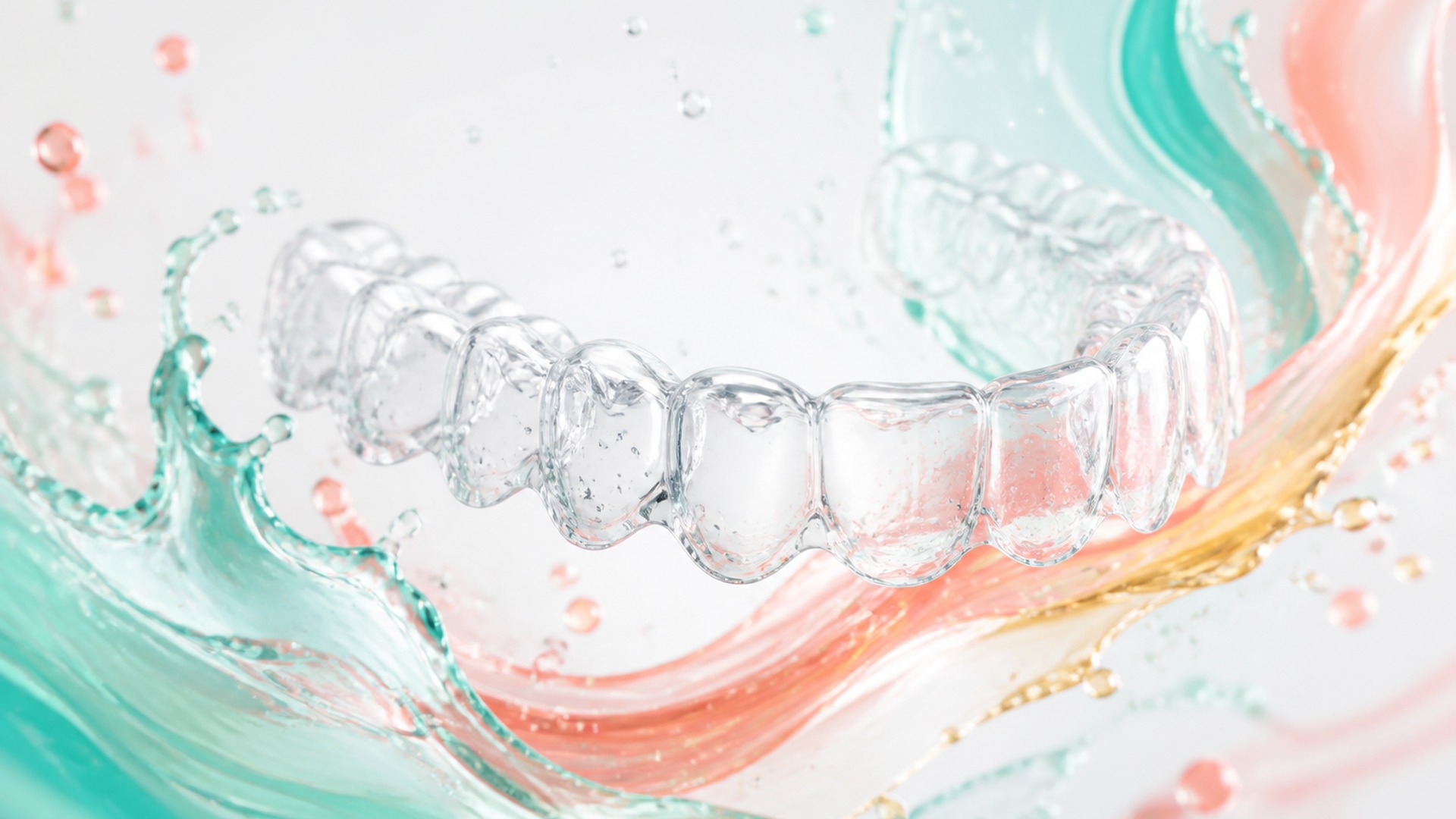
Clear aligners cloud and smell when saliva film, plaque, micro-scratches, and food residue stay on the plastic. A tray is a thin shell worn about 20–22 hours a day, so the inner surface stays warm and wet for most of the day. If you remove a tray and drop it into a case without rinsing, that film dries and clings harder. I treat adult aligners and Invisalign in Dubai, and on reviews I hear the same pair of complaints: “the tray went matte” and “my breath smells even though I brush.” The usual cause is habit, not a “bad brand”: abrasive toothpaste on plastic, boiling water “to sterilise,” dyed soap, a dirty case overnight, and coffee or meals with trays still in. Below is a practical cleaning protocol, calm don’ts, and signs a tray should be replaced early. This is appliance and mouth hygiene, not an online exam: if odor persists with a clean tray, we check teeth, gums, and tongue at consultation.
Why clear aligners cloud and start to smell
Clouding and odor are different processes that often travel together. Clouding appears when light scatters on a rough surface: micro-scratches, mineral film, protein pellicle, pigments from tea, coffee, curry, smoking, or coloured drinks. Odor appears when bacteria break down food and saliva into volatile compounds. Smooth, clean plastic stays clearer longer and holds smell less. Scratched, unwashed plastic clouds faster and smells stronger after short wear. At the chair I ask first: what do you clean trays with, what water temperature, where do you store them, do you drink coffee in trays, do you brush before reinsertion. Those answers explain the picture better than the logo on the box. Three sources below are the ones patients mix up most often.
Plaque and saliva on the inner surface
The inner face of a tray copies tooth anatomy and composite attachments. Saliva with proteins and minerals settles in those recesses. Skip a rinse after removal and the film dries within minutes. A brush then skates over a crust. Patients describe a “white coating inside” — often dried biofilm, not “defective plastic.” In Dubai heat plus air-conditioning, a closed damp case adds condensation: warm, wet, and friendly to leftovers. The ritual is simple: remove — rinse under lukewarm water at once — brush — then a dry spot or a clean case. Skip one evening step and morning odor shows up.
I ask patients to run a finger along the inner surface after a night without cleaning. A grey smear means film. A rough feel means scratches. Film yields to soft brushing and a soak. Scratches do not polish back to glass. At aligner fitting I sometimes hold an old tray next to a new one: the difference needs no microscope.
Micro-scratches from toothpaste and hard brushes
Many people reach for the same whitening paste they use on enamel. Whitening and “tartar control” pastes carry a high abrasive load. Silica particles polish teeth and etch a scratch web into thermoplastic. Scratches scatter light — the tray looks matte. Pigment and bacteria settle in those grooves. A hard brush and heavy scrubbing make it worse. A bulky electric head fits poorly inside a tray and wears edges unevenly. I recommend a separate soft children’s or ortho brush for trays and keep toothpaste for teeth, not plastic. Product detail sits in a later section; the mechanic matters here: clouding often starts with scratches, then odor clings to them.
Pigments, heat, and shape change
Colour arrives from outside. Coffee, black tea, red wine, turmeric, berries, nicotine, and shisha leave thin colour layers. Drink those with trays in and pigment lands on plastic and on teeth underneath. Hot tea or soup in trays adds warping risk: thermoplastic softens, edges lift from the gum line, fit drifts. Boiling water “to disinfect” is a common internet mistake. A tray can widen or twist by fractions of a millimetre; tiny to the eye, enough for a tracking gap. I say it calmly: water a little warmer than body temperature is fine; water too hot to hold a finger in is a risk. A warped tray is not worth “deep cleaning” — force misses the goal, and clouding is secondary.
The basic ritual after every removal
Daily rinses keep trays clearer than any “miracle tablet” alone. Most patients wear trays 20–22 hours and remove them for food, drinks other than water, and brushing. Every removal is a window for film. If the tray sits in a napkin in a pocket or in a dirty case during that window, evening odor arrives even with good tooth brushing. Dubai long lunches, coffee breaks, and flight-hub days multiply removals. So I teach a under-a-minute ritual that needs no pharmacy run. The goal is not operating-theatre sterility. The goal is to clear fresh film before it dries. Three steps below are what I walk through at the start of adult aligner care.
Rinse with lukewarm water immediately
Trays out — hold them under lukewarm running water for 10–15 seconds outside and inside. Temperature: comfortable for your hand, no steam. Cold water is acceptable; boiling water and “hottest cooler setting” are not. Rinsing removes saliva and loose crumbs. If the office only offers cold cooler water, use it; cold now beats an hour in a napkin. Shake off drops. Do not wipe with a fibrous paper towel: fibres lodge in attachment wells and later catch the tongue.
In a restaurant without a sink, the minimum is a bottled-water rinse and a clean case. Full brushing waits until home. Do not leave a wet tray in a sealed dirty box for three hours with no air. Crack the lid or use a vented case if you have one.
Soft brush without abrasive toothpaste
A soft brush reserved for trays only. A drop of clear, unscented liquid soap or an aligner-specific gel. Light strokes on the inner relief and the outer face. Spend extra time on incisor zones and attachment wells — that is where debris collects. Do not scrub like a pan. Three or four passes per segment are enough. Rinse until the soap film is gone. Soap left behind tastes bad and irritates mucosa.
Skip abrasive toothpaste for this step. Even “gentle” pastes often carry particles that scratch plastic. If an older brand leaflet mentions a “small amount of toothpaste,” check with me at your visit: many protocols now emphasise water, mild soap, and system crystals. My chairside default for patients is clear mild soap and a separate brush; paste stays on teeth.
Clean the teeth before trays go back in
A clean tray on dirty teeth smells again within an hour. After meals, brush and floss or use interdental brushes, especially around composite attachments. No brush available — rinse the mouth with water and brush at the first chance. Under a tray, leftover carbohydrates give bacteria a closed greenhouse for hours. That path leads to odor, white-spot risk, and inflamed gums. I treat tray hygiene and tooth hygiene as one block: neither works alone. On review I watch tray clarity and gum margins at attachments — one care story.
Morning and evening deeper cleaning
Daytime rinses clear the fresh layer. Morning and evening clear what builds up. Overnight saliva is thicker for many people; the mouth can be drier; the tray stays seated for eight hours straight. Morning taste often arrives before visible clouding. After a city day, plastic holds more pigment and snack residue. Deeper cleaning means a calm soak plus brushing — no extreme chemicals. I do not send patients to ten pharmacy bottles. One compatible solution and discipline are enough. On Invisalign, system crystals are convenient; for other systems, use tablets or solutions the manufacturer allows and that I confirm in your plan. Below is how to fit that into a Dubai day without losing wear hours.
Morning: clear overnight film before breakfast
Trays out before breakfast. Rinse. While you brush your teeth, trays can sit in a glass with solution per product instructions — usually 10–15 minutes, not an hour “just in case.” Over-soaking in aggressive solutions dries the surface and dulls it. After the soak — soft brush, water, check against light. White crust left in a recess gets twenty more seconds of targeted brushing. Trays back in right after tooth cleaning. Do not leave clean trays on the sink next to open toothpaste: dried paste on an edge scratches on insertion.
Morning soaks help mouth-breathers and low-water drinkers. Dryness makes film stickier. If odor returns by midday, I sometimes add a short afternoon rinse after lunch.
Evening: day’s pigment and the case
Repeat a soak in the evening if the day included coffee, tea, or a heavy dinner out. If the day was quiet and daytime rinses were honest, thorough soft-soap brushing can be enough. Wash the case with warm soapy water and dry it open. A dirty case returns smell to a clean tray overnight — a classic pattern. Once a week wipe the case with a soft cloth; skip the dishwasher for most boxes unless the maker allows it: high heat warps lids.
Check tray margins. Sticky film or a dark line at the gum contour deserves extra brush time. Patients often miss the margin, then complain about a “yellow stripe.”
Soaks when you travel or work late
Dubai patients often move between emirates or fly through the hub. Pack a small zip bag with two or three tablets or crystal portions, a foldable soft brush, and a mini bottle of clear soap. Hot tea in trays on a plane is a poor idea; still water is fine under most plans. In hotels use lukewarm tap water, not a kettle boil. Forgot solution — mild soap and water cover you until a shop. Do not improvise with household bleach, wound alcohol, or glass cleaner: they dull surfaces faster than they “save” colour.
What you can clean with — and what you should skip
Patients bring whitening paste, dyed mouthwash, denture tablets, vinegar, baking soda, and peroxide “from a reel.” Some help inside narrow limits. Some cloud plastic in a week. I sort products by one question: does this remove film without scratches and without warping. The system brand sets the base; I tune details to your mouth and to what you can actually buy in Dubai. The table below is the working map. If a bottle is unclear, bring it or photograph the label: one minute of checking beats a cloudy tray mid-wear.
| Product / action | For trays | Use for | Risk | Chairside note |
|---|---|---|---|---|
| Lukewarm water rinse | Yes | Saliva, crumbs | Low | Baseline after every removal |
| Soft brush + clear mild soap | Yes | Daily film | Low with light pressure | Separate brush for trays only |
| System crystals / gel | Yes | 10–15 min soak | Low per label | Handy for Invisalign and peers |
| Aligner cleaning tablets (gentle) | Yes if allowed | Odor, light film | Medium if over-soaked | Watch formula and time |
| Abrasive toothpaste | No as habit | — | High: scratches, clouding | Paste for teeth, not plastic |
| Boiling / very hot water | No | — | High: warping | Breaks fit |
| Alcohol / dyed mouthwash soak | Usually no | — | Clouding, colour | Do not soak trays |
| Bleach, acetone, glass cleaner | No | — | High surface damage | Home “hacks” harm |
| Hard / metal brush | No | — | Scratches | Soft only |
| Vinegar / soda “by eye” | Cautious | Rare spot soak | Vinegar smell, roughness | Only if I approve in writing |
| Denture cleaning tablets | Often no | — | Clouding per many IFUs | Do not confuse with trays |
Why boiling water and “sterilisation” hurt the course
Wanting to boil a tray is understandable: people hear “bacteria” and picture hospital sterility. An orthodontic tray is not a surgical instrument. It needs a clean surface and an accurate shape. Water hotter than hand-comfortable softens thermoplastic. Edges lift, attachment contact weakens, the next tray seats worse. On review I see a gap and hear: “but I disinfected everything.” Disinfection traded for geometry is a bad swap. Calm hygiene with water, a brush, and a compatible soak cuts bacterial load enough for daily wear. If true medical sterility is the goal, that is another context — not a kitchen kettle.
Why abrasive toothpaste clouds trays
Toothpaste is designed for enamel and dentine. Abrasive lifts stain from hard tissue. Tray plastic is softer. Micro-scratches stack over days. First the tray is “a little less glossy,” then matte, then it holds pigment like a sponge. Patients think the “system yellowed itself.” Often it is a scratch web plus coffee. I do not make a scene over one slip. I ask patients to drop paste from the tray ritual and compare a new tray to the old one after two weeks. The difference usually teaches without a lecture.
Vinegar, baking soda, and peroxide
Home mixes live on forums. A weak peroxide soak is sometimes used briefly when I agree. Strong vinegar leaves smell and can dull the surface. Baking soda as a paste is abrasive. I do not recommend DIY mixes as the main protocol. If branded products are unavailable, stay with water and mild soap until you buy compatible tablets. An “eye-balled” experiment saves dirhams and can cost the clarity of the current tray.
Odor: where it comes from and how to clear it
Tray odor is almost never “one bad shell.” It is a sum: biofilm on plastic, plaque on teeth, tongue coat, mouth breathing, rare flossing around attachments, smoking, sweet drinks under trays. Patients smell the tray at evening removal and blame plastic alone. I ask them to rinse the tray, smell it, then judge breath without trays. Sometimes the tray smells. Sometimes the mouth smells and the closed tray volume amplifies it. That split matters: otherwise you soak forever and skip tongue and tooth care. Dubai office air-conditioning and low daytime water intake make film stickier, so odor shows earlier under the same ritual that “worked in another climate.”
A one-week odor plan: (1) rinse after every removal; (2) morning and evening soaks; (3) brush and floss before reinsertion; (4) clean dry case; (5) water instead of sweet drinks in trays; (6) no smoking or shisha in trays if that applies. Reassess after seven days. If odor is gone, keep the protocol. If odor remains with a visually clean tray — book an exam: we look for decay, gum inflammation, dry mouth, ENT contributors. An orthodontist does not treat every breath cause on earth, but I can separate “dirty plastic” from “mouth problem.”
Skip “freshness gum” tricks inside trays: most gum needs trays out; sweet mints under plastic feed bacteria. Alcohol mouthwash masks smell for minutes and dries mucosa. Mechanical cleaning beats masking. A coated tongue often explains half of “my trays stink” — the tray is only an amplifier.
When odor points to gum inflammation
Bleeding on floss, swollen gums at attachments, bite tenderness, and stubborn odor with a clean tray mean buy fewer tablet packs and book an exam. Inflammation has its own smell and its own risk for tooth movement: I do not load inflamed tissue harder without need. Sometimes professional cleaning and attachment hygiene coaching are enough. Sometimes a periodontist is needed before the next active stage. I calmly pause the “chase for crystal trays” when soft tissue needs care. Clean plastic on inflamed gums is a pretty picture on a weak base.
Dry mouth and overnight wear
At night the tray stays in without removals. People with dry mouth, snoring, mouth breathing, or saliva-reducing medicines notice stronger morning odor. Morning soaks, daytime water, and an honest medicine list at consultation help. I do not cancel night wear for smell: hours matter for tracking. I strengthen the morning ritual and tongue care. Severe dryness may need mucosal support coordinated with other doctors — not acidic folk rinses that irritate gums.
Clouding, scratches, and when a tray is past saving
Clouding can be reversible or not. Reversible means a thin film: after a soak and brush the tray returns closer to clear. Irreversible means a scratch web and pigment locked in roughness. You can improve smell; you cannot restore “day-one gloss.” On a short wear cycle (often 7–14 days per number) that is mostly cosmetics. On a long hold of one tray while the next series is delayed, clouding annoys more: trays show on video calls and photos. Client-facing roles in Dubai notice this earlier.
Three signs the look will not fully recover: (1) matte finish remains after correct cleaning; (2) against light you see fine strokes like frosted glass; (3) colour has gone evenly yellow-brown. Focus then shifts to function: does the tray seat, hold attachment contact, stay crack-free. If function is good, finish the planned wear. If the tray cracked, warped in boiling water, or will not seat — message me early. Do not stretch a cloudy, poorly fitting tray “to save money”: force is already off, tracking suffers.
Prevention costs less than an extra series. Separate brush, no abrasive paste, no boiling water, no drinks in trays, regular soaks. At course start I fold this into the same talk as wear hours: clarity is discipline, not luck. A brand-new tray early in its cycle is your quality check. If day three already looks like day fourteen, fix the ritual now — not at package end.
Cracks, dull margins, and a “white line” at the gum
A crack is a separate issue. Even a perfectly clean cracked tray can cut the tongue and lose stiffness. A white line at the margin is often film or micro-damage from a hard brush. Clean first. If the line stays and the edge feels sharp — we check at a visit; sometimes we trim or change the tray. Do not file the edge with a nail file at home: it is easy to remove too much and leave a sharper corner.
Home photos for your own check
Every few days photograph the tray on a light background in daylight after cleaning. Compare with day one of that number. You catch clouding before it becomes a call topic. Bring two or three old trays to review: they show where the ritual slipped. I use them as teaching aids — facts about the surface, not blame.
Case, teeth, and fit checks
Tray hygiene sits inside the wider protocol. A dirty case, rare flossing around attachments, and latte-in-trays cancel a perfect brush. I ask patients to keep a mini kit in the bag: case, tray brush, tooth brush, floss, mini soap. In a DIFC or JBR office it looks minor until you compare month-one odor with someone who stores trays in a napkin. Napkins absorb moisture and shed fibres; a case protects and cues the rinse. A second case in the car or desk drawer cuts the urge to “hold trays in a palm” after lunch.
At fit checks I assess more than gaps and tracking. I look at tray margins, clarity, odor on removal, and gums at attachments. A cloudy tray on day three of a number means we rebuild the ritual. A clean tray with bleeding gums means we strengthen tooth hygiene and, if needed, send for professional cleaning. Aligner orthodontics stands on three supports: wear hours, accurate fit, clean mouth. Knock one out and the course creaks. A dirty tray can also seat worse: film occupies attachment wells, the click softens, patients under-seat the tray and blame the next number.
If you are still choosing a system, build care into the decision with aesthetics. Tray clarity is a promise with conditions. Without care, any system looks like plastic. At consultation I demonstrate cleaning on a model and hand over a short checklist. Ask about a specific Dubai pharmacy bottle before you buy a large pack: formula beats pretty packaging. For Invisalign, system crystals are often convenient; for other systems we pick a compatible option without harsh denture-grade chlorine.
In practice I ask patients to run the first week with a phone checklist: every removal — water; morning and evening — soak; case — clean; teeth — before reinsertion. After seven days odor complaints usually drop. People who slip most often forget the case at the office and store trays in a napkin. That fix is simpler than “switching aligner brands.”
Keep the tray smooth and free of dried film. Brush teeth before reinsertion. Wash the case. Leave boiling water and abrasive toothpaste out of the protocol. Then clouding and smell show up less often on review, and the visit returns to tooth movement — the reason you started adult aligners.
FAQ: cleaning clear aligners
How often should I clean aligners?
Rinse after every removal. Soft-soap brushing at least morning and evening, and after meals when you can. Soak per product instructions once or twice a day. Less often means film and odor return faster.
Can I clean aligners with toothpaste?
I do not recommend abrasive toothpaste for daily tray cleaning: it scratches plastic and speeds clouding. Brush teeth with paste as usual. For trays use a soft brush and clear mild soap or your system’s cleaner. If an old leaflet mentions a “dab of paste,” confirm the current protocol at your visit.
Why can’t I boil aligners?
Hot water warps thermoplastic. The tray loses accurate shape; fit and force suffer. Lukewarm water, a brush, and a compatible soak are enough for hygiene. Boiling does not make treatment safer — it makes the tray less precise.
How do I get rid of aligner smell?
Start with the protocol: rinse, soak, brush teeth and tongue, clean case, no food or sweet drinks in trays. If odor remains after a week with a clean tray — examine the mouth. Gum and mint masking do not close the problem.
What if my aligners are already cloudy?
Try correct cleaning and a soak. If matte goes away, you were holding film. If it stays, scratches or locked pigment are likely; finish the number by function if fit is good. On the next tray, drop paste and boiling water from the habit list.
Can I use denture cleaning tablets?
Often no: many aligner instructions warn that denture products dull the surface. Use tablets or crystals made for clear trays, or what I wrote in your plan. “Looks like a denture cleaner” is a poor selection rule.
Do I need to clean the aligner case?
Yes. Wash with warm soapy water and dry open. A dirty case returns smell to a clean tray. Do not boil the case or run it in a dishwasher unless the maker allows it.
Is cleaning the same for Invisalign and other systems?
The logic is the same: lukewarm water, soft mechanics, no warping, no abrasive. Soak products and brand kits differ. I follow your written system plan and the exam, not a random chat tip. The logo on the box does not cancel plastic physics.