Mail-order clear aligners are the “scan or mould at home → trays by courier → wear them yourself” model, often with no in-person orthodontist exam and no full diagnostic set. The American Association of Orthodontists (AAO) states it plainly: orthodontic care is a medical service, not a product in a box; without an in-person evaluation and imaging, the plan can miss the real mouth. I practise in Dubai as a specialist orthodontist and see patients who arrive mid-“home” course: the front teeth look a little straighter, while the bite, roots, or gums look worse than at the start. Below is a calm, evidence-based walkthrough without naming retail brands for sport: where diagnosis fails, why tray tracking needs a chair, how to think about DHA licensing and specialty in the Emirates, and how a doctor-supervised aligner course differs from a parcel. Practice floors on my service pages: consultation from AED 500, aligner treatment plan from AED 600, adult aligners from AED 16,000, Invisalign from AED 22,000. Those are page floors, not an invoice for someone else’s kit. Only an exam can judge your case.
What mail-order aligners are — and how they differ from care in a clinic
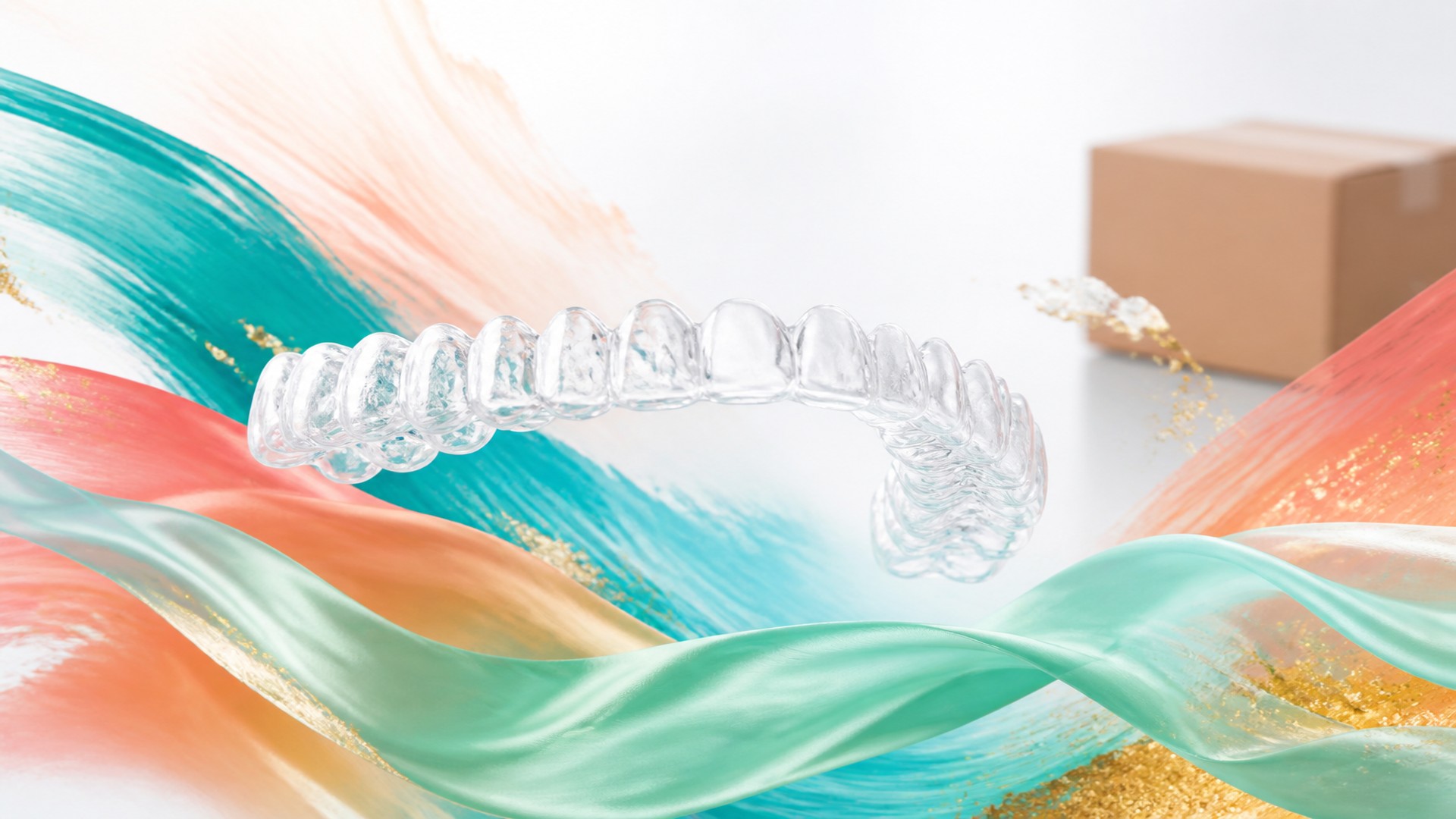
When people search “mail order clear aligners” or “at home clear aligners,” they usually mean a direct-to-consumer (DTC) path: you take impressions or a scan outside a full orthodontic visit, pay for a tray series, receive aligners by courier, and change them on an app calendar. Sometimes a remote clinician sits somewhere in the chain — a person you never meet. Sometimes “supervision” is a photo upload. From the outside it looks like aligner treatment. In substance it is closer to buying plastic with a smile promise.
A course with an orthodontist runs differently. First come the complaint and the goal. Then an exam of tissues, occlusion, joints, and hygiene. Then films: a panoramic radiograph (OPG), and when indicated a lateral cephalogram or CBCT. Only after that comes a digital plan: which teeth move where, where composite attachments help, where enamel reduction (IPR) is needed, where elastics belong, and where another appliance is the honest choice. Trays are a tool of the plan. Without a plan, a tray pushes whatever the mould captured on the crowns and stays silent about roots, bone, and hidden decay.
Mail-order marketing often narrows the job to “straighten the front.” That can be enough for a Stories photo. It is not enough for chewing, joints, and long-term stability. Teeth sit inside a bite. Moving incisors without controlling anchorage and contacts can polish the smile zone and overload molars or shift the midline at the same time. Patients notice months later, when the box is already paid for.
Keep a clear line between tele-dentistry that supports an in-person standard of care and a fully contact-free start. The AAO allows remote elements when they complement in-person evaluation. Skipping the in-person assessment before tooth movement is a different model. That is the model I unpack here: paying to move teeth without meeting the person accountable for the diagnosis.
Home moulds and “the doctor in the cloud”
A home impression or kiosk scan captures tooth surfaces. It does not replace gum assessment, pocket checks, mobility testing, jaw opening, or a clinical look at the mucosa. A remote clinician who only sees an STL file and a selfie works from a truncated dataset. If the contract does not name the doctor, the licence jurisdiction, and a usable contact path, you are effectively running the course yourself on a tray calendar.
I do not argue with courier convenience. I argue with calling delivery “complete treatment.” Logistics do not create a diagnosis.
One appliance sold for every mouth
Mail-order models often sell one tool: clear trays. In the chair I choose among trays, braces, a hybrid, and sometimes a surgical referral. The choice depends on the skeleton, the periodontium, the size of the move, and your wear discipline. If the seller only offers trays, the method was chosen before anyone saw your mouth. That is tidy for inventory. For biomechanics it is a narrow bet.
“No doctor visits” as the marketing hook
Lines like “no clinic trips” and “all online” lower fear of the dental chair. They also strip a safety layer: who reads the roots, who catches a lagging tooth, who stops force when gums flare. Orthodontics moves teeth through bone. Bone answers slowly and sometimes unlike the animation. Without a person accountable for your films and your mouth, error accumulates quietly.
Why a plan without exam and films is built blind
An orthodontic diagnosis is not “one tooth looks crooked.” It is a map: root position in bone, cortical thickness, impacted units, decay under old restorations, bone levels in periodontitis, skeletal jaw relation, joint function. Part of that map exists only on films. Part exists only in the chair. A mould shows crowns. It does not show where the root will travel or whether bone volume allows that path.
AAO patient materials on at-home / mail-order orthodontics ask whether radiographs are taken before start, whether in-person visits are included in the fee, and who supervises care. Those questions are not paperwork theatre. Without films it is easy to move a tooth with short or curved root anatomy, an apical lesion, resorption, or thin labial bone. On the surface the tray “fits.” Under the surface the tissues are already in a risk zone.
At consultation I separate the aesthetic ask from medical status first. Someone wants straighter incisors before a wedding. I check bleeding gums, active pockets, bridges in the path of movement, tongue habits that keep an open bite. If status is unstable, orthodontics waits. A mail-order funnel rarely says “pause — see a periodontist first”: its business model ships trays.
Skeletal background drops out often too. Mild crowding on a clear Class II or III face is a different job. Dental compensation has a ceiling. Without a cephalometric read and a profile talk, a “smile trays only” plan can tip incisors past a safe range. The patient sees a neat row. I see decompensation that takes longer and costs more to unwind.
What films catch before tray one
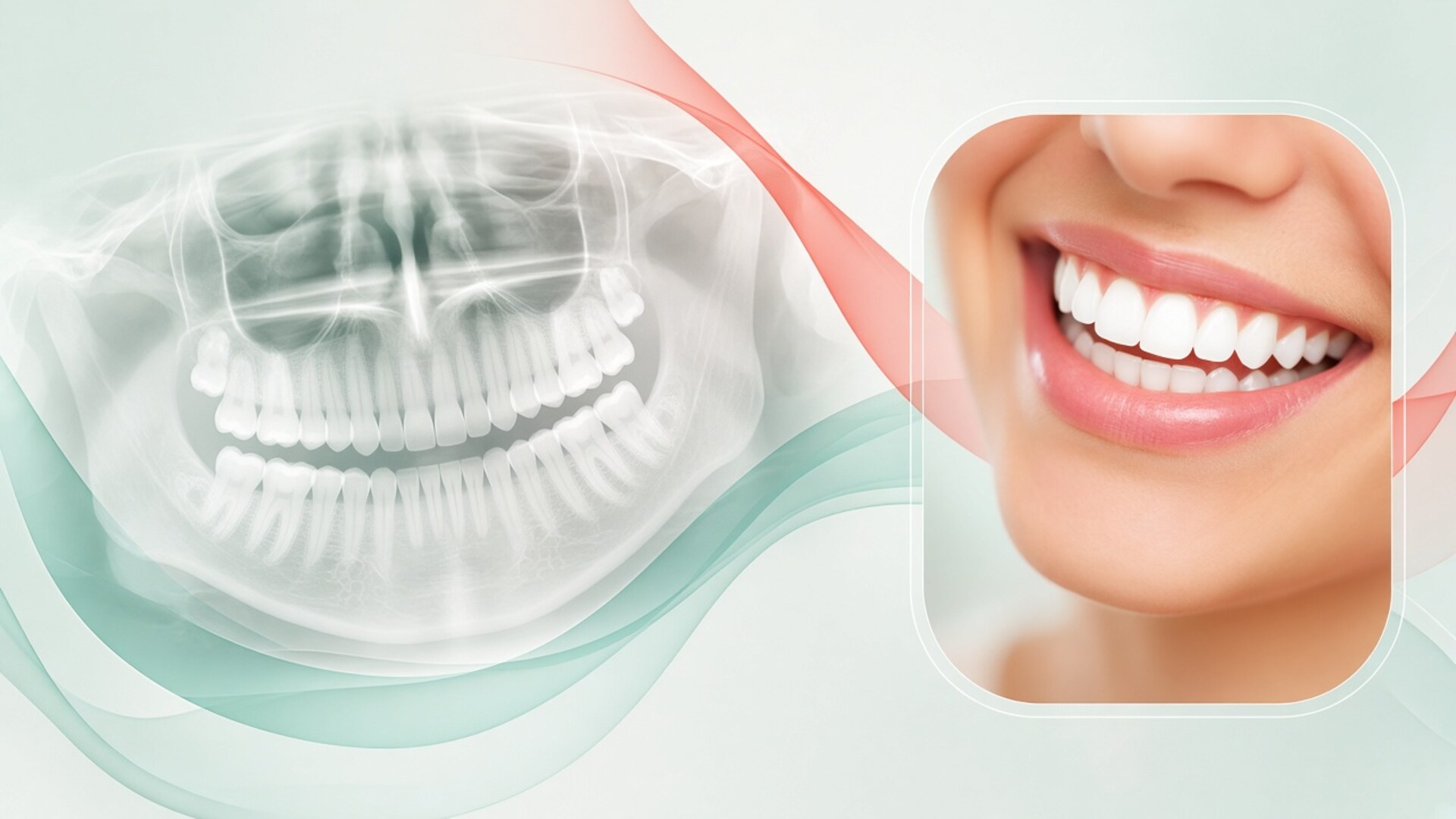
An OPG gives the overview: impacted teeth, large lesions, approximate root length, missing units. A lateral ceph helps with skeletal frame and tip. CBCT is a targeted tool when bone volume or complex impaction needs a 3D read. I do not order every film for every patient. I order what I need to say honestly “yes, trays are predictable here.” Mail-order paths often skip that filter entirely.
Why a smile selfie lies
A selfie — even a decent phone intraoral shot — shows crowns at an angle. Chairside occlusion, articulating-paper contacts, and mobility under finger pressure have no substitute on a handset. An algorithm that “draws straight teeth” from a photo optimises a picture. A clinical plan optimises health and function. Those are different goals, even when both sound like “a nicer smile.”
When a “mild” case turns out complex
Some adults with moderate crowding do well on aligners under supervision. Some do not: thin gums, heavy bruxism, a missing posterior unit with no prosthetic plan, an old retainer and a hidden relapse with root twist. Without an exam the package seller cannot tell those groups apart. You learn you were in the “complex” group when the tray stops seating or pain appears that the FAQ never named.
Tracking, fit, and supervision: what you lose without visits
Aligners work only when the tray seats and delivers force to the tooth for that stage. Tracking means the real tooth position matches the planned position for the current tray. I catch it on review: gaps, tray edges, attachment engagement, contacts, hygiene. If a tooth lags, we do not “wait two more weeks and hope.” We change tactics: extend wear on the current tray, step back one tray, order a plan revision series, strengthen the protocol, or narrow the goal in writing.
In mail-order models, review often means photos every few weeks. Photos are weak at catching early lag on posterior teeth. The patient sees “the front looks better” and keeps the calendar. By tray ten the gap is large enough that the next stage pushes past the tooth. Then either a stop and remake, or stubborn “finish the box,” which deepens the mess.
Wear hours are the second layer. Most protocols sit around 20–22 hours a day. Without visits, discipline rests only on willpower. In the chair I see under-wear signs: a floating tray, more plaque, a tooth that never caught the stage. We fix the schedule before the series becomes scrap. An app reminder helps. It does not replace eyes on fit.
Composite attachments and enamel reduction in a full plan are vector tools. Mail-order packages sometimes promise “no bumps, no filing.” That sounds gentle. For many movements, without shape and grip the tray slides. Then either motion is weak, or force tips the crown the wrong way. I discuss attachments before start on an aligner treatment plan, not after plastic already sits at home.
Early signs the plan has drifted
The tray does not reach the gum line on one tooth. A lasting gap appears at a canine. A molar “does not feel” the tray. Pain rises at the end of a wear period instead of the first days of a new tray. Gums bleed more than before treatment. Any of these is a reason for an in-person exam, not “one more week per the app.”
Why support chat is not an orthodontic visit
Support teams handle logistics: shipping, a cracked tray replacement, a discount code. Clinical decisions — stop force, unload a tooth, refer to a periodontist, rebuild the plan — need a doctor with your records and accountability for outcome. If chat tells you to “push the tray harder” through clear pain and mobility, that is a process red flag.
Retention the box forgets at the end
Straightening is half the job. Holding the result is the other half. Without retainers, teeth tend to drift back. In a normal course, retention is planned before the finish: fixed wire, removable retainer, or both. In mail-order stories, patients often “graduate” on the last active tray and put plastic in a drawer. Six months later the smile softens again, and they decide “aligners don’t work.” What failed was a scheme without a holding plan.
Clinical risks that show up in real mouths
I write this without scare tactics. Orthodontic risks exist in supervised care too: root resorption, demineralisation with poor hygiene, relapse. The difference is early detection and a plan change. In a contact-free scheme, warning signs stack up without a witness.
First risk group: periodontal tissues. Moving teeth through inflamed support can speed bone loss. If nobody scored bleeding and pockets before start, trays can “align” an arch while support thins. Second group: occlusion. Front-only alignment without posterior contact control yields a pretty smile zone and a traumatic bite in the back. Third: roots and bone — excess tip, root through thin cortex, recession on a thin biotype.
Function sits in its own line. AAO notes that poorly planned movement can affect chewing, speech, and jaw function. Not every home course ends badly. Skipping the “who is a candidate” filter raises the share of mouths for whom the method was wrong on day one.
Retreatment after DTC is its own money and emotion story. In a survey of AAO members (public results around 2022), a majority of respondents said they had taken patients for retreatment after mail-order / DTC care that started without an in-person exam. That is not proof that every posted tray harms every person. It is a profession signal: these cases reach specialist chairs often. In Dubai I see a similar stream among relocators: a box started abroad, supervision gone quiet, a fork needed now.
What I see on second opinion after a “home” course
On a second opinion I do not put the brand on the box on trial. I read today’s mouth and films. A common picture: straighter incisors, canines off in torque, open posterior contacts, thin gum at one incisor, the final-stage tray that will not seat. Next plan: stabilise tissues, full new records, then either supervised refinement, a change of appliance, or pause and retain what is already acceptable. “Just finish those same trays quickly” is a promise I rarely make.
When the situation is still fixable without heavy remakes
If the course is short, tracking is mostly alive, tissues are quiet, and the goal is narrow — sometimes we stop DIY tray changes, examine, and rebuild the plan. Earlier stop means cheaper exit. Doubt about fit outranks the app calendar.
When stopping tooth movement is the honest move
Active inflammation, rising mobility, acute joint pain, a cracked tooth, an apical lesion on a fresh film — stop orthodontic force until clarity. Continuing “because the trays are already paid for” at that point spends tissue to protect a sunk cost. I say it directly: plastic can sit on a shelf; bone and gums cannot.
Dubai and DHA: why an app parcel is not local treatment
In Dubai, the right to treat patients comes from an active regulator licence. For most clinics in the emirate that means Dubai Health Authority (DHA) and public checks in Sheryan: name, Active status, Specialty, facility link. Orthodontics as a specialty line reads Specialist Orthodontics or Consultant Orthodontics. A general dentist and a specialist orthodontist are different rows. I have a separate walkthrough on how to verify; the principle here is simple: you may know who owns your plan.
Mail-order schemes often live under another jurisdiction. Trays cross borders. The “doctor in the app” may hold a licence in another state or country. For your mouth in Dubai that opens an accountability gap: who stops the course on a Friday evening complication, who takes the film, who takes the case in a chair. Support phone lines in another time zone do poorly against acute periodontitis in Marina.
I keep the regulatory wording careful. I do not claim a named foreign service is “banned” without checking current rules. I tell patients something else: if you live in Dubai and move teeth, you need a clear local care path — a licensed clinician, a clinic, an urgent contact route. Buying plastic does not replace that path. If you doubt a doctor’s status, verify the card before a large deposit.
Tele-dentistry is growing. Remote check-ins help between visits and during travel. They work as add-ons to a course that started after diagnostics. They are a weak substitute for a blind start with no films. In my practice, photos between visits help. Decisions about force on teeth still sit with me as the specialist accountable under the clinic’s privileges.
Specialty beats a polished app
An app can be slick. Specialty answers whether the person spent years learning to move teeth and bites. For an orthodontic course I recommend a specialist orthodontist, not “anyone who will ship trays.” Checking Specialty in the registry takes minutes and can save months of dispute.
If the box is already flying to Dubai
Do not start the next tray “just in case.” Book an exam with what you have: numbered trays, plan screenshots, any films, the chat history. In the chair we decide: pause, supervised continuation, or a new plan. The sooner you show the mouth, the less chance the app calendar pulls teeth past a safer zone.
Insurance and mail-order kits
UAE policies treat orthodontics unevenly. A foreign kit without a local clinic contract often sits outside cover. Later specialist remake may count as new treatment against a separate limit. Confirm with your insurer or TPA in writing; I do not sign other people’s tariffs. Clinically the sharper point remains: paid plastic does not oblige a doctor to continue an unsafe plan.
Money: cheap box versus the cost of remake
Mail-order marketing hits price: “far cheaper than a clinic.” The comparison is honest only when both sides include the same scope: diagnosis, films, plan, reviews, revisions, retention, doctor accountability. Often the left side is a tray series. The right side is a full medical path. Figures below are conversation guides for Dubai in 2025–2026, not another company’s public offer and not your personal invoice. The exam and a written estimate lock the number.
| What you compare | Typical mail-order contour | Orthodontist-led clinic course | Where “savings” usually sit | Where later cost appears | Floor on my site |
|---|---|---|---|---|---|
| Entry | Mould/scan, form, photos | Exam + diagnostics | Doctor chair time | Missed hidden pathology | Consultation from AED 500 |
| Plan | Algorithm + remote sign-off | Written plan with forks | Speed to order | Goal wider than trays can carry | Aligner plan from AED 600 |
| Appliance | Tray series by post | Trays / braces / hybrid by indication | One SKU in stock | Method change after failure | Adult aligners from AED 16,000; Invisalign from AED 22,000 |
| Review | App photos | Fit and tracking in chair | Rare “visits” | Lagging tooth, remake series | Inside care / by estimate |
| Revision | Often paid or capped thin | Round limits in the contract | Low entry cheque | Full new package | Above limit — by estimate |
| Retention | Sometimes a separate buy | Holding plan before finish | “Done on last tray” | Relapse in 6–12 months | Retainers — separate practice line |
| Remake after DTC | — | New records + new course | — | Paying twice | Estimate after exam; second opinion per service page |
A cheap entry is not a cheap outcome. Patients who pay for a kit, then films “just in case,” then two second opinions, then a full specialist course often outspend those who started with one in-person plan. I respect the wish to save. I ask you to add the full path, not only the landing-page price.
Time is another cost line. Months of under-wear and poor tracking do not return with a coupon. Bone already answered the force. A rebuilt plan starts from today’s point, not from the pretty date in the app.
What a supervised clear aligner course looks like
In my practice the path starts with an orthodontist consultation. We lock the complaint, timing, aesthetic and functional goals, and medical background. If trays are realistic, we move to records and an aligner treatment plan. On screen you see the simulation: who moves, where attachments sit, where IPR sits, roughly how many stages. Simulation is a forecast, not a guarantee. We say that before you pay for a series.
Next comes system and package level. Adult aligners and Invisalign are different lab and protocol contours; site floors differ. I match the tool to the job, not to an ad reel. If trays are weak for the needed move, I say braces or hybrid before the deposit. Declining trays in some cases is part of specialist work, not an upsell.
Start: seat tray one, bond attachments per plan, hand over hours and hygiene rules. Reviews follow case rhythm: denser early and on hard stages, lighter when tracking is stable. Photos between visits are fine. Decisions to jump a tray early or to pause stay clinical. At the end: retention and a clear holding schedule.
If you are already in mail-order trays and unsure — bring the box and any files to a second opinion. We map status without moralising: what is already gained, what is risky to continue, what path in Dubai is realistic. Orthodontics can be convenient. Convenience does not have to mean “without a doctor.”
FAQ: mail-order aligners without seeing a doctor
These are questions I hear from patients and that people type when they research mail-order clear aligners, at-home kits, and treatment without an in-person dentist. Answers are short; a personal plan still needs exam and films. Use them to decide “pause the box / see an orthodontist,” not as a remote diagnosis.
Can clear aligners straighten teeth with no doctor visits at all?
Plastic can shift crowns without chair time. I do not treat unsupervised tooth movement as a predictable, safe orthodontic course. AAO discourages mail-order models that skip in-person evaluation. For oral health you need a clinician accountable for diagnosis and follow-up.
How do mail-order trays differ from clinic aligners?
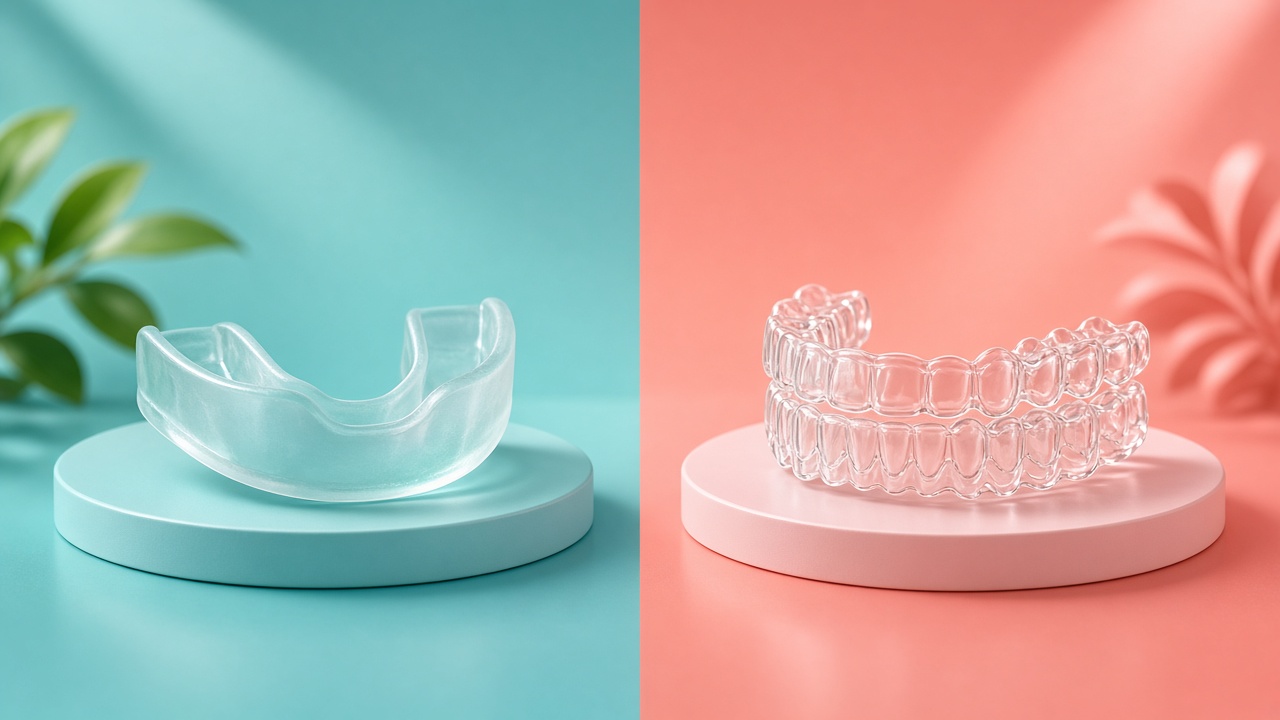
On the outside: clear plastic. Inside the process: diagnosis, method choice, attachments, fit checks, revisions, retention. In clinic, the tray is a specialist’s tool. In mail-order, you often buy a tray series with a thin medical layer.
Are X-rays required before starting aligners?
For an honest plan — yes, at least a current panoramic film and whatever else your case needs. Without a view of roots and bone, a doctor (and an algorithm) sees only surfaces. I do not start movement on mould-plus-selfie alone when films matter for safety.
What if my mail-order trays already fit poorly?
Stop stepping forward on your own. Keep numbered trays and the chat log. Book an orthodontist exam with what you have. We decide pause, plan rebuild, or appliance change. Forcing a floating tray through the rest of the series usually worsens the map.
Can I continue an app-based course after moving to Dubai?
Sometimes — after exam, fit check, and access to the plan. Sometimes you need a new scan and series. Sometimes stop and stabilise is wiser. Today’s tissues and tracking decide, not the paid box. A local licensed specialist owns only what they can control.
Why did a friend “do fine” without a doctor?
Mild cases plus strong wear habits can yield an acceptable cosmetic result even in a risky scheme. That does not erase case selection: some mouths were never candidates for contact-free care. Someone else’s review does not replace your films and your gums.
Is mail-order cheaper in the end than orthodontist care?
Entry price often is. The full path with remake, new films, and a second course often is not. Compare scope, not only the first payment. Clinic floors sit in the table above; your estimate comes only after examination.
Where should I start if I want aligners without the “no doctor” gamble?
Book a consultation, and take a second opinion if a kit is already paid for. Next: diagnostics and a written aligner treatment plan. That path keeps clear trays as medical care, not as a parcel with a smile promise.