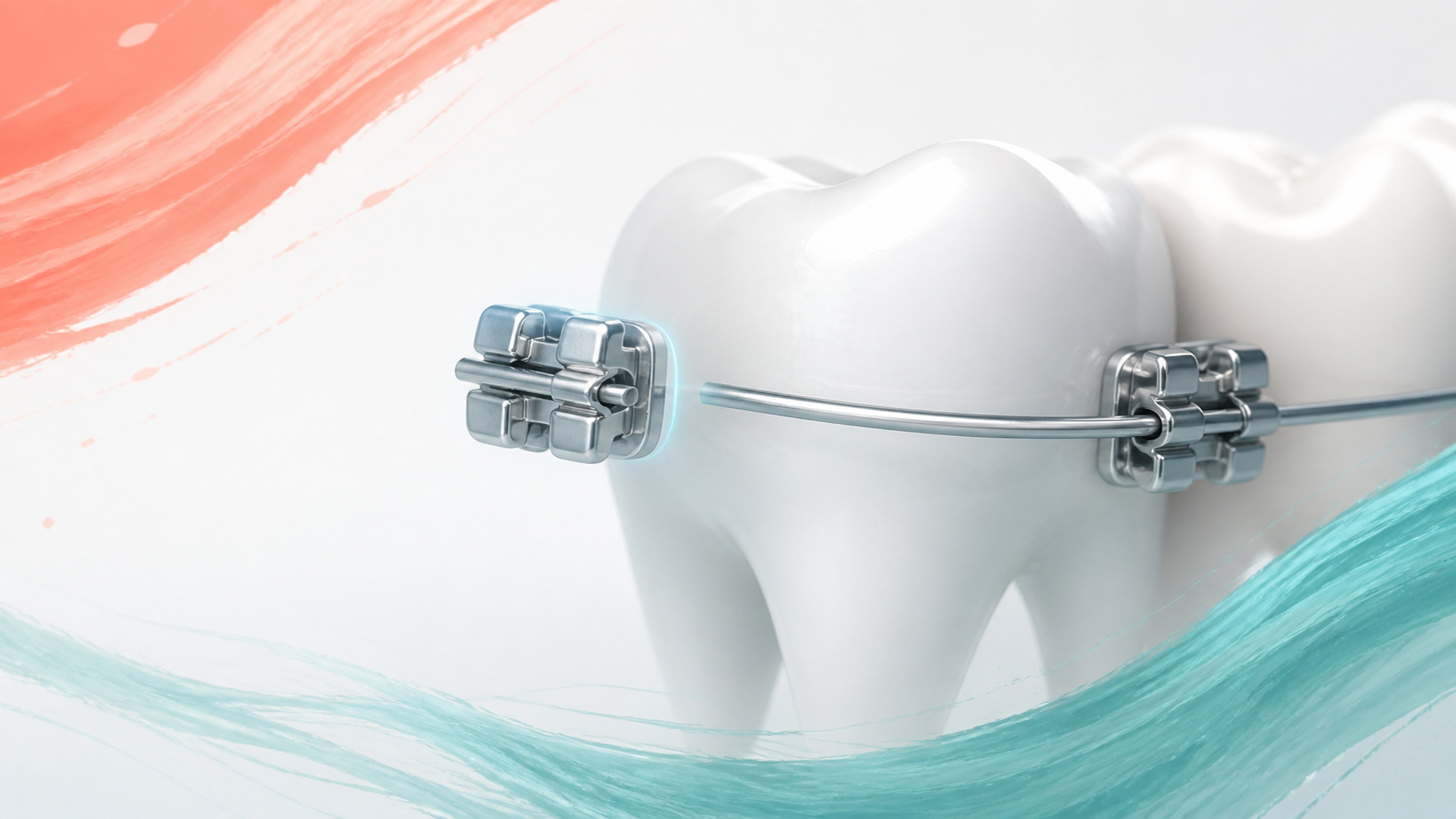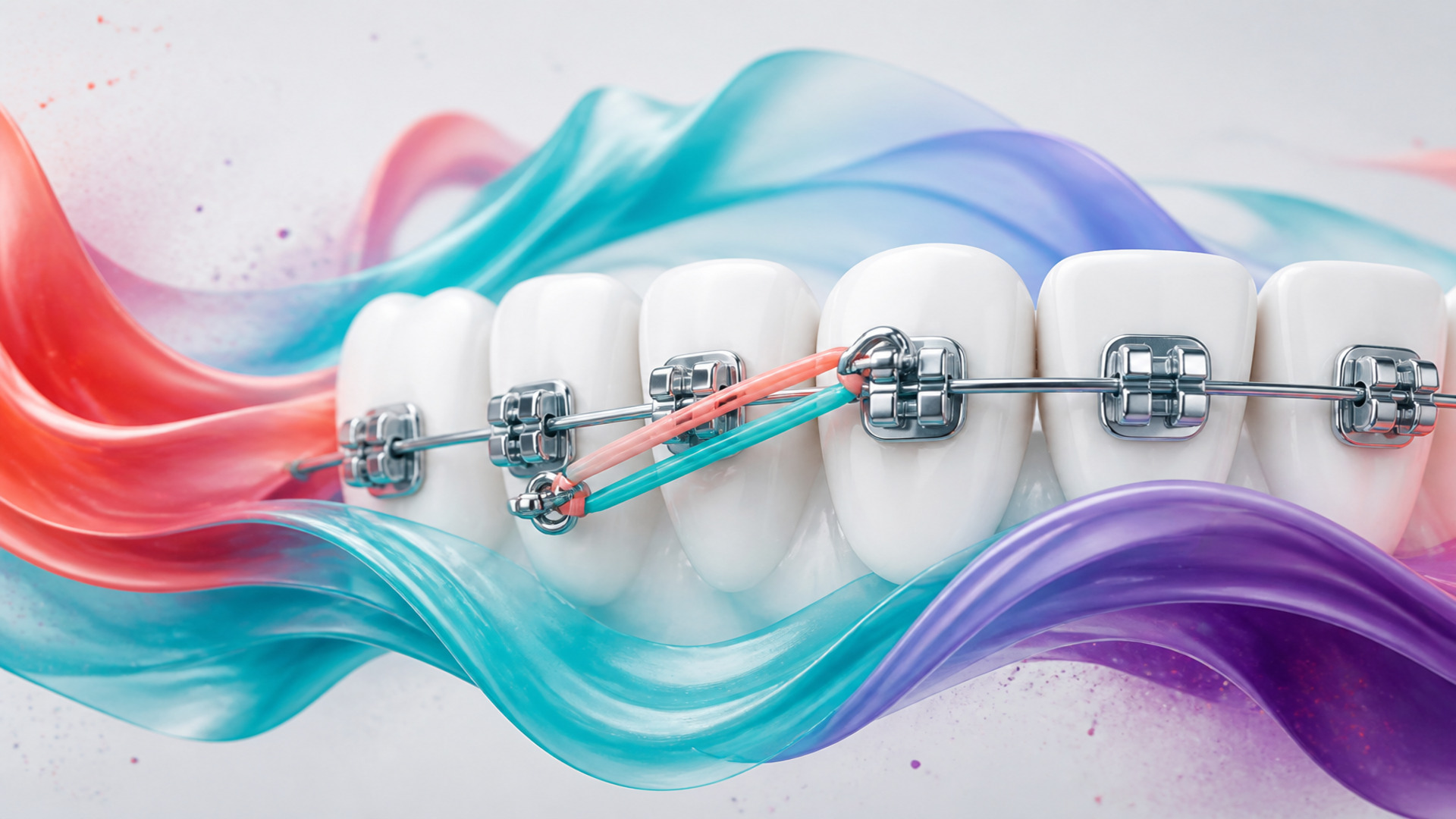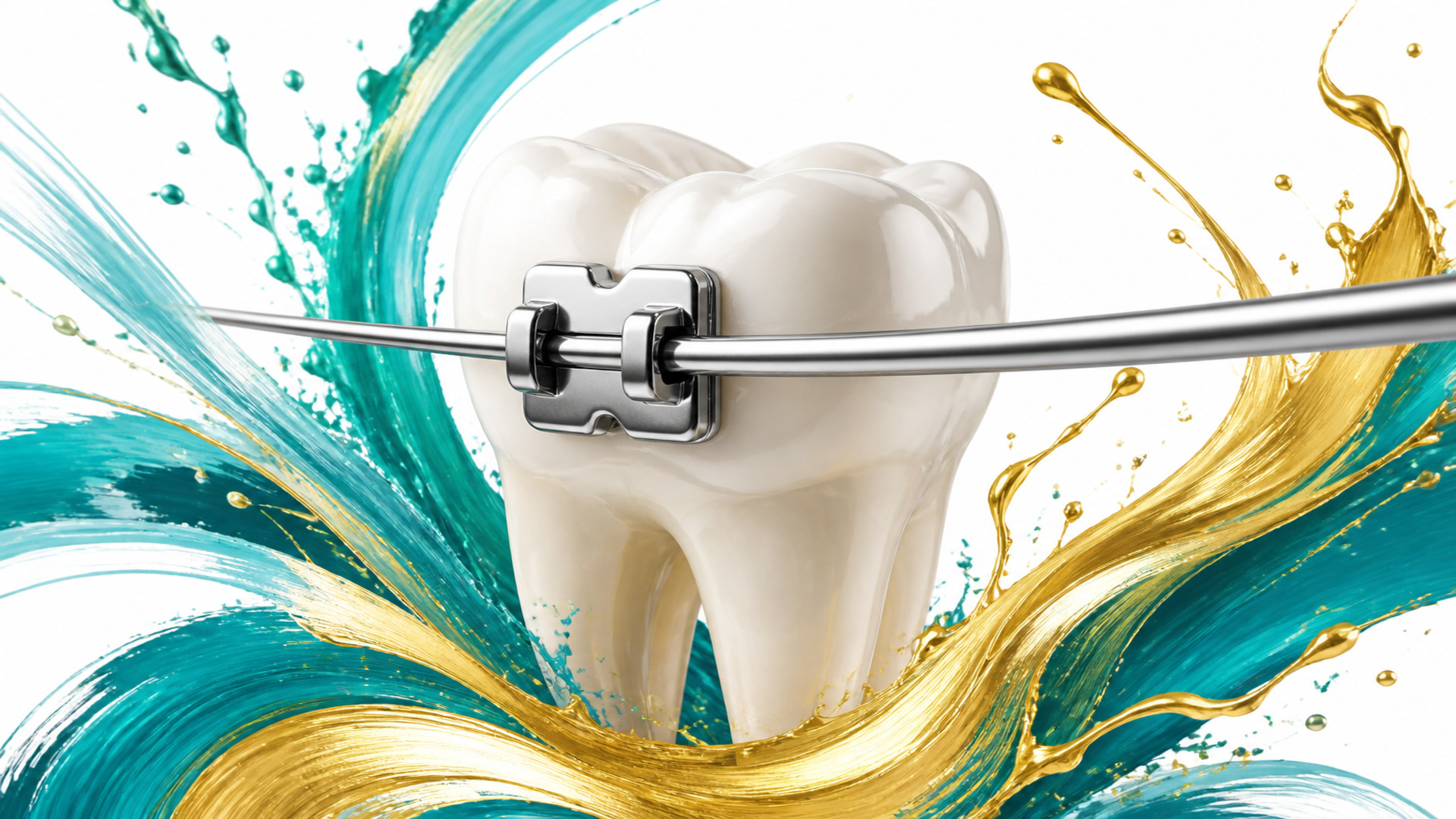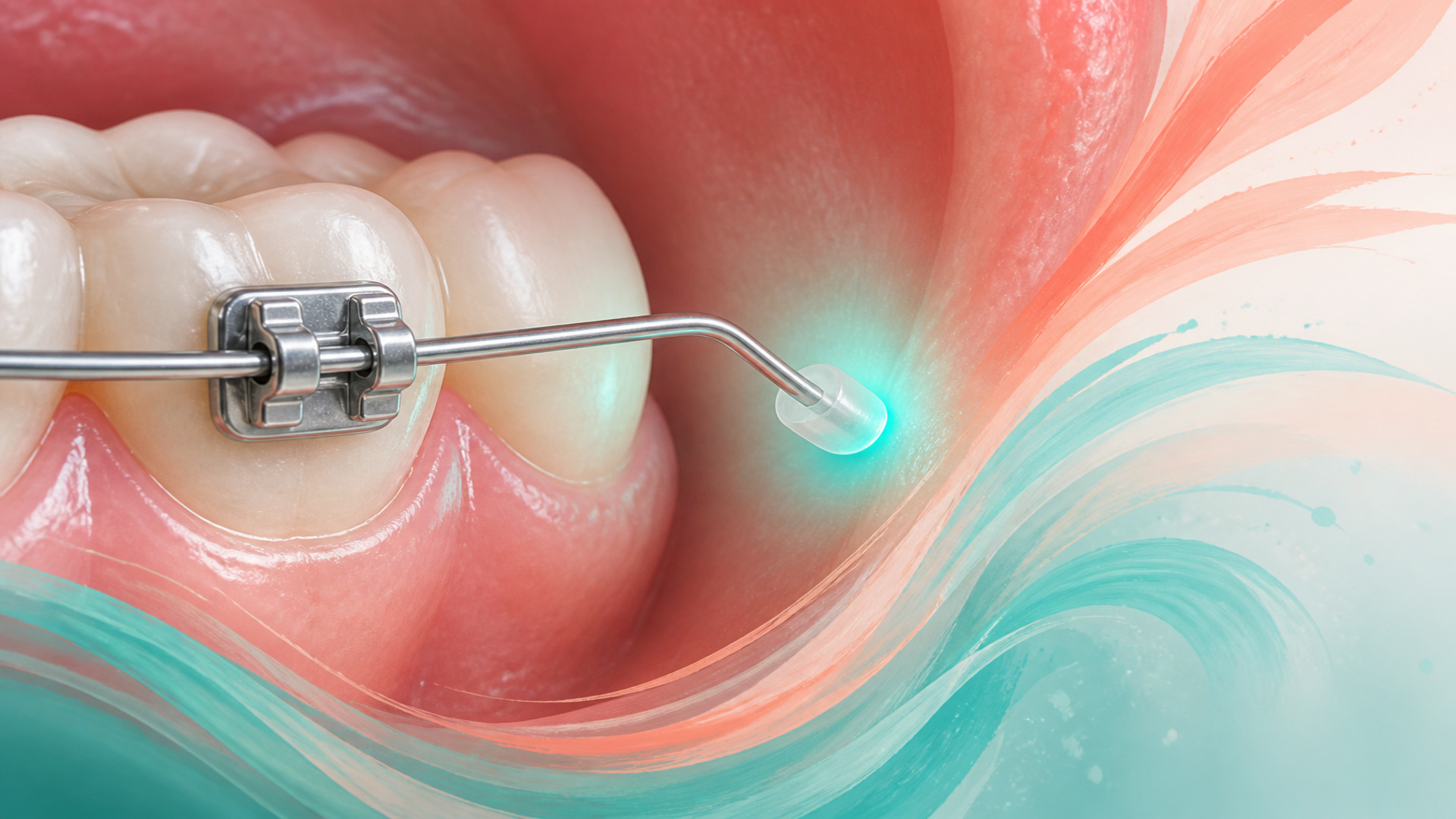
A sharp arch-wire end in your cheek is one of the most common calls between planned brace visits. Patients describe it as cutting with every word, ruining sleep, or leaving a sore that has lasted three days. The American Association of Orthodontists (AAO) tells patients to press the end toward the tooth, cover it with wax, eat soft food, and contact the clinic. Below are four practical ways to get through until your appointment without bathroom “surgery.” I treat brace patients in Dubai; I do not diagnose from photos alone. Site floors on this article’s date: consultation from AED 500, arch-wire replacement from AED 700, metal braces as system context from AED 3,500 for installation. Your final bill after exam may differ.
Why the wire starts poking your cheek and what to check in the mirror
The wire end cuts mucosa when it slips out of the last bracket slot or sticks out longer than needed after an activation. Teeth move, the arch shifts distally; a ligature on the back tooth loosens; hard food pushes the wire. Less often a debonded bracket changes the arch geometry. Before you reach for wax, look in bright light: which side the wire points, whether the arch still sits in neighboring slots, whether a white or red ulcer has already formed. Take a photo — it speeds booking a comfort slot. If pain comes with facial swelling, fever, or a tooth that shifted after a blow, wax is no longer the story; you need urgent care under your city’s rules.
The gap between “I can wait until Friday” and “I need a slot tomorrow” is often visible in the mirror. I ask Dubai patients to name three things: which tooth carries the last active bracket, whether the wire points on the cheek or tongue side, and whether wax stays put for more than two hours after eating. Answers save phone time and help reception block the right visit length. If you wear elastics, do not drop them “so the wire stops pushing” unless your doctor said so; traction sometimes holds the end in a safer position. If an elastic catches the sharp metal and snaps every hour, remove traction for 24 hours and message the clinic.
Three pictures below help you label what happened. They do not replace an exam, but they calm the first evening.
The arch slipped out of the last bracket
Classic in the chewing zone and on back teeth. The wire end moves freely and scrapes the cheek whenever you open your mouth. Wax grips worse here than on a flat bracket: a pea rolls off a thin strand. Try to seat the end first — see the next section. If two calm attempts fail, switch to wax and call the clinic. For some patients the end pops out on one side only — usually where chewing load is higher. After meals check the slot; food can push the wire out again.
The end is long but still in the slot
Common after a thinner wire change or a trim when the tail still “grows” with tooth movement. The wire is technically seated, but the bend points outward. Wax often carries you for days until a planned adjustment. If the ulcer grows, move the visit closer. On early thin wires the end feels soft, yet as teeth move the bend still finds the cheek. Do not confuse this with a debonded bracket: with debond you see a mobile pad on the tooth, not only free metal.
It scrapes the tongue or lip, not the cheek
Lower incisors on the tongue side and the upper lip follow the same mechanics. Press, cover, tell your doctor. Do not trim the end with nail clippers — a ragged edge cuts harder. Parents sometimes mistake wire scratch for wax allergy — rare, but it happens. If a new wax brand burns the skin around the site, message the clinic; that does not cancel checking the poking end.
First way: seat the wire end back in the bracket slot
AAO patient handouts recommend trying to slide the wire back into the last bracket slot with a clean tool or a gloved finger. That is the fastest way to stop trauma without a visit when geometry allows. I give this script to Dubai patients before activations on back teeth: many manage at home in a minute and arrive without an ulcer.
Work at a mirror in good light. Hands washed, nails short. No sharp jerks — repeated scraping tears inflamed mucosa. Two failed attempts — stop. Wax and booking next.
Self-ligating and ligature systems behave differently: on ligature braces a loose colored tie or twisted wire ligature on the back tooth often causes a “sudden” slip. On self-ligating brackets a long tail after activation is the usual culprit. Metal braces in my practice tolerate home seating like ceramic, but ceramic brackets are brittle — do not force if the pad feels mobile.
What to use to press the end
A cotton applicator, pencil eraser, clean toothpick with a soft tip, or a finger in a medical glove. Direction follows the arch toward the tooth so the end enters the slot or lies flat along the row. Some patients use a spoon back to press against the chewing surface of the neighbor tooth — only if that is easier and you are not crushing enamel. Photo “before” and “after” — from those frames I often see whether the arch deformed or a trim will suffice.
When it worked — next steps
End seated — thin wax on the bend, before/after photos to clinic chat, soft food for a day. Check at night: the tongue often pushes the wire out again. If it pops back, repeat without shame — this is normal wear on active treatment, not “you ruined everything.” At the next visit show the photos; they show how often the end escapes and whether I need a different bend or earlier trim at this stage.
When not to push harder
If the bracket debonded, the slot is damaged, or the arch bent after trauma, forcing seating can tear a ligature or shift the bracket. Stop, wax, chew on the other side, move the visit up. If the end points on the lip side of a canine and you cannot see the slot — do not dig with a toothpick for an hour; you will injure the gum.
Second way: orthodontic wax and backup materials
Wax is the main between-visit tool when the wire pokes your cheek. It does not fix mechanics; it stops sharp metal friction until you reach the chair. Dubai pharmacies and supermarket pharmacies usually stock wax; if none at night, short substitutes last hours, not a week.
In Dubai Hills, Marina, and Downtown patients often buy wax at mall pharmacies until late evening. On a weekend when the clinic is closed, still find wax before sleep. One unprotected night on a sharp bend turns mild irritation into a painful ulcer. Keep a main pack at home and a mini stick in your bag like a phone charger.
Technique beats volume. A thick blob on the whole arch “just in case” blocks chewing and falls off fast. Cover the injury point.
How to apply wax on a poking wire
Wash hands. Dry the break zone with a tissue: wax grips poorly on wet enamel and metal. Tear a pea, soften it, press so the sharp edge sits inside the ball. On thin wire make a “sausage” around the tail, anchoring to the neighbor bracket. Replace wax after meals and brushing. At night check whether the layer slid off. Before each new piece dry the metal with a tissue — even good wax grips half as well on wet wire.
If you have no wax handy
Clean cotton for a few minutes, sugar-free gum as a bridge to the pharmacy, ear-plug silicone for some patients. Remove gum and silicone before eating. No modeling clay, greasy cream, or glue — they are not sterile and interfere with later repair.
Common wax mistakes
Too thin on a sharp bend — slides off in an hour. Wax over plaque — falls off and irritates the gum. “Flooding” the whole bracket to save time — blocks the bite. If an ulcer already exists, still use wax: it cuts repeat friction while mucosa heals.
Third way: caring for a cheek ulcer until it heals
Chronic rubbing turns mild discomfort into a painful ulcer in two or three days. Even after you wax the wire, mucosa needs a calm routine. AAO advises warm salt rinses and soft food; pain relief only per drug instructions and your contraindications.
I often see patients wait “until the ulcer passes,” but with live sharp metal it does not heal — it only changes size. The third way pairs with wax: you remove trauma and let the cheek recover. Without that, the fourth way (routine and clinic contact) becomes endless “one more day.”
I do not prescribe antibiotics or steroids by chat. Facial swelling, pus taste, fever — in-person care, not home experiments.
Rinses and cleaning around the ulcer
Warm water with a pinch of salt two or three times daily soothes tissue. Rinse without aggressive “power washing” — you hit the sore again. Brush with a soft brush, careful around the sharp bracket, but do not skip hygiene: plaque speeds gum inflammation. Alcohol rinses on an open ulcer often burn without benefit. A white ulcer with a red rim is typical mechanical rubbing — it heals after trauma stops, but only if metal stops scraping daily.
Pain relief and irritants
If your doctor previously allowed your usual OTC comfort med for brace soreness, follow that scheme and label dosing. Do not heat the cheek externally “to speed healing” without guidance. Skip acidic, spicy, and very hot food the first day after active rubbing. Sugary gum and hard candy often shift the wire again.
When the ulcer means move the visit up
If wax will not stay, the ulcer grows, bleeds, or blocks eating and sleep, you need a comfort slot within 24 hours, not “at the next activation in three weeks.” Attach a photo in clinic messenger — reception faster understands this is not cosmetic.
Fourth way: food, sleep, and staying in touch with the clinic
The fourth way is not a material in the mouth — it is the calendar. You reduce load on the wire and keep your doctor informed while you wait. Many tolerate a week because they “do not want to bother,” then arrive with a long ulcer and a shifted arch. A short clinic message saves mucosa and treatment time.
Write when it started, which side pokes, what you tried (wax, seating attempt), whether you have photos. That lets the doctor decide if the planned slot is enough or you need emergency time.
Food that does not pull the wire out again
Soft, cut-up food — no biting whole apples, popcorn, nuts, croutons, toffee, or meat on the bone. Chew on the side opposite the problem if bite allows. Drink water: dry mouth in Dubai AC worsens rubbing. After meals check whether wax moved. Soup, yogurt, eggs, soft fish, and cut vegetables work for the waiting week. The goal is not starvation — it is not yanking the arch with hard texture.
Sleep and habits that push the wire out
At night tongue and lips move more than you notice by day. Refresh wax before bed. If the ulcer hurts against the pillow, sleep on your back a few nights. Do not chew pens, caps, or nails — a common reason for “sudden” slip in adult patients at the office. Set a phone reminder at 10 p.m. to check wax — dull, but it beats a 3 a.m. wake-up with a new sore.
How to book a comfort slot in Dubai
Call or message in clinic hours with photos. Say plainly: “wire poking cheek, wax not holding / holding but ulcer growing.” Reception separates orthodontic discomfort from dental emergency. If the clinic is closed on a weekend and you cannot eat, find a dentist experienced with braces for stabilization, then return to your orthodontist with a report.
Home kit and habits that save your cheek until the visit
Most “wire poking cheek” episodes end quietly when a minimum kit already lives at home. I issue it at metal brace placement and ligature starts; if you lost the kit, rebuild it in one pharmacy run. Cheaper than a week of pain and a rush comfort visit at peak hours.
The list is practical, not brand advertising. If your doctor gave personal instructions or mini cutters — they sit on top, not the drawer bottom.
What to keep at home and in your bag
Orthodontic wax — two packs: bathroom and travel pouch. Soft brush and interdental aids — plaque around a poking wire inflames the gum. Cotton applicators or sticks to seat the end. Mini mirror and a phone camera for clinic photos. A container if a bracket debonds, not only when wire pokes. Spare elastics in the size your doctor prescribed if you wear them.
What to check weekly at the mirror
One minute: all ligatures present, molar band stable, wire not catching the cheek at day’s end after wax. Catching “the end is close to mucosa” early often resolves with wax before activation — no ulcer.
Habits that push the wire out again
Whole apples and carrots, nuts, croutons, ice chewing, pens and caps in the mouth, stomach sleeping with face in the pillow for some people increase cheek contact with metal. Contact sport without a guard — separate trauma and arch bend risk. Nothing is “banned forever,” but while the end already sticks out these habits repeat injury faster.
When you can wait for a planned visit and when you need urgency
The same poking end may wait three days or need tomorrow. I use three levels: the four home ways are enough; comfort within 24–48 hours; ER or urgent dental care for trauma, infection, or systemic symptoms. AAO separates orthodontic discomfort from life threats. Confusion either sends people to ER for wax that slid off or makes them tolerate a cutting wire through a holiday.
If you used all four ways and symptoms do not improve on day two, the home ceiling is reached. A visit next is normal, not weakness. I do not triage urgency from chat without photos, but an open-mouth photo with side noted (left/right cheek, upper/lower) speeds reception’s reply.
The table below is for phone notes beside the photo. It does not replace exam.
| Situation | Four home ways | Where to go | Timing | Bring | Do not |
|---|---|---|---|---|---|
| End seated, wax holds, ulcer stable | Seat/wax, rinses, soft food, clinic message | Planned orthodontist | Until next activation | Wax, photos | Nail-clipper trim |
| Arch out, wax holds, can eat | Seat or wax, routine, contact | Comfort or planned | 1–3 days | Applicator, wax | Pliers on wire |
| Wax fails, ulcer grows, cannot eat | Max stabilization | Urgent dental / ortho | Hours–24 h | Photos, med list | Wait “until Monday” |
| Back bracket debonded, arch loose | Wax, soft food, photo | Comfort slot | 24–48 h | Container for parts | Superglue |
| Molar band loose | No chew that side, contact | Urgent slot | 24–48 h | Bite photo | Ignore a week |
| Facial blow, bleeding, tooth shifted | External cold per ER guidance | ER / urgent | Now | Passport, insurance | Wait for ortho |
| Facial swelling, fever, pus taste | No self-medication | ER or urgent dental | Now | Allergies, meds | Random antibiotics |
| Tooth ache only, cold sensitivity | Soft food, contact | Dentist if worsening | By symptoms | Treatment history | Heat without exam |
| Mild rub 24 h after activation | Wax, rinses | Planned if needed | 1–2 days | Clinic wax | Panic |
Planned visit in a few days — often fine
If wire stays stable under wax, the ulcer does not spread, you eat and sleep, the next activation window often suffices. Message ahead — I block time for trim or arch-wire replacement. In chat note how many days you waxed; if more than five with worsening, a slot two weeks out usually no longer fits.
Comfort slot — when waiting hurts
Wire out every night, wax falling off after every meal, ulcer larger than a small coin — not “I’ll wait until Friday.” Chair trim and bend take minutes and cost less than a week of mucosa recovery and drift risk.
ER — only for systemic red flags
A popped ligature and cutting wire without facial swelling — not ER. Bleeding after trauma, breathing trouble, rapid swelling — yes. Follow your local ER staff; I do not replace their protocol with Dubai habits.
What your orthodontist will do: trim, wire change, and prices
On a comfort visit I first address trauma: mucosa exam, numbing gel if the ulcer blocks opening. Then the arch: diameter, material, where the end exited. Distal trim takes minutes. If the wire finished its stage or bent, we replace the arch-wire — from AED 700 on the site when billed separately from a package activation.
Sometimes a poking end signals something else: debonded back bracket, loose band, elastics changed too early. Trimming only — repeat in two days. Every bracket on the arch gets checked even if you came “just to trim a millimeter.”
The job is simple: stop trauma and restore controlled mechanics. I look at why the end sticks: wire length, back bracket position, ligature state, treatment stage. Sometimes a millimeter trim and bend suffice. Sometimes arch-wire replacement in another size or alloy. Sometimes rebond of a back metal bracket lets the arch seat again.
Figures below are my practice floors (from … on the service pages), guide on publication date, not a fixed receipt. Orthodontist consultation — from AED 500. Planned arch-wire replacement — from AED 700 when billed separately. Spot comfort trim prices by chair work; packages may include activations — read your contract.
Bring home photos, describe which of the four ways you tried. New patient after a gap or doctor change starts with consultation and imaging when indicated — only then is force and wire shape safe to change. I do not promise “trim by WhatsApp”: length and bend depend on your stage; a millimeter error puts the end back in the cheek in two days.
After trim or change I explain when to expect mild rub again and how much wax to keep in the kit. If the same tooth pokes every activation, we look deeper: bracket position, arch form, different bend, or wire sequence change.
If mechanics drifted while you waxed and rinsed, teeth may have shifted slightly. At exam I match plan, bite, each bracket. Sometimes trim alone. Sometimes new wire and reactivation. That is why you should not delay comfort when wax stops working.
Frequently asked questions
Questions I hear when the wire pokes between visits. Answers stay short; personal decisions need an exam. If your symptom is not listed, still send photos and note which of the four ways above you tried.
Why is the wire poking my cheek now when yesterday was fine?
Teeth move after activation, the arch shifts; a ligature loosened; hard food or tongue pressure moved the wire. Sometimes the end was long at the visit but did not scrape until mucosa swelled. Exam shows trim or replacement. Note when symptoms started — links pain to food, activation, or sleep.
Can I trim the poking wire at home?
Without written instruction and proper tools from your orthodontist, I advise against it. A cut end often gets sharper; length may be too short for the next activation. Safer: wax and visit. If your doctor gave mini cutters and a scheme — follow only that. Unchecked trim can leave wire too short for the next leveling stage and force early replacement.
How many days can I run on wax without coming in?
Depends on symptoms. Wax holds, ulcer stable, you eat and sleep — sometimes until the next planned slot. Worse daily — comfort within 24 hours. No universal “five days is fine.”
What covers the wire if I have no wax at night?
Sugar-free gum or clean cotton until morning; buy wax in the morning. Try to press the end with an applicator. No glue or clay. Night gum is only if you cannot sleep otherwise.
Is cheek poking normal after a wire change?
Mild rub for 24–48 hours after activation is common; wax and rinses usually help. Rising pain, obvious free end, or repeat slip from the slot — message the clinic; that is not “wait until you adapt.”
What does fixing a poking wire cost in Dubai?
Site floors: consultation from AED 500, arch-wire replacement from AED 700 when billed separately. Comfort trim may sit inside package activation. Exam and written estimate set the total.
Do I need ER if the wire badly cuts my cheek?
ER for bleeding, facial trauma, displaced tooth, facial swelling, fever, breathing trouble. Cutting wire without those — orthodontist or urgent dentist, not the emergency room.
What should I bring if I waxed for several days before the visit?
Photos at start and now, list of what you tried, brace system name, date of last activation. Debonded bracket in a container. Note whether wax held at night — that tells us whether we start with trim or wire change.