Elastics on braces add a force vector the arch wire alone cannot deliver. I prescribe them when we need to shift jaw relationship, close the bite, pull a canine into the arch, or hold a tooth after a spring. Wearing them when you remember, or taking weekends off, is a common way to add months to treatment. I treat metal braces and other systems in Dubai; at the visit I hand you a chart: which hook to which hook, day or night wear, how often to change. Below is why elastics matter, how to put them on, what the first days feel like, what breaks when you skip, and when to message. Your chart is the only prescription that counts; I do not switch a Class II scheme to Class III from a messenger photo. Plan and indications are fixed at consultation and in clinic records.
Why your orthodontist prescribes elastics with braces
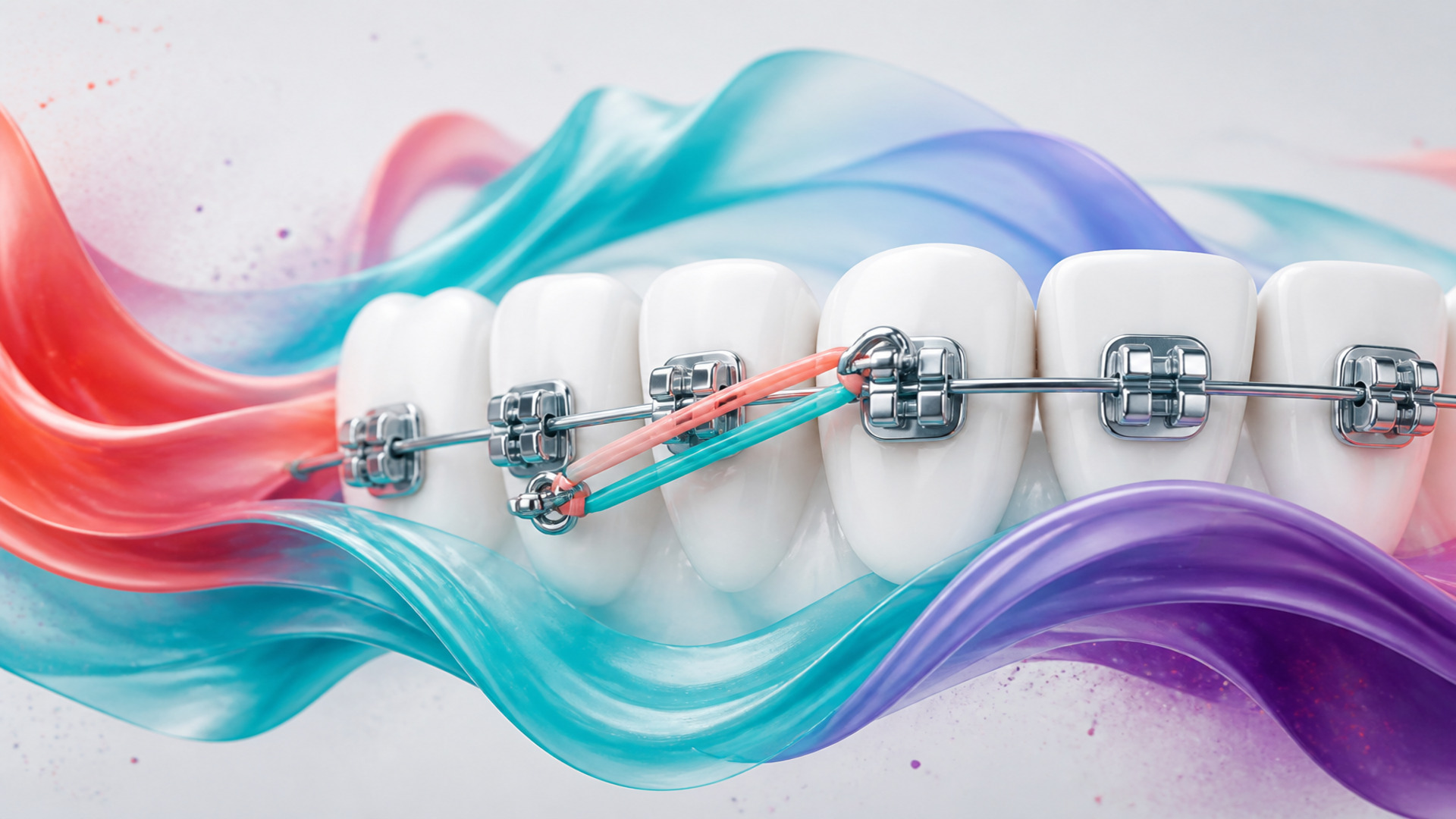
The arch wire in the slot moves teeth along the curve and controls rotation. It cannot always tip the lower jaw back or forward, close an anterior open bite, or keep a molar still while front teeth come together. An elastic between hooks adds that vector. Force depends on rubber thickness and how far you stretch it when you seat it. Patients sometimes assume elastics speed treatment. Biology sets the pace: the periodontal ligament and bone remodel on their own timeline. Elastics steer direction and interarch relationships. without prescribed elastics the bite may stay open by millimeters, Class II may not settle, a canine may not enter the arch, even when the row looks straight. The American Association of Orthodontists (AAO) patient materials state plainly: elastics are part of the plan, worn per doctor instruction, changed on schedule.
Interarch elastics and bite classification
Class II: often from an upper hook to a lower hook so the lower jaw and teeth receive a backward or upward vector per plan. Class III: reverse scheme or diagonal. Class labels are orthodontic categories, not comments on appearance. I draw an arrow on paper: upper six to lower six, or canine to molar. Swapping upper and lower is a frequent reason a month passes with zero effect.
In Dubai I explain the chart across languages in one family: the paper stays in the teenager’s backpack, the parent checks at night that bands went on. Adults living alone set a phone reminder to change elastics after lunch. Without a system, a three p.m. change becomes one band from morning until bedtime.
Elastic angle sets direction: upper hook distally, lower hook mesially is a typical Class II line. Stretch it vertically at random and force goes the wrong way. I ask for a smile photo with elastics on day one, not for social media, for comparison if something looks off.
Elastics do not replace the wire and do not replace planned arch wire replacement. They work together. Removing elastics because the wire changed and everything hurts, without calling, often hits the period when the vector matters most. Message me: I may say remove for two days or wear a lighter size, but silence stalls the stage.
Combined with headgear or a facemask, if those are in your plan, bracket elastics are a separate line item. This article covers rubber bands on bracket hooks. If you have extra appliances, schemes stack; do not drop elastics because the mask is nights only unless I say so.
Single-jaw and single-tooth elastics
Sometimes an elastic runs from a canine hook to a molar hook on the same jaw to pull the canine into the arch. Or a chain plus an elastic closes a space. Removing bands for lunch here can move the tooth back within a day. I ask for continuous wear per chart unless the handout allows meal breaks.
A lone canine outside the arch looks prominent; a single-jaw elastic draws it into line. Patients want a thick wire first. Without the elastic the canine may never seat even when other teeth look even. A one-tooth chart looks simple; discipline is tighter because there is no opposite side to balance by eye.
A gap between incisors after leveling sometimes closes with a chain on the wire; an elastic from an incisor hook to a molar hook adds steady vector once the chain is placed. Remove the band for a party and the space may open a millimeter over the weekend. Monday photo: gap is back. That is wear schedule, not “elastics do not work.”
Patients with implants and crowns on molars: the hook sits on the bracket on the tooth, not on a crown without a bracket if that tooth is in the system. A tooth with no bracket does not take an elastic; the plan differs. At consultation before braces I spell out whether every molar is in the appliance.
Holding elastics late in treatment
Late stage elastics hold a molar while front teeth settle, or lock a micro-position before the retainer. Skipping on weekends here rolls back two weeks of spring work. Patients ask why bands remain with three months left. Without them we debond with an open bite level the elastic was closing.
A coil spring on the wire pushed a molar; an elastic holds it while anterior teeth converge. Drop the elastic because the molar looks set and the molar drifts in days. On late visits I often say: elastics until debond, no weekends off. That sounds strict; debond without hold surprises you on the retainer a month later.
Elastics rarely appear on day one for everyone. We often level the arch with wires first, then add elastics when hooks are stable and the vector is clear. A child with developing bite and an adult with relapse after a retainer get different charts. I do not copy the neighbor’s Class II pattern.
Types of elastics and wear schedules
Elastics differ by diameter and thickness. A thick band delivers more force at the same stretch. Color often codes size in the clinic, not fashion, so you do not grab the wrong bag. I give labeled bags and a paper chart. Change schedule: one elastic per stretch usually lasts several hours or up to a day per instruction; when it slackens, replace it. Day versus night: night-only schemes start for children and for adults with strong daytime soreness. Full wear around twenty-two hours daily is a common target for interarch elastics once you adapt. Dubai heat and air conditioning do not melt orthodontic elastics in the mouth under normal wear. They lose force from time and saliva, so change on schedule. Keep the bag in your purse or pocket, not on the car dashboard in sun.
Size, color, and bag labeling
Do not buy “blue bands from the pharmacy” without agreement. Drugstore rubber is not orthodontic rubber. Thickness and diameter set force. If the bag runs out, request from the clinic or an agreed channel; do not substitute random sizes.
Clinic bags are marked by force level and diameter. If two colors look similar under bathroom light, compare against the label on the original pack before you stretch the wrong one onto a molar hook. A step up in thickness without my order overloads the bracket and the ligament.
When you transfer care from another country, bring the last bags or photos of labels. I match force to your stage; guessing from memory at the airport shop fails often.
Latex and non-latex bags: report latex allergy before I hand out a pack. Reaction signs: itchy gums, lip swelling at the elastic zone, rash around the mouth. Remove, message, we switch to non-latex. Do not endure a month.
For schoolchildren in Dubai I suggest a case on a lanyard, not loose in a pencil case with graphite dust. Adults keep a spare bag in the key pocket of a tote. A lost pack in a rush is not a reason to skip a day; pharmacy bands are the wrong gauge.
Changing elastics through the day
A slack elastic does no work. After meals, after brushing, if one snaps, use a fresh band. Keep several in a pocket. Teenagers snap them in gym class; normal if you replace immediately.
A phone alert at three p.m. beats memory. Two alerts, morning and evening, if your chart says three or four changes daily. Weekends follow the same rules; “no bands on weekends” does not exist for most interarch schemes.
If a band lands on the pillow, do not reuse it. Saliva and dust cut force and hygiene. A slack band from yesterday carries bacteria you do not want back on the hooks after a proper brush.
Some charts allow one band through a short nap if you reseat before sleep; most interarch plans want a fresh band morning and night regardless. When in doubt, open a new one from the bag.
Day wear, night wear, and meals
If the handout says remove for meals, remove, eat, brush, seat a new band. If it says soft food with bands on, do not chew steak with fresh interarch elastics week one. Mixing modes is a common “they do not work” story.
Night-only ramp exists so sore jaws sleep before full daytime wear. Jumping to twenty-two hours because you read a forum thread adds pain without adding biology. Follow the ramp on your paper.
Hot coffee and tea soften elastics faster; after a long latte, change the band if it feels mushy. Water and room-temperature drinks are easier on the schedule during office hours. Meals: some charts allow remove-eat-replace; some ask for soft food with bands on. Ask which applies to you.
The table lists typical schemes. It is not a prescription, only a question map for visits. Your chart may differ. At consultation before elastics start I explain why you need bands, not “everyone wears them.”
| Scheme (example) | When prescribed | Typical wear | What often breaks if ignored | What to tell the doctor after a slip |
|---|---|---|---|---|
| Class II interarch | Protruding upper jaw per plan | 20–22 h/day, change 2–4× daily | Bite does not settle, treatment +months | Days missed, can you return to full wear |
| Class III interarch | Lower forward per plan | Same hours, own diagonal | Same | Bite photo and chart from handout |
| Single-jaw elastic | Canine, space, rotation | Often continuous | Tooth relapses in days | Do not wait for planned month |
| Nights only (start) | Adaptation, child | Night 10–12 h | Slow effect, not zero | Honest: did you remove by day? |
| Late holding | Before debond | Full wear until removal day | Open bite returns | Debond date may shift |
How to put on and remove elastics without breaking hooks
The hook on a bracket is bent wire. Yanking an elastic at the wrong angle breaks the hook or debonds the bracket. I teach in the chair: open wide, loop the elastic onto the near hook with a finger or elastic placer, stretch to the second hook without a jerk. Mirror and good light the first days. For children under twelve a parent watches in the mirror together until the teen can hit both hooks alone. Removal: open the loop from one hook, do not pull the tooth. If a hook wiggles before elastics start, message; we fix it before the scheme. Seating a band on a loose hook sends the hook into lunch. First three to five days placement takes a minute; after a week, seconds.
Step-by-step for interarch elastics
Take a fresh elastic from the bag. Seat the first hook per chart, lower or upper as drawn. Stretch along the diagonal on the paper, not straight up and down unless the chart shows vertical. Check left and right match if the scheme is bilateral. Do not open wide like after anesthesia; the band snaps, usually not the hook.
If both sides use different diagonals, the paper shows two arrows. Do not mirror-image from memory; one reversed side fights the plan for weeks.
After seating, close gently and feel whether the pull is even. Uneven pull for three days warrants a photo message, not silent endurance.
Skipping because you feel shy in public costs a month of treatment. Nobody on the Dubai Metro inspects your mouth; embarrassment is expensive. Teens sometimes hide that they cannot reach a distal hook. Ask in the chair or by voice note; I reposition hooks or change placer technique.
Placer tool and mirror
A plastic elastic placer helps on posterior hooks. In clinic I give one or show what to buy locally. A bathroom selfie beats placing by touch and catching the wrong hook.
Carry the placer in the same case as spare bands so you are not hunting drawers at the office bathroom. Fold a paper copy of the hook diagram into the case lid.
Distal hooks near the molars need good light; phone flashlight angled in the mirror works when hotel lighting is dim on travel. Left-right symmetry matters on bilateral Class II charts. One side only looks like half compliance; the bite torques. I mark L and R on the handout photo.
Parents who still place bands at fourteen often find the child “forgets” when the parent travels. Independence training is part of the visit.
When a band snaps or a hook fails
Snapped band: new one. Broken hook: no wire improvisation; visit to re-tie the hook. Lost bag on a trip: message; sometimes a temporary scheme until arrival, sometimes courier of the correct size after hook photos.
Parents placing bands for a child until age twelve, then the child forgets, is a pattern I see weekly. Transition to self-placement is its own milestone. I have the teenager seat bands in the chair under my eyes while the parent only watches. Shame about missing the hook blocks questions; voice notes about a confusing chart are welcome.
Swallowed a small piece after a snap: usually passes; seek urgent care if breathing is affected. Do not chew bands to test strength. If a hook for elastics was placed this visit, check the first days for cheek rub; wax on the hook temporarily, not on the band.
What happens when you skip or misuse elastics
Missing one day of interarch elastics does not zero the case, but it slows it. Teeth and jaw partially return toward the old pattern. Skipping every weekend each month behaves like fifty percent wear; the plan stretches. Removing bands because of soreness without a call risks losing the vector for a month. Wearing one side on Class II with two sides planned creates asymmetry; one quadrant moves, the other stalls. Patients sometimes “boost” the scheme with double elastics from a forum. Force above calculation debonds brackets, spikes pain, traumatizes gum. Do not double without my order. If elastics are prescribed, they are not optional decoration. I compare elastics to a nightly retainer: the schedule holds the result. Retainer off all morning and teeth drift; bands off all weekend and the bite drifts.
Weekends off and vacation without bands
Two weeks abroad without bands is a classic “why did the bite not settle” story. Fly with bags, chart on your phone, wear in the hotel. Remove for diving and contact sport per agreement; not for the whole holiday.
Ramadan fasting changes meal timing but not hook geometry unless we adjust the chart together. Message before you change day-night pattern for a month.
Staycations in the UAE count too: bands off at the beach all Saturday and Sunday each week adds up like a flight without packs. Wedding or photo shoot: removing bands for an hour for frames may be fine per agreement if full wear returns after. All-day off for makeup without calling is not fine. Discuss before the date.
If you cannot commit to the wear chart, discuss alternatives at consultation: different vector, sometimes surgery in combination. Silent skipping is not an alternative.
Wrong hook pattern
Swapped left and right, upper and lower: vector harmful or null. Send a bite photo, relearn in the chair. Do not run the wrong line for a month because pride.
Online diagrams for “Class II elastics” may show a generic triangle that does not match your hooks. Your clinic paper overrides search results.
If a friend’s chart looks similar, still use yours. Hook position on the tooth differs by bracket prescription and stage.
Doubling elastics and forum “upgrades”
Double elastic without order overloads the system. A bracket debonds before the bite closes. Force is set by rubber gauge, not band count.
Thicker gauge from a leftover bag “because the thin one felt weak” is the same error in another form. Message before you change size.
Power chains and springs plus doubled elastics sum force in ways photos hide until something breaks. One change at a time, per visit plan. Orthodontic force from a band is not linear. A dead elastic barely works. Half a day without bands is not half an effect; by evening teeth often sit near the starting point because elastic relapse is quick.
First days with elastics: pressure, speech, and eating
Starting elastics adds pull on teeth and sometimes on the jaw. Peak often days two to four: chew soft food, do not remove without calling unless the handout allows pain breaks. Speech may shift for a few hours with lips on a stretched band; usually faster adaptation than bonding week. Interarch bands sometimes feel like the jaw does not close the old way for several days while muscles learn a new resting path. Food: soft menu, no apple bites on incisors. If you remove for meals, do not leave the bag on a restaurant table; napkin on the side, not a dirty surface. Fresh band after eating beats a worn band with plaque. If you remove bands unconsciously in sleep, we discuss night-only ramp or hook adjustment at the next visit.
Pressure on teeth and the jaw joint
Diffuse pressure on several teeth is expected. Sharp pain on one tooth, or a clicking joint with pain only after elastics, tell me. I separate orthodontic response from joint findings at exam.
Ibuprofen or paracetamol per your physician’s guidance sometimes helps day one; I do not prescribe in an article. Wax on a poking hook is separate from elastic soreness.
If soreness spikes when you yawn wide, the band may be overstretched or on the wrong hook; photo before you remove both sides. Chewing muscles work differently with interarch pull; some feel jaw fatigue the first evenings. Soft food lowers load. Gum and nuts with fresh elastics double debond risk.
Speech and video calls
On a video call day one, speak slightly slower. Colleagues rarely notice; you notice more. Teenagers at school: short explanation like with new braces removes stigma.
Lip posture changes for a few hours; it is not a permanent lisp. Reading aloud at home speeds adaptation faster than silent worry.
If a band rubs the lip raw, message; hook position or size adjustment beats weeks of wax on rubber. Office workers in DIFC and Business Bay often seat bands in a restroom before a client block; plan the two minutes so back-to-back meetings do not eat the change window.
Eating and restaurants in Dubai
Lunch at Dubai Mall or delivery: remove if your chart says so, eat, brush and interdental clean, new elastic. Do not skip reseating because you are late. Keep the bag in a jacket pocket, not in a car parked far from the table.
Buffets and long dinners tempt “just this once” removal for two hours; that gap on single-tooth schemes shows by morning photos.
Iftar gatherings during Ramadan: brush after dates and before reseating if your chart allows meal removal. Sticky dates and weak bands are a bad pair.
Hot coffee and tea do not dissolve bands instantly, but hot drinks speed slackening; change after a hot drink if the band feels soft. Children on brass or woodwinds sometimes remove bands for rehearsal per agreement. Decide rehearsal versus full wear before elastics start, not the day of a concert.
Hygiene with elastics without breaking your wear schedule
Elastics do not cancel brushing. Plaque under a band and around hooks smells and inflames gum. Order per handout: remove bands for brushing if allowed, or brush with bands if the chart permits. Interdental brush under the wire, soft brush on every bracket, floss where access exists. Seat new elastics after brushing, not the old saliva-worn ones. Irrigator on low power after brushing is fine. A hard jet into a hook does not clean it; it may bend the hook. Rinse with water after a snack if full brushing waits until home. Floss with interarch elastics is awkward. Remove bands for a minute, floss, new bands. Travel-size brush and a spare bag in the same pouch prevent forgetting to reseat after a rushed lunch break at the office.
Odor and plaque when wear slips
One band for a third day because it did not snap breeds odor and plaque. Scheduled change is hygiene as much as force. Sticky sweets with bands on accelerate the effect.
Change bands before a social event if you removed them for a long meal; seated fresh bands beat discreet breath issues.
If gum bleeds at a hook, gentle brushing continues; message if bleeding grows after three days of good care. White plaque at a hook means tonight needs a real brush session, not another day of shortcut.
Teens: school brushing is rarely perfect; at least water and a fresh band after lunch. Skipping floss “because elastics” lets decay at the bracket edge break the plan faster than one evening without bands.
Wax on the hook, not on the elastic
Hook rubs the cheek: wax on metal, not on rubber. Wax on the band kills effective stretch. Persistent rub needs hook adjustment in clinic.
Do not file a hook at home; you weaken wire and change the vector.
After arch wire replacement hooks may sit differently for a few days; wax temporarily until the visit if something pokes, then we tune the hook.
Travel hygiene and spare bags
Travel-size brush and a spare bag in the same pouch prevent “I forgot to reseat after airport brushing.” Cabin dry air weakens elastics faster on long flights; drink water, change after landing.
Hotel bathroom mirrors are enough for reseating after dinner if you removed bands per chart. Leave the bag by the sink, not in a closed kit you will forget to open.
Pool days in Dubai: bands can stay on for swimming; brush after chlorine exposure so plaque does not cake at hooks overnight.
Elastics at work, school, and travel in the UAE
At a wire change visit I check whether elastics ran on schedule. A month of skipped wear changes the appointment: not always “next wire,” sometimes back to vector catch-up. Honesty saves chair time. Contact sport: remove for a match per agreement; a mouthguard does not always fit with interarch bands. Non-contact sport often allows bands. Swimming: bands stay on; brush after the pool. Flights: bags in carry-on, chart on the phone. Weekend trips to Abu Dhabi, Sharjah, or Ras Al Khaimah: packs travel with you. Distance does not pause the chart. Dubai clinic chat stays open for our patients when you send clear photos. School sports day and corporate team events follow the same rule: contact removal per chart, not automatic all-day off.
Office and client-facing meetings
Seating bands in the restroom before a meeting is normal. One minute at the mirror. Colleagues do not watch the process; they see bite change over months. Shyness in an office bathroom is common; mirror plus placer in a case fixes it.
Keep a spare bag in the desk drawer if you work late; evening slackening happens on long days.
If you present on stage, practice with bands seated that morning so speech surprises happen at home, not at the podium.
School and gym class
PE: remove for contact matches per agreement. School pool: bands can stay; brush after. Gym: bands snap on pull-ups; replace after training.
Music room rules match wind instruments: agreed removal window, then reseat before the next class.
Bullying about visible bands is rare in Dubai international schools; if it happens, school pastoral staff and a one-line medical note help more than skipping wear.
Flights and hotels
Cabin dry air weakens elastics faster. Drink water, change after a long leg. In the hotel leave the bag by the mirror, not buried in a closet.
Red-eye flights: set a change alarm before sleep and after landing so two time zones do not erase the schedule.
If luggage with spare bags is delayed, message from the airport; courier within the UAE is often same-day for active patients. On a long flight change the band after the meal service. Security sensors are not bothered by elastics in the mouth; do not chew bands to test.
When to message the clinic about elastics
Message when: hook broken or wobbly; bracket debonded while seating a band; you cannot follow the chart after three days of tries; sharp pain on one tooth; latex allergy signs if we use latex bands (non-latex exists); swallowing with choking or vomiting (non-dental emergency). Do not send only “elastics do not work” without data: days worn, weekend removals, snaps. I will ask; better in the first message. Clinic photos: smile with bands seated, hooks visible. Blurry shots without teeth do not help. A three-second video opening and closing sometimes shows asymmetry better than a still. If you started elastics and “nothing moves” after week one, mirror judgment misleads; interarch change is measured in millimeters, not daily mirror hunts.
Wire change visits and honest wear reports
If you skipped elastics for a month, the wire change may shift from “next gauge” to vector recovery. Tell me at check-in, not after I activate a new wire.
New hook this visit: check whether it rubs the cheek first days; wax on the hook temporarily, not on the band.
Disciplined retainer wearers usually adopt elastic routine faster. “Forgot retainer” patients deserve an honest talk before elastics: are you ready for twenty to twenty-two hours daily?
What to include in a message
Visit date if relevant, days worn versus missed, whether both sides were seated, tears or hook breaks, and one clear photo if possible. “They do not work” without wear data slows my reply.
Voice notes describing “I think upper goes to lower canine” help when text is confusing; I still need wear days counted honestly.
Urgent versus can-wait scenarios
Broken hook or debonded bracket while hooking: message today. Slack band at bedtime: replace yourself, no call needed. Sharp one-tooth pain with swelling: today. Lost bag abroad with three days left on trip: message for courier or temp scheme.
Planned braces treatment finishes when vectors complete, not when the row looks straight. Elastics are biomechanics, not decoration. Wear per chart, change on schedule, do not self-upgrade force. Skips lengthen treatment and sometimes block debond. Scheme questions belong at every visit and at consultation before elastics start.
Frequently asked questions about braces elastics
Why do I need elastics on my braces?
They add force the arch wire cannot: jaw relationship, bite closure, canine alignment, holding a tooth after a spring. Without them the plan often stalls even when teeth look lined up.
How often should I change my elastics?
Per your handout: often two to four times daily for interarch wear, or after meals if you remove them. One band for several days only if your chart explicitly says so.
Can I remove elastics to eat?
Only if your instruction allows it. Otherwise soft food with bands on, or remove, eat, brush, seat a new band. There is no universal “everyone removes to eat” rule.
What happens if I do not wear elastics for a week?
The vector fades; teeth and jaw partially relapse. Treatment stretches by weeks. Sometimes we repeat a spring or wire stage.
Do elastics hurt?
Pressure often peaks days two to four, then eases with continued wear per chart. Removing bands to avoid soreness without calling slows adaptation. Sharp pain warrants a message.
Can I wear double elastics?
Only if prescribed. Doubling on your own overloads brackets and ligaments.
What if the hook for my elastic feels loose?
Do not seat bands on a wobbly hook. Message for hook or bracket repair in clinic.
Do I need elastics until braces come off?
If they are in your plan, yes through debond day. Late elastics hold the bite. Removing them three days before removal risks an open bite on debond photos.