Braces move teeth with controlled force: the bracket holds a point on the crown, the archwire delivers pressure, and bone around the root remodels. The American Association of Orthodontists (AAO) frames tooth movement as a biological response to light, sustained load — the same biology as clear aligners, delivered through wire and fixed brackets instead of a plastic shell. I practise in Dubai as a specialist orthodontist, and on consultation I walk through the full chain: records, braces installation, the rhythm of wire changes, anchorage, elastics, and retention. Below is how braces work in plain language: what the appliance is made of, why the first days ache, which movements advance faster, why we change wires, and where metal, ceramic, or self-ligating systems change the “housing” rather than the laws of bone. Only an exam with records sets timelines for your case; I do not diagnose from messenger photos.
Bracket, wire, and how force begins
Patients often picture treatment as “tighten a few screws and the teeth slide.” There are no screws in that sense. Three working parts do the job: a bracket on each tooth, an archwire linking the arch, and a ligature, clip, or self-ligating door that holds the wire in the slot. Force comes from the wire’s elasticity: once seated, the wire wants to recover its shape and pulls the brackets with it. Wrong bracket height or angle moves the tooth the wrong way. That is why braces installation is geometry of force for months ahead, not a cosmetic sticker. A millimetre of height on an incisor changes the smile line. Brackets are fixed onto cleaned enamel; removal includes polishing leftover adhesive. A loose bracket zeroes force on that tooth while neighbours keep moving. Three layers below complete the picture.
The bracket as a handle on the tooth
A bracket is a small body with a slot. The slot receives the wire. The angle and height of placement set where the tooth travels once the wire begins to straighten. Manufacturers build ideal crown tip and root position into the prescription; the orthodontist places each bracket for your bite, not for a catalogue photo. Metal brackets take daily load well; ceramic and sapphire trade aesthetics for the same lever rules. On the metal braces page I outline system scenarios; here the principle matters more: the bracket is the force application point, not jewellery.
If a bracket comes loose, force on that tooth stops. Neighbours keep receiving load and the arch logic breaks. Urgent repair of a loose bracket is part of mechanics, not a lifestyle footnote.
The archwire as the elastic engine
The archwire is a thin alloy wire — nickel-titanium, stainless steel, or beta-titanium. Early wires are often soft “memory” wires that gently draw crowded teeth toward arch form. Later wires are stiffer sections that hold shape and allow fine detailing. Round versus rectangular cross-section and the size of the slot change how fully the wire fills the bracket and how well crown and root tip are controlled. I keep the wording plain: a thin round wire levels and teaches the arch its shape; a fuller rectangular wire transfers control of crown and root tip more effectively. I cinch or tuck wire ends so they do not scratch the cheek; if a sharp end appears on a trip, wax plus a message to the clinic beats DIY clippers from a travel kit.
Wires fatigue and lose spring. Long gaps without visits leave a wire that barely works. That is the point of planned adjustments and wire changes: renew force, change section, add bends, add or remove elastics. Patients sometimes ask to keep the same wire another month because “everything feels fine.” Sometimes I agree if the arch has not fully seated. More often the next wire is due: comfort is not the same as a finished phase.
How the wire stays in the slot
A classic ligature is thin wire or an elastic ring that seats the archwire in the slot. A self-ligating bracket holds the wire with a clip or door. The difference is friction and chairside speed when changing wires; bone biology stays the same. Marketing sometimes promises self-ligating systems finish twice as fast. Clinically, time savings depend on the case, hygiene, and visit discipline — not on a clip as a magic button. Force still travels through wire and bracket. The clip changes how the wire is held; it does not cancel bone remodeling.
Biology: how bone and the ligament answer force
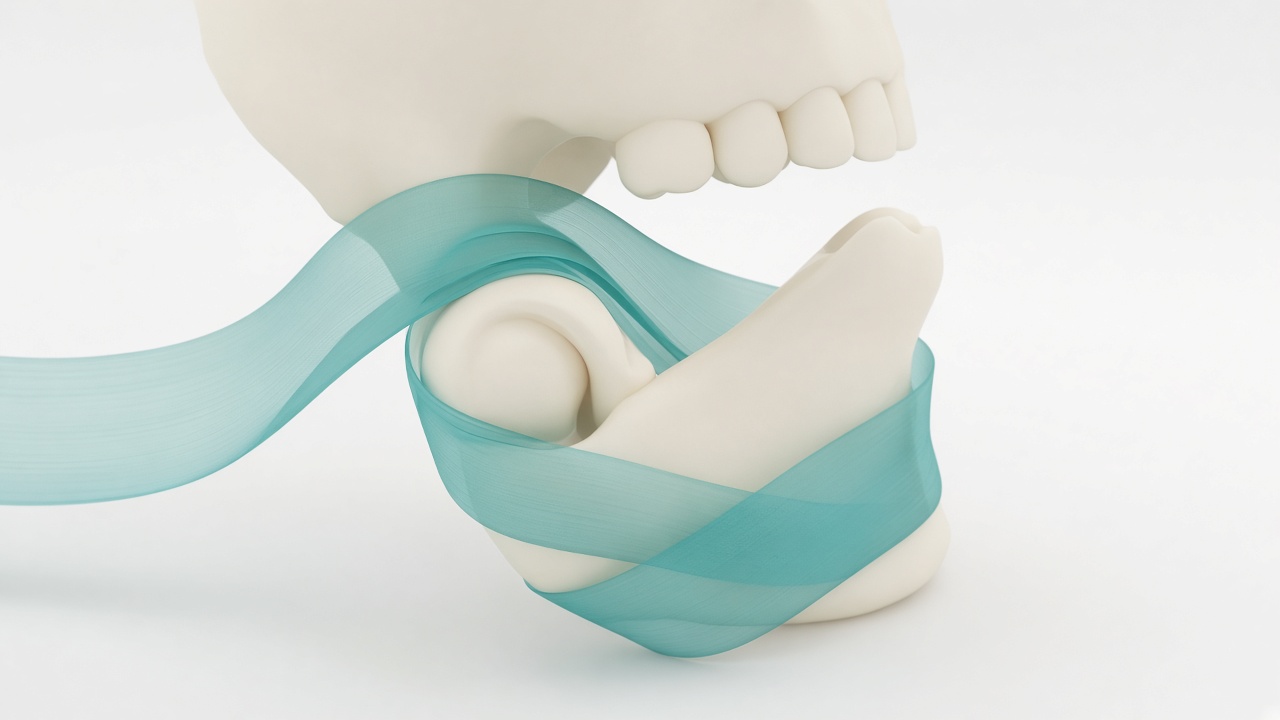
The appliance sets direction. Living tissue does the moving. Between root and bone sits the periodontal ligament — a thin cushion of fibres, vessels, and cells. When the wire presses the bracket, the crown shifts by fractions of a millimetre; the ligament compresses on one side and stretches on the other. Bone cells get the signal: free space here, build support there. Braces only change how load is delivered. On consultation I tie timeline expectations to gum health, bone age, and systemic factors — the same wire behaves differently on a quiet ligament and on inflamed tissue. Smoking, untreated periodontitis, and some conditions slow the bone response. Before heavier activations I check bleeding, mobility, and pockets. Active gum inflammation means hygiene and periodontal care first, then a stiffer wire. Three biological layers follow.
The periodontal ligament and the early ache
After installation or a wire change, many people feel a dull load for two to five days. That is the ligament and vessels answering new pressure. Sharp stabbing pain, facial swelling, or fever is a different signal: message the clinic. Mild mobility within orthodontic norms can appear on an active stage: the tooth is travelling in a remodeling socket. Hard food in those days amplifies discomfort; a softer diet helps because the ligament is already working, not because the teeth are “weak.”
Hygiene in those days is critical. Plaque around brackets plus pressure raises the risk of gum inflammation. Inflamed tissue tolerates orthodontic load poorly. Cleaning is not an add-on to the hardware; it is the condition that keeps mechanics safe.
Bone resorption and formation
On the pressure side, bone gradually yields (resorption). On the tension side, new support forms. The tooth moves with that remodeling. A sharp, brief force injures tissue and yields little stable shift. A light, sustained force draws a more predictable bone answer. “Tighten harder to finish faster” is a poor strategy: faster often means risk to roots and periodontium, not months saved.
On films I watch roots, the cortical plate, and signs of resorption. A rare but real cost of aggressive mechanics is root shortening. Controlled force and spacing between activations protect bone reserve. Patients hear “slower”; clinicians mean “safer to the finish.”
Pace, pauses, and “accelerator” promises
Adult bone answers more slowly than adolescent bone. That is a calendar multiplier, not a reason to refuse treatment. Months without visits leave the appliance in place without managed activation; teeth may stall or drift without a clear plan. Vibrating devices, lights, and supplements from ads rarely replace sound force and visit discipline. I discuss such tools only when data and a clear role exist in your plan; otherwise they are noise around the same biology.
In Dubai, logistics add to pace: flights, Ramadan, school holidays. Agreeing the adjustment calendar early beats repairing a broken rhythm mid-course.
How force travels from crown to root
The bracket sits on the crown. The tooth’s centre of resistance lies closer to the root, inside bone. Force above that centre favours tipping: the crown moves, the root lags. Bodily movement — crown and root travelling closer to parallel — needs a force couple and control through wire shape and bracket prescription. That is why talks about crown tip and root position run long: a smile photo shows crowns; the bite and the film decide the roots. I show this on a model before we start so a “straight selfie line” is not confused with a stable occlusion. Adults in Dubai often ask for “just the front six” and leave understanding that the molars hold anchorage and occlusion. Without that support the front can look neat on camera and feel unstable in chewing. Three practical consequences of that geometry follow.
Crown tipping and bodily shift
Tipping is when the crown travels and the root stays nearly put. Over a short distance it quickly “paints” the smile line. Over a long distance it breeds instability and relapse risk. Bodily shift takes time: wire sections change, bends appear, elastics and anchorage join the plan. Patients see a “stall” on the front while the chart is working on roots. I flag that phase early: visible progress and biomechanical progress run on different graphs.
Control of root tip toward the cheek or tongue is a separate job. In plain terms: the root should sit in bone so the crown does not flop under the lip or tip inward. A rectangular wire in a well-filled slot transfers that control better than a thin round wire.
Rotation, vertical moves, space closure
Rotating a tooth around its long axis happens when the bracket transmits a twist from the wire. Rounder teeth (premolars) rotate less readily than flat-faced incisors — grip geometry is weaker. Vertical moves — sinking a tooth into the socket or extruding it — need precise force and often elastics. Closing spaces after extractions relies on sliding along the wire and on anchorage that does not “give” the whole arch forward. I map each scenario on the plan rather than promising the wire will level every problem the same way.
Wrong bracket height as a wrong vector
A bracket placed too high or too low pulls the tooth vertically off plan. Shifted toward the front or back of the arch, it breeds unwanted rotation. Replacing a single bracket is a working tool, not a failure badge. Mid-course I sometimes change bracket height on purpose to correct the smile arc or gum contour. I explain before the visit: we are moving the force point so the vector matches the goal.
Treatment stages: from first wire to detailing
A braces course rarely runs on one wire from start to finish. Classic phase logic: leveling and aligning, space and jaw relationship work, occlusal detailing, removal and retention. Phase borders blur; every mouth has its own map. Understanding phases still lowers the anxiety of “six months in and the canines are not perfect.” At installation I give phase landmarks without a hard wedding date if biology and logistics are not yet measured. Records before the first wire include exam, photos, panoramic film, lateral film or CBCT when needed, and a look at gums and decay. Without that baseline, “same-day braces” risks moving teeth past a hidden problem. I separate the meet-and-plan visit from the day we fix the brackets when films or cleanup are still pending. Three patient-facing stages follow.
Leveling: the arch gathers onto the wire
Early wires are soft. Crowding opens, rotations ease, incisal edges level. Cheeks and lips adapt to the brackets. Speech may lisp for a week while the tongue learns new volume. This is the phase where “before / three months later” photos often please the most. The risk is treating early cosmetics as the finish and asking for removal. Under a pretty front, spaces, molar contacts, and unresolved anchorage can remain. I keep focus on the bite even when the mirror already looks good. If a canine or premolar bracket loosens here, we repair fast: otherwise leveling stalls against a gap in the wire.
Space, elastics, and anchorage work
Once the arch is more even, harder jobs join: close spaces, move molars, coordinate upper and lower with elastics, protect anchorage. Hooks and elastics, power chains, sometimes mini-screws appear. Patient work rises: elastics wear by the hour, not “when remembered.” Without that discipline, paper mechanics outrun the mouth. I issue a written scheme: which elastics, how many hours, when to change. In Ramadan and with late Dubai dinners we sometimes reshape wear hours around real meal patterns — an honest schedule beats a perfect one that breaks in week three.
Detailing and exit to retention
Finish is millimetres: contact points, individual crown tip, midline, gum-edge height. Wires are stiffer; visits may be closer. Patients tire here: “almost straight — why three more adjustments?” Almost straight on sight and stable in chewing are different states. Then removal, polish of leftover adhesive, retainers. Retention continues the same physics: ligament and bone “remember” the old position for months. Without retainers, rotations and reopened spaces return first. I discuss retention in the same talk where I explain how teeth move: otherwise the finish feels like a point where physics stops.
Adjustments and wire changes: why visits every few weeks matter
Between visits the wire works on its own, but not forever. Spring fades, ligatures wear, elastics lose pull, brackets loosen. At an adjustment I check hygiene, mobility, occlusion, and each bracket, then change or bend the wire, renew elastics, and plan the next step. Intervals are often four to eight weeks; detailing or breakages can mean sooner. Long silence with the clinic turns the appliance into jewellery with unpredictable force. In Dubai practice I ask early about travel and school holidays: shifting a visit by a week on purpose beats vanishing for three months. If you leave for long, we discuss elastic stock, what to do with a poking wire end, and when to seek temporary care abroad. Below is what changes by hand in the chair — and why “tighten harder” is not a better plan.
What I do with my hands on the visit
I remove old ligatures or open clips. I judge whether the current wire has gone passive (the arch has accepted its shape). I place the next wire in the sequence or keep the same one with a new bend. I refresh elastics and chains. When needed I replace one bracket. I take progress photos. I tell you what changed since last time and what to expect at home until the next visit. A visit without that explanation feels like ritual; a short mechanics brief lowers anxiety and raises elastic compliance.
Why we do not jump to the stiffest wire on day one
A thick stiff wire in a crowded arch spikes force and injures the ligament. A soft-to-stiff sequence is a safety standard. Exceptions exist, chosen by the doctor from status — not by a patient racing a holiday deadline. I decline “put the final wire on now”: it saves a calendar date in the mind and adds risk in bone.
The home half of mechanics
Elastics, cleaning around brackets, skipping ice and hard nuts, wax for rubs, a quick call on a loose bracket — that is your share of the force vector. The appliance does not read intentions. It reads hours of elastic wear and whether the bracket is still on the tooth. In Dubai, flights add to daily life: elastic and wax stock in hand luggage saves a travel week.
Anchorage, elastics, and mini-screws in plain words
When the wire pulls some teeth, others act as anchorage — the “anchor” the force pushes against. If the anchor is weak, the wrong segment moves: incisors flare forward while a molar was supposed to go back. Orthodontics has spent a century solving anchorage. Elastics link upper and lower. Mini-screws give bone-based anchorage almost independent of neighbouring teeth. Patients hear complexity; in practice it is how we avoid paying for one tooth’s move with another tooth’s collapse. In the chair I draw arrows: where force goes, where the anchor sits, what happens if elastics are worn half the prescribed hours. A classic error is thinking “a level upper wire is enough.” A level wire with weak anchorage and empty elastic hours yields a pretty arch and a bite that misses. Three anchorage tools without spare jargon follow.
Inter-arch elastics
Elastics from an upper hook to a lower hook change jaw relationships and help selected tooth moves. The force is small; the hours are critical: twenty hours of wear and eight hours are different plans. Removing for meals is normal. Forgetting to replace after lunch three times a day is a hole in the stage. I ask for a photo in elastics when the scheme is unclear: better to correct a hook pattern than pull the wrong way for a month.
Power chains and springs
An elastic chain draws teeth along the wire — closing spaces. Springs open or close segments. Both lose force over time; visits renew them. At home you do not “tighten” a chain. At home you keep hard food from tearing it.
Mini-screws as an independent anchor
A thin screw in bone gives a point from which to pull a tooth with little movement of neighbours. Placement is under local anaesthetic; care uses a brush and irrigator; removal follows when the job is done. Not every case needs them. When they are indicated, they save months and protect the incisor profile. I explain indications before placement — without selling a “premium screw package” to every patient.
Which movements braces prefer
Predictability is the practical question after “how does it work.” Fixed braces with a continuous wire hold arch form and root tip control well in places where a tray needs complex geometry. The table below is a talking guide for the exam chair, not an online diagnosis. Your case may mix easy and hard rows in one arch.
| Movement type | What happens to the tooth | How force travels | What we often add | Typical risk | What I check |
|---|---|---|---|---|---|
| Crown tipping | Crown moves, root lags | Wire pulls bracket above centre of resistance | Later, fuller wire for control | Pretty photo, weak root position | Crown tip relative to gum |
| Bodily shift | Crown and root nearer parallel | Force couple, rectangular wire filling the slot | Time, anchorage, precise bends | Apparent stall while roots work | Root position, contacts |
| Rotation | Tooth spins on long axis | Bracket transmits twist from wire | Bends, sometimes new bracket height | Incomplete turn on round premolars | Crown face on photos |
| Intrusion / extrusion | Tooth sinks or rises vertically | Vertical vector via bracket height and elastics | Elastics, wire bends | Local open bite, overload | Incisal edge height, occlusion |
| Space closure | Teeth meet along the wire | Sliding on wire + chain/spring | Posterior anchorage, tip control | Tip instead of bodily close, black triangles | Contacts, papillae, profile |
| Molar distalisation | Back tooth moves distally | High need for anchorage | Elastics, mini-screws | Front flaring if anchor yields | Incisor position, lip profile |
| Upper–lower coordination | Jaws in sagittal and cusp fit | Inter-arch elastics + wires | Elastic wear hours | Level wire, missed bite | Occlusal contacts in the chair |
| Root tip control | Root toward cheek or tongue in bone | Rectangular wire in a filled slot | Bracket prescription, bends | Catalogue “ideal” without clinic | Buccal–lingual tip, gum |
I show this logic before full-course payment. If hard rows dominate the plan, I set visit count and timeline more honestly than an ad that promises “straight in six months for everyone.”
Metal and other systems: one mechanics, different housing
Metal braces, ceramic, sapphire, lingual systems, and self-ligation share one job: deliver force from wire to tooth. Friction, aesthetics, tongue comfort, consumable cost, and cleaning ease change. Ligament and bone laws stay shared. Choosing a system is a talk about your priorities and the hardware I can manage confidently in your case. The braces hub lists types; this article stays on movement physics, not a comparison shop window.
Metal remains the workhorse for complex moves and for patients whose hygiene is still building: wings chip less, repairs are simpler, wires behave predictably. Ceramic and sapphire sit closer to enamel colour on camera; you pay with bracket bulk and chip risk on hard food. Lingual systems hide steel from the smile side and add tongue and speech adaptation in the first weeks. Self-ligation speeds wire changes in the chair and changes friction; course length still follows biology and discipline, not the clip. I do not rank systems as better or worse for everyone. I ask about photos, sport, flights, elastic readiness, and repair budget. Answers pick the housing. Root physics in bone stays common.
If you want installation with full diagnostics, the path starts with consultation and a placement plan — not with buying the “most invisible brackets” without a bite in the chair. On consultation you hear which moves in your case are straightforward, which need anchorage, roughly how many phases you face, and why the first “pretty” wire is a start, not a finish.
After removal, mechanics do not end. Retainers hold the result while bone and ligament settle. A fixed wire behind the incisors holds rotations; a removable retainer tray covers the arch at night. Many plans combine both. A lost retainer, a broken fixed wire, or a long gap without review are reasons to contact the clinic, not to wait for teeth to “figure it out.” On trips, a spare tray or a quick Dubai clinic message protects months of work. A braces course is engineering of a force point plus bone biology plus your rhythm of visits and elastics. The bracket holds. The wire pulls. Bone answers. Anchorage protects neighbours. Adjustments renew force. Retention locks the gain. If you want your case mapped this way, start with an exam and records in Dubai.
FAQ
Do braces move teeth every day?
Micro-shifts continue while force is active and tissues respond. You will not see a “new tooth every morning.” Progress is measured at visits and on photos weeks apart. Between adjustments the wire works, but spring gradually fades — that is why review rhythm matters.
Why does it hurt again after a wire change?
The new wire loads the ligament again. Dull ache for two to five days is a common pattern. Sharp pain, swelling, or fever means message the clinic. Pain relief agreed with your doctor and softer food help through the peak; “tough it out and skip cleaning” is a bad idea.
Can I finish faster by coming for adjustments more often?
More often is not the same as stronger and better. Jumping to stiffer wires before tissues are ready raises risk. Interval follows arch status and hygiene. Elastic discipline, intact brackets, and timely decay care speed more than a calendar of “every two weeks at any cost.”
Is the force different with metal versus ceramic?
The principle is the same: wire and bracket. Ceramic may be bulkier or rub the wire differently; metal usually resists wing chips better. Bone movement depends more on wire section, bracket position, and anchorage than on bracket material. Choice is mostly aesthetics, hygiene, and daily durability.
Why do I need elastics if the wire is already on?
The wire levels teeth within one jaw. Elastics link upper and lower and help sagittal and some vertical goals. Without wear hours, the paper plan does not reach the bite in the chair.
What if I skip an adjustment for two months?
Sometimes the wire still works. Often it is already passive, ligatures are worn, a loose bracket went unnoticed, and hygiene slipped. The longer the gap without review, the higher the chance of lost months. Message the clinic and reschedule; do not wait for the mouth to “catch up alone.”
Does everyone need mini-screws?
No. They go in when anchorage cannot honestly come from neighbouring teeth without harming profile or position. I name indications after records. Refusing a needed screw lengthens the path or changes the compromise on the front teeth.
Can a smile photo tell how much treatment remains?
A smile photo shows crowns. Bite, roots, and occlusion in the chair are poorly replaced by a selfie. I give a timeline after exam, films, and phase understanding. “Three months left” from a chat photo is an empty phrase.