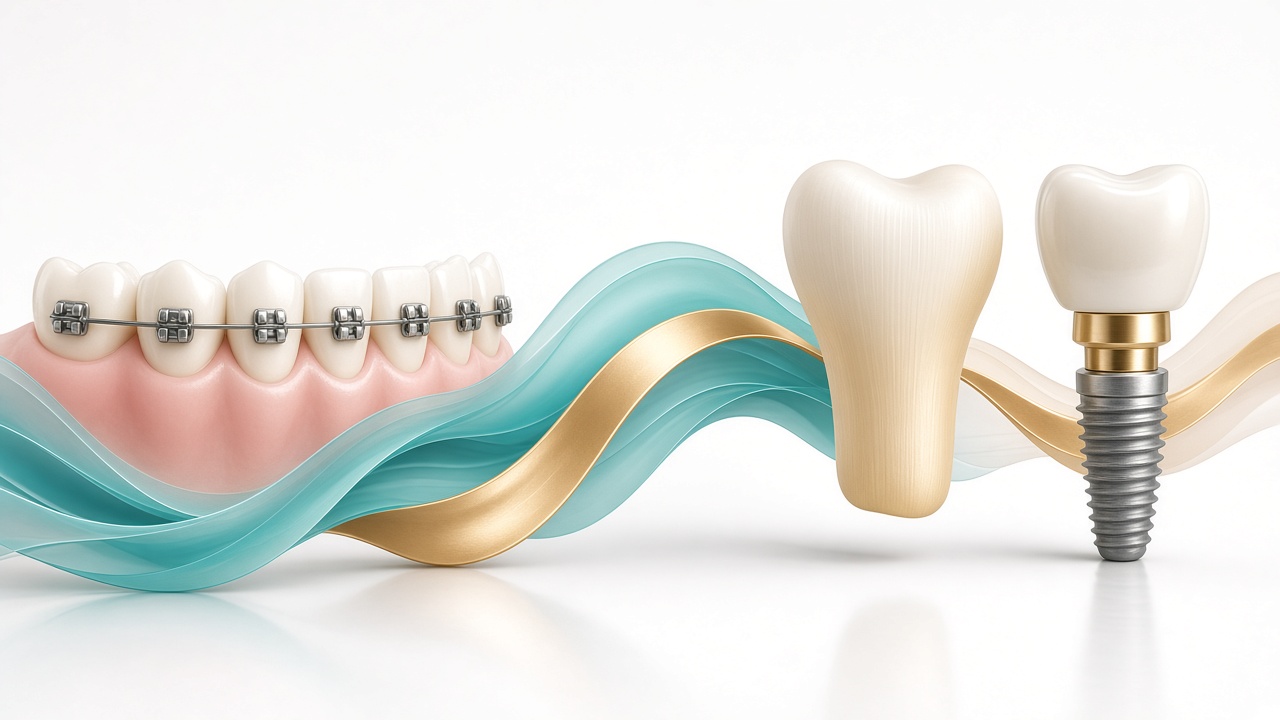
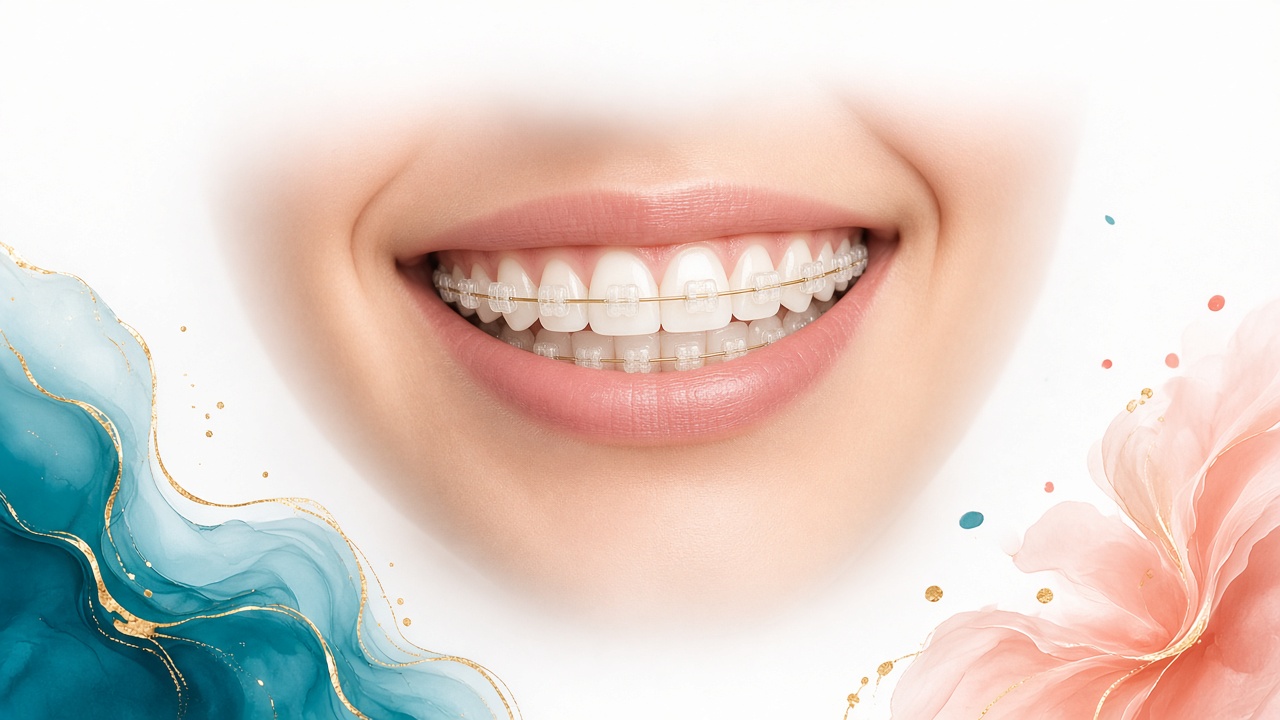
Braces installation day is a timed visit: check-in and consent, a final look at today’s mouth, enamel preparation, bracket placement tooth by tooth, the first archwire, diet and cleaning instructions, then a booking for the next wire change. The American Association of Orthodontists (AAO) separates the planning visit from the day the appliance starts: consultation answers “do you need braces and which kind,” installation answers “how the appliance sits in your mouth today.” I practise in Dubai as a specialist orthodontist. On the service pages, consultation is from AED 500; installation is from AED 3,500 (a start procedure, not the full course). Below is an hour-by-hour map of a typical visit for metal or aesthetic braces: how many minutes each block takes, where it hurts (almost never in the chair), what you feel that evening, and why photo records and X-ray / CT should exist before hour zero. Timings are a guide; tooth count and system type move the clock. I do not diagnose from messenger photos.
Two different visits: consultation and installation day
Patients often expect the “first orthodontist visit” to end with metal on the teeth. In sound practice those are two steps. On consultation I hear the complaint, examine the bite, gums, mobility, and restorations, gather or order records, and name options with a time corridor. AAO frames that appointment as findings, appliance choices, and a financial frame — without a duty to start the same hour. Installation day begins only after an agreed plan, decay cleanup when needed, and a contract you understand. If you ask to “put them on today” with missing films or bleeding gums, I postpone placement: moving teeth past a hidden problem costs more months than a second calendar slot.
Sometimes records and installation share one long day — when films already exist, the mouth is ready, the system is chosen, and you blocked three to four hours on purpose. More often we split: one visit for clarity, one for unhurried chair time. Dubai logistics add flights, Ramadan, and afternoon meetings. Tell me your free window early. Two-arch installation rarely fits “forty minutes between calls.” Metal, ceramic, sapphire, or self-ligating systems change visibility and how the wire is held; the day’s chronology stays similar: surface prep, bracket positions, first wire, instructions.
Pain myths need a clear line. Placement itself almost always runs without injections and without drilling for brackets. Discomfort arrives later: within a few hours teeth ache on biting, lips and cheeks learn to clear bracket wings. That is the ligament and soft tissue answering new hardware, not a sign the placement failed. If one tooth hurts sharply when touched in the chair, we stop and find the cause before finishing the arch.
Another myth: “faster placement means a better doctor.” Speed without a dry field and accurate bracket height saves minutes today and spends weeks later. I will spend an extra ten minutes on isolation and front-tooth symmetry. Predictable treatment over 12–24 months beats a one-hour highlight reel. If a clinic promises “braces in 30 minutes all-inclusive” without naming tooth count or system type, ask what those thirty minutes cover: front teeth only, one arch, or a full protocol with instructions.
What must be ready before hour zero
Before installation day I want a finished baseline: diagnosis, goals, chosen system, current records, and a mouth without active sites that block placement. Without that baseline the visit becomes guesswork. AAO ties option talks and treatment start to a full evaluation. In my practice that usually means a completed consultation, photo protocol, X-ray or CT when indicated, and a written plan you can follow. Soft floors on the site: consultation from AED 500, photo protocol from AED 500, X-ray/CT from AED 400, installation from AED 3,500. Some diagnostic lines may credit into a course package — we write that before you pay for placement day. Settle insurance questions early: installation day is for chair work. Three blocks below are the ones I rarely skip before hour zero.
Plan, system, and consent on paper
Before the chair you already know: both arches or one, metal or aesthetic brackets, whether extractions sit in the plan, whether separators were needed earlier, and what diet limits apply in the first days. I do not sell surprises while your mouth is open under suction. Consent covers demineralisation with poor hygiene, loose brackets, rub spots, possible timeline stretch, and retention after removal. You may ask about bracket class and whether installation sits inside a course package or bills alone. If numbers still float, estimate first, calendar second.
Photos and films as the zero point
Photo protocol locks face, smile, and intraoral views before hardware. Films show roots, impacted teeth, bone plates, and hidden decay. A panoramic film from a year ago helps comparison; for course start I rely on today’s picture. Without a zero point, progress talks turn into memory contests: you recall “how it felt,” I need files. If you bring DICOM from another country, we check quality and date; when unsure, we remake locally.
Cleanup, hygiene, and stop signals in the mouth
Active decay under a future bracket, bleeding gums, or sharp edges on old restorations are reasons to shift installation. Professional cleaning shortly before placement day helps: clean enamel takes adhesive better, and you already practised brushing. Bring a medicine list, allergies, and systemic diagnoses. Antiresorptive therapy, recent jaw trauma, pregnancy planning — short talks before force on teeth. Smoking and weak hygiene do not cancel installation by themselves, yet they change the forecast for white spots and inflammation — that belongs in consent too.
A practical checklist the day before: brush as usual in the morning; do not arrive hungry; skip heavy lipstick if photos happen the same day; warn early if you will be late — adhesive and the assistant’s slot do not wait forever. If you wake with a fever or a blocked nose, reschedule: two hours of mouth breathing with congestion is miserable, and saliva behaviour worsens isolation. I would rather move the calendar three days than force the system through illness.
Minutes 0–40: check-in, consent, final exam
The first forty minutes rarely look dramatic on social video, yet they protect the whole day. Reception confirms identity, insurance if any, and signatures. I briefly restate the day’s plan: how many arches, work order, where a pause is possible. Then a quick final exam: new decay, gum flare since last week, a chipped crown margin. If the mouth is calm, the assistant lays out brackets, wires, adhesive, retractors. If not, we change the script before opening the primer. This block runs 20–40 minutes depending on paperwork volume and whether you are new to the clinic. Rushing check-in almost always shows up as isolation failure an hour later. Clarity here beats repairing a loose bracket next week. Three entry layers patients often underrate follow.
Papers, timing, and length expectations
I name a corridor: typical installation for both arches in an adult is about 90–180 minutes of chair time plus check-in. One arch is shorter. Lingual technique and awkward crown anatomy stretch the clock. Teen visits may move faster on tooth count and slower on coaching a parent. Build travel buffer and avoid booking a steak lunch right after. Bring water, a phone charger, and a soft snack for later — not for the chair.
Final exam of today’s mouth
I check mucosa, bleeding, mobility, bite contacts, and enamel where brackets will sit. If a filling was placed yesterday next to an anchor tooth, I confirm surface readiness with the dentist. Sometimes we skip one tooth in the arch: place the rest, return after healing. Patients hear “incomplete installation.” Clinicians mean enamel and adhesive protection. One delayed bracket beats a loose bracket on a fresh filling margin a week later.
Fear of needles and “drilling”
Many adults in Dubai arrive with childhood dental memory. I say upfront: standard installation has no anaesthetic needle and no drill for bracket beds. You get polishing paste, a short controlled etch gel, curing light, adhesive taste, finger pressure seating each bracket. If anxiety runs high, we agree a hand signal for “pause” and more frequent rinses. A calm patient shortens the visit: fewer isolation breaks and retractor resets.
In these same minutes I name what will be in the mouth at the end: brackets, first wire, coloured or clear ties, sometimes bite turbos. Patients surprise at “buttons” on molars — those protect ceramic and enamel in a deep bite, they are not a mistake. Better to hear about them before the curing light than find them with your tongue in the lift.
Minutes 40–90: enamel prep and a dry field
Once papers close, clinical prep starts. Retractors hold lips and cheeks; suction and cotton rolls keep the field dry. Dryness is critical: moisture is the main enemy of adhesive. Teeth are cleaned of plaque with oil-free polish. Then etch gel, rinse, dry to a frosty look, primer and adhesive per material protocol. A careful team spends 30–50 minutes on both arches here, longer with heavy saliva or short clinical crowns. You mostly lie still and breathe through the nose. I keep music quieter than the assistant’s voice: I need short answers of “fine / pause.” How long brackets survive daily food starts in this hour. Rushing etch to save minutes is a poor trade. Three practical layers explain why “just attach them” takes so many minutes.
Isolation and the fight with saliva
If the field wets, brackets hold poorly. The assistant changes rolls, holds suction, asks you to swallow in pauses. I do not rush this stage for a pretty timer: redoing a loose bracket next week costs more than ten dry minutes today. Strong gag reflex means short segments and more breaks. Retractor pressure on lips is pressure, not tooth pain — say if an edge digs.
Cleaning and etching
Polish removes the plaque film. Etch creates enamel micro-texture for adhesive. Gel stays only as long as the material requires, then rinses thoroughly. Acid taste and brief bitterness are normal. I watch so gel does not pool on the gum: soft-tissue contact can blanch briefly — uncomfortable, usually temporary. After drying, enamel looks chalky — expected before primer, not “tooth damage.”
Primer, adhesive, and readiness for the bracket
Primer and adhesive prepare the surface for the bracket base. The curing light sets the layer. The field must still be dry. If saliva breaks through, we redo that segment. To you it looks like “they’re painting the same tooth again.” For adhesion it is the gap between a bracket that holds a year and one that flies off a baguette. I warn early so a redo does not read as assistant error.
Breathing evenly and fixing your eyes on one ceiling spot helps. A phone under retractors is awkward; listen to music in one ear before isolation or agree screen-free pauses. Kids sometimes watch a ceiling cartoon; adults in Dubai usually prefer a short narration of each step. If your neck is sensitive to curing light, say so: we shield skin and do not park the lamp on soft tissue without need.
Minutes 90–150: placing brackets tooth by tooth
The day’s core is each bracket’s position. Height, mesiodistal seat, and angle set where the tooth travels under the first and later wires. I place brackets to the system prescription and your plan: smile line, crown tip, rotations. On metal the base edge is easier to see; ceramic and sapphire need more care on contour and wing chip risk when clearing excess. Self-ligating brackets add a clip or door step. Lingual work has its own timing and often a lab transfer tray. A typical corridor for both labial arches is 45–70 minutes of pure placement plus corrections. This hour also decides whether the first wire seats calmly or fights into crowded slots. That geometry of force lasts months. Three layers make up the hour.
How I choose height and angle
Height gauges are a guide, not dogma. A short clinical crown, worn incisal edge, veneer, or crown with different optics all shift the seat. I check symmetry to neighbours and the midline. A millimetre error on an incisor later “treats” with months of wire bends or placing the bracket again. I do not chase speed for its own sake. You hear instrument clicks and short assistant cues; inside, force geometry for the whole course is being set.
Seating, excess composite, light
Composite goes on the bracket base, the bracket seats on the tooth, we position, clear flash around the wings, and cure. Excess at the gum becomes a plaque trap and inflammation risk. I check the margin with a probe and brush before the wire closes the arch. If a bracket sits wrong, I remove it at once and place again while adhesive is fresh. Correcting today costs less than explaining next month why a canine travelled the wrong way.
Pauses, segments, and one arch at a time
Often we finish one arch, let you swallow and rest the lips, then the second. Neck fatigue means we adjust the headrest. Anxious adults and children get the arch in segments: front first, then the chewing group. That adds 15–20 minutes and cuts isolation breaks. If you named a hard time limit, we choose honestly: one arch today, the second on another slot — better than both in a rush.
Aesthetic judgement “leaving the clinic” needs patience. Fresh brackets with composite flash look different from the arch after margin polish and wire seat. I show the mirror at the end of the block, not mid-retractor when cheeks distort the view. A lift selfie five minutes later almost always looks worse than the chair photo: camera angle lies, and lips have not found their usual close. Give soft tissue the evening — “how it looks” is fairer in the morning.
Minutes 150–180: first wire, check, instructions
Once brackets stand, the first archwire seats — usually a soft nickel-titanium memory wire of small section. It begins gently drawing crowded teeth toward arch form. Ties or self-ligating clips hold the wire. Ends are tucked or cinched so they do not scratch the cheek. I check the bite: whether a bracket hits an opposing tooth hard enough to chip ceramic at once; bite turbos go in when needed. Then mirror, “after” photos, and a point list: food, cleaning, wax, when to message the clinic, when the next visit sits. This closing block runs 20–40 minutes. It separates “brackets are on” from “you know how to live until the first adjustment.”
Instructions stay short and concrete. Soft food for two to five days. No ice, nuts, hard crusts, caramel. Slice apples. Brush after meals: toothbrush, interdental brushes, irrigator as you adapt. Wax on a wing that rubs. Sharp pain, facial swelling, fever, trauma — message the clinic the same day. Dull load on biting is expected. The first wire change usually follows in a few weeks once the arch accepts early form; the exact interval goes in the chart. On the site, planned wire change when billed alone is from AED 700; in a course package visits often sit inside the contract — read your estimate.
Money should not be a surprise if the estimate came before the visit. Reminder: installation from AED 3,500 is the start-procedure floor on the service pages, not the price of treatment through removal. Full system packages for metal and other options sit higher and discuss separately. If you pay installation only and then visit fees, lock activation prices in writing before you leave.
Hour-by-hour timeline: how long installation takes
Figures below are a working guide for adult labial installation on both arches in a calm clinic. Your timing shifts with tooth count, bracket type, saliva, anxiety, bite turbos, and whether records share the day. One arch usually runs 30–40% shorter. Lingual work and a full restart after removing another system count separately.
| Visit stage | Time guide | What happens | What you feel | Common delay |
|---|---|---|---|---|
| Check-in and papers | 10–20 min | Chart, consent, insurance | Waiting, questions | Incomplete paperwork |
| Final exam | 10–20 min | Gums, enamel, today’s bite | Probe, mirror | Sudden decay / inflammation |
| Isolation and clean | 15–25 min | Retractors, polish | Lip pressure, vibration | Gag reflex, saliva |
| Etch and adhesive | 15–25 min | Gel, rinse, primer | Sour taste, curing light | Wet field |
| Bracket placement | 45–70 min | Position, excess, cure | Finger pressure, light | Height tweaks, aesthetics |
| First wire and ties | 10–20 min | Wire in slots, ends | Mild pressure on teeth | Crowding blocks wire entry |
| Instructions and booking | 15–25 min | Food, hygiene, wax, next slot | Information load | Package / insurance questions |
| Total chair time | ≈ 90–180 min | Full installation cycle | Jaw fatigue by the end | Sum of small pauses |
If the same day adds photo protocol and films, add another 40–90 minutes before installation chair time. I prefer records closed earlier: a tired patient holds the mouth open poorly for two straight hours. In Ramadan and peak Dubai heat I sometimes split the plan across two visits — respect for soft-tissue and attention reserves, not delay for its own sake.
The first 48 hours at home after installation
The evening of placement day is often calmer than people fear. Discomfort rises over two to six hours, peaks in the first two days, and eases by day four or five for most. The ligament answers new force; lips learn to clear metal. Soft diet, usual over-the-counter pain relief if you may take it, wax on rubbing wings — the basic kit. Hard food in these days raises aching load and the risk of a fresh bracket coming off. Speech shifts for one to three days, then articulation recalibrates. Below is the household contour without drama and without a promise that you will feel nothing.
Food: soups, eggs, yoghurt, soft rice, stewed vegetables, fish, banana. Hot tea is fine; boiling water straight onto a bracket is unnecessary. Soft drinks and constant sweet snacks raise white-spot risk around brackets — hygiene matters more than a lifelong ban list. Sport: contact sports with a mouthguard by agreement; early days are a poor time to test the jaw with a hard hit. Work: many return to the office next day; allow slightly slower speech on the morning call.
Message the clinic if: a bracket loosens and slides on the wire; a wire end pokes and cuts; pain rises after day five instead of falling; facial swelling or fever appears; you take a blow to the jaw. Do not bend wire yourself with travel clippers — easy to break a neighbour bracket. Wax and careful soft biting are your maximum until an exam.
The next visit is not “just a look.” On activation I assess hygiene, gums, which teeth answered the first wire, and whether we keep the section or change wire. Dubai schedules often run every 4–8 weeks early on; detailing phases can tighten. If you fly long-haul right after installation, say so before placement day: sometimes shifting start beats leaving fresh hardware without review for months.
Hygiene in the first two days sets the tone for the course. Plaque at the wings plus wire pressure quickly brings bleeding. Buy interdental brushes before the visit, not “sometime later.” Add an irrigator once you can clean with a brush: water jet does not replace mechanical plaque removal around the bracket base. If gums bleed at every touch by day three, intensify cleaning and, if it persists, show the mouth before the planned adjustment. I do not “tough out” start-phase inflammation until next month: a short hygiene correction is safer than moving teeth in swollen tissue.
Sleep the first night: many sleep as usual; some raise the pillow if lips feel puffy from retractors. Snoring and mouth breathing dry tissues and worsen rub spots — water by the bed and wax within reach help. In the morning the tongue still “counts” every bracket; by week’s end the mental map of the mouth updates, and the hardware stops being the day’s main headline.
FAQ: braces installation visit
Below are questions I hear before booking placement day and that people type in plain language: does it hurt, how long it takes, can you eat right away, both arches at once, anaesthesia, work next day, start cost in Dubai. Answers stay short; your timing and estimate follow exam and records. Read them as a guide to installation, not a remote plan. If pain or length still worries you after reading, bring that to consultation before the placement slot: easier to clear fear in words than under retractors. I will calmly walk the protocol again for anyone who needs step-by-step control. Booking after those questions usually feels calmer for both sides. Short answers follow; your mouth still decides the personal plan.
Does braces installation hurt in the chair?
Placement itself usually has no sharp pain: no injection and no drilling under brackets. You feel pressure, material taste, and jaw fatigue from holding open. Dull load on the teeth more often starts a few hours later when the ligament answers the first wire. If one tooth hurts sharply in the chair, say so at once — we stop and find the cause.
How long does two-arch installation take?
Adult labial visits often run about 1.5–3 hours including check-in and instructions. One arch is shorter. Aesthetic systems, heavy crowding, and anxiety stretch time. I name a corridor once I see tooth count and bracket type. Build calendar buffer; do not stack the visit against a hard deadline.
Can braces go on the same day as consultation?
Sometimes yes, when records are ready, the mouth is cleaned up, and the plan is agreed. More often it is wiser to split consultation and placement day: fewer film surprises and less rush in the chair. AAO describes the first visit as evaluation and options; appliance start is the next step after consent.
Can I eat right after installation?
A short pause without food or drink right after placement helps adhesive settle — about an hour unless your team says otherwise. Then soft food. Hard, sticky, and front biting in early days raise loose-bracket risk. Water after the pause is fine; confirm your material protocol with the team.
Is anaesthesia needed for installation?
Standard placement on intact enamel usually needs no anaesthetic. Rare exceptions discuss case by case. If someone promises a “filling-style injection” for every installation without a reason, ask why it sits in the protocol.
Can I work the next day?
Most adults in Dubai return to work next day with a soft diet and wax in the bag. Allow a little extra time to brush after lunch and a calmer tone on calls until speech settles. If your job is public speaking or wind instruments, say so early: starting on a Friday sometimes lets the weekend take the discomfort peak.
What does installation cost in your practice?
On the service pages braces installation is from AED 3,500 as the start-procedure floor. Consultation is from AED 500. That is not the price of a full course through removal: system packages depend on material and scope. Exact estimates follow exam and records; a third-party ad “from AED 399” for a whole journey cannot compare to an installation floor.
What should I bring on installation day?
ID, insurance details if you use a policy, medicine list, charger, water, a soft snack for after, wax if already issued, headphones if you like. Wear comfortable clothes without a stiff high collar. Eat 1–1.5 hours before the visit: a two-hour chair on an empty stomach wears harder. If plan questions remain, ask them before retractors go in — nodding with an open mouth is a poor briefing format.