Parents ask when to take a child to the orthodontist in two extremes: “too early, baby teeth” or “too late, wait for every permanent tooth.” The American Association of Orthodontists (AAO) recommends a first orthodontic check no later than age 7. By then most children have a mix of baby and permanent teeth, and the doctor can see how jaws grow and where permanent teeth are heading. That visit is a screen, not an automatic start of braces. I run pediatric consultation in Dubai: below — why the age-7 marker exists, which signs call you earlier, when watchful waiting is enough, when early intervention fits, and how that links to teen braces. I do not diagnose from a messenger photo; a plan follows exam and films when indicated. Whether you read this with a five-, seven-, or fourteen-year-old, the logic stays the same: clarity first, appliance second.
Why the AAO marker is “no later than age 7”
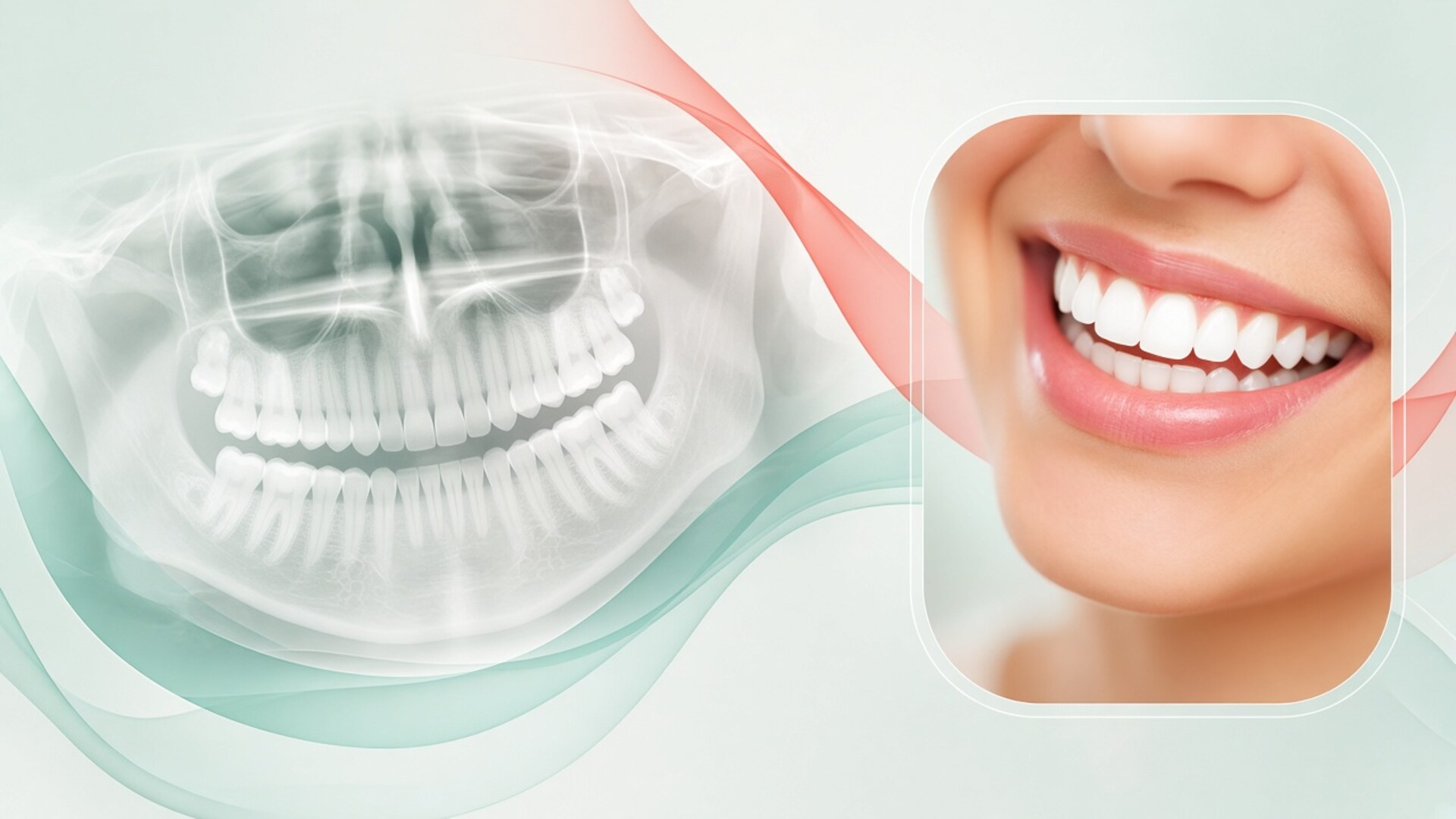
Age 7 is a useful point on the growth chart, not a magic “bond metal today” date. By then first permanent molars and central incisors have usually erupted. The orthodontist assesses jaw relationship, space for canines, crossbites, habits, and tooth buds on a panoramic film. Problems parents do not yet see on a smile already show on imaging: an extra tooth, a missing bud, a canine aimed at a neighbour’s root.
Early screening is not early treatment. For many children the first visit ends as “review every 6–12 months.” For some it means a short plate, expansion, or guided baby-tooth removal. For some it means waiting for the mixed or permanent dentition and a full course later. The AAO also notes: if something looks off before seven, you need not wait for the birthday. If the child is already eight to ten with no screen, you are not “forever late”; many courses start between 9 and 16 based on physiologic readiness.
In Dubai families move between countries and school calendars. I tie the first visit to age and signs, not to “when Saturday frees up after football.” If the pediatric dentist has not mentioned an orthodontist, that is not a ban on booking: a referral is not required. You can bring the child yourself when bite, crowding, or thumb-sucking questions appear. In mixed-nationality homes I hear different folk rules — “only after all teeth,” “plate for every five-year-old,” “braces ruin enamel.” We test each rule against this child’s facts, not against a family chat.
The age-7 marker prevents two errors. First — missing a window where jaw growth still helps (for example, upper expansion for a transverse deficit). Second — starting a full fixed course too early while many permanent teeth are still in bone and the plan will be rewritten. Screening separates those paths. I explain the child’s path on models and films without pressure to “buy treatment today.” If you want a second opinion after the visit, that is fine; take film copies and the recommendation list so comparison uses the same data.
It helps to know how an orthodontist differs from a pediatric dentist on this visit. The dentist treats decay, watches hygiene, places fillings. The orthodontist watches jaw growth, permanent-tooth paths, and the bite as a system. Both matter; neither replaces the other. I often ask to finish decay care before an appliance starts — otherwise orthodontics begins on sick enamel. When to see the orthodontist and when to see the dentist for treatment are parallel calendar jobs for the family. International school diaries in Dubai are dense: I suggest tying orthodontic reviews to holidays, while not delaying painful decay “until a convenient window.”
Another myth: “parents wore braces, so the child needs them at the same age.” Heredity influences jaw and tooth size, yet start time and appliance type follow the child’s exam, not the family album. A sibling with early expansion does not force the same path for the younger one. Each child gets a screen and a map.
What happens on the first visit
My first visit is talk and exam, not “bond today.” I listen for snoring, mouth breathing in sleep, injured incisors, crowding, school teasing, and family orthodontic history. I look at the face front and profile, lips at rest, swallow and breathing. In the mouth — habitual bite, midline shifts, crowding, wear, gums and hygiene. If films are needed, I explain why: a panoramic shows buds and impaction risk; a lateral shows skeletal relationships; periapicals show selected roots. Not every screen needs a full imaging package the same day.
I keep the AAO’s five first-exam questions in mind and say them aloud: is there a problem and what is it; what options exist; how long might treatment take if it is needed now; what observation looks like if treatment is early; what fee range applies when start is real. The parent leaves with a spoken or written plan: observation / short phase / full course later. For the child the visit should be predictable: no surprise “we bond today” unless that was discussed. I show instruments before they approach the mouth and let the child use a mirror — that cuts fear more than vague “it will not hurt” lines.
In Dubai some children already saw an orthodontist abroad. Bring notes and films on a stick or in the cloud. I match prior advice to today’s growth. Sometimes “wait” now needs an update; sometimes an early appliance from another clinic can be adjusted without panic. If the child is anxious, a parent stays in view and we split the exam into short steps. The goal is family clarity, not sales speed. An interpreter helps when home language makes medical words fuzzy: fear often grows from adult phrases the child does not follow.
After the exam I name the next review date. For quiet growth that is often six to twelve months. For thumb habit or crossbite, earlier. Put the date in the family calendar next to school vaccines: orthodontic screens vanish between moves. If new complaints appear within months — snoring, dental trauma, sudden crowding — do not wait for the planned slot. A phone reminder tagged “ortho + last smile photo” helps you compare change at home before you arrive.
I also ask about sport and school canteens. Contact sport with protruding incisors raises trauma risk — not to scare you, but to prioritise protection and sometimes an early phase. Sweet snacks without cleaning worsen any future appliance forecast. Those daily details belong on the first visit as much as measuring the bite.
Signs to come before age 7
“No later than seven” does not ban a visit at five or six. Come earlier when signs are clear: marked crossbite, trauma-prone protruding incisors, thumb or pacifier habit past four to five, mouth breathing, loud snoring, facial asymmetry, early baby-tooth loss with neighbour drift, delayed eruption. Parents often spot a “crooked smile” on a party photo before a short dental check does. That is enough reason for pediatric consultation. Below — three sign groups where I ask you not to wait for the birthday: bite and trauma, habits and breathing, space loss and eruption delay. If you hesitate between “too early” and “time now,” choose the exam — it costs less than a year of worry and is clearer than family-chat advice.
Bite, crowding, and trauma-prone incisors
Lateral or anterior crossbite, deep bite with palate trauma, open bite with a gap between incisors, strong upper-incisor protrusion — reasons to look before seven. Protruding incisors break more often on playgrounds and in pools. Crowding where baby teeth fan without space for permanent successors is also a signal: waiting alone does not create space. I decide whether a plate, limited fixed work, or eruption watch is enough. That decision follows films and skeletal age, not only the passport. An early visit here cuts two extremes: “wait until teens” when growth already helps, and a full course “just in case” when a short phase would do.
Habits and breathing
Thumb sucking, long pacifier use, tongue thrust, habitual mouth breathing reshape dental arches. The longer the habit, the stronger the open bite or upper narrowing. I ask about sleep, snoring, adenoids, and ENT history. Sometimes an orthodontic phase runs beside ENT care. Breaking a habit by shouting at home rarely works; short appliances and clear child rules work more often. If the child is four and the thumb is “only for sleep,” still discuss a plan — do not wait silently until seven. Forty minutes in the chair beat a year of anxiety and sometimes beat a harder course that could have been simplified.
Space loss and delayed eruption
Early loss of a baby molar without a space maintainer lets neighbours drift and block the permanent tooth. Eruption delayed six months or more versus the other side warrants a film. An extra tooth or cyst on the panoramic changes the plan. I decide on a simple maintainer, guided removal, or watch. Parents sometimes think “baby teeth fall out anyway” — and lose the window while a permanent canine drifts into the palate. Early screening catches those plots. I do not set start age from one selfie angle online.
Early intervention or observation
After screening I sort three baskets: observation, early intervention, and delayed full course. Observation means regular exams, photos, sometimes a repeat film, home rules. Early intervention is a short phase (often months, not years of full “metal”): expansion, a plate, limited braces in one zone, habit correction. Full course usually sits in mixed or permanent dentition, often in the teen years. AAO guidance and clinic practice agree: not every child with “uneven teeth” at seven needs an appliance now. Below — how I pick a basket and what I tell families about timing without “you missed it” or “you were sold” labels. Parents leave with one chosen basket and a next-step date, not a foggy “think about it” without a calendar entry and a red-flag list for early return.
When observation is enough
Observation fits moderate crowding with a fair space forecast, no crossbite or trauma-prone protrusion, a habit the family is already dropping, and eruption waiting without pathology on film. I set a review interval and a red-flag list for early booking: new trauma, snoring, sudden midline shift, pain. Observation is an active strategy, not a brush-off. At each review I compare photos with the last visit so parents see progress or drift. In Dubai, ads for “braces from five” sit next to advice of “only after sixteen”; the anchor remains exam, growth, and the child’s hygiene.
When a short early phase fits
Indications for a short phase include upper transverse deficit with crossbite, some habit-related open bites, space maintenance after early baby-tooth loss, help with eruption in a local block, and lowering trauma risk from strongly protruding incisors. The aim is to simplify a later course or remove a harmful factor — not to “finish orthodontics forever at seven.” I say aloud that a second phase in the teen years may still come. Families who expect a plate to cancel future braces leave disappointed; families with an honest two-phase map leave calmer. A removable plate without home discipline does not treat; a fixed piece without hygiene stains enamel — the child’s temperament enters the method choice.
When a full course should wait
I do not place full teen braces “because the child turned seven.” Teeth and jaws must be ready, hygiene must hold, and the child needs motivation. If most permanent teeth are still in bone, years of fixed appliances without a clear goal tire the patient and raise decay risk. A delayed start with a clear observation calendar often beats an early full course “just in case.” Exceptions — severe function issues, trauma, prep for other care — we discuss separately. I give parents written review dates so “we’ll wait” does not become a forgotten phone note.
Ages 8–11: mixed dentition
Between seven and the teen growth spurt sits mixed dentition: some baby teeth, some permanent. This is the window where I most often decide a short early phase or keep watching. Permanent canines and premolars erupt; arch space either appears or does not. A panoramic at this age is especially useful: it shows whether a canine aims at an incisor root, whether an extra tooth exists, whether eruption is symmetric.
Dubai parents in these years juggle school, clubs, and flights to relatives. Orthodontic reviews slip. I suggest tying visits to holidays or the annual dental check. If the child already wears a plate, wear hours matter more than appliance brand: hours per scheme, a clean case, a message on breakage. A broken plate in a suitcase for a month is a lost stage. Before a long trip, ask for a short check: can you fly on the current scheme, do you need wax, whom to message if something fails abroad.
At 8–11, sport and music questions appear. Limited fixed work or plates usually fit school life with simple protection rules. I discuss contact sports separately. Aesthetics already matter: children compare smiles in class. Clear elements or a limited metal zone can lower resistance when clinically fair. Function and growth still decide — not TikTok fashion. If the child feels shy about an appliance, we talk before placement, not after the first school day.
Mixed dentition is also time to recheck ENT status if mouth breathing continues. Orthodontics does not replace adenoid care; ignoring breathing weakens expansion results. I write a plan note for the family: “ENT review if snoring.” Teamwork between specialists is shorter than arguments over “whose child” it is. In parallel I watch hygiene: if plaque is already high without an appliance, we strengthen cleaning first or any phase risks white spots. Ask to watch one uncoached evening brushing — the picture often differs from “we brush twice a day.”
At this age I also explain the gap between “even front teeth” and “a finished bite.” Parents see incisors and want a full course at once. Sometimes laterals will settle as they erupt; sometimes a plate helps; sometimes waiting for canines is wiser. Patience here is a clinical tool, not an excuse. When to bring the child back in mixed dentition, I write a concrete date — not “sometime in the holidays.”
Teens and full braces courses
The teen years are the classic window for a full course: most permanent teeth are in, growth can still help, motivation and hygiene sit closer to adult patterns (though not always). I discuss teen braces as a 12–24 month project with retention after — not as “metal for the holidays.” If the age-7 screen was calm, we often revisit start around 11–14. If there was no screen, we begin diagnosis now — missing the age-7 visit does not mean treatment is too late. Below — three common entries into a teen course after a childhood screen, a short early phase, or a first visit from scratch. Forcing treatment without the teen’s voice yields brackets and empty hygiene — a scenario I ask families to avoid before they even pick ligature colours.
If age 7 said “observe”
Observation does not vanish into air. At reviews I track growth, crowding, habits. When the permanent bite is ready and indications exist, I propose a full course with a new duration corridor. Parents sometimes say, “at seven everything was fine.” Fine for seven is not zero crowding at fourteen: jaws and teeth keep changing. Prior visit notes show the trend without drama. Teen refusal is a separate talk: the child’s voice, a clear plan, ligature colour choice, and calendar around IB exams beat force.
If there was a short early phase
After expansion or a plate, a second phase is often still needed to detail the bite. I do not sell early care as cancelling future braces. Honest map: phase 1 removed crossbite / habit / space deficit; phase 2 aligns the arch and contacts. Families with that map feel less misled. Hygiene after phase 1 must stay a habit — otherwise phase 2 starts with white spots. In Dubai teens live between school systems and summer travel: we align activation calendars early, especially if a move is known.
If you arrive first at 13–16
A late first visit does not close the door. Diagnosis, films, plan, discussion of metal, ceramic, or aligners when indicated. Growth may still help in some cases; in others we work like a near-adult bite. The key is not to lose more years waiting “until after graduation.” Trauma-prone protrusion and function complaints follow clinical need, not the school awards timetable. Changing doctors mid-course in a move lengthens the path; better to plan start if the main phase will stay in one city.
Choosing the moment in Dubai
Practically: if the child is near seven with no screen, book pediatric consultation. If signs from the list above appear — earlier. If a teen already complains of crowding — do not wait months for a “perfect holiday window.” Bring the insurance card if you hope for coverage: UAE rules depend on the policy; I do not invent tariffs here. Exact fees and film needs follow the exam.
Dubai family calendars are dense: school, heat, trips to Europe and Asia. I offer holiday-tied slots for observation reviews and a tighter rhythm when an active appliance is in. For early intervention, home discipline is critical; for teen braces, social readiness matters too. We say both aloud on consultation. If the family splits time between two cities, decide early who owns the main phase: hopping clinics without film transfer lengthens the path more than one honest reschedule.
Before booking, write a short question list: what the doctor sees now; whether treatment is needed today; what the observation schedule is; which signs call earlier; how the plan fits school and sport. That list saves a second visit of “we forgot to ask.” Bring the child fed and rested — hunger and sleep debt make the chair hostile even with a gentle doctor. For anxious children a pre-tour without treatment helps: see the chair, meet the assistant, leave with a sticker and a sense of control.
| Age / situation | Usual step | Visit goal | Common next step | Red flags for early return | What to bring |
|---|---|---|---|---|---|
| 4–6 with signs | Early screen | Habits, crossbite, breathing | Observe or short phase | Snoring, incisor trauma, thumb >4–5 | Complaints, ENT notes |
| ~7, no complaints | AAO screen | Growth and bud baseline | Review 6–12 months | New crowding, asymmetry | Prior films if any |
| 8–11 mixed dentition | Review / early phase | Canine space, width | Plate / expansion / wait | Eruption delay, crossbite | Appliance if already in use |
| 11–14 ready for course | Full diagnosis | Start full treatment | Teen braces / aligners per plan | Trauma, joint pain, hygiene refusal | Policy, school calendar |
| 15–17 first visit | Diagnosis from scratch | Honest duration corridor | Plan + retention at end | Decay, periodontal issues, move | Films, move history |
| Move to Dubai mid-course | Transfer care | Plan stitching | New corridor | Pause >2–3 months | Notes, appliance type |
| “Only for photo aesthetics” | Goal unpacking | Separate cosmetics and function | Observe or plan | Social pressure without clinic | Sample “wanted smile” photos |
The table is a talking guide, not a remote diagnosis. Your child may not fit a “typical” row; the exam decides.
After the table I often ask families to mark one closest row and one they fear. Fear of “too late” at fifteen is usually overstated. Fear of “forced treatment at five” is too. Reality sits in the middle: screen, clear schedule, treatment when indicated. If you moved to Dubai mid-school year, do not wait until September for convenience — convenience without a screen can cost complexity later.
One more practical tip: store films and plans in a dated family cloud folder. Changing clinics or countries then costs fewer weeks of guessing. I thank parents who bring a timeline: “plate at 6 for four months, pause at 8, review at 11.” That tape beats memory of “we wore something.” If cloud use is hard, one phone album labelled “child ortho” works — just keep films from vanishing into an old email after a family device shuffle.
Before pediatric consultation, tell the child a short truth: the doctor will check how teeth are growing and say whether anything is needed now or later. Truth without threats beats a fairy tale of “just saying hello” followed by a chair surprise. Bring water, a light snack after the visit, and the parent question list on paper — a hungry child and forgotten questions spoil even a good exam.
FAQ: first orthodontist visit age
When should I take my child to the orthodontist for the first time?
AAO guidance is no later than age 7. Earlier — with clear signs: crossbite, trauma-prone incisors, long habits, breathing problems. After seven still matters if no screen has happened yet.
Does an age-7 visit mean braces will be placed?
No. Observation is a common outcome. Braces and other appliances follow indications, not birthdays. I explain the basket: observe, short phase, or delayed full course.
Do we need a referral from the pediatric dentist?
No. A referral is not required to book an orthodontist. The dentist remains a key partner for decay and hygiene, yet the family can start the orthodontic screen.
Can the first visit skip X-rays?
Sometimes, if the exam is calm and no red flags appear. A panoramic often helps see buds and impaction risk. We discuss films with the parent before exposure.
What if the child is already 12 and never saw an orthodontist?
Book diagnosis now. Many problems treat well in the teen years. Missing age 7 does not cancel the value of a plan at twelve to sixteen.
Does early intervention cancel future braces?
It does not guarantee that. It often simplifies a later phase or removes a harmful factor. An honest plan states the chance of a teen course up front.
How do we prepare the child for the first visit?
Explain briefly that the doctor will look at teeth and jaws, may photograph the smile, and sometimes needs a film. Skip threats about drilling. Bring water and headphones for the wait. Write parent questions as a list so none vanish in the room.
When do teen braces sit apart from the childhood screen?
When the permanent bite is ready and full-course indications exist — usually nearer the teen window. The age-7 screen helps you not miss prep for that stage and to choose early intervention when it is needed. The first visit itself is exam and talk without bonding pain; films add time, and a film holder can be explained to the child beforehand.